Date: 2026-11-25
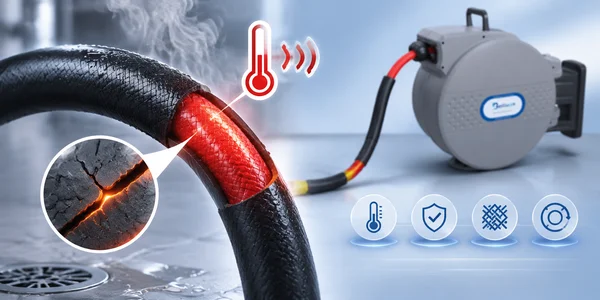
In commercial kitchens, hotel kitchens, and food processing facilities, hose reels are often used for hot-water cleaning. While hot water helps loosen grease and residues, prolonged exposure can accelerate hose aging, leading to hardening, cracking, or leaks at the connections. When purchasing a hose reel, buyers should look beyond hose length and reel design to consider temperature resistance, pressure performance, flexibility, and connection reliability. Choosing a hose suited to the actual operating conditions helps maintain cleaning efficiency and extend equipment service life.
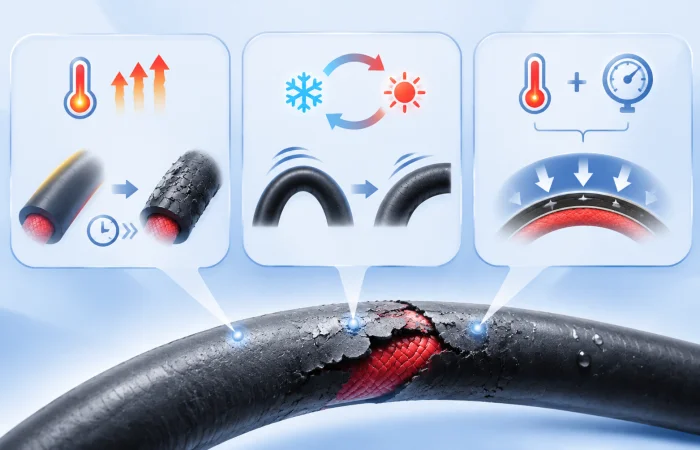
The effects of hot water on a hose go beyond simply raising its surface temperature. In high-frequency commercial cleaning applications, temperature changes, internal pressure, and repeated bending can act together, gradually affecting the hose's structural stability.
A hose typically consists of an inner tube, a reinforcement layer, and an outer protective layer. Different materials have different levels of temperature resistance. When a hose is exposed to hot water over an extended period, changes may occur in its material structure, reducing its elasticity and flexibility. Over time, some hoses may become stiff, lose their resilience, or develop surface cracks.
It is important to understand that heat resistance does not mean immunity to long-term aging at high temperatures. A hose that can withstand a certain temperature for a short period may not be suitable for conveying hot water every day over extended periods. Buyers should pay attention to the continuous operating temperature rather than relying solely on the maximum temperature rating.
Cleaning in commercial kitchens is often intermittent. A hose may switch between cold and hot water, then gradually cool down when it is no longer in use. Repeated heating and cooling cause the hose material to expand and contract. Over time, these temperature cycles may contribute to material fatigue and affect the integrity of the hose and its different structural layers. If the hose is also frequently pulled out, bent, and retracted, thermal cycling and mechanical movement place additional stress on it.
Hot-water cleaning generally requires sufficient water flow. However, the mechanical properties of hose materials may change as the temperature rises. When a hose operates under high pressure at elevated temperatures, its inner tube and reinforcement structure must remain stable. A hose with insufficient temperature resistance or an unsuitable construction may develop bulges, deformation, or leaks around its connections. For this reason, temperature resistance and pressure performance should not be evaluated separately. Buyers need to confirm whether the hose can reliably withstand the required water pressure at the actual operating temperature.
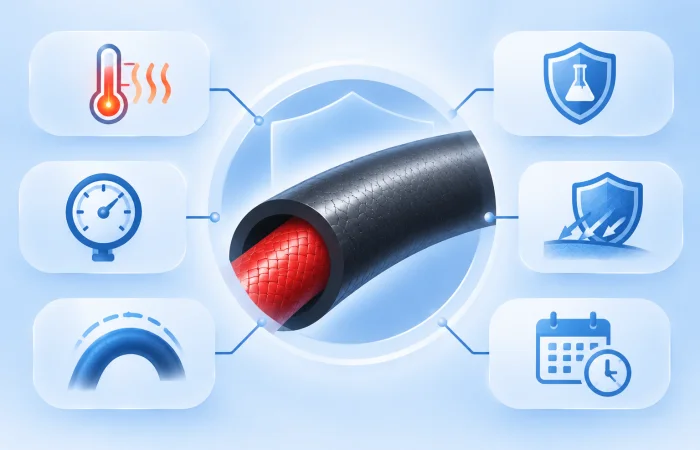
Once the effects of hot water are understood, buyers can translate these risks into practical selection criteria. The following hose properties deserve particular attention.
Temperature rating is one of the most fundamental specifications for hot-water cleaning applications. Hose temperature specifications may include a maximum temperature rating, a continuous operating temperature, or a temperature range under specific conditions. These terms do not necessarily mean the same thing.
|
Temperature specification |
What buyers should understand |
|
Maximum temperature rating |
The upper temperature limit the hose can withstand for a limited period under specified conditions |
|
Continuous operating temperature |
The temperature range within which the hose is designed for long-term operation |
|
Temperature-pressure rating |
The working pressure the hose can withstand at a specified temperature |
For example, a hose rated for a maximum temperature of 80°C should not automatically be assumed to withstand its maximum rated pressure continuously at 80°C. Higher temperatures may affect the material's pressure-bearing capacity. The actual operating limits should be confirmed through the manufacturer's technical specifications. Before purchasing, buyers should consider the water temperature commonly used on-site, the duration of each cleaning session, and the water supply conditions. The hose should provide an appropriate operating margin rather than being selected based on a single maximum temperature figure.
A hose reel hose is frequently pulled out, redirected, and retracted. Insufficient flexibility can make these operations more difficult. A hose that is too stiff requires greater pulling force when cleaning beneath equipment, around corners, or in confined spaces. Excessive bending, meanwhile, may restrict the internal water passage or cause localized damage.
During product evaluation, buyers should observe:
· Whether the hose remains flexible at both room temperature and its operating temperature;
· Whether it kinks or deforms easily when bent;
· Whether it twists during extension and retraction;
· Whether it returns to its original shape after bending.
Flexibility does not mean that a hose should be as soft as possible. A well-designed hose needs to balance flexibility, pressure resistance, and structural stability.
Commercial kitchen floors may contain grease, water, cleaning tools, and equipment edges. During use, the hose may rub against floors, walls, or surrounding equipment. If the outer protective layer is not sufficiently durable, repeated friction may wear down the hose surface and expose the reinforcement layer, potentially compromising the hose's overall service life.
Buyers should check whether the outer material is suitable for frequent dragging and whether the hose provides adequate abrasion resistance. For hose reels that require long hose extensions, the frequency of floor contact and the hose's typical movement path should also be considered.
Hose damage does not always begin with the hose body itself. Fittings, threaded connections, and the connection between the hose and the reel are also critical areas to inspect. These points may be exposed to water pressure, pulling force, bending, and repeated movement at the same time. Poorly designed connections can lead to loosening, leakage, or localized fatigue.
Before purchasing, buyers should confirm:
· Whether the fitting material is suitable for prolonged hot-water exposure;
· Whether the connection is secure;
· Whether the hose-to-fitting joint has a reliable sealing design;
· Whether pulling the hose places excessive stress on the connection.
Even a high-quality hose needs reliable connections to perform as intended.
Hose specifications form the basis of product selection, but actual service life also depends on installation, operation, and maintenance.
For hose reels, the hose needs to remain properly arranged as it is pulled out and retracted. If the reel's guiding structure is poorly designed, the hose may cross over itself, become locally compressed, or experience repeated friction. Even if the hose has good temperature and pressure resistance, uneven stress over time may shorten its service life. When purchasing, buyers should therefore evaluate not only the hose material but also whether the reel allows smooth winding and storage, minimizing localized bending and excessive pulling.
The installation position affects the hose's movement path. If the reel is installed in a narrow passage, a crowded area, or a location where objects frequently obstruct the hose, employees may need to change direction repeatedly when pulling it out. This can increase friction between the hose and nearby equipment edges. A suitable installation position should minimize unnecessary turns and obstacles, allowing the hose to extend smoothly and retract naturally after use.
Hot water is not the only factor that affects hose performance. Commercial kitchens may use chlorine-based cleaners, alkaline detergents, or other chemical products. Different hose materials have different levels of chemical resistance. Prolonged contact with incompatible cleaning agents may cause surface aging, discoloration, hardening, or cracking. Buyers should identify the cleaning chemicals used on-site and ask the supplier to confirm the hose material's chemical compatibility. During routine cleaning, prolonged chemical residue on the hose surface should also be avoided.

During the purchasing process, buyers can use the following checklist to assess whether a hose reel is suitable for their application.
|
Evaluation item |
What to check |
|
Operating temperature |
Identify the typical water temperature and duration of use |
|
Temperature rating |
Confirm the continuous operating temperature, not just the maximum rating |
|
Working pressure |
Check the actual water supply pressure and pressure capacity at elevated temperatures |
|
Hose construction |
Evaluate flexibility, kink resistance, and outer protection |
|
Connections |
Check sealing, connection security, and heat resistance |
|
Reel design |
Observe how smoothly the hose extends, retracts, and stores |
|
Operating environment |
Consider cleaning chemicals, installation space, and floor friction |
Where possible, buyers can request technical specifications, test documentation, and the applicable temperature range from the supplier. A practical test can also help assess how the hose performs when extended, redirected, and retracted. Compared with simply evaluating appearance or price, this approach provides a more reliable basis for determining whether a product is suitable for long-term operation.

In commercial cleaning environments, a hose reel needs to provide a stable water flow while accommodating frequent extension, repositioning, and retraction.
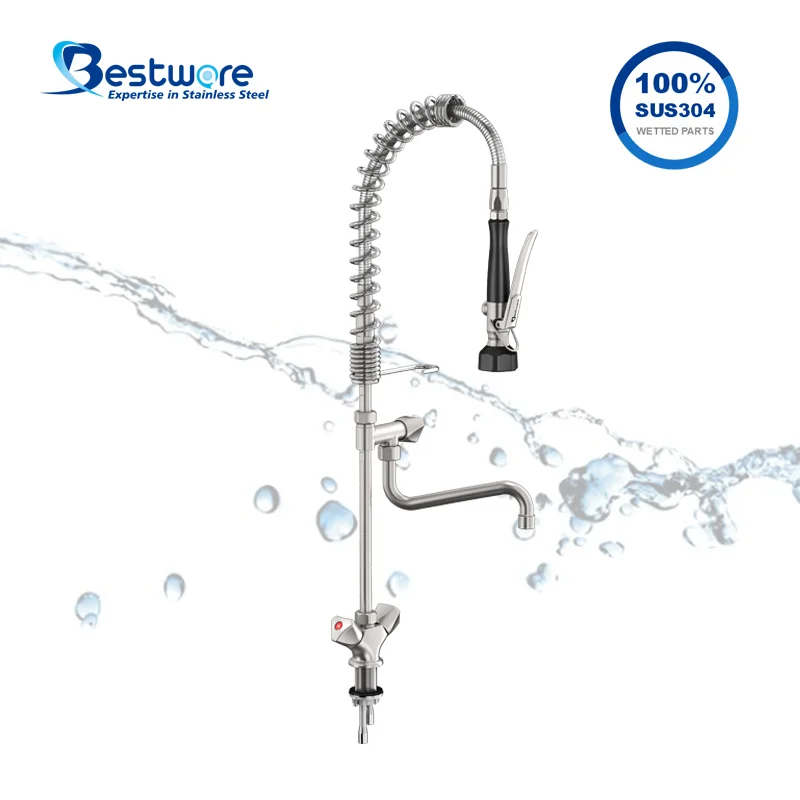
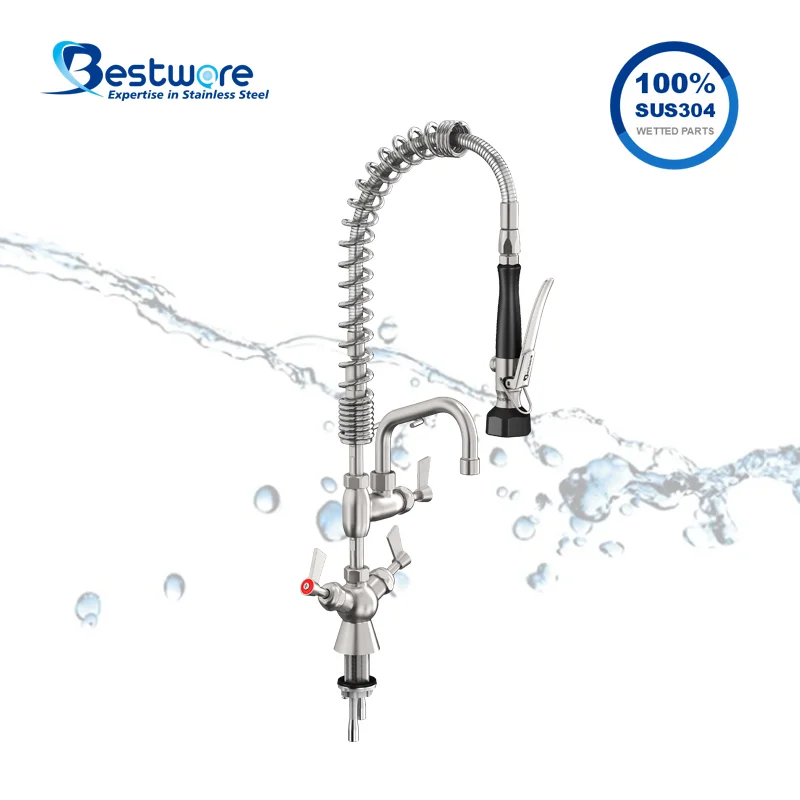
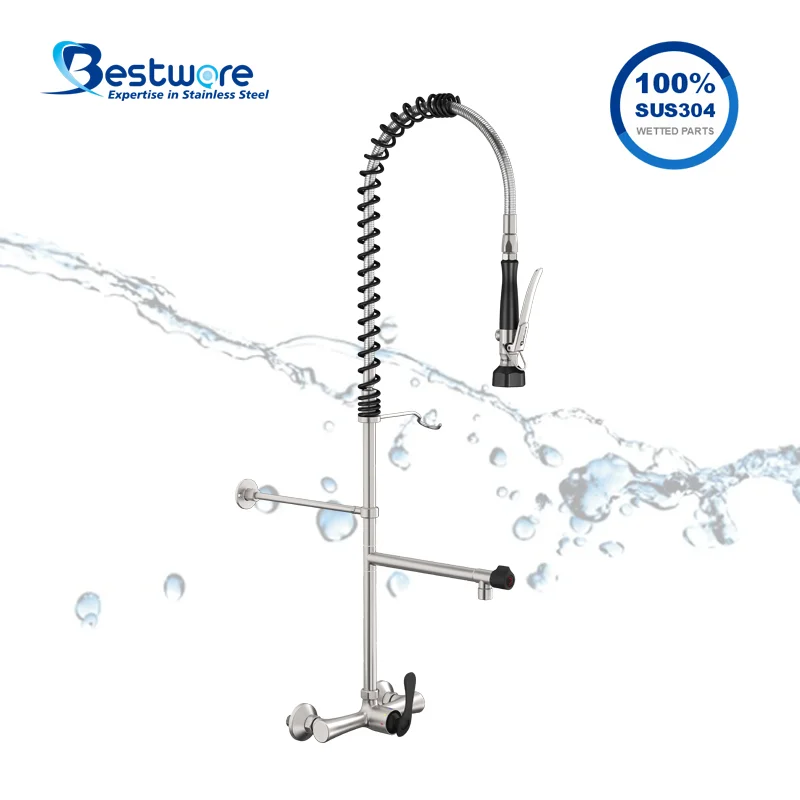
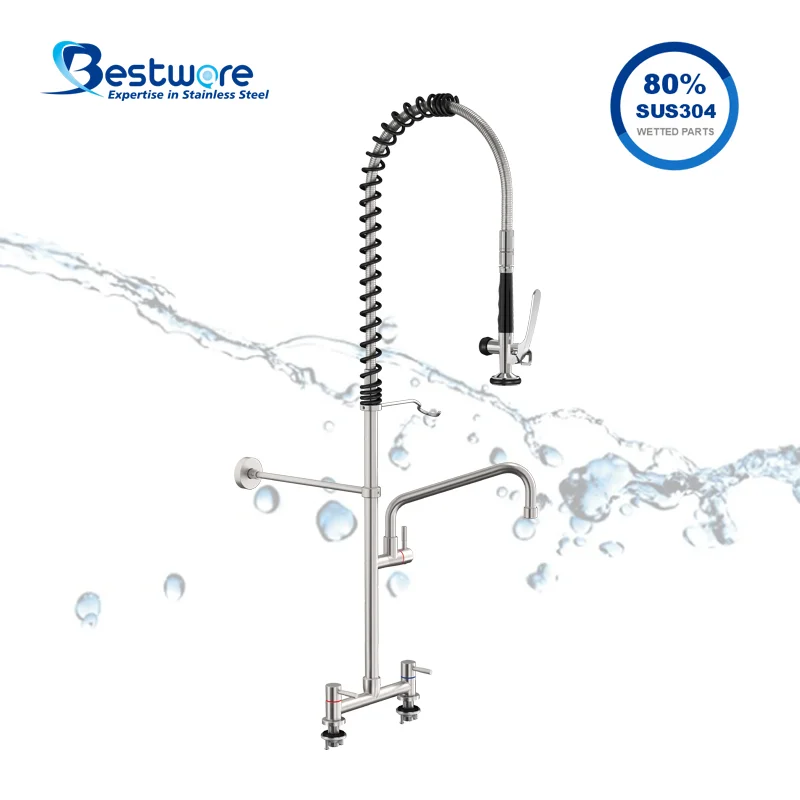
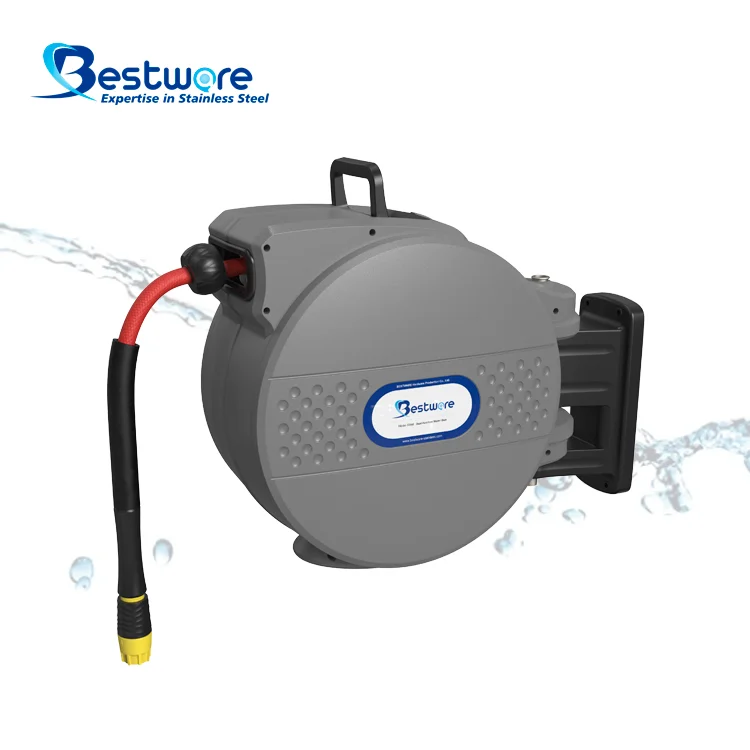
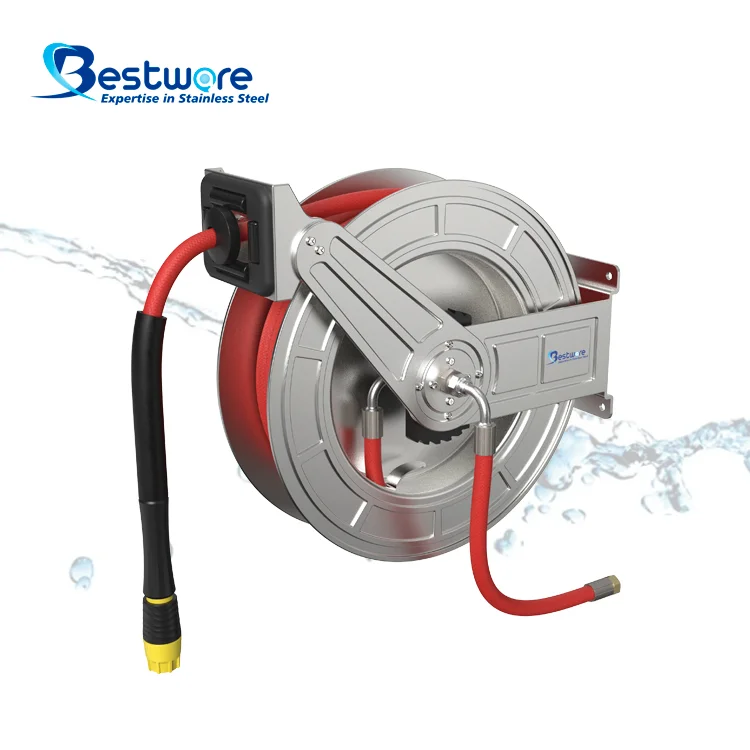
Bestware hose reels feature a reel-based design and are available in open and enclosed configurations to suit different installation environments and operating needs. They are equipped with a semi-automatic retraction system that helps store the hose after use, reducing the need for manual handling.
For water flow control, Bestware's self-developed dual-function water gun switches between Powerful Washing and Large-Area Washing modes, allowing users to select the appropriate spray pattern for different cleaning tasks.
For hot-water applications, Bestware hose reels are equipped with a heat-resistant hose rated for temperatures above 80°C, according to the product specifications. Buyers should still confirm the applicable conditions for the specific model by checking its technical data against the site's water temperature and supply pressure.
Hot-water cleaning helps commercial kitchens remove grease and stubborn residues, but it also places additional demands on the hose. High-temperature aging, thermal cycling, pressure fluctuations, repeated bending, and external friction can all affect long-term hose performance. When purchasing a hose reel, buyers should evaluate temperature resistance, pressure performance, flexibility, abrasion resistance, and connection reliability as a whole. Reel design, installation position, and the cleaning environment should also be taken into account. A hose suitable for frequent hot-water cleaning must do more than withstand a certain temperature. It needs to remain stable, reliable, and easy to handle under actual operating conditions. Matching product specifications to the requirements of the site can help reduce unnecessary maintenance and replacement, supporting more efficient and dependable commercial cleaning operations.
One-stop Solution Provider of Stainless Steel Commercial Faucets
Email: business@bestware-stainless.com
after-sales@bestware-stainless.com
Tel: +86 18929047065
WhatsApp: +86 18929047065


WeChat: +86 18929047065


Website: www.bestware-stainless.com(Global Site)
www.bestware-sparkling.com(Water Dispenser)
Add: Block 8, No. 6, Jianda Nan Road, Jiangmen, Guangdong, China
Copyright © Bestware Hardware Production Co., Ltd. All Rights Reserved.