Date: 2026-11-26
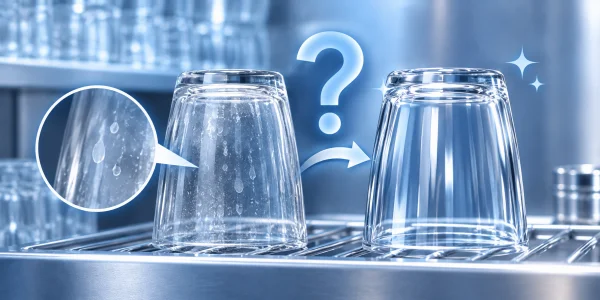
In coffee shops, bubble tea stores, bars, and other foodservice establishments, glasses sometimes develop white spots, transparent water marks, or irregular cloudy streaks after washing. If the glasses have already been rinsed, why do they still look less than clear? Are these water spots caused by water quality, cleaning agents, or rinsing methods? Understanding how water spots form can help improve glassware cleaning results and reduce unnecessary rewashing and routine maintenance.
After rinsing, a thin film of water usually remains on the glass surface. As the water gradually evaporates, dissolved substances in the water or residues from the cleaning process may remain on the glass, leaving visible marks. Water spots do not necessarily mean that the glass has not been cleaned properly, but they may indicate that water quality, cleaning agent use, rinsing performance, or drying methods need to be adjusted.
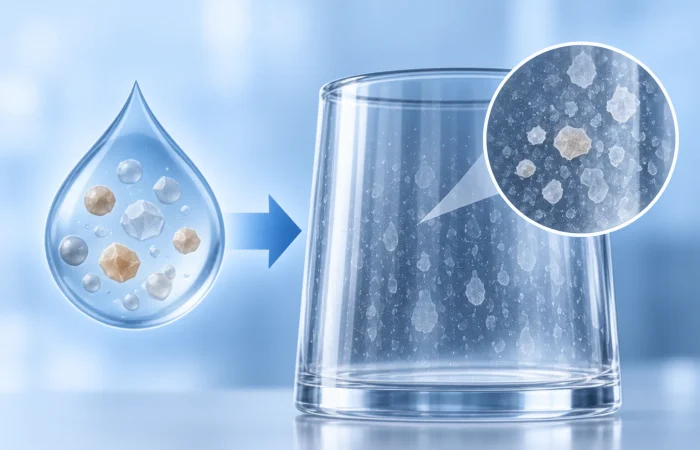
Tap water usually contains certain amounts of minerals such as calcium and magnesium. When the water evaporates, these minerals may remain on the glass surface as deposits. This is particularly common in areas with hard water. Hard water generally contains higher concentrations of calcium and magnesium ions, making visible mineral deposits more likely to form as water droplets dry.
Common signs include:
· White spots or ring-shaped water marks on the glass;
· Irregular, light-colored deposits near the bottom or rim of the glass;
· A gradual loss of clarity after the glass is air-dried.
If water spots mainly appear where water droplets have dried, temporarily disappear after wiping, and return when the glass comes into contact with water again, minerals in the water are likely to be the main cause.
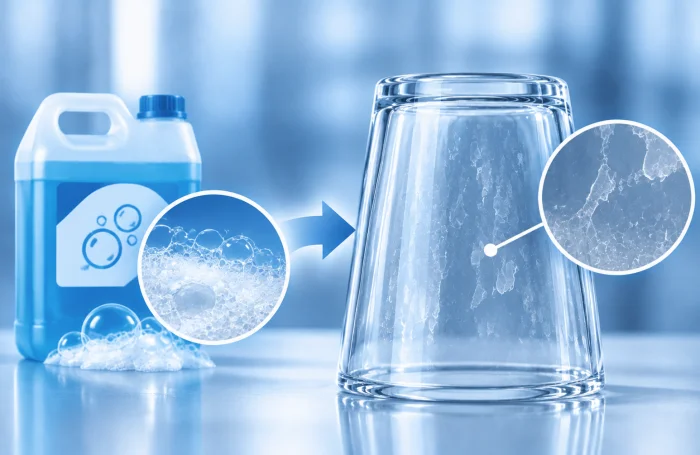
Cleaning agents help remove grease, proteins, and other deposits during glassware washing. However, if too much cleaning agent is used or the glass is not rinsed thoroughly afterward, some ingredients may remain on the glass surface. Once dried, these residues may form a transparent or slightly cloudy film.
Unlike mineral water spots, cleaning agent residue does not necessarily appear as obvious white marks. It may make the glass look dull or cloudy, or cause uneven reflections under light. It is important to note that using more cleaning agent does not always improve cleaning performance. If the cleaning agent is not rinsed away properly, it may instead increase the burden on the subsequent rinsing process.
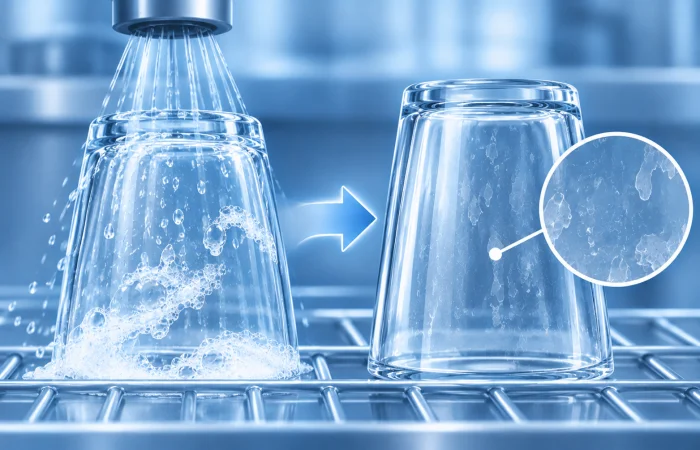
During glassware cleaning, rinsing does more than simply bring water into contact with the glass. Its main purpose is to carry loosened dirt and cleaning agent residue away from the surface. If the water flow only reaches the area near the rim, or does not adequately reach the bottom and inner walls, some residue may remain on the glass.
For example:
· The glass is too deep for the water flow to reach the bottom effectively;
· The curved glass wall makes certain areas difficult to rinse;
· The glass is inverted or positioned at an unsuitable angle, preventing water from draining properly;
· The rinsing time is too short for the residue to be fully removed from the surface.
When these residues dry together with water droplets, they may form spots or uneven water marks.
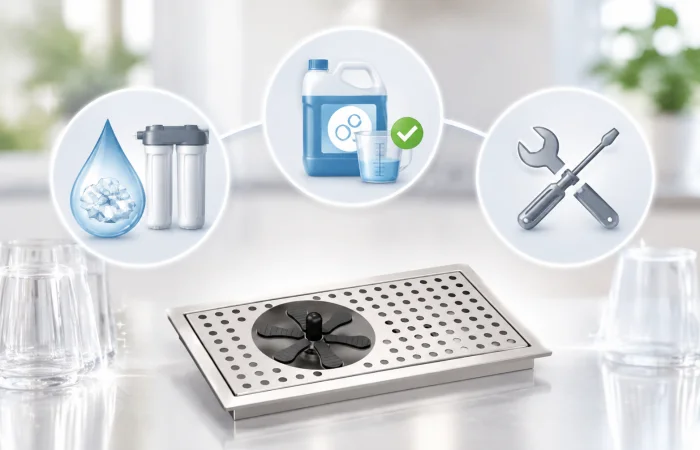
Water spots are often caused by several factors working together. To improve the results, businesses should consider water quality, cleaning agents, rinsing, drying, and equipment maintenance as part of an overall approach.
If the water contains high levels of minerals such as calcium and magnesium, simply changing the rinsing method may not completely eliminate water spots.
For commercial establishments where water spots occur frequently, it may be worth testing the hardness of the local water supply and evaluating whether an appropriate water treatment solution is needed based on the equipment and cleaning process.
Common measures include:
· Using a water softening system based on actual water quality;
· Installing an appropriate water treatment solution for compatible cleaning equipment;
· Regularly checking the operating condition of water treatment equipment;
· Avoiding arbitrary changes to the water supply system without proper assessment.
It is important to note that water softening mainly reduces the effects of calcium and magnesium ions. It does not mean that all dissolved substances in the water will be removed. The appropriate solution should be determined based on water quality testing and the actual application.
The purpose of cleaning agents is to remove dirt, not to create additional chemical residue on glassware. During daily cleaning, the amount used should be controlled according to the product instructions and the type of residue present. For glasses with substantial grease, milk, or syrup residue, an appropriate cleaning program should be used rather than simply increasing the cleaning agent concentration.
At the same time, ensure that the subsequent rinsing process is thorough. When using dishwashers or other cleaning equipment, the amount of cleaning agent, rinsing program, and operating condition of the equipment can all affect the final results. If persistent cloudy marks appear on the glass, first check whether too much cleaning agent is being used and whether the rinsing water can effectively remove the residue.
Rinsing performance depends not only on water flow strength but also on flow direction, coverage, and glass shape. For deep glasses, narrow-mouth glasses, or glassware with unusual internal structures, water may not reach the entire inner surface evenly.
Therefore, when selecting rinsing equipment, consider the following factors:
· Whether the water flow can reach the bottom and main inner surfaces of the glass;
· Whether the glass remains stable when positioned and can be effectively exposed to the water flow;
· Whether residual liquid can drain away smoothly during rinsing;
· Whether the equipment is suitable for the sizes and shapes of glasses used in daily operations.
If residue repeatedly appears in the same area of certain glasses, try adjusting their positioning or checking whether the spray design of the rinsing equipment is suitable for that type of glassware.
After prolonged use, the spray components of rinsing equipment may be affected by scale, particles, or other deposits. If some outlets become partially blocked, the water flow may become misdirected, unevenly distributed, or reduced in coverage. This can affect rinsing efficiency and prevent residue from being removed promptly from certain areas.
Routine maintenance may include:
· Regularly checking the spray components for blockages;
· Cleaning relevant parts according to the equipment requirements;
· Checking whether the water pressure is within the applicable range;
· Observing whether the water flow has changed noticeably;
· Carrying out necessary maintenance and replacement according to the product instructions.
The goal of maintenance is not simply to achieve a stronger water flow, but to ensure that the equipment consistently delivers stable rinsing performance suitable for the intended application.
Commercial glass rinsers are generally used for quick pre-rinsing in beverage preparation areas. They help remove leftover drinks from glasses and make subsequent cleaning more convenient. However, it is important to understand that a glass rinser is primarily designed for quick rinsing and cannot eliminate every type of water spot on its own.
Different spray designs affect how water is distributed inside a glass. Traditional jet designs generally produce a relatively concentrated stream, while a blade-style rotating spray design uses a different water-flow pattern to help expand rinsing coverage.
For coffee shops, bubble tea stores, and bars that frequently handle glasses of different sizes, buyers should focus on whether the water flow can effectively reach the bottom and inner walls of the glass, as well as whether the equipment is suitable for the glassware commonly used. More effective water coverage can help reduce areas that are insufficiently rinsed. However, the final performance still depends on the water supply, glass structure, and specific product design.
For commercial beverage establishments, a practical glassware handling process may include:
Emptying any remaining beverage from the glass;
· Using a glass rinser for quick pre-rinsing;
· Carrying out the necessary cleaning based on the glassware and type of residue;
· Completing rinsing and sanitizing in accordance with applicable hygiene requirements;
· Drying or storing the glassware appropriately.
This process helps staff deal with beverage residue promptly and reduces the time that leftover drinks remain on the glass surface. However, glasses with dried milk residue, hardened syrup, or obvious mineral deposits may still require additional cleaning steps. Quick rinsing cannot replace a complete cleaning and hygiene process.
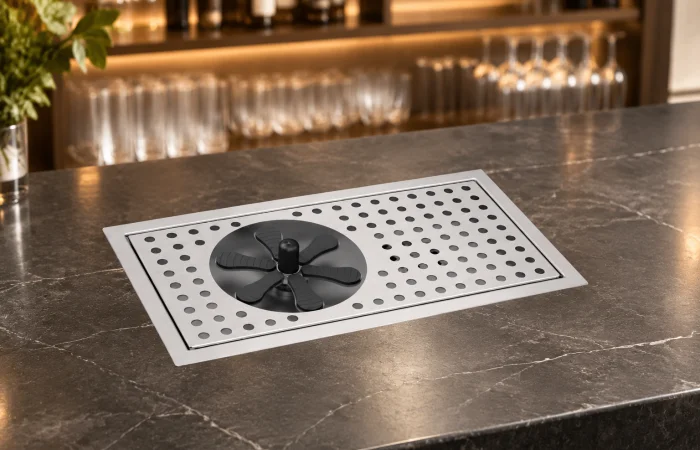
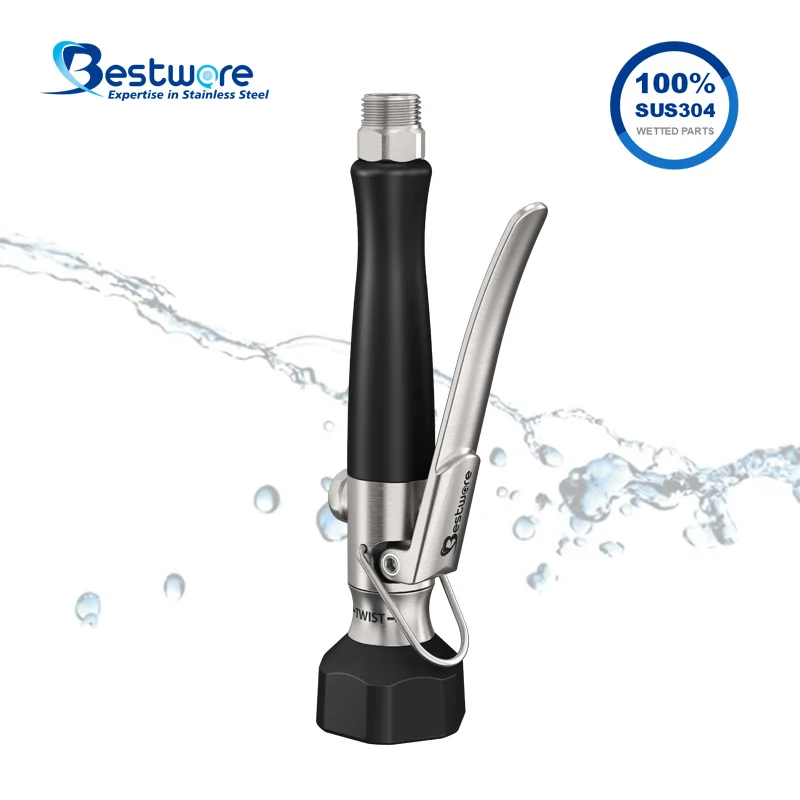
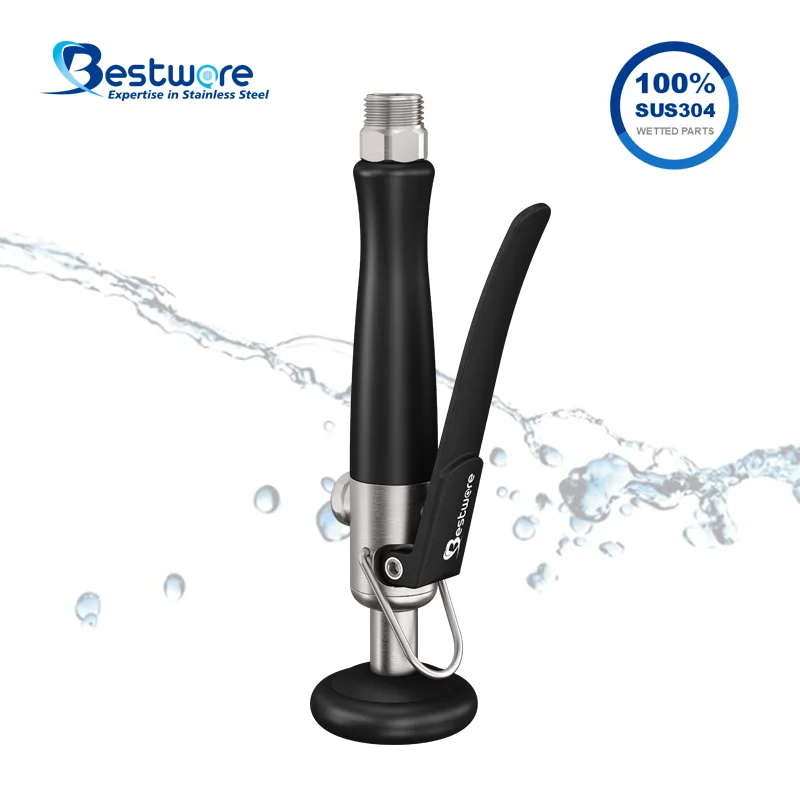
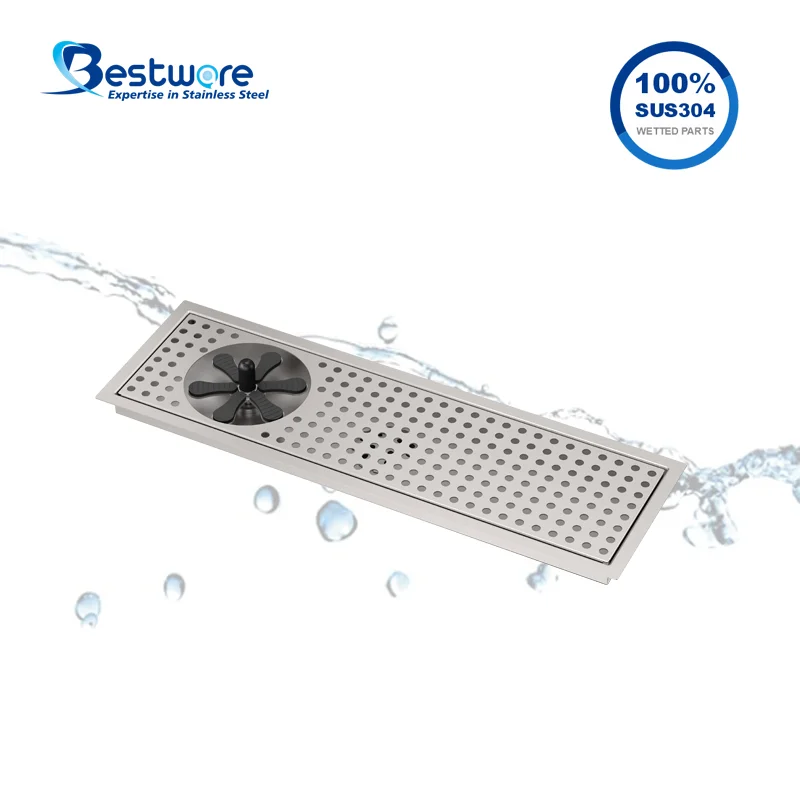
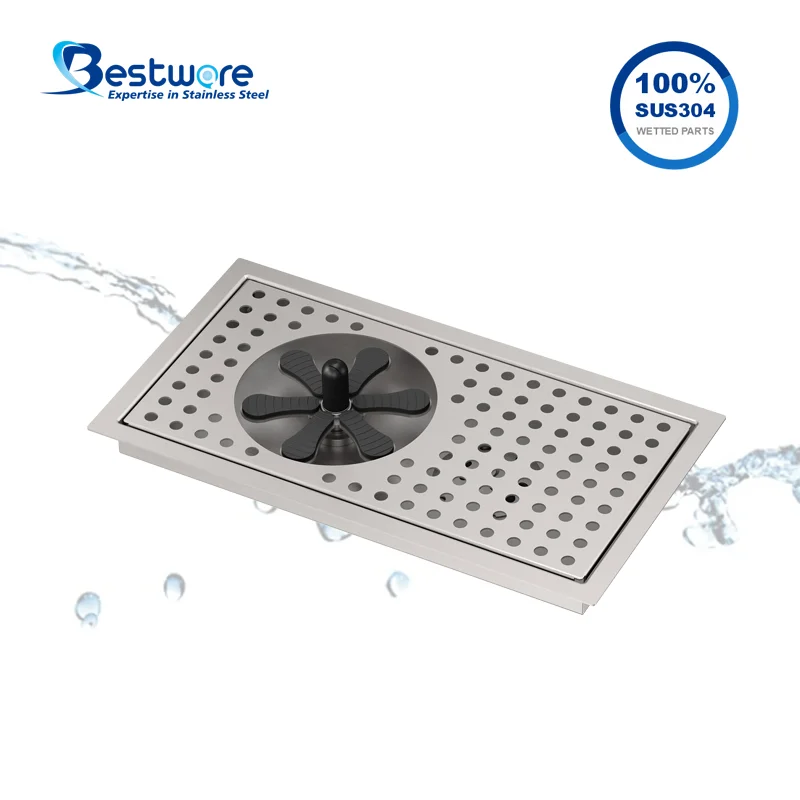
Designed for quick pre-rinsing in commercial beverage preparation areas, the Bestware Glass Rinser is made from SUS304 stainless steel and features a blade-style rotating spray design to help expand water coverage, allowing the flow to reach different areas inside compatible glassware. For coffee cups, beverage glasses, and other suitable containers, the glass rinser can be used for daily pre-rinsing to help remove leftover beverages and some loose residue, making subsequent cleaning more convenient.
When selecting a commercial glass rinser, equipment buyers and foodservice equipment distributors can evaluate the product based on the types of glassware used by their target customers, frequency of use, installation conditions, and cleaning procedures. In addition to material and spray design, they should confirm whether the equipment is suitable for the intended application and can work effectively with the existing cleaning process. Selecting suitable equipment and establishing standardized cleaning procedures can help businesses address the daily glassware handling needs of commercial environments more effectively.
Water spots on glass do not always result from insufficient cleaning. Minerals in the water, cleaning agent residue, inadequate rinsing coverage, and drying methods can all affect the final clarity of glassware. When dealing with different types of water spots, businesses should first observe how they form and then make targeted adjustments to water quality, cleaning agents, rinsing equipment, and drying procedures. Combining appropriate equipment selection with effective cleaning management can help improve glassware cleaning results more consistently and reduce the time and maintenance costs associated with repeated cleaning.
One-stop Solution Provider of Stainless Steel Commercial Faucets
Email: business@bestware-stainless.com
after-sales@bestware-stainless.com
Tel: +86 18929047065
WhatsApp: +86 18929047065


WeChat: +86 18929047065


Website: www.bestware-stainless.com(Global Site)
www.bestware-sparkling.com(Water Dispenser)
Add: Block 8, No. 6, Jianda Nan Road, Jiangmen, Guangdong, China
Copyright © Bestware Hardware Production Co., Ltd. All Rights Reserved.