Date: 2026-07-30
In restaurants, cafés, bars, and beverage shops, glassware cleaning is a frequent and repetitive task. From coffee cups and beer glasses to milk tea cups and cocktail glasses, different types of glassware need to be cleaned continuously throughout daily operations. For commercial establishments, a glass rinser is more than just a cleaning accessory. Its performance directly affects cleaning efficiency, staff workload, glassware turnover speed, and overall customer experience. Traditionally, most glass rinsers on the market use a jet spray design, where multiple fixed nozzles spray water upward to rinse the inside of the glass. While this structure can meet basic cleaning requirements, its limitations become increasingly noticeable as foodservice businesses demand higher efficiency and hygiene standards. Why can some glass rinsers remove residues quickly while others require repeated rinsing? The difference is not simply water pressure, but rather how water is distributed and how the spray structure is designed.
In residential environments, the number of glasses that need cleaning is usually limited, so a few extra seconds per cleaning cycle may not have a significant impact. However, for restaurants, cafés, bars, and beverage shops, glassware cleaning is a continuous high-frequency operation.
For example, a busy café may need to clean hundreds of coffee cups, milk pitchers, and glasses every day. Beverage shops also need to quickly process large quantities of used cups during peak business hours. When each cleaning cycle takes only a few seconds longer, the accumulated time cost can become significant after hundreds of repeated operations.
Therefore, the value of a commercial glass rinser is no longer limited to replacing manual rinsing. More importantly, it helps optimize the entire bar workflow.
An efficient glass rinser should be able to:
· Quickly remove residues from glassware
· Reduce repeated rinsing cycles
· Improve glassware turnover efficiency
· Reduce staff workload
These capabilities largely depend on the water flow design of the glass rinser.
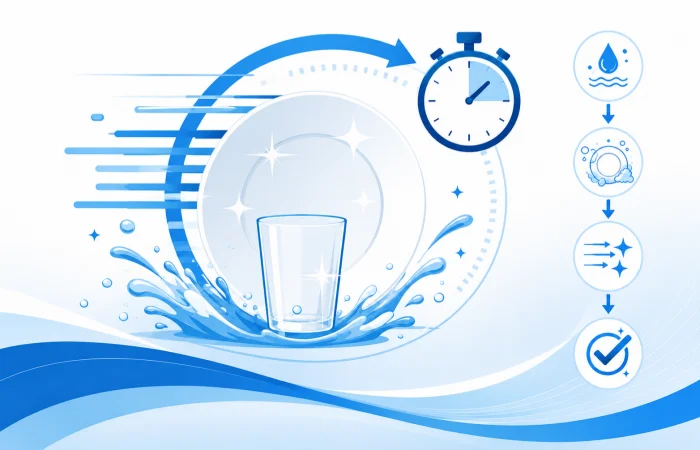
Traditional glass rinsers usually adopt a fixed jet spray structure. During operation, water is sprayed upward through multiple fixed openings, using water impact to remove residues inside the glass. This design is simple, cost-effective, and widely used in the market. However, in real commercial applications, traditional jet designs have several limitations.
The inside of a glass is not a completely flat cleaning surface. Different types of glassware have different structures. For example, beer glasses, wine glasses, and tall glasses often feature deeper interiors and curved walls. Traditional jet water flow mainly concentrates on the center area of the glass bottom, while the side walls receive relatively limited coverage.
This means:
· The bottom area can be rinsed effectively
· Residues may remain on the glass walls
· Some areas may require additional rinsing
For commercial businesses handling large volumes of glassware every day, limited cleaning coverage can reduce overall efficiency.
Effective cleaning requires more than sufficient water pressure. The path and distribution of water flow are equally important. When water is sprayed from a fixed direction, increasing water volume alone may not ensure sufficient contact with every area inside the glass.
For example:
· Coffee oils can easily adhere to glass walls
· Milk tea syrup may leave sticky residues
· Alcoholic beverages can leave odors and liquid deposits
These residues require more comprehensive flushing rather than concentrated impact in only one area.
For home use, the difference of a few seconds in cleaning time may not be noticeable. However, in commercial environments such as restaurants, cafés, and bars, hundreds or even thousands of glassware cleaning cycles may be performed every day. The additional seconds required for each operation accumulate over time, resulting in increased labor and time costs.
Therefore, the real challenge for commercial glass rinsers is not simply providing water flow, but creating a more efficient spray structure that delivers thorough cleaning in a shorter time, improving glassware turnover while reducing manual effort.
When selecting a glass rinser, many users focus mainly on water pressure.
However, cleaning performance is determined by multiple factors, including:
· Water flow speed
· Spray angle
· Coverage area
· Water flow rotation method
If water is concentrated only in one area, even high pressure may not achieve complete cleaning. In contrast, optimizing water direction and expanding coverage allows more effective cleaning under the same water consumption conditions. This has become an important development trend in commercial glass rinser design.
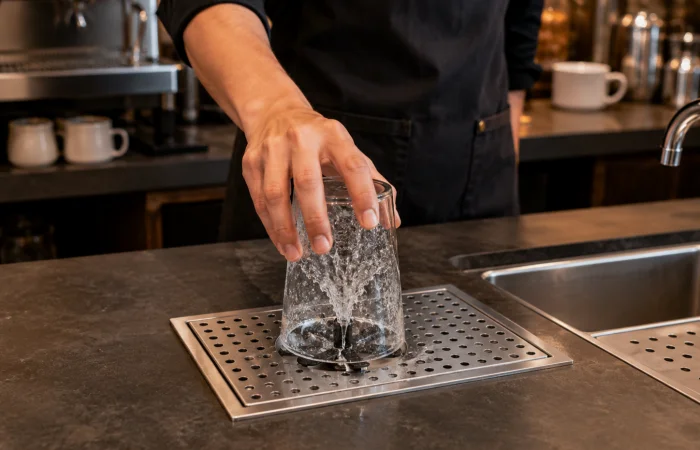
Compared with traditional fixed jet designs, the blade-style rotating spray design changes the movement pattern of water flow, creating wider coverage and more effective rinsing performance. Its advantages mainly include the following aspects.
The blade-style rotating spray design expands the effective water coverage area. When a glass is placed upside down on the glass rinser, the rotating water flow reaches the inner wall more effectively instead of concentrating only on the bottom area.
Compared with traditional jet designs:
· Larger cleaning coverage
· More complete rinsing paths
· Reduced risk of insufficient cleaning in certain areas
This is especially important for commercial beverage applications where different types of glassware are frequently used.
Removing residues requires more than simple water contact. Effective cleaning also depends on sufficient flushing force.
By optimizing water movement, the blade-style rotating spray design creates a more effective rinsing action, improving the removal of coffee oils, beverage residues, and other attached contaminants.
Compared with traditional jet water flow that concentrates impact on a limited area, rotating water distribution provides a more balanced cleaning process.
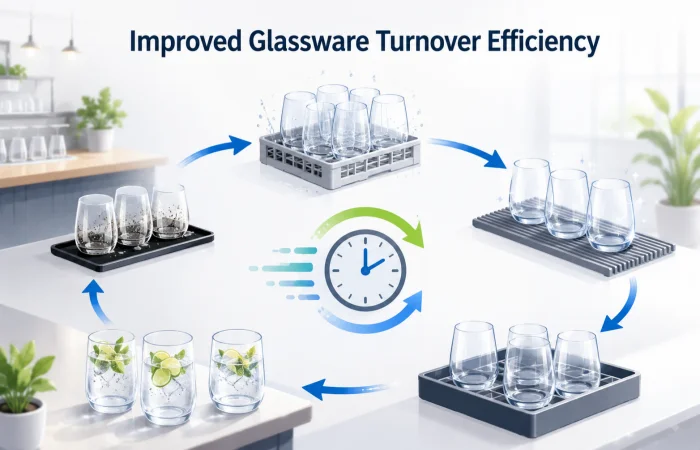
For commercial beverage operations, cleaning efficiency directly affects operational efficiency.
A faster and more thorough rinsing process helps staff:
· Reduce waiting time
· Improve glassware circulation speed
· Handle peak business demand more effectively
Therefore, optimizing glass rinser design not only improves cleaning performance but also enhances the overall workflow.
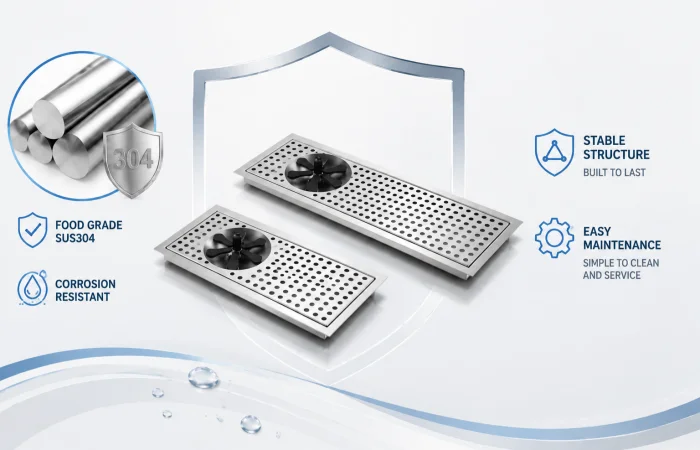
Although spray structure determines cleaning efficiency, a high-quality commercial glass rinser must also meet long-term operational requirements. Besides cleaning performance, commercial users should also consider material safety, product durability, and maintenance costs.
Although a glass rinser is not a direct drinking water device, it cleans glassware that comes into direct contact with beverages. Therefore, material safety is an important consideration. Food-grade SUS304 stainless steel is widely used in foodservice equipment due to its excellent corrosion resistance, stability, and hygienic properties.
For commercial glass rinsers, using lead-free food-grade SUS304 stainless steel helps the product better withstand:
· Frequent water rinsing
· Humid operating environments
· Daily cleaning and maintenance
A safer material choice also better meets hygiene requirements in commercial beverage applications.
Commercial environments are different from residential applications. Equipment needs to withstand frequent operation every day.
Therefore, a glass rinser should not only provide effective cleaning performance but also feature a stable and reliable structure to ensure consistent operation over time.
Corrosion resistance, wear resistance, and structural strength are all important factors for commercial equipment.
For restaurants and beverage shops, equipment maintenance costs are also an important consideration.
An excellent glass rinser should not only perform well when newly installed but also maintain stable performance during long-term operation.
Reducing maintenance frequency and replacement costs helps commercial users achieve greater overall value.
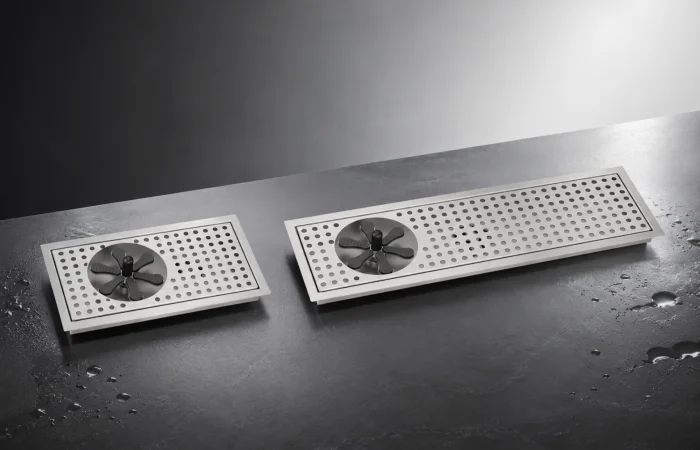
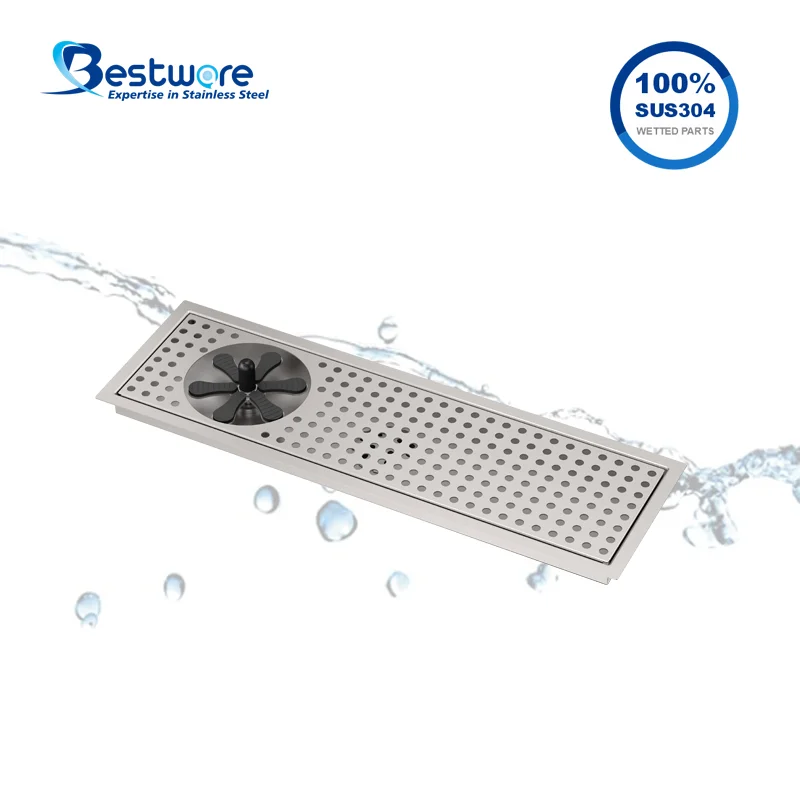
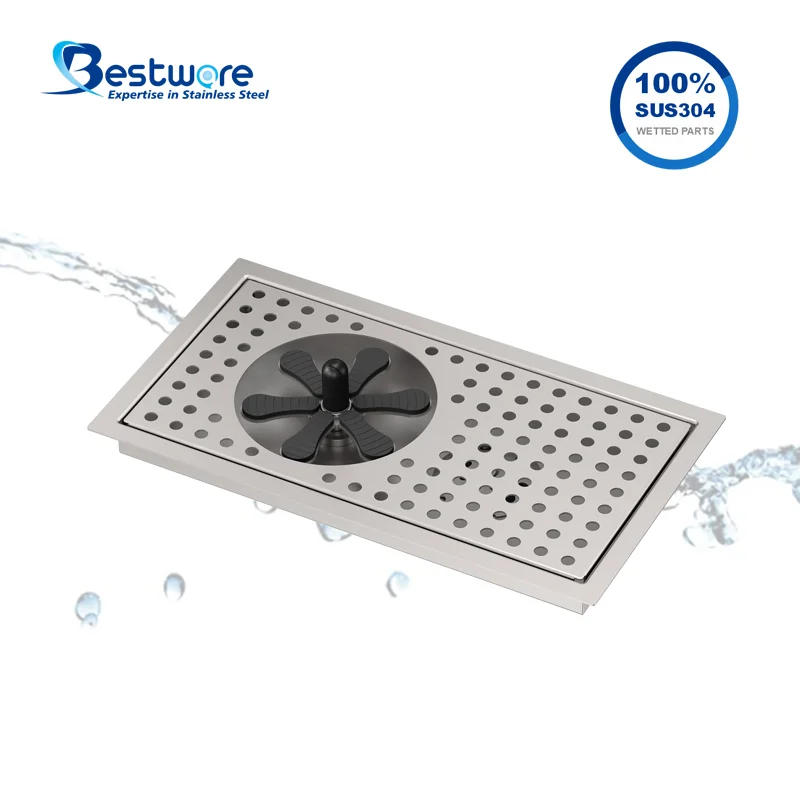
Based on a deep understanding of commercial cleaning requirements, Bestware has developed a commercial glass rinser featuring a blade-style rotating spray design.
By optimizing water flow direction and coverage, the product provides a wider cleaning area and more efficient rinsing performance compared with traditional jet designs, helping restaurants, cafés, and beverage shops improve glassware cleaning efficiency.
The glass rinser is also made of lead-free food-grade SUS304 stainless steel, ensuring hygiene safety while enhancing durability and meeting the demands of long-term, high-frequency commercial use.
The development of glass rinsers reflects the foodservice industry's continuous pursuit of higher efficiency, hygiene standards, and operational performance. From traditional fixed jet designs to more advanced water flow solutions, glass rinsers are no longer just simple rinsing tools. They have become important equipment for optimizing bar workflows. For restaurants, cafés, and beverage shops handling large volumes of glassware every day, choosing the right glass rinser can not only improve cleaning efficiency but also reduce labor pressure and enhance overall operational performance. In the future, more scientific water flow designs, safer material selections, and more reliable product performance will become important trends in commercial glass rinser development.
One-stop Solution Provider of Stainless Steel Commercial Faucets
Email: business@bestware-stainless.com
after-sales@bestware-stainless.com
Tel: +86 18929047065
WhatsApp: +86 18929047065


WeChat: +86 18929047065


Website: www.bestware-stainless.com(Global Site)
www.bestware-sparkling.com(Water Dispenser)
Add: Block 8, No. 6, Jianda Nan Road, Jiangmen, Guangdong, China
Copyright © Bestware Hardware Production Co., Ltd. All Rights Reserved.
(2).webp)
(1).webp)