Date: 2026-03-25
In beverage service settings such as bars and cafés, the speed of drink preparation during peak hours has a direct impact on both customer experience and overall business performance. Many operators focus on improving staff skills or upgrading equipment to enhance efficiency, yet often overlook a seemingly minor but critical component—the glass rinser. In day-to-day operations, it directly affects service efficiency and glass turnover. When orders surge and glassware is rapidly cycled, this step often becomes the first bottleneck that limits overall service flow.
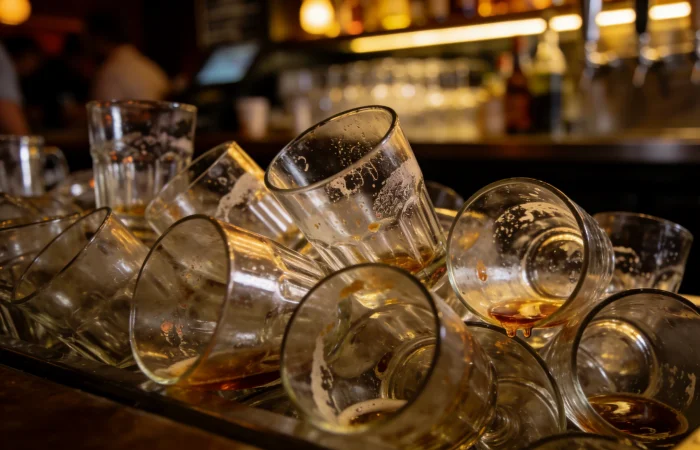
Conventional glass rinsers typically use a column-style water flow design, which struggles to fully cover the interior of the glass. As a result, areas such as the bottom and inner edges can easily become cleaning blind spots. These gaps make it difficult to achieve a thorough rinse in a single pass. For common residues such as beer foam, dairy traces, or syrup deposits, buildup tends to cling more stubbornly to the walls and base edges of the glass. If not properly removed, these residues may affect the taste and quality of the next beverage, and in hot and humid environments, they can also pose potential hygiene concerns.
More importantly, insufficient cleaning is not an isolated issue. When a single rinse fails to achieve the desired result, rework becomes almost inevitable—requiring staff to rinse the glass a second or even multiple times. While this may seem like just a few extra seconds, during peak hours these repeated actions quickly accumulate, significantly extending the processing time per glass and disrupting the overall service rhythm.
As drink output begins to slow, orders start to queue up, customer wait times increase, and service pressure builds. During peak periods, such delays can lead to customer loss, negative reviews, and even a direct impact on revenue. Ultimately, this creates a cascading effect that starts at the cleaning stage and spreads across the entire operation, making it difficult for the bar to keep up with order volume during busy hours.
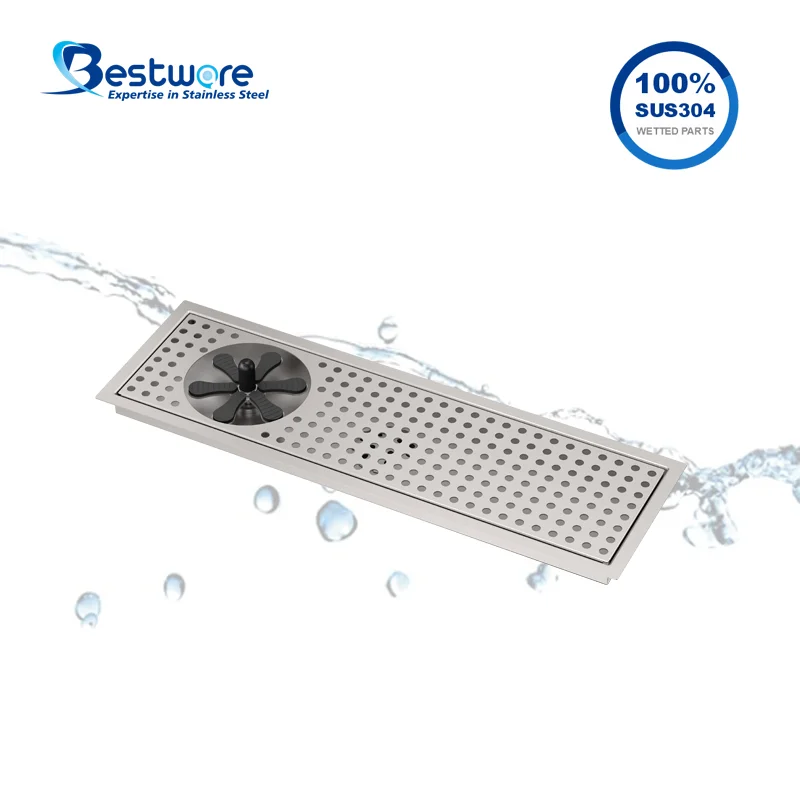
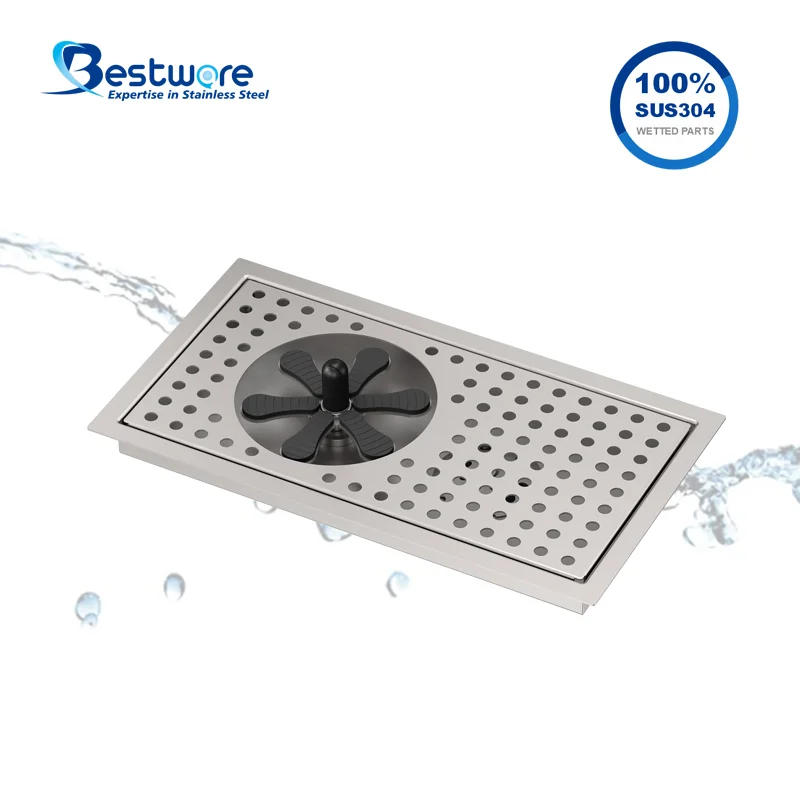
To address the cleaning blind spots caused by the limited coverage of conventional glass rinsers, Bestware glass rinser adopts a 180° blade-style water outlet combined with a 360° rotating rinsing design. This transforms the water flow from a single-direction spray into a fully dynamic, all-directional rotational rinse with no dead zones.
During operation, the water flow follows a continuous rotational path inside the glass, providing consistent coverage across the bottom, inner walls, and rim areas. This allows the water to form a more complete rinsing pattern within the glass, minimizing blind spots and achieving more comprehensive cleaning coverage.
By optimizing the rotational speed, the water flow maintains a more stable and continuous rinsing action upon contact with the surface. Compared to conventional instantaneous impact, this approach extends the contact time of the water on areas prone to residue buildup—such as the bottom, inner walls, and edges—thereby improving the removal efficiency of stubborn residues and ensuring a more thorough and effective clean.
This change in water flow design eliminates the need for repeated adjustments or multiple rinsing cycles. In high-frequency operating environments, most glassware can reach usable standards after a single rinse, reducing rework and allowing glasses to return to the service flow more quickly, ultimately improving overall service efficiency.
In high-frequency operating environments, differences in glass rinsing efficiency are continuously amplified, ultimately manifesting in both service rhythm and overall operational performance.
Based on real bar workflow, which includes a continuous sequence of placing the glass, rinsing, and removing it:
• Bestware glass rinser: approximately 3 seconds per glass
• Conventional glass rinsers: approximately 4–5 seconds per glass
In one hour of continuous, high-frequency operation:
• Bestware glass rinser: approximately 1,200 glasses rinsed
• Conventional glass rinsers: approximately 720–900 glasses rinsed
During peak hours, this efficiency gap becomes increasingly amplified. With its faster rinsing performance, Bestware enables smoother glass turnover, helping bars maintain a consistent service pace and better handle peak-order demand.
Bestware glass rinsers first optimize internal bar workflows. With more efficient and consistent cleaning performance, they reduce the need for repeated rinsing, allowing staff to focus more on drink preparation and customer service. During peak hours, this translates into the ability to handle more orders within the same timeframe, resulting in smoother operations and improved overall efficiency.
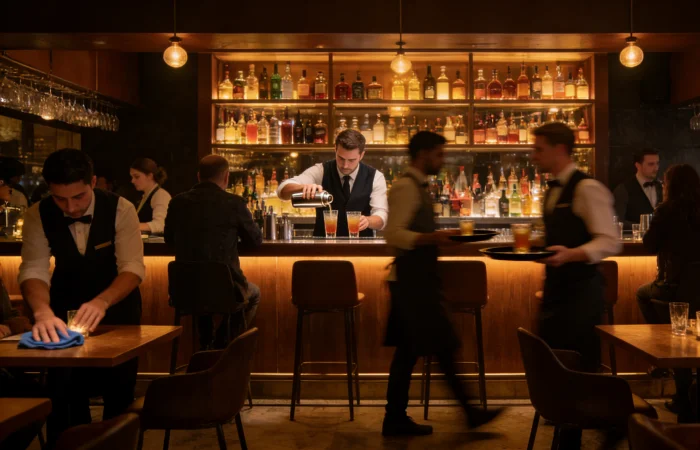
As internal efficiency improves, glass turnover accelerates and service flow becomes more streamlined. In food and beverage environments, shorter wait times have a direct impact on customer experience. A smoother service process not only reduces delays but also reinforces a perception of speed and professionalism, leading to higher customer satisfaction and increased repeat business.

With a more stable service rhythm, glassware enters the workflow under consistent cleaning standards, improving product consistency. This helps prevent flavor transfer and ensures the intended taste of each beverage. At the same time, it reinforces a more professional bar image. For brands, this consistency translates into reliable product quality and a cohesive service experience, building customer trust through attention to detail.

Through its blade-style rotational water flow design and optimized rotational speed, Bestware glass rinsers reduce the need for repeated cleaning cycles while ensuring consistent results, minimizing hidden time and labor costs. In high-frequency operating environments, this improvement not only enhances glass turnover but also helps maintain a more stable and controlled service flow.
What Bestware delivers goes beyond a more efficient rinsing method—it drives a coordinated improvement in bar efficiency, service speed, and overall operational performance.
2025/10/15 0:00:00
One-stop Solution Provider of Stainless Steel Commercial Faucets
Email: business@bestware-stainless.com
after-sales@bestware-stainless.com
Tel: +86 18929047065
WhatsApp: +86 18929047065


WeChat: +86 18929047065


Website: www.bestware-stainless.com(Global Site)
www.bestware-sparkling.com(Water Dispenser)
Add: Block 8, No. 6, Jianda Nan Road, Jiangmen, Guangdong, China
Copyright © Bestware Hardware Production Co., Ltd. All Rights Reserved.
(2).webp)
(1).webp)