Date: 2026-09-17
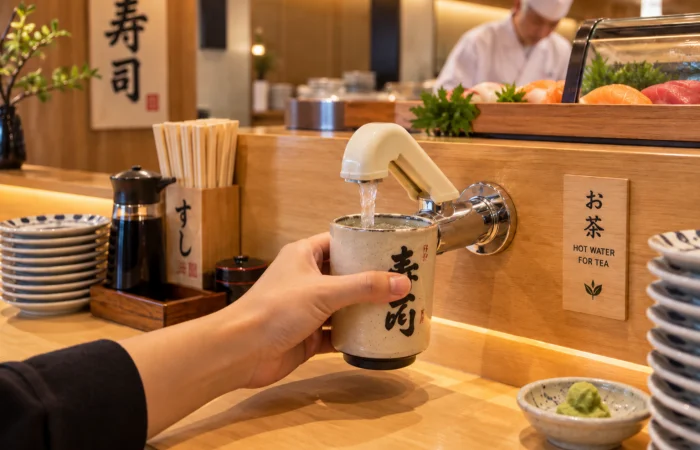
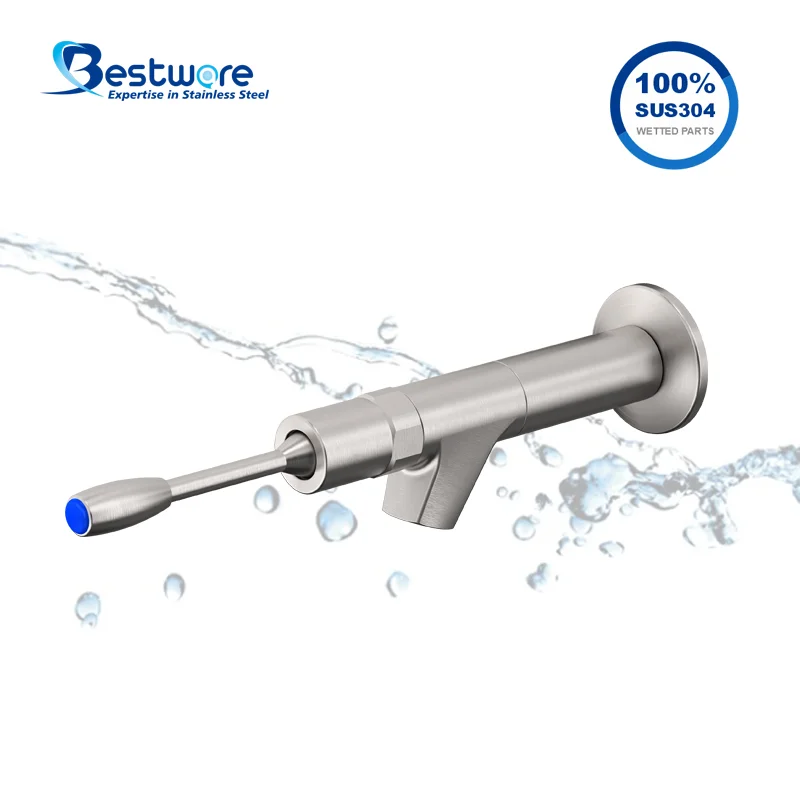
Cup-activated designs have long been common in sushi restaurants using deck-mounted hot water faucets. They are simple to operate: users do not need to operate a separate handle and can dispense water simply by holding the cup. However, when the faucet supplies hot water, the activation method cannot be judged by convenience alone. In this type of design, the cup is not only used to collect water but also needs to contact the faucet to activate the water flow. Moving the cup closer, pushing the activation component, or moving it away can all affect the water flow. This raises a question worth reconsidering: if the cup needs to contact the faucet to start the water, is there a better activation method when the cup itself is made of glass or ceramic and is being filled with hot water? This is exactly the question that needs to be considered when moving from a cup-activated design to a press-and-rotate activation method for sushi faucets.
There is a reason why cup-activated designs have remained common in sushi restaurants. Their biggest advantage is that they combine what would otherwise be two separate actions into one.
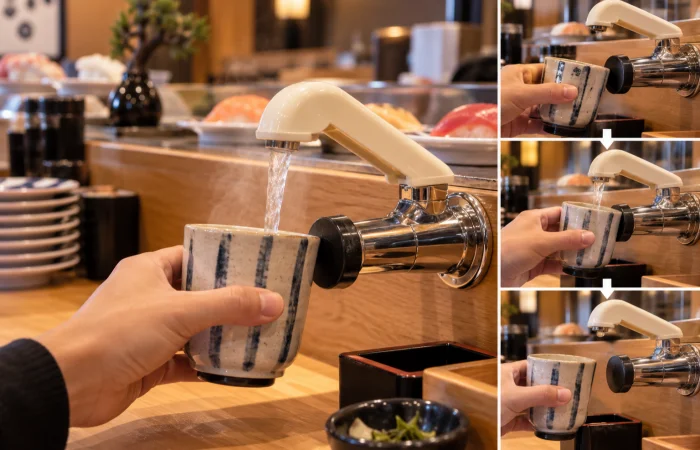
The user places the cup under the spout while pushing the activation component forward, and the water starts flowing. Once the cup is filled, moving it away stops the water. There is no need to look for a handle or perform a separate on/off operation. For foodservice environments where water needs to be dispensed frequently, this approach is indeed simple and straightforward. Users do not even need to learn a specific faucet operation; they only need to know where to place the cup and which direction to move it.
Another advantage of a cup-activated design is that the same hand holding the cup can also activate the faucet. This is particularly convenient when water needs to be dispensed quickly. Moving the cup, starting the water, and filling the cup can all happen in one continuous motion, without a noticeable interruption between the steps. So, in terms of convenience, cup activation does offer clear advantages.
The real question is: how is this convenience achieved?
The answer is that the cup directly participates in activating the faucet.
And that is precisely where further consideration is needed.
A cup-activated design does not mean that simply touching the faucet with a cup will necessarily cause a problem. The key point is that there is a direct connection between the cup and water activation. This may be less noticeable in ordinary drinking-water applications, but in the hot-water environment of a sushi restaurant, the cup material, frequency of use, and water temperature all become factors worth considering.
A cup-activated design requires the cup to push the faucet's activation component. If glass or ceramic cups are used, the cups repeatedly come into contact with hard metal components. A single contact would not normally cause any obvious effect, but commercial foodservice environments involve frequent and repeated use. Therefore, from a product design perspective, if the cup is only needed to collect water and does not need to activate the water flow, reducing this unnecessary mechanical contact is itself a design direction worth considering.
Hot water makes the activation method even more important. When the cup pushes the activation component, the water starts flowing at the same time. If the user adjusts the position of the cup during activation or moves it away after filling, the movement of the cup may occur while water is still flowing. With hot water, this involves not only contact between the cup and the faucet but also the possibility of splashing as the water flow changes. Therefore, in hot-water applications, one question worth considering is whether the action of positioning the cup and the action of activating the water really need to be combined into the same movement.
The discussion above is not intended to suggest that cup-activated designs cannot be used. Instead, it is intended to clarify what a new design should address. If the cup is no longer responsible for activating the water flow, at least two conditions need to be met.
The cup should only be responsible for collecting water. The user can first place the cup in the appropriate position and then activate the water flow through the faucet itself. This means the cup no longer needs to push a metal activation component to start the water. It can reduce unnecessary direct contact between the cup and the activation component while also separating the cup's position from the activation action.
A new activation method also needs to make one thing clear: what action means, "I want the water to start flowing"? If moving the cup no longer serves this function, the user should actively operate the faucet to start the water. In this way, placing the cup simply prepares it to receive water, while actively operating the control component is what starts the water flow.
If a clear active operation is required, then what type of operation can remain easy to use while being less likely to activate the water through simple contact?
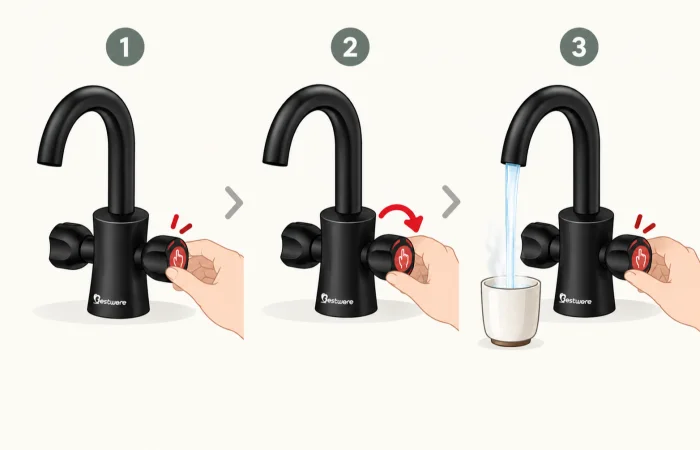
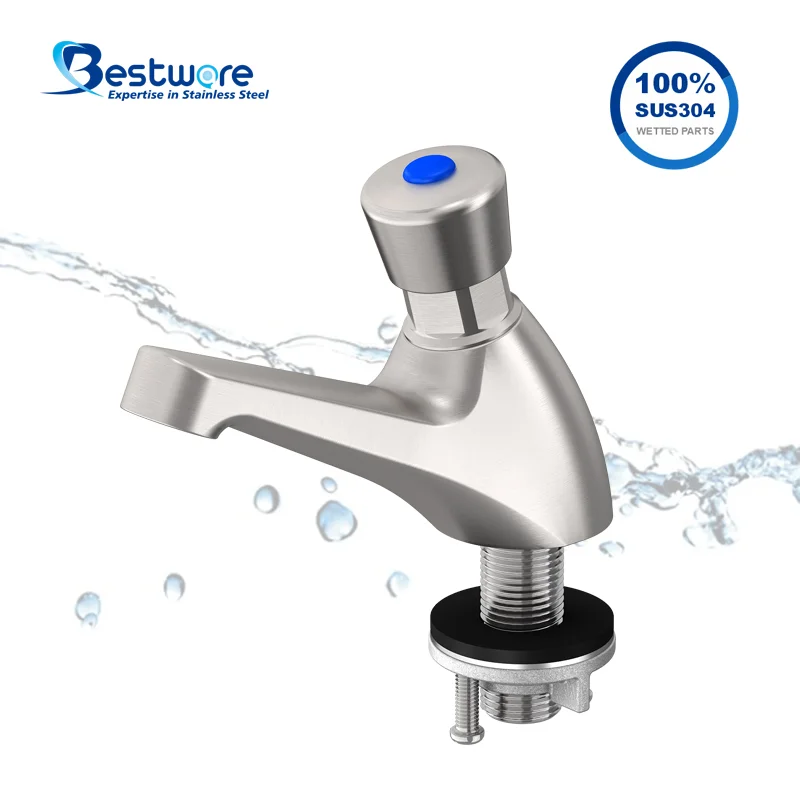
During use, the user needs to actively press and rotate the control component before the water starts flowing; when the operation stops, the water flow stops. Compared with cup activation, the biggest change is not simply adding another step, but changing the condition required to start the water. Placing the cup in position only means that the user is ready to collect water. Pressing and rotating the control component is what indicates that the user actively wants the water to flow.
If activation required only a single pressing action, the activation condition would be relatively simple, and pressure applied to the control component could trigger the mechanism. Pressing and rotating, however, requires two consecutive actions to be completed together. This can reduce the possibility of activation caused by simple contact or accidental pressure, making the activation action more deliberate.
This design is not intended to make operation more complicated. Instead, it uses a clear active operation to separate water collection from water activation. Compared with cup activation, press-and-rotate requires one additional action, but it also reduces the need for the cup to participate in activation, allowing the user to have clearer control over when the water starts flowing.
When the activation method changes from cup activation to press and rotate, the new activation structure needs not only to make the water-starting action more deliberate but also to withstand frequent, long-term operation in commercial environments.
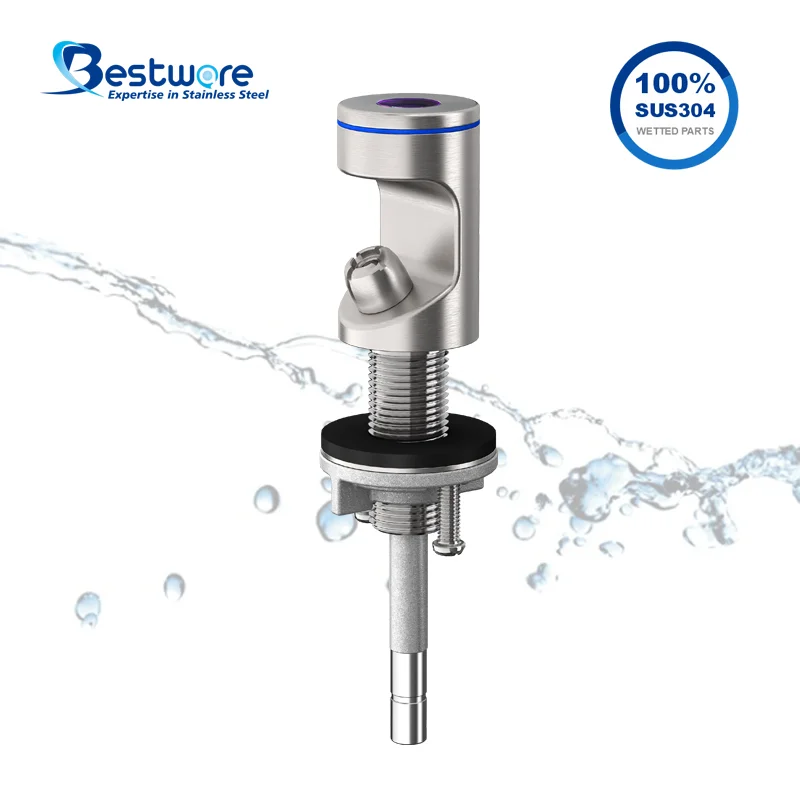
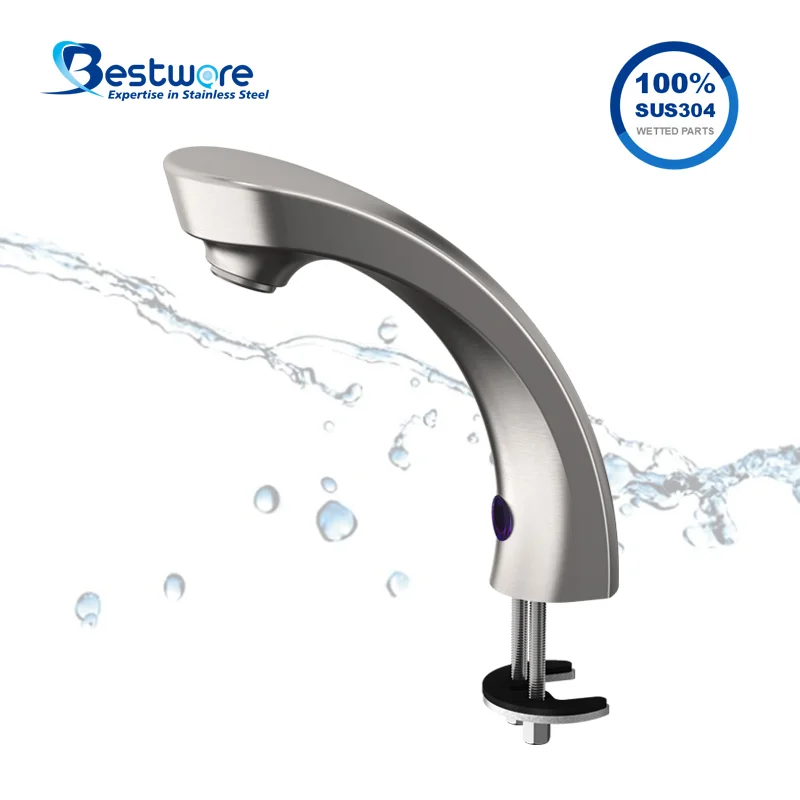
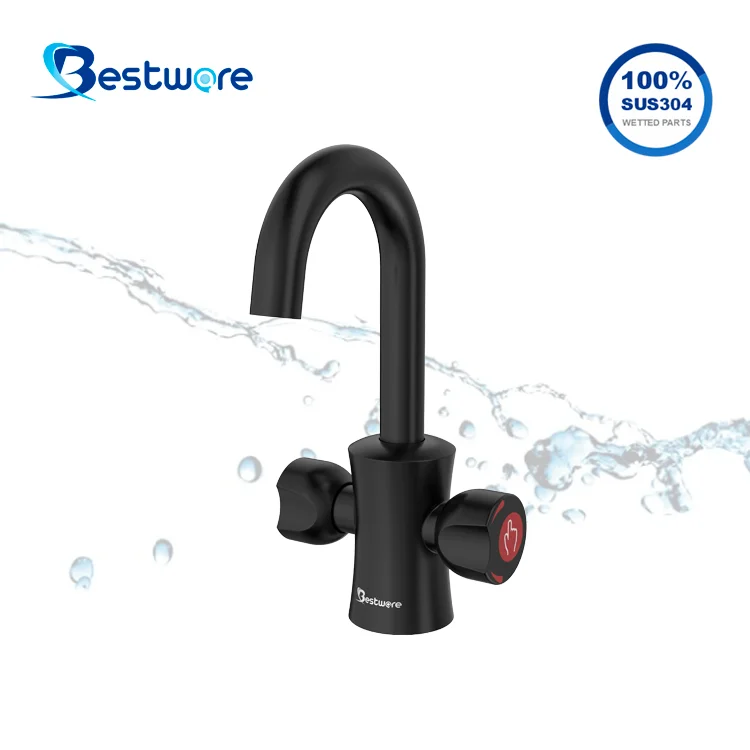
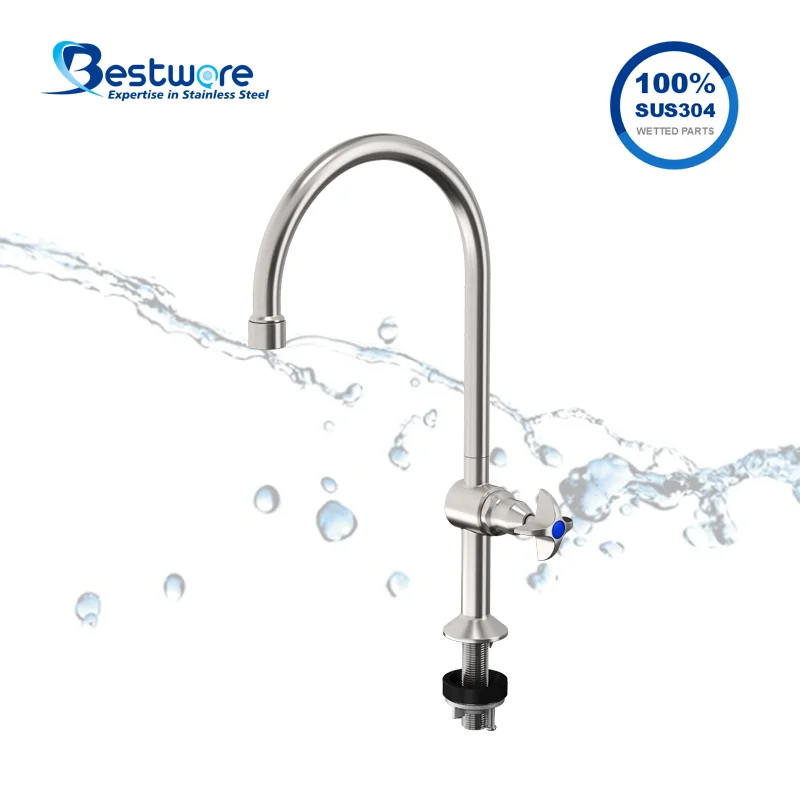
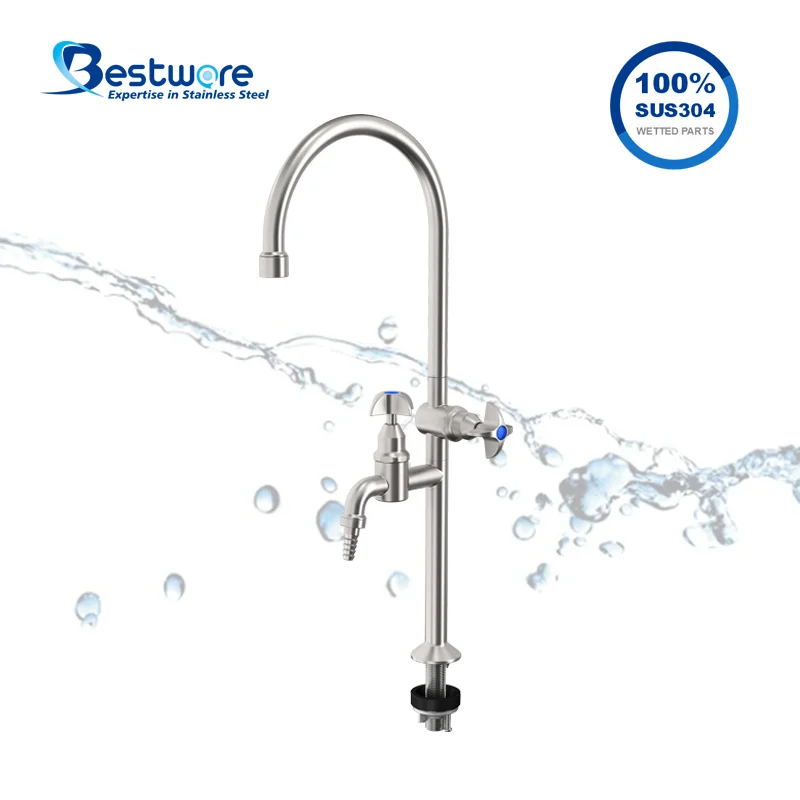
Bestware sushi faucets use a press-and-rotate structure that separates cup placement from activation: the user first places the cup and then actively presses and rotates the control component to start the water. This reduces the need for the cup to participate in activation while making the action of starting hot water more deliberate, reducing the possibility of unintended water flow caused by simple contact with or movement of the cup.
To make this activation method suitable for frequent use in commercial environments, Bestware commercial sushi faucets are made of food-grade SUS304 stainless steel and equipped with SUS304 stainless steel valve cores, which have undergone more than 200,000 operation cycles. A check valve structure is also incorporated to reduce the impact of backflow on the internal faucet components and water supply system.
Therefore, press and rotate changes more than just the on/off action. The valve core, control structure, and internal waterway also need to be compatible with this activation method to withstand long-term use in commercial environments.
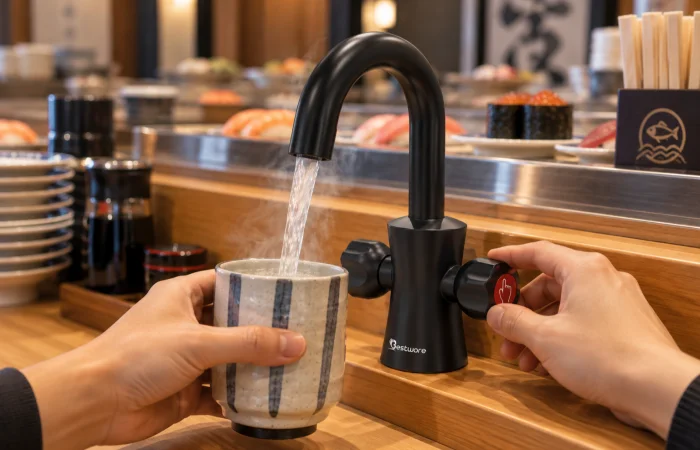
The activation method of a sushi faucet may seem like a small structural change, but it directly affects the relationship between the cup, the user, and the water flow. Cup activation combines water collection and activation into one action, providing clear convenience, but the repeated contact between the cup and activation component, as well as the simultaneous movement of the cup and water flow, deserves further consideration when glass or ceramic cups are used with hot water. Press and rotate separates these two functions again: the cup collects the water, while the user actively controls the water flow. Bestware adopts this structure and combines it with the corresponding valve core and internal design, making the activation process more deliberate while also supporting long-term, high-frequency use in commercial environments.
One-stop Solution Provider of Stainless Steel Commercial Faucets
Email: business@bestware-stainless.com
after-sales@bestware-stainless.com
Tel: +86 18929047065
WhatsApp: +86 18929047065


WeChat: +86 18929047065


Website: www.bestware-stainless.com(Global Site)
www.bestware-sparkling.com(Water Dispenser)
Add: Block 8, No. 6, Jianda Nan Road, Jiangmen, Guangdong, China
Copyright © Bestware Hardware Production Co., Ltd. All Rights Reserved.
(2).webp)
(1).webp)