Date: 2026-11-09
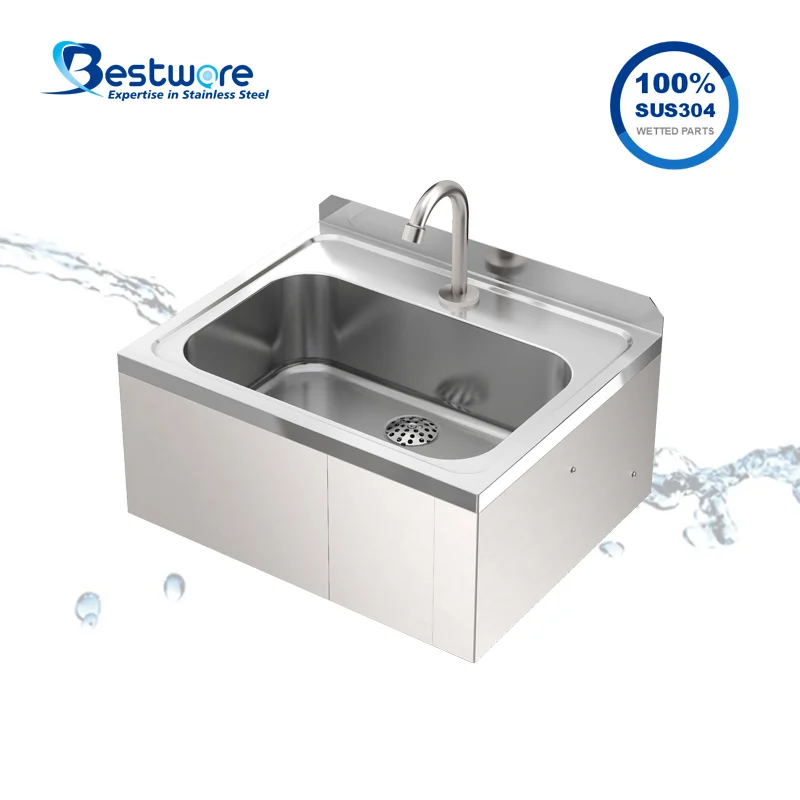
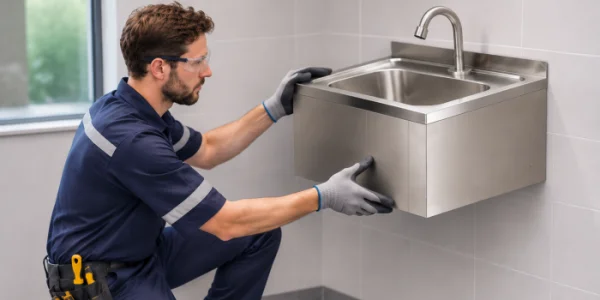
Knee operated wash sinks are commonly used in commercial kitchens, food processing areas, public hygiene facilities, and other environments where frequent handwashing is required. Compared with conventional handwashing fixtures, they have specific operating and installation requirements. Focusing only on product dimensions and materials while overlooking available space, wall construction, water supply, and drainage conditions can lead to installation difficulties and affect daily operation. Therefore, a thorough site assessment should be carried out before procurement and installation to ensure that the equipment can be properly fitted and meets the needs of its intended environment.
Before checking the specific installation conditions, it is important to understand how and where the wash sink will be used. Different environments have different traffic levels, usage frequencies, and space layouts, all of which influence where the equipment should be installed.
Knee operated wash sinks are generally installed in areas where frequent handwashing is required, such as entrances to food preparation areas, near kitchen prep stations, designated handwashing points in employee restrooms, or within production facilities.
When selecting an installation location, two key factors should be considered.
First, accessibility. The wash sink should be located close to the work area or along the usual staff circulation route, allowing employees to wash their hands without taking unnecessary detours. In food processing facilities, its location should also align with the separation of raw material handling, processing, and cleaning areas.
Second, workflow efficiency. Avoid installing the wash sink in main passageways, equipment operating zones, or material transport routes. Otherwise, employees using the sink may obstruct traffic and interfere with other operations.
Once the installation location has been selected, consider how many people will use the equipment and how frequently it will be used throughout the day.
A single wash sink may be sufficient for a small restaurant kitchen. However, in large food processing facilities or busy public areas, peak-time usage should be evaluated. Additional units or multiple handwashing stations may be necessary to accommodate demand.
This assessment affects not only the quantity of equipment required but also the planning of installation locations, water supply lines, and available operating space.
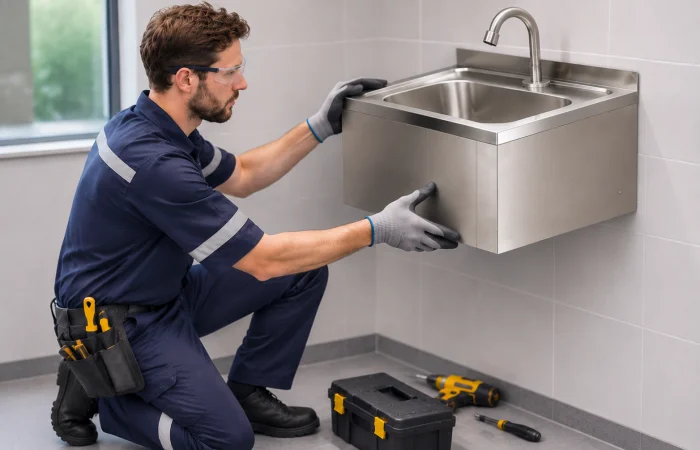
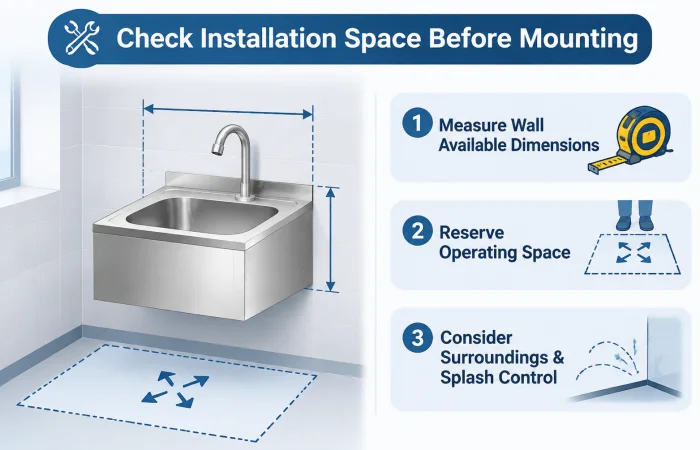
After determining the installation location, the next step is to measure the available space. Knee operated wash sinks are typically wall-mounted, so it is important to consider more than just the width and height of the unit. Sufficient space must also be provided for operation and maintenance.
Before installation, check the following dimensions against the product drawings:
· Installation width: Ensure that the wall has enough space to accommodate the wash sink without interfering with adjacent equipment, cabinets, or pipes.
· Installation height: Determine the mounting height based on the product design, intended users, and operating habits, allowing users to reach the knee-operated panel comfortably.
· Installation depth: Check how far the wash sink will extend from the wall. It should not take up excessive passageway space, while still allowing users enough room to stand and operate it comfortably.
Installation dimensions should not be determined solely by on-site experience. Different Knee Operated Wash Sink models may have different overall dimensions, mounting hole positions, and control panel locations. Always refer to the installation drawings for the specific model.
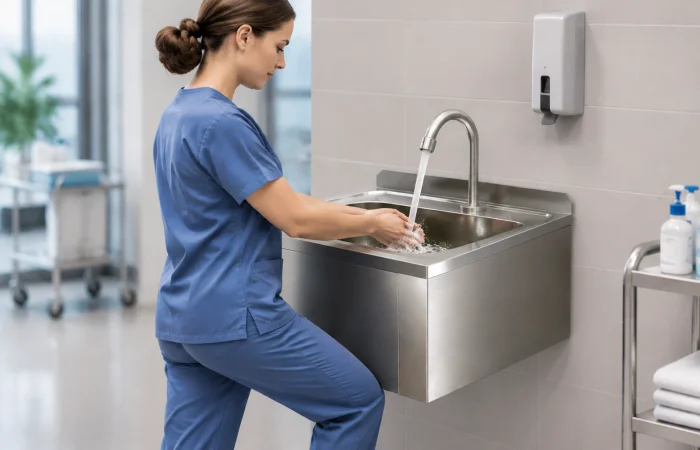
Since a Knee Operated Wash Sink is activated by pressing a control panel with the knee, sufficient standing and operating space must be left in front of the unit.
If the installation area is too narrow, users may not be able to stand naturally or position their knees comfortably against the operating panel. In high-traffic environments, also consider whether consecutive users may interfere with nearby equipment or people passing through the area.
Avoid placing waste bins, cleaning tools, or other obstructions near the wash sink, as these can restrict access and interfere with normal operation.
A wash sink may produce water splashes during use, so the surrounding walls, floors, and equipment should be assessed before installation.
For example, if the proposed location is close to electrical equipment, power outlets, or materials that are not suitable for prolonged exposure to moisture, reconsider the installation position or provide appropriate waterproofing measures.
For installations in busy passageways, also consider the risk of water accumulating on the floor. Excessive splashing may create slippery surfaces and increase the risk of accidents.
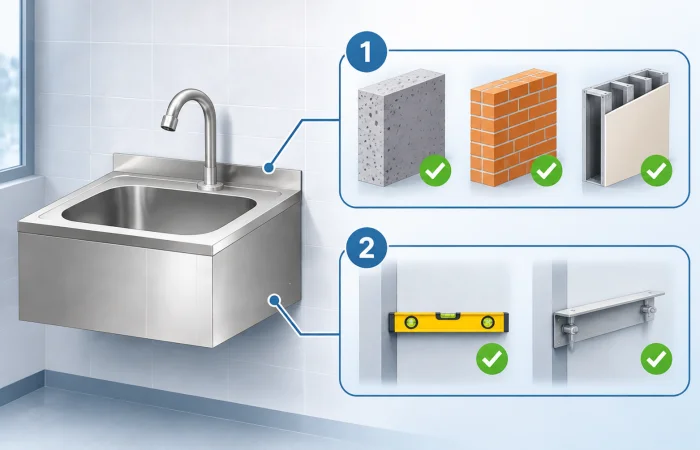
Knee Operated Wash Sinks are generally secured to a wall. The strength and stability of the wall directly affect how securely the unit can be mounted.
Different wall constructions have different load-bearing capacities and mounting requirements. Identify the wall type at the proposed installation location before proceeding.
|
Wall Type |
Installation Considerations |
|
Concrete wall |
Generally provides a solid mounting base. However, check the wall condition, mounting hole positions, and suitability of the selected expansion anchors |
|
Solid brick wall |
Check the condition of the bricks and mortar, and select an appropriate fixing method |
|
Hollow brick wall |
Do not assume that the same fixing method used for solid walls will be suitable. An appropriate anchoring solution should be assessed |
|
Metal stud or board partition wall |
Check the location and load-bearing capacity of the internal studs. Additional reinforcement may be required |
If the wall cannot provide reliable support, the equipment should not be mounted directly onto it. For lightweight partition walls or walls with uncertain load-bearing capacity, the installation team should assess the structure in advance and determine whether reinforcement is needed based on the equipment weight, usage conditions, and wall construction.
In addition to load-bearing capacity, wall flatness can affect the installation result. If the mounting surface is noticeably uneven, tilted, or locally damaged, the wash sink may not sit properly against the wall, making installation and alignment more difficult.
Before installation, check that the wall is flat and structurally sound, and ensure that the mounting holes align with the product's fixing points. For projects requiring concealed pipework or embedded mounting components, the product drawings should be checked during the wall construction stage to avoid additional drilling or modifications later.
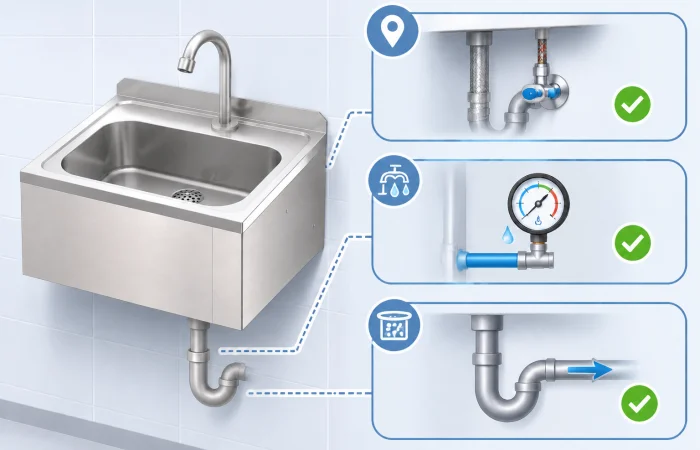
After checking the available space and wall structure, the site's plumbing conditions must also be assessed. Compatible water supply and drainage connections are essential for the wash sink to function properly.
First, confirm that the position of the water supply connection matches the product's water inlet. If the pre-installed supply pipe is too far from the unit's inlet, additional connecting pipework may be required. If the connection is obstructed by the wall or nearby equipment, installation and future maintenance may also become more difficult. Before installation, refer to the product drawings to confirm the direction, height, and position of the water inlet. Make sure there is sufficient space for connecting the pipework.
Water pressure directly affects the flow performance of the wash sink. Insufficient pressure may result in weak water flow, while unstable pressure can affect consistent operation. It is recommended to measure the actual water pressure on site before installation and compare it with the product's technical specifications. The supply line should also be capable of providing a stable water supply that meets the equipment requirements. If the site has fluctuating water pressure, insufficient supply, or blocked pipes, these issues should be addressed before the equipment is installed.
During installation, confirm that the wash sink's drain outlet can be properly connected to the existing drainage pipe.
Pay particular attention to the following:
· Whether the drain outlet position and direction match the equipment's design.
· Whether the drainage pipe has an appropriate slope to prevent standing water.
· Whether the pipe diameter and drainage capacity are sufficient for the intended usage.
· Whether the drain connection is accessible for maintenance and free from potential leakage issues.
If the existing drainage pipe is poorly positioned, its route may need to be adjusted. In areas with high handwashing demand, drainage capacity during peak periods should also be considered to prevent slow drainage or water accumulation.
In addition to checking the site's plumbing conditions, the required water flow mode should be determined during the procurement stage. Different modes have different operating mechanisms and can influence user habits and water management.
With instant flow mode, water starts flowing when the user presses the knee-operated panel and stops immediately when the panel is released. This mode allows users to control the water flow duration directly, making it suitable for environments where flexible water control is preferred.
With timed flow mode, pressing the operating panel activates the water flow, which automatically stops after a preset period. Some configurations allow the delay time to be adjusted within a specified range. This mode reduces the need for users to keep pressing the panel and can simplify the handwashing process.
It is important to note that instant flow and timed flow generally require different valve core configurations. The preferred mode should therefore be selected according to actual requirements during procurement, rather than assuming that all units can be freely switched between modes after installation.
When selecting a water flow mode, consider the following factors:
|
Consideration |
Instant Flow |
Timed Flow |
|
Water flow control |
Water flows while the panel is pressed and stops when released |
Water starts when activated and stops after the preset time |
|
Operation |
Requires continuous pressure on the panel |
No need to keep pressing after activation |
|
Usage requirements |
Suitable when users need flexible control over water flow duration |
Suitable when a simplified operating process is preferred |
|
Procurement checks |
Confirm the instant-flow valve core configuration |
Confirm the delay time and available adjustment range |
Before finalizing the configuration, also check the product's water inlet arrangement, connection specifications, and site water supply conditions to ensure compatibility with the existing plumbing system.
After completing the above assessments, carry out a final review before installation begins. For projects involving commercial kitchens or food processing areas, it is particularly important to complete these checks before wall finishes are applied or pipework is concealed.
The following checklist can help purchasing teams, project managers, and installation contractors coordinate the key requirements:
|
Inspection Item |
What to Confirm |
|
Usage requirements |
Installation location, number of users, and expected usage frequency |
|
Installation space |
Wall width, mounting height, equipment depth, and front operating clearance |
|
Wall conditions |
Wall type, load-bearing capacity, flatness, and fixing method |
|
Water supply |
Water inlet position, water pressure, and supply stability |
|
Drainage |
Drain outlet position, pipe diameter, slope, and drainage capacity |
|
Product configuration |
Instant or timed flow valve core, delay time, and connection specifications |
|
Future maintenance |
Accessibility of pipe connections, valve cores, and other components |
After installation, the unit should undergo an operational inspection. Check that it is securely mounted, the water supply connections are leak-free, drainage is unobstructed, the selected water flow mode works correctly, and the knee-operated panel functions smoothly. If necessary, perform several consecutive activation and shut-off tests to assess the unit's stability under normal operating conditions.

Installing a Knee Operated Wash Sink involves more than simply securing the unit to a wall. It requires careful consideration of the available space, wall structure, water supply and drainage connections, and product configuration. The more thoroughly these conditions are checked in advance, the easier it will be to coordinate the installation with the product's design and avoid unnecessary modifications or rework. For purchasing teams and project managers, it is advisable to obtain the product dimension drawings and installation requirements before placing an order, then review the key conditions with the on-site installation team. Only when the equipment configuration matches the site conditions can the Knee Operated Wash Sink perform as intended in daily operation.
One-stop Solution Provider of Stainless Steel Commercial Faucets
Email: business@bestware-stainless.com
after-sales@bestware-stainless.com
Tel: +86 18929047065
WhatsApp: +86 18929047065


WeChat: +86 18929047065


Website: www.bestware-stainless.com(Global Site)
www.bestware-sparkling.com(Water Dispenser)
Add: Block 8, No. 6, Jianda Nan Road, Jiangmen, Guangdong, China
Copyright © Bestware Hardware Production Co., Ltd. All Rights Reserved.