Date: 2026-03-10
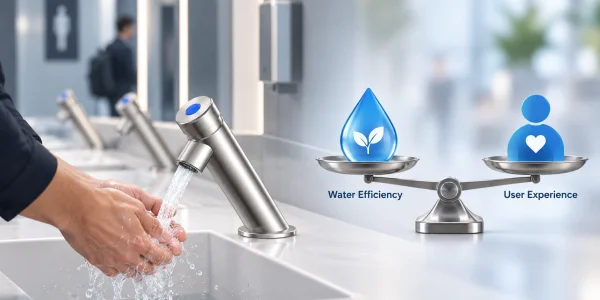
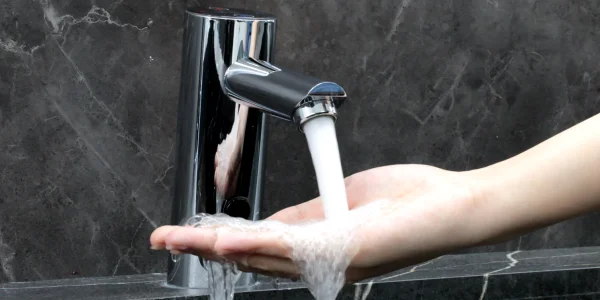
In many hotels and public restrooms, sensor faucets have long become a standard fixture. They are considered more convenient, hygienic, and comfortable, while also aligning with the design ethos of modern public spaces. Yet, many people have experienced frustrating situations:
• Placing hands under the sensor, but no water comes out immediately
• Waving hands several times before water finally flows, only for it to stop midway through washing
• Water suddenly turning scalding hot, forcing users to quickly withdraw their hands
Surprisingly, despite these frequent issues, most people have become accustomed to them, as if slow response and occasional malfunctions are an industry-standard expectation. But should this really be the case?
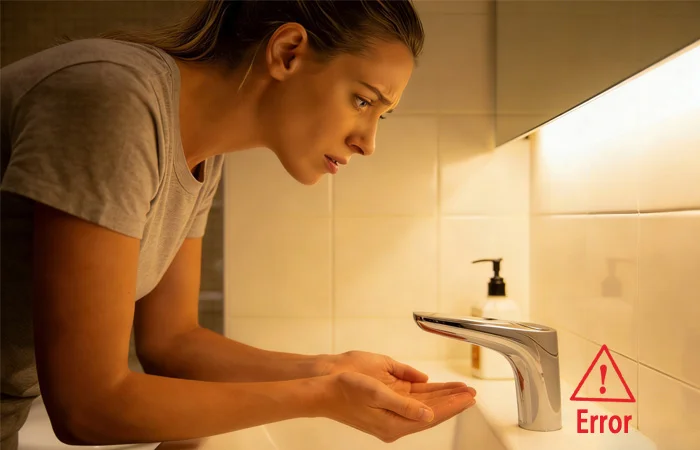
Many assume that such problems stem from aging devices or poor maintenance. In reality, the root cause often lies in technical limitations built into the product from the design stage. In real public-use scenarios, traditional sensor faucets commonly show three issues:
Conventional sensor faucets usually take time to detect user movement and start water flow.
In practice, this means:
• Hands are under the faucet, yet water does not start immediately
•Users must wave repeatedly to trigger the sensor
In high-traffic hotel environments, these delays noticeably degrade the user experience.
Many traditional sensor faucets only have basic mixing functions without precise temperature control.
Under varying usage conditions, users often experience:
• Water temperature fluctuating unpredictably
• Slow temperature adjustment response
• Need to constantly readjust to maintain comfort
In hotels and public spaces, this affects comfort and may even pose a scalding risk.
Traditional infrared sensor systems can be affected by multiple environmental factors, including:
• Strong or reflective lighting
• Residual water droplets
• Multiple users at once
• Nearby devices emitting electromagnetic interference
This can result in:
• False triggers
• Delayed detection
• Sudden water stoppage
When these issues accumulate, the common perception arises: sensor faucet malfunctions are "normal."
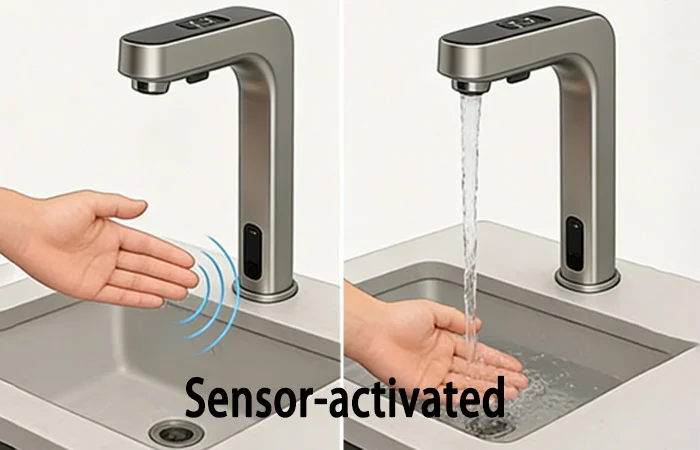
As hotels and premium commercial spaces increasingly demand superior user experiences, the technical standards for sensor faucets are rising. A truly high-quality sensor system does more than just detect hands—it maintains long-term stability in high-traffic and complex environments. Key performance indicators include:
Advanced sensor systems detect hand movements almost instantly, ensuring water flow triggers without repeated gestures or noticeable delay.
Precision temperature technology maintains water within a defined range, preventing sudden fluctuations. This enhances user comfort in hotel and public restrooms and effectively reduces scalding risk.
Upgraded sensors minimize the impact of light, water droplets, and environmental changes. Even in high-traffic environments, water flow remains stable and reliable.

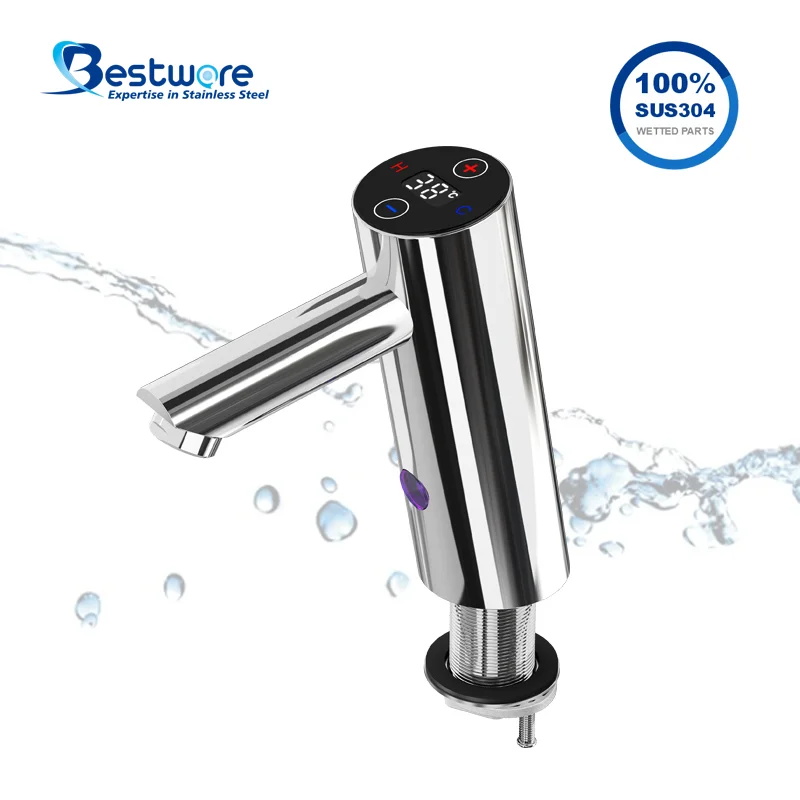
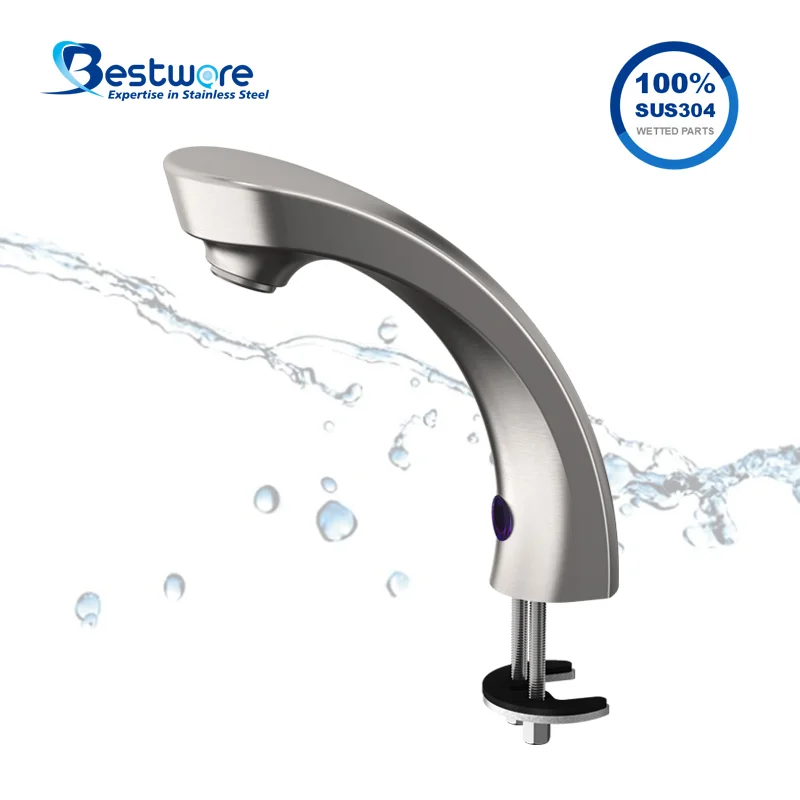
In the field of sensor faucets, BESTWARE has consistently focused on solving persistent pain points of traditional designs. Through continuous technical optimization, BESTWARE has achieved significant improvements in three key areas:
Highly sensitive with an activation speed of just 0.2 seconds, eliminating the need for repeated hand gestures.
Intelligent temperature adjustment (35°C–45°C) with ±1°C deviation. If the faucet remains unused for 30 seconds, the system automatically returns to 38°C—the optimal comfortable temperature for humans—ensuring both comfort and safety.
Built-in 10V/m anti-interference technology, significantly stronger than the 3V/m commonly found on the market, ensuring stable sensing performance in complex environments.
These enhancements may seem subtle but dramatically improve real-world user experience. Users no longer need to wave repeatedly or worry about sudden temperature changes. Only then can a sensor faucet fulfill its intended purpose: making handwashing natural, hygienic, and comfortable.
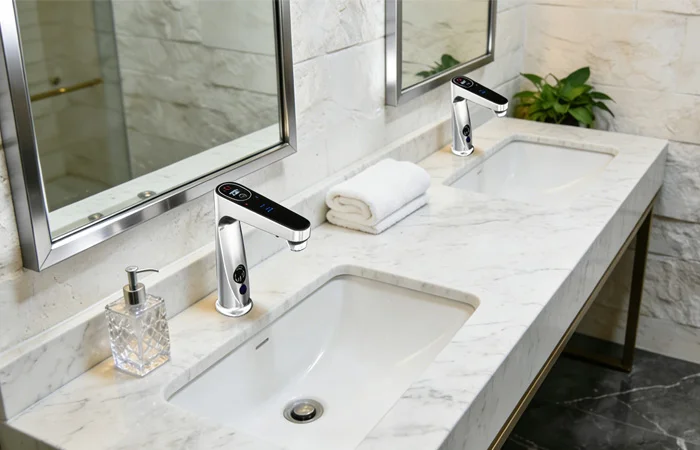
For too long, users have tolerated the common shortcomings of sensor faucets—slow response, intermittent water flow, and unpredictable temperature. These so-called “norms” should never have been accepted.
A truly excellent sensor faucet doesn't require repeated gestures, nor does it suddenly fail or fluctuate in temperature during use. It delivers fast response, consistent temperature, and stable water flow, even in high-traffic environments. When this level of stability becomes the industry standard, people will realize that what they previously "tolerated" was not good design, but avoidable problems.
True smart sensing isn't about occasional responsiveness—it's about reliable performance every time. This is exactly the direction in which the new generation of intelligent sensor faucets is advancing.
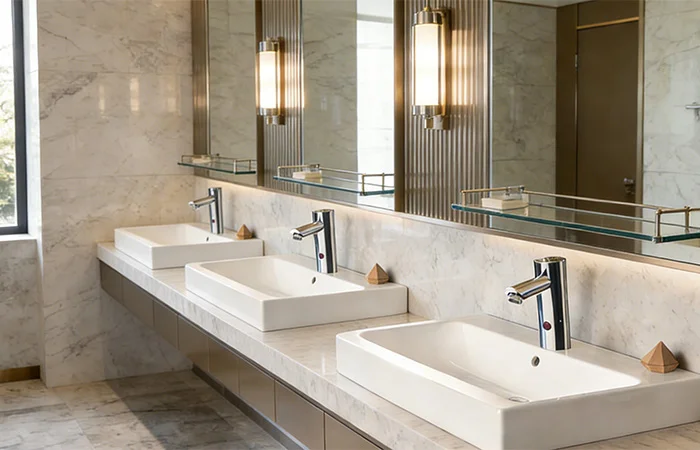
2025/12/30 0:00:00
One-stop Solution Provider of Stainless Steel Commercial Faucets
Email: business@bestware-stainless.com
after-sales@bestware-stainless.com
Tel: +86 18929047065
WhatsApp: +86 18929047065


WeChat: +86 18929047065


Website: www.bestware-stainless.com(Global Site)
www.bestware-sparkling.com(Water Dispenser)
Add: Block 8, No. 6, Jianda Nan Road, Jiangmen, Guangdong, China
Copyright © Bestware Hardware Production Co., Ltd. All Rights Reserved.
(2).webp)
(1).webp)