Date: 2026-07-31
In restaurants, hotels, central kitchens, cafeterias, and various food processing facilities, manual faucets are one of the most frequently used basic fixtures every day. Compared with residential kitchens, commercial kitchens face more complex requirements, including cleaning large cookware, food preparation, tableware rinsing, frequent operation, and long hours of continuous use. Therefore, choosing a suitable commercial manual faucet is not simply about providing water. Different kitchen layouts, cleaning tasks, and operating habits require different faucet designs. For example, large cookware cleaning requires greater clearance and longer spout reach; daily sink operations focus more on flexibility and convenience; while special applications require ergonomic handle designs. So, how can you choose the right commercial manual faucet based on actual usage requirements?
Different commercial kitchens have different cleaning requirements. Therefore, choosing the right faucet structure according to specific tasks can significantly improve working efficiency and user experience.
In hotel kitchens, restaurant back kitchens, and central kitchens, cleaning large cookware is a frequent and demanding task.
Due to the large size of commercial cookware, traditional low-profile faucets may have limited operating space. Staff often need to constantly adjust the position of cookware during cleaning, which reduces efficiency.
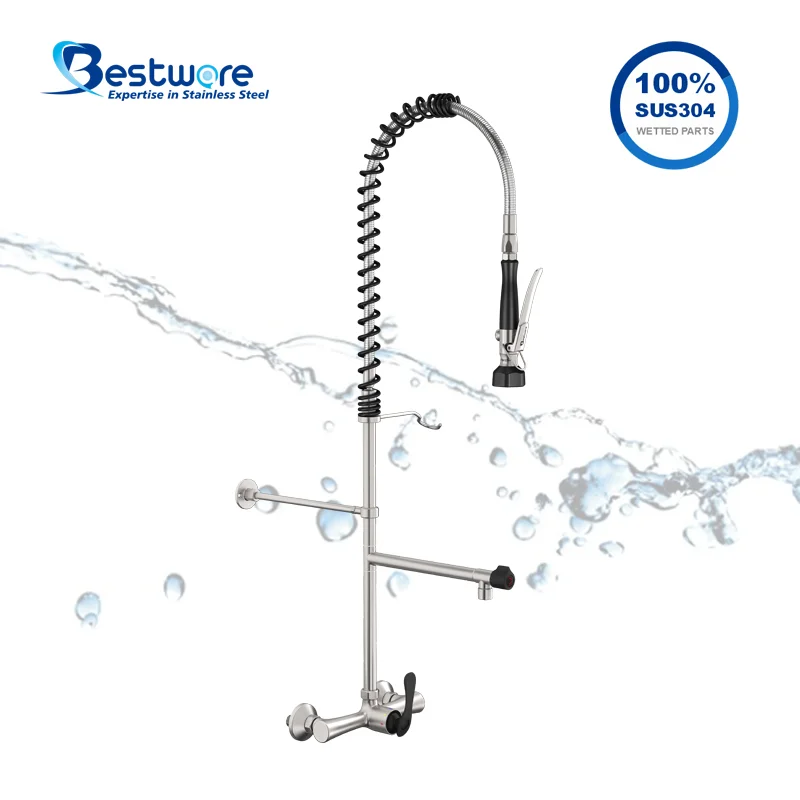
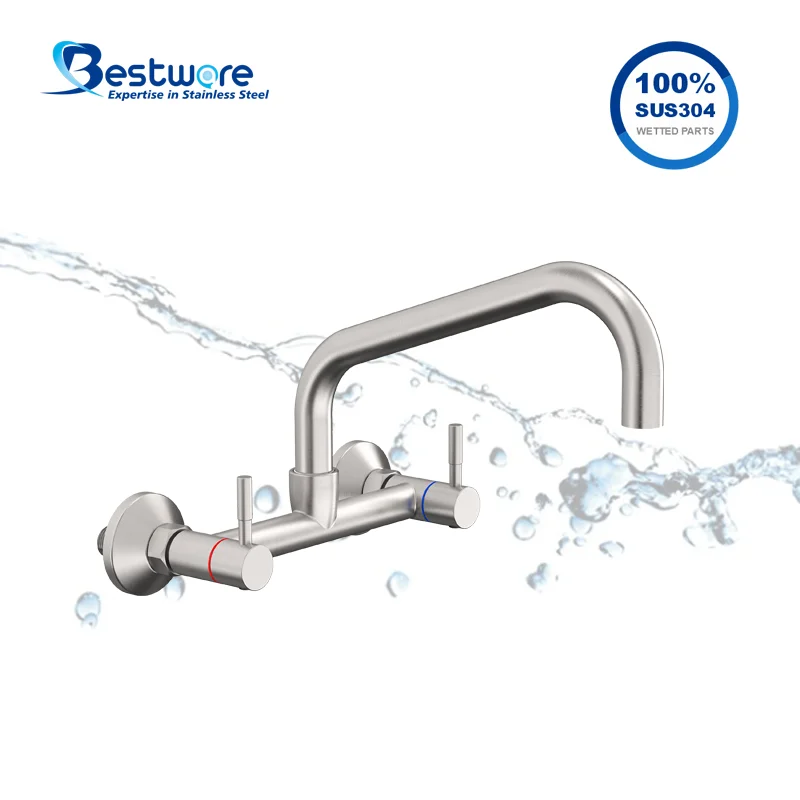
Wall-mounted pot filler faucets are designed to better meet these application requirements.
Wider Cleaning Coverage
The wall-mounted installation design helps free up sink countertop space. Combined with a longer spout design, it provides a larger cleaning coverage area.
Better for Large Container Cleaning
The higher installation position and flexible water outlet angle allow users to easily rinse:
· Large cooking pots
· Storage containers
· Food processing containers
For commercial kitchens that handle large amounts of cookware every day, a wall-mounted design can effectively improve cleaning efficiency.
For most food service kitchens, daily cleaning tasks account for the majority of operations, including:
· Washing fruits and vegetables
· Rinsing tableware
· Cleaning work surfaces
· Filling containers
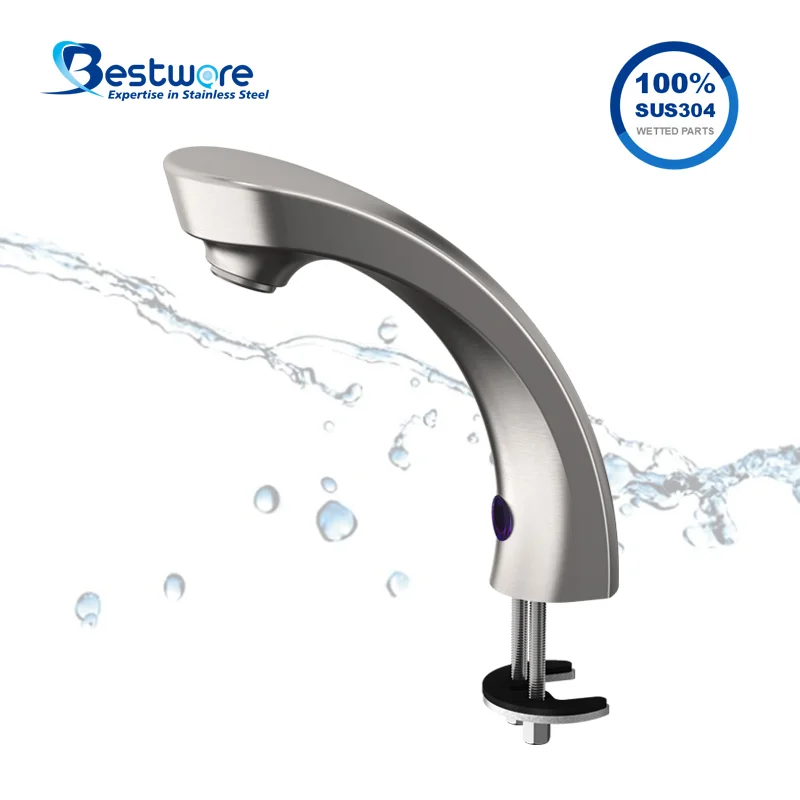
These applications usually require a C-spout faucet that offers flexible operation and reliable performance.
With years of market application, C-spout designs have become one of the most widely used faucet structures in commercial kitchens.
Classic Design for Various Kitchen Layouts
The C-shaped spout provides a comfortable operating height while maintaining a compact design, making it suitable for commercial sinks of different sizes. Whether used in restaurant kitchens, small cafés, or school cafeterias, C-spout faucets can effectively meet daily cleaning needs.
Proper Spout Reach Reduces Operation Restrictions
A well-designed spout reach can cover the main sink area, allowing operators to clean and fill containers without frequently repositioning them, improving overall working efficiency.
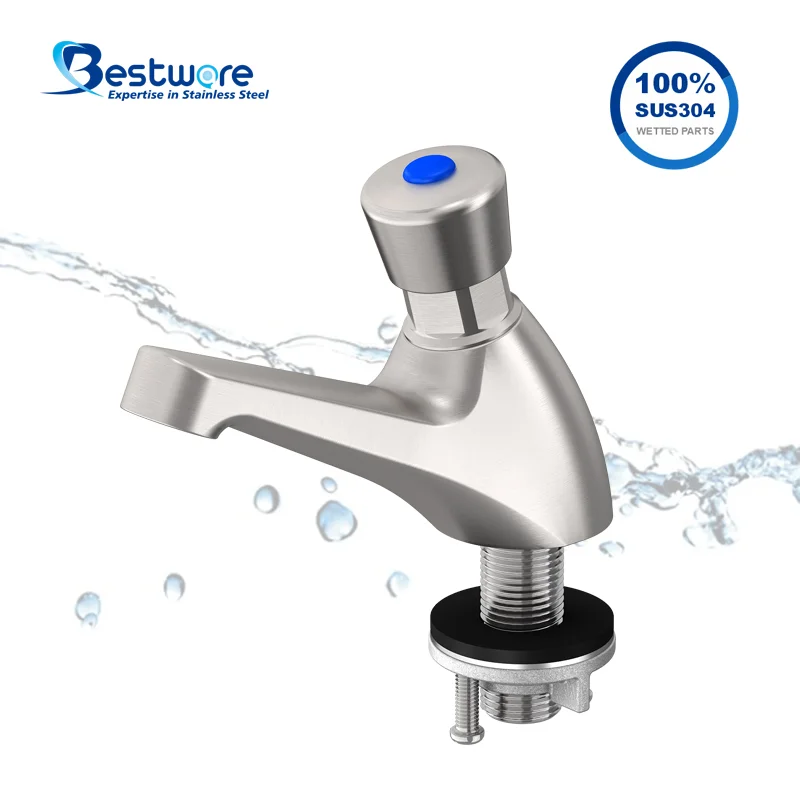
Meanwhile, Bestware offers various manual faucet designs to match different sink sizes and installation environments.
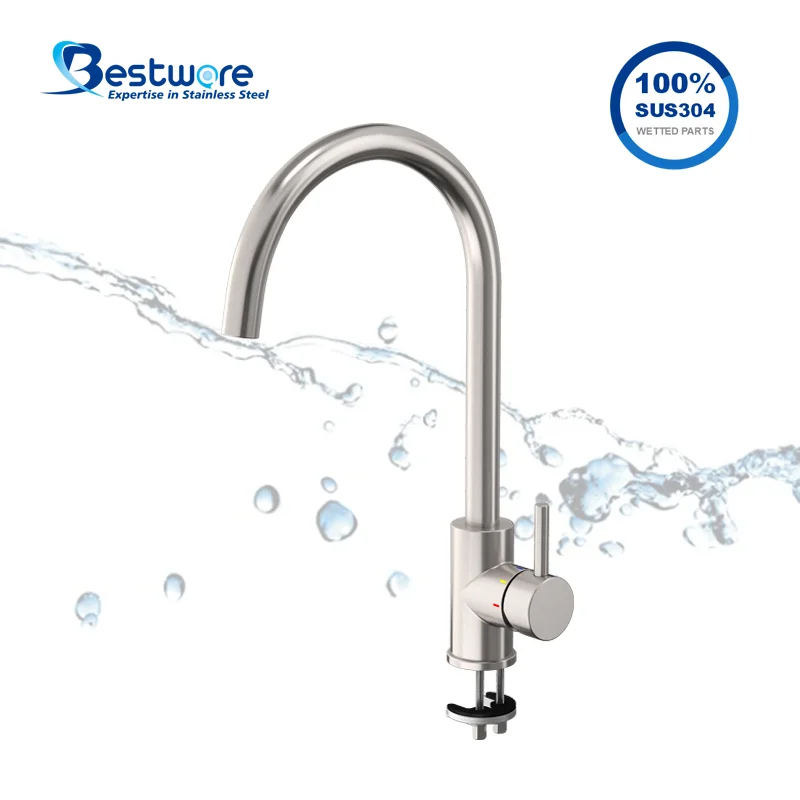
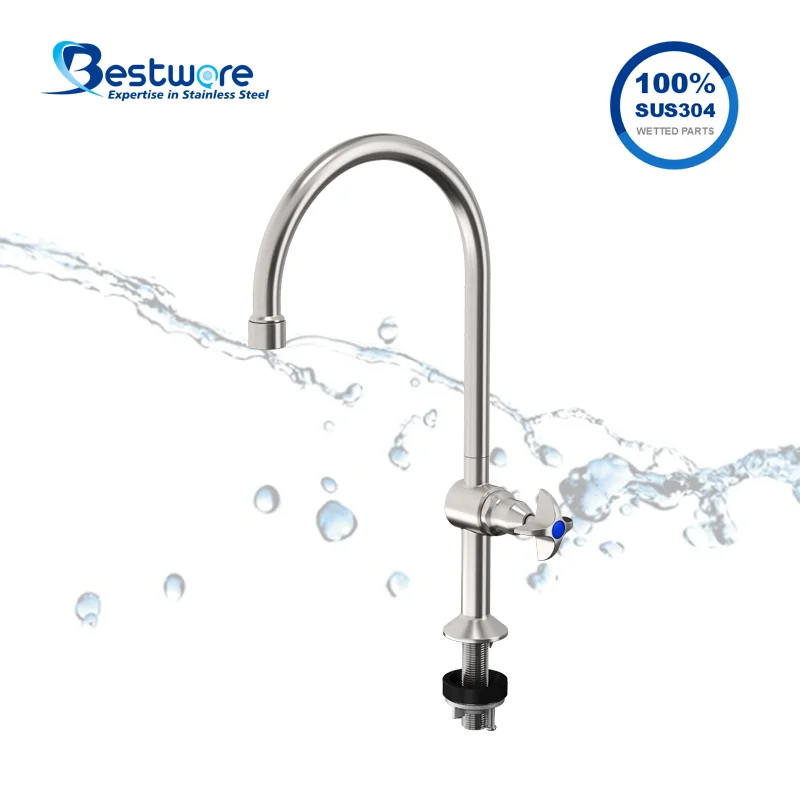
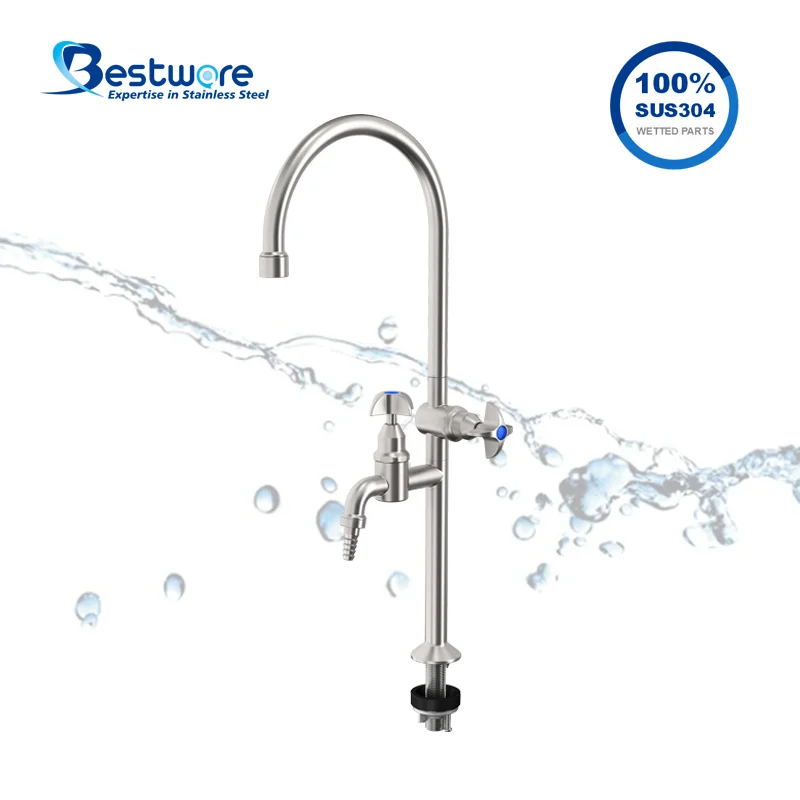
For kitchens that frequently fill large containers or clean tall equipment, gooseneck faucets are a practical choice.
The biggest advantage of a gooseneck design is:
Higher Spout Clearance
Compared with traditional low-profile spouts, gooseneck faucets provide greater vertical clearance.
This allows operators to easily:
· Place tall cups and containers
· Clean large commercial kitchen equipment
· Complete filling tasks quickly
More Comfortable Operation
Commercial kitchens focus heavily on efficiency, and faucet design directly affects the daily experience of operators who use the equipment for hours. The gooseneck structure reduces restrictions caused by container height, making cleaning operations smoother and more convenient. For hotels, buffet restaurants, school kitchens, and other facilities that handle large quantities of tableware and containers, gooseneck faucets provide an improved user experience.
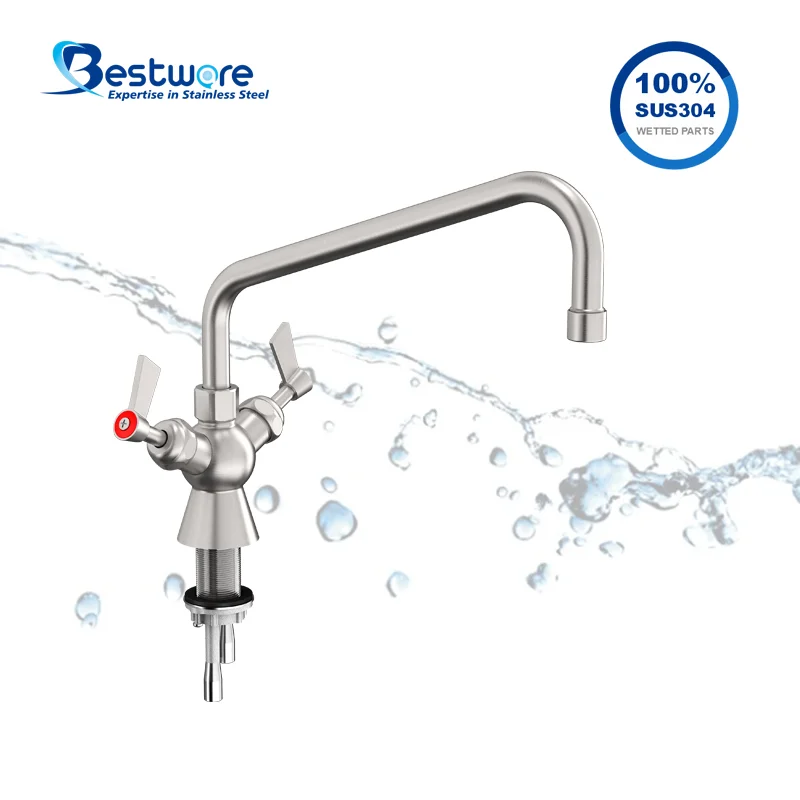
In some commercial applications, faucets may need to be operated hundreds of times or more every day.
Examples include:
· Food processing areas
· Public kitchens
· High-hygiene environments
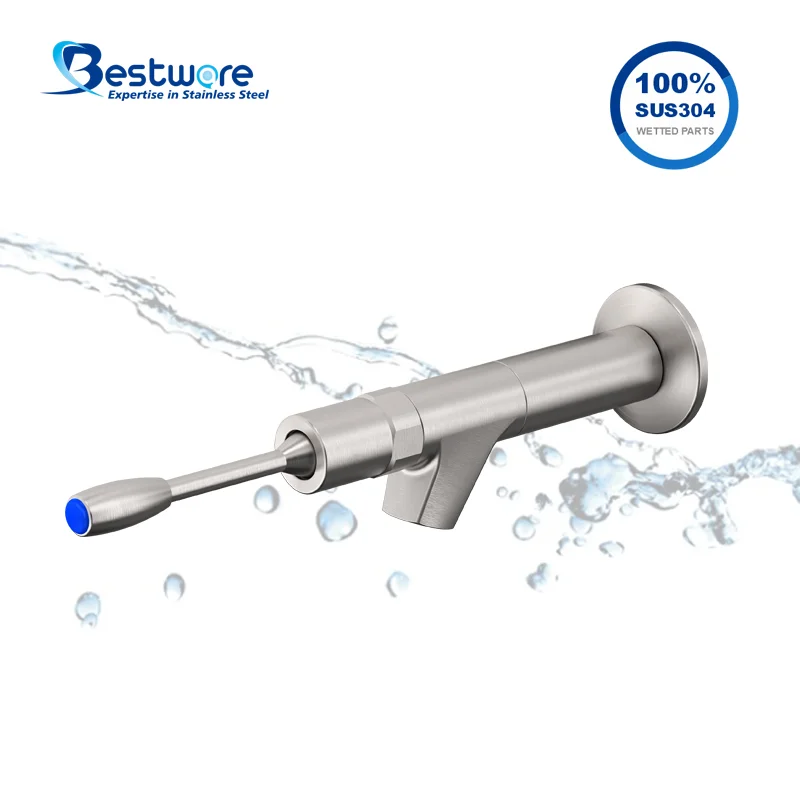
Compared with traditional small handles, long handle designs provide a larger operating range. Operators can turn the faucet on and off using their wrist, the back of their hand, or even their elbow, reducing direct hand contact and improving convenience. This makes long handle faucets especially suitable for applications requiring frequent operation and improved hygiene.
Choosing the right faucet structure is only the first step. For commercial kitchens, manual faucets must also maintain stable performance under long-term and high-frequency use. Material quality, structural design, internal components, and manufacturing processes all play important roles in determining product reliability.
Traditional commercial faucets widely use brass materials. However, as global markets continue to place greater emphasis on water safety and environmental requirements, stainless steel has become an increasingly popular choice for professional kitchen applications.
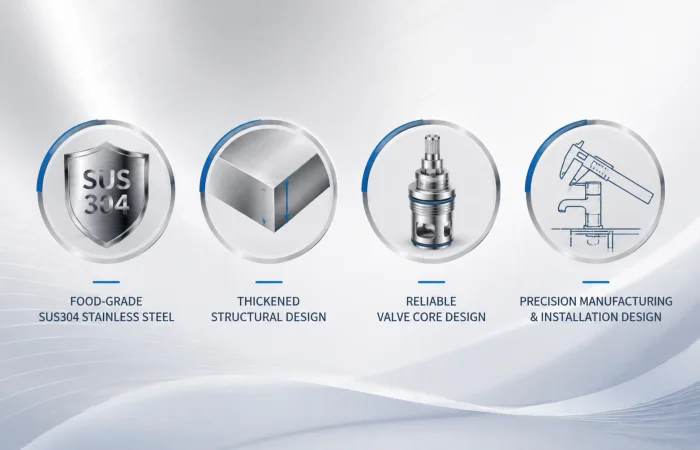
Compared with traditional brass, food-grade SUS304 stainless steel offers several advantages:
Lead-Free Safety Performance
Stainless steel avoids the potential lead release risks associated with traditional brass materials, making it more suitable for food-related applications.
Superior Corrosion Resistance
Commercial kitchens are exposed to water, cleaning agents, and high-humidity environments on a daily basis. SUS304 stainless steel provides excellent corrosion resistance, helping maintain more stable performance over long-term use.
Higher Structural Stability
Stainless steel offers higher hardness and structural stability. Combined with optimized material thickness, it improves pressure resistance and makes the faucet more suitable for long-term commercial kitchen applications.
Bestware manual faucets are manufactured with food-grade SUS304 stainless steel, providing safe, durable, and sustainable solutions for professional kitchens.
Commercial kitchens have much higher requirements for equipment reliability compared with residential kitchens.
Manual faucets need to withstand:
· Frequent rotation operations
· Continuous opening and closing
· Daily impact and mechanical stress
Bestware improves overall product strength through optimized structural design and material thickness.
Compared with lightweight products, a reinforced structure can:
· Reduce the risk of deformation during long-term use
· Improve connection stability
· Extend faucet service life
This makes Bestware manual faucets more suitable for restaurants, hotels, and large-scale food service facilities.
The cartridge is one of the most important internal components affecting the service life of a manual faucet.
Under high-frequency commercial use, the cartridge needs to maintain:
· Stable opening and closing performance
· Reliable sealing performance
· Lower maintenance requirements
Based on different product structures and application requirements, Bestware adopts reliable cartridge solutions, including stainless steel cartridges and high-performance ceramic cartridges. Some cartridges have passed 200,000 cycle tests, ensuring long-term and high-frequency operation in commercial kitchens, effectively reducing leakage risks and improving overall product reliability.
For commercial projects, installation efficiency and long-term maintenance costs are equally important. If a product has a complicated structure or poor component compatibility, it may not only increase installation time but also create difficulties for future maintenance.
Bestware applies high-precision manufacturing processes to improve:
· Component compatibility
· Product consistency
· Connection stability
Meanwhile, optimized installation structures make the products easier to install and maintain, helping commercial users reduce labor costs.
In addition to cleaning tasks and product performance, commercial users should also consider the installation environment, usage frequency, and long-term maintenance requirements when selecting a manual faucet. A suitable commercial manual faucet should not only meet current operational needs but also maintain stable performance throughout long-term use while reducing maintenance costs.
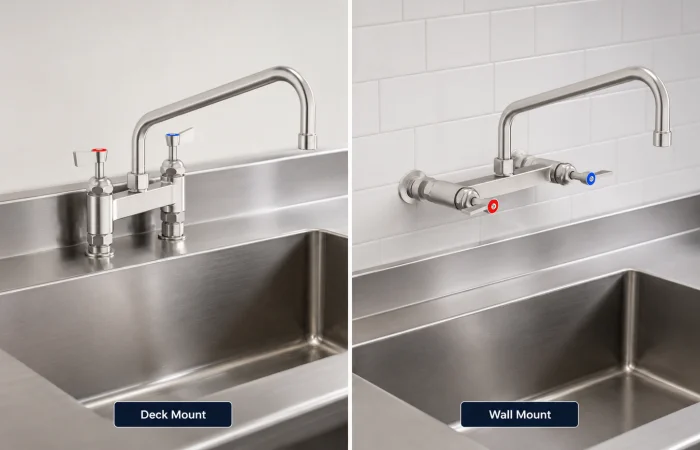
Different kitchen layouts have different requirements for faucet installation methods.
Wall-Mounted Installation
Wall-mounted faucets are suitable for commercial kitchens that require more countertop space or a larger operating range, such as:
· Large cleaning areas
· Restaurant back kitchens
· Central kitchens
Key advantages include:
· Reducing countertop occupation around the sink
· Providing more flexible operating space
· Being more suitable for cleaning large cookware and equipment
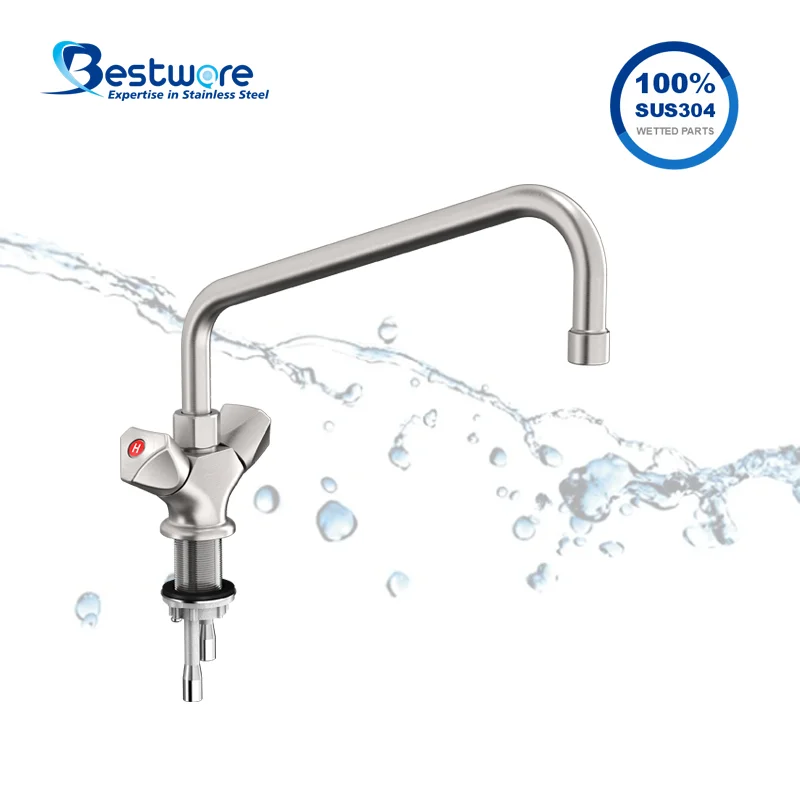
Deck-Mounted Installation
Deck-mounted faucets are suitable for most standard commercial sink applications, such as:
· Restaurants
· Cafés
· Cafeteria cleaning areas
Key advantages include:
· More flexible installation
· Wider compatibility with different sink setups
· Easier replacement and maintenance
Choosing the right installation method based on actual kitchen conditions can improve space utilization and enhance daily operation efficiency.
One of the biggest differences between commercial kitchens and residential kitchens is the much higher frequency of use. In restaurants, hotels, and food processing facilities, faucets may be operated hundreds of times every day and continuously exposed to humid and high-load working environments.
Therefore, buyers should pay close attention to:
· Whether the material is corrosion resistant
· Whether the structure is stable
· Whether internal components are wear resistant
· Whether the product is suitable for continuous operation
Commercial manual faucets made with food-grade stainless steel, reliable internal components, and precision manufacturing processes can better withstand high-frequency use and reduce operational disruptions caused by equipment failures.

For commercial kitchens, equipment purchase cost is only part of the total investment.
If a faucet frequently experiences:
· Leakage problems
· Component damage
· Frequent maintenance requirements
it can not only increase repair costs but also affect normal kitchen operations. Therefore, when selecting a commercial manual faucet, buyers should consider product reliability, component compatibility, and ease of maintenance. Products with stable structures and high manufacturing precision can reduce maintenance frequency, extend service life, and help businesses lower long-term operating costs.

In commercial kitchen environments, manual faucets may be a basic fixture, but their reliability directly affects daily operation efficiency and long-term operating costs. An excellent commercial manual faucet needs to achieve a balance between safety, durability, stability, and easy maintenance. From material selection and structural design to internal components and manufacturing processes, every detail influences long-term performance under high-frequency use. For restaurants, hotels, central kitchens, and food processing businesses, choosing the right faucet is not only an equipment purchase, but also an investment in kitchen efficiency and long-term reliability. Bestware specializes in the research, development, and manufacturing of stainless steel commercial faucets. By using high-quality stainless steel materials and continuously optimizing product structures and manufacturing processes, Bestware provides safer, more durable, and more efficient water solutions for commercial kitchens worldwide. Through reliable product design and stable manufacturing capabilities, Bestware helps restaurants, hotels, central kitchens, and food processing facilities improve operational efficiency, reduce maintenance costs, and meet the evolving needs of modern commercial kitchens.
One-stop Solution Provider of Stainless Steel Commercial Faucets
Email: business@bestware-stainless.com
after-sales@bestware-stainless.com
Tel: +86 18929047065
WhatsApp: +86 18929047065


WeChat: +86 18929047065


Website: www.bestware-stainless.com(Global Site)
www.bestware-sparkling.com(Water Dispenser)
Add: Block 8, No. 6, Jianda Nan Road, Jiangmen, Guangdong, China
Copyright © Bestware Hardware Production Co., Ltd. All Rights Reserved.
(2).webp)
(1).webp)