
Date: 2026-09-04
Using a drinking tap may seem simple: turn on the water and either fill a container or drink directly from the stream. In actual commercial and public settings, however, users do not always operate the tap exactly as originally intended. Some use cups, while others use large-capacity water bottles. Some drink directly from the tap, while others need to adjust the position of the container to catch the water. Children, adults, and users with different levels of mobility may also have different requirements for outlet height and operating space. These differences do not necessarily mean that users are operating the product incorrectly. Rather, public drinking facilities naturally need to accommodate a wide range of users and usage patterns. Therefore, when designing commercial drinking taps, it is worth looking beyond a single ideal usage scenario and asking a more practical question: when actual use differs from the original design assumptions, can the product still provide a good user experience?
One of the biggest differences between public drinking facilities and household faucets is that the users are usually not fixed. A faucet at home is generally used by the same family members, so their height, habits, and ways of using the faucet are relatively consistent. Public drinking facilities, on the other hand, may serve dozens, hundreds, or even more users in a single day. As a result, the product cannot be designed around just one fixed way of use.
Adults can generally adjust the position of a cup or water bottle relatively easily when using a drinking tap. For children, however, the height of the equipment, the position of the outlet, and the distance they need to reach may be more important.
In hospitals, public buildings, and similar settings, some users may also have limited mobility. Their requirements for operating height, reach distance, and surrounding space may differ from those of the average adult.
Therefore, when designing a drinking tap, it is important to make sure that users with different needs can approach the outlet easily and complete the filling or drinking process without complicated adjustments.
Cups, water bottles, and sports bottles can vary significantly in size. If the outlet is too close to the countertop, a large-capacity bottle may be difficult to position. If the outlet is too high, the greater drop between the outlet and the container may increase the likelihood of splashing during filling.
For this reason, sufficient space should be provided around the outlet so that users can adjust the container according to its size. This may appear to be a simple dimensional consideration, but it can directly affect how well a drinking facility accommodates different ways of use.
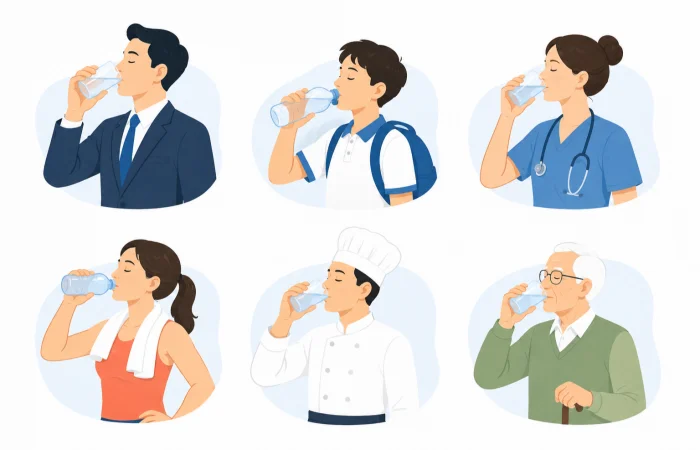
After considering differences between users, it is also necessary to look at how they actually collect or drink water. Even the same person may use a drinking tap differently from one occasion to another. Some users place a cup directly under the water stream, while others tilt the cup to reduce splashing. When using a water bottle, they may need to move the bottle to find a suitable position. For direct drinking, the user needs to maintain an appropriate distance from the outlet. Therefore, the design of a drinking tap needs to provide enough space for these different ways of operating it.
Outlet height directly affects the range of containers that can be used. If the outlet is too low, it may limit the use of larger containers. If it is too high, the greater water drop may increase the risk of splashing.
Therefore, there is no single outlet height that works for every project. It should instead be determined based on the countertop height, basin depth, container size, and the primary way the drinking tap will be used.
If the outlet position is too restrictive, users have to move their cups or water bottles to align them with the water stream. When a drinking facility is used frequently throughout the day, these extra adjustments are repeated over and over again.
A suitable outlet length and position can reduce these unnecessary adjustments and provide more appropriate operating space for different containers. The goal is not to add more moving components, but to make the outlet position better suited to actual usage.
When users drink directly from the tap, the container is no longer the main reference point. The distance and angle between the user and the water stream become more important. If the outlet direction is unsuitable, users may need to change their standing position or body posture. If the water flow is not properly controlled, splashing may also occur. Therefore, the outlet direction needs to accommodate both common ways of use: filling a container and drinking directly from the tap.
For equipment that is used infrequently, minor inconveniences may not be particularly noticeable. Public drinking facilities, however, are typically subject to long-term, high-frequency use.
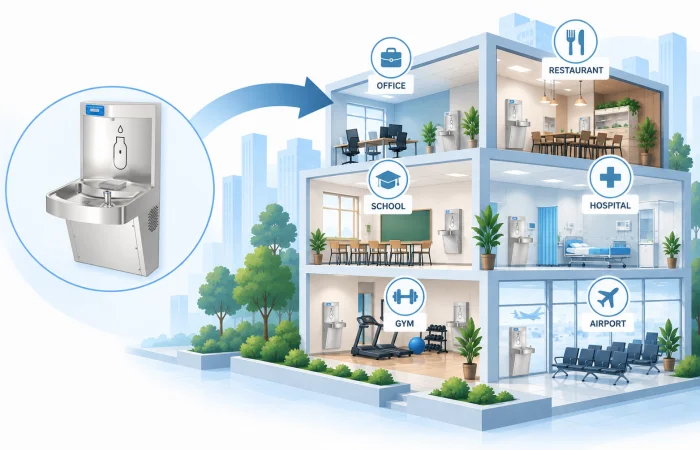
Schools may experience concentrated use between classes, office buildings during lunch breaks, and sports venues after activities or events. Taking a few extra seconds to adjust a cup may seem insignificant each time, but when the same action is repeated hundreds of times a day, small differences in product design can become much more noticeable.
Frequent use also creates another consideration: the equipment is exposed to more than standard drinking actions. Users may accidentally bump the tap while positioning a water bottle, staff may come into contact with it while cleaning the countertop, and maintenance personnel may need to inspect and disassemble related components repeatedly.
Therefore, commercial drinking taps need to do more than support normal operation. They also need sufficient structural stability to withstand long-term repeated use and reasonable levels of accidental contact. This is why commercial products should not be evaluated only by how convenient they feel during the first use. Their long-term stability also matters.
When discussing how to accommodate unexpected ways of use, it is easy to fall into a common misconception: does having more functions make a product more adaptable to different users?
Not necessarily.
Too many adjustment mechanisms can make a product more complex and may also increase the difficulty of cleaning and maintenance. In public drinking facilities, users generally do not have time to learn complicated operating procedures, while maintenance personnel do not want to deal with structures that are difficult to disassemble or clean. A more practical approach is to identify the most common variations in use and provide enough space to accommodate them.
For example:
· Different container sizes require suitable outlet height and operating space
· Different drinking methods require an appropriate outlet direction
· Different installation environments require suitable deck-mount or wall-mount configurations
· High-frequency use requires stable construction and durable materials
· Routine maintenance requires minimizing areas that are difficult to clean or inspect
This approach is not about making a single tap capable of solving every possible problem. Instead, it focuses on addressing the most practical needs without making the product unnecessarily complicated.
If it is impossible to accurately predict how every user will operate a drinking tap, the design focus should not be on predicting every possible situation. Instead, it should leave sufficient room for reasonable variations in use.
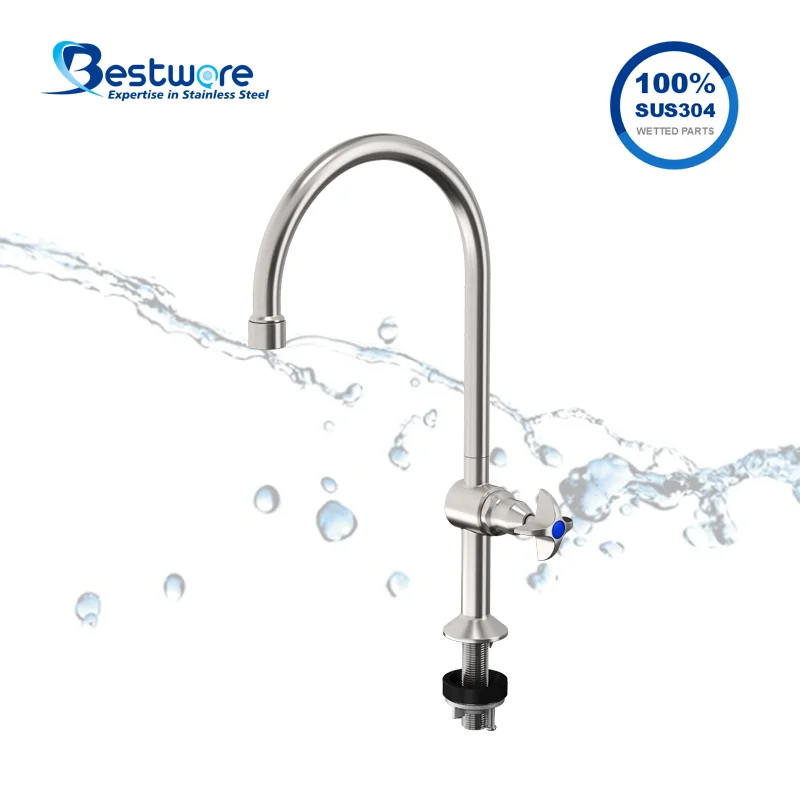
This flexibility begins with the outlet design. Outlet height, length, and direction need to work together to accommodate common containers while also providing enough operating space for direct drinking. The goal is not to make the outlet structure adjustable in as many ways as possible, but to provide a sufficient range of use within a practical fixed structure.
The next consideration is structural design. Drinking equipment in commercial environments must withstand frequent repeated use and may also be exposed to contact from water bottles or during cleaning. Structural design therefore needs to consider long-term stability in addition to normal operation, while avoiding unnecessary moving components that could make maintenance more difficult.
Finally, there is product configuration. Installation environments, available space, and usage requirements vary from project to project. Rather than adding numerous functions to a single product, it is more practical to match different projects through different mounting methods, body sizes, outlet structures, and waterway configurations. This approach can meet different project requirements while avoiding unnecessary complexity in pursuit of being “multifunctional.”
In other words, the adaptability of a drinking tap does not come from unlimited adjustability. It comes from reasonable design margins and targeted product configurations. Providing enough usable space for different users, containers, and operating methods is a more practical way to achieve adaptability.
For Bestware, drinking tap design is not based on a single way of use. Different commercial projects have different installation environments, available space, and drinking requirements, so drinking taps also need to offer appropriate options.
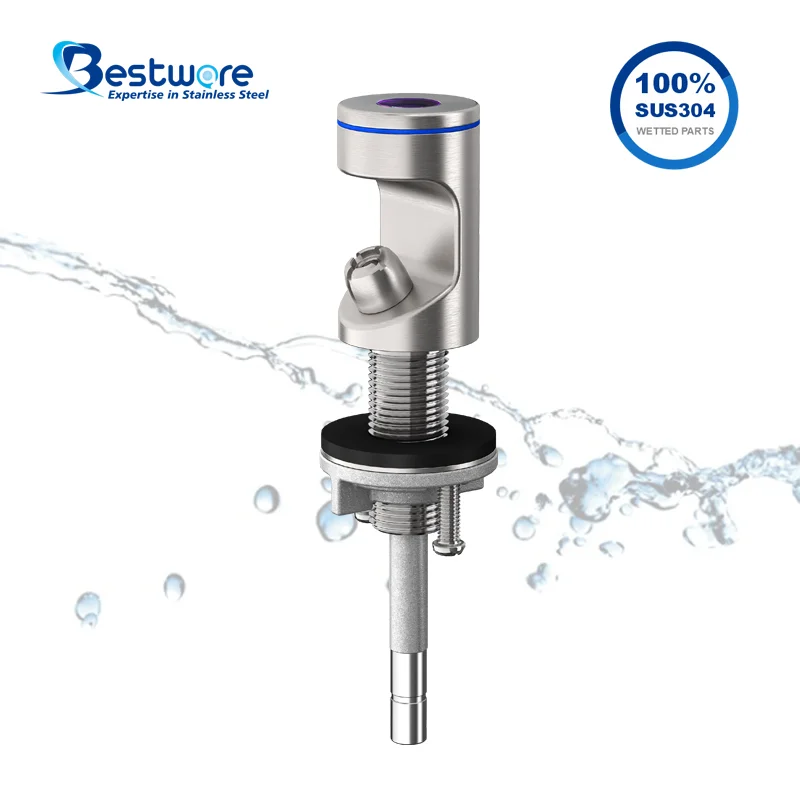
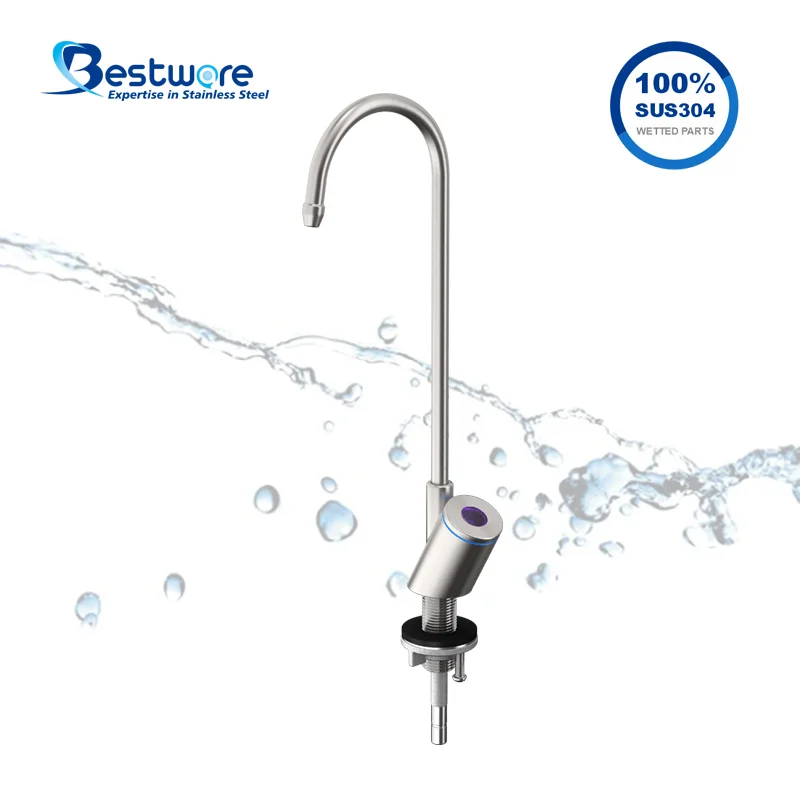
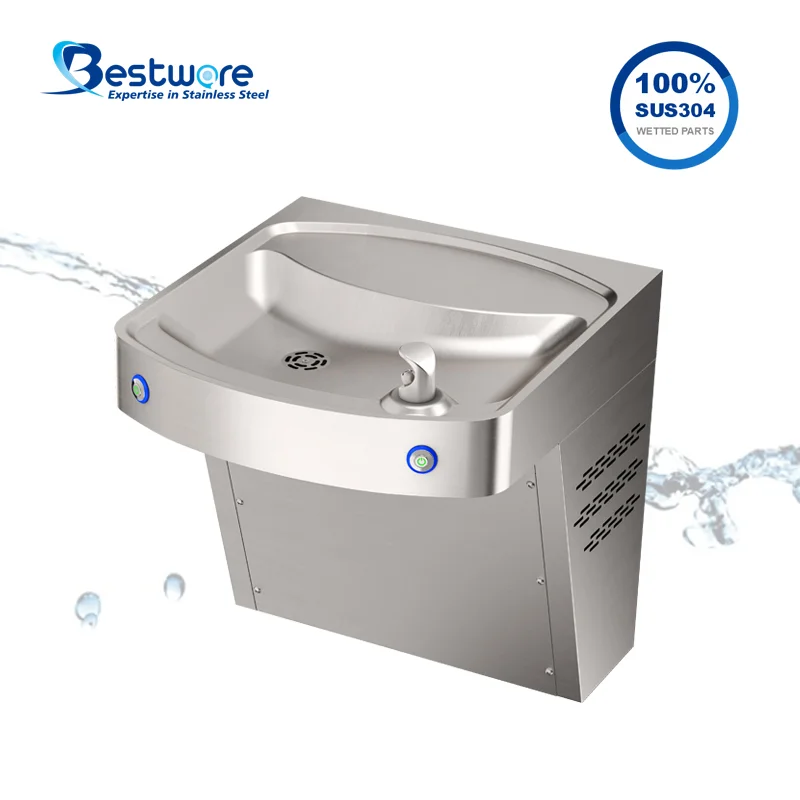
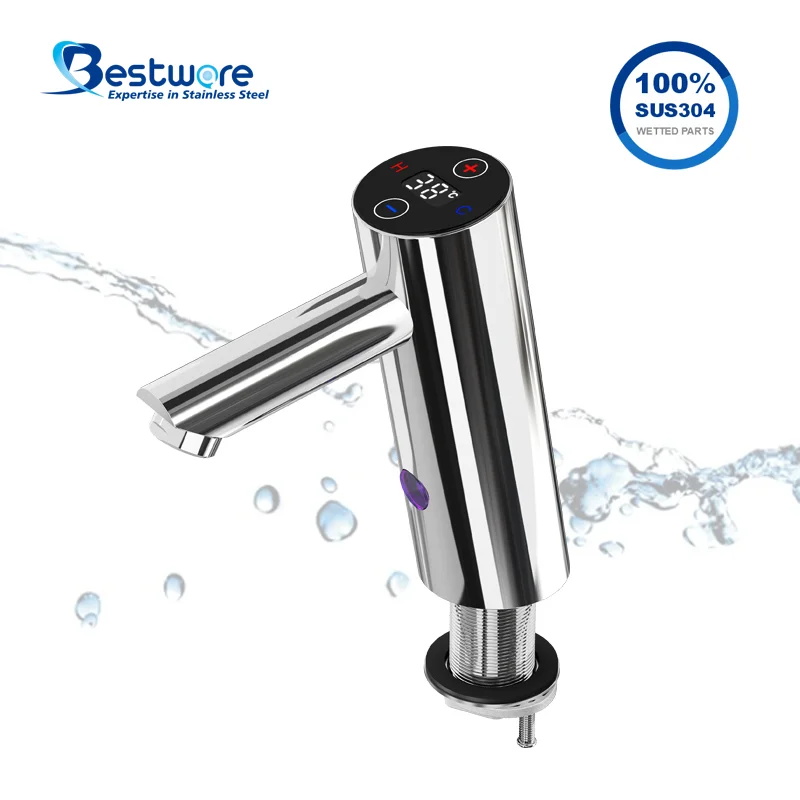
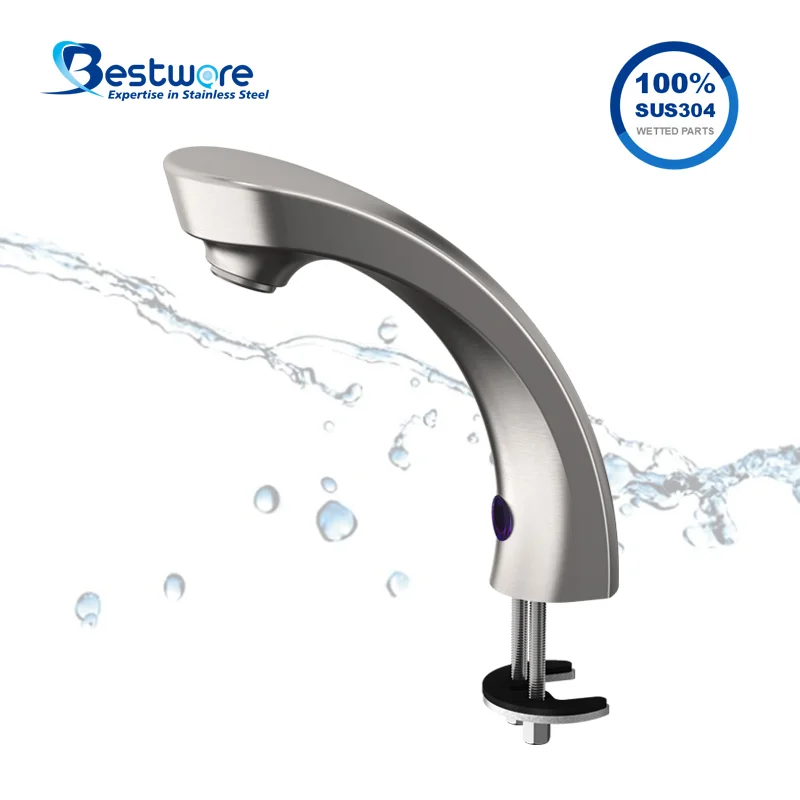
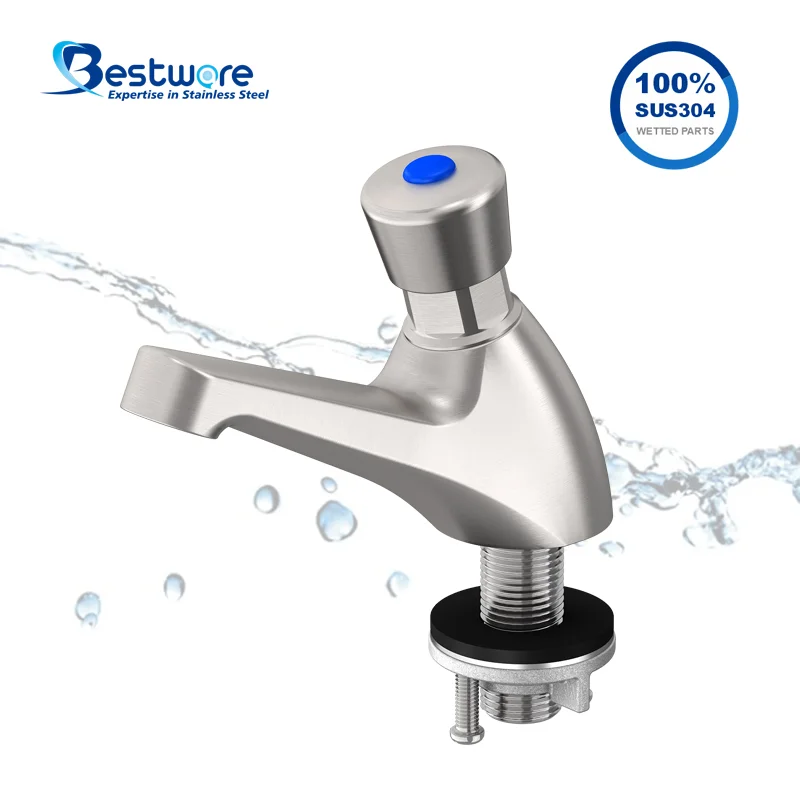
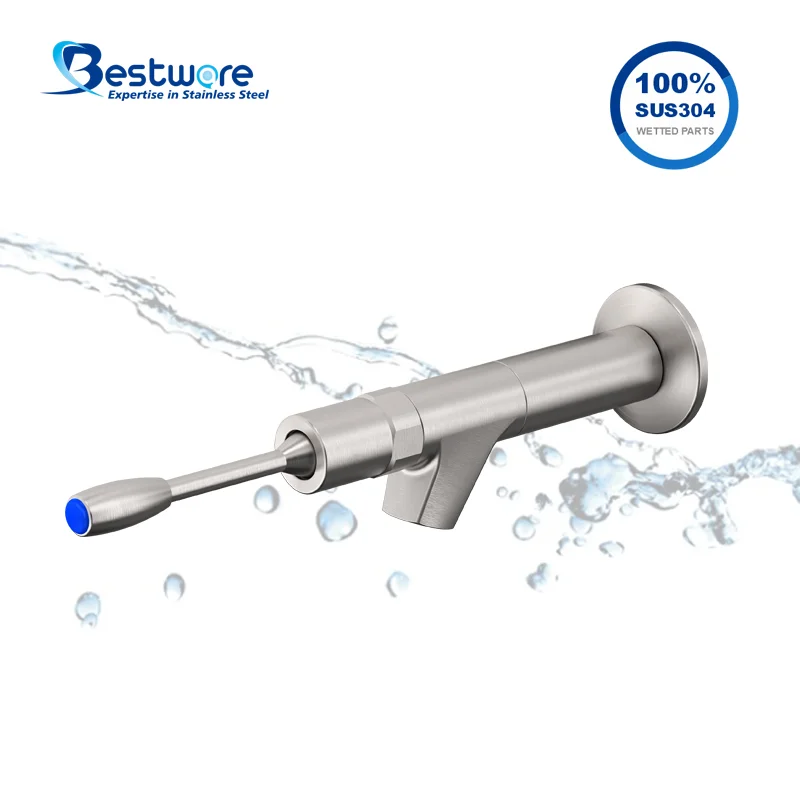
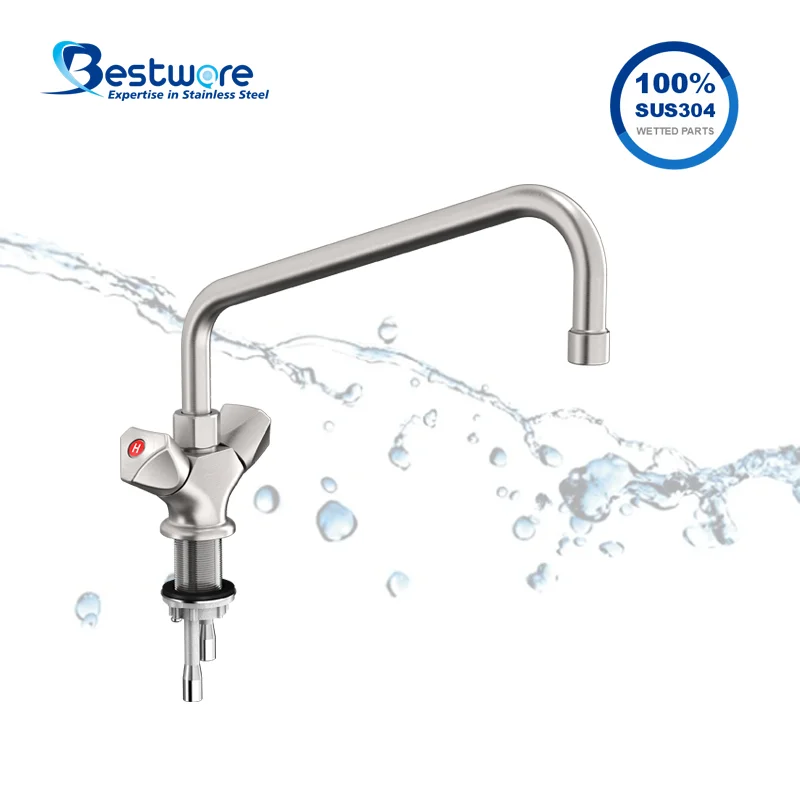
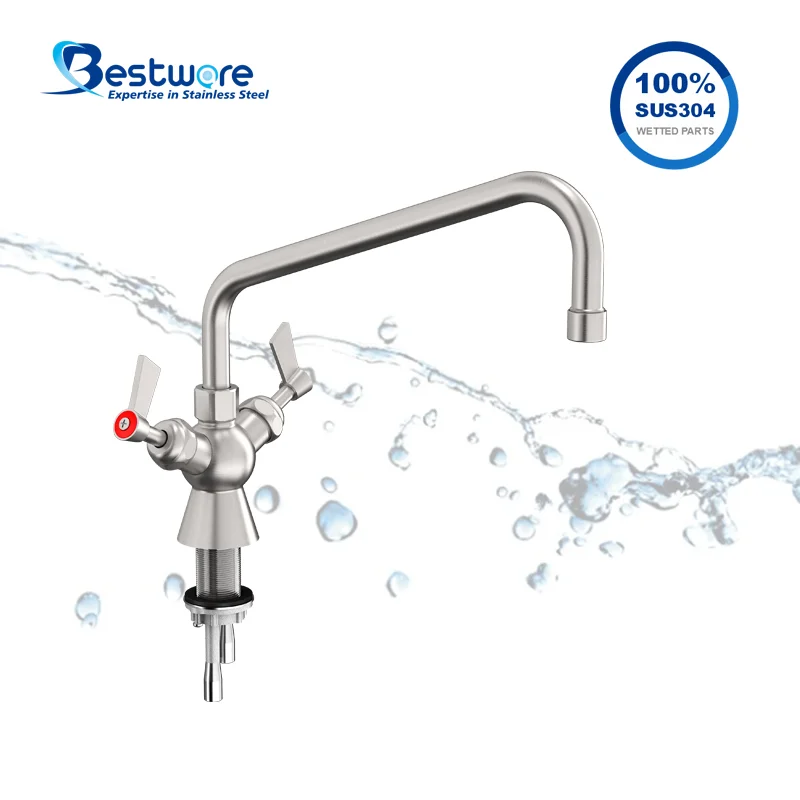
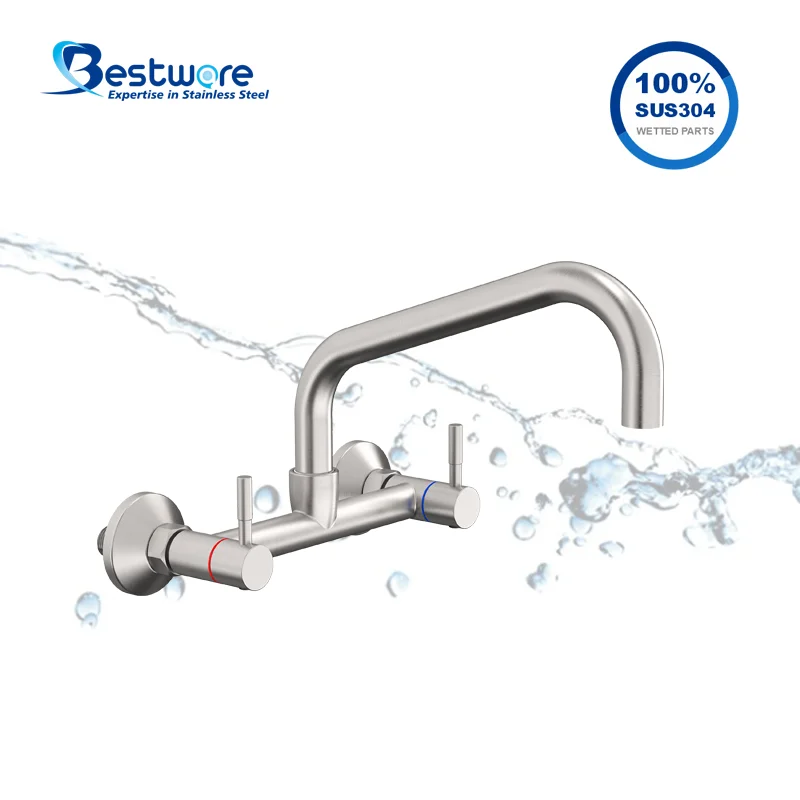
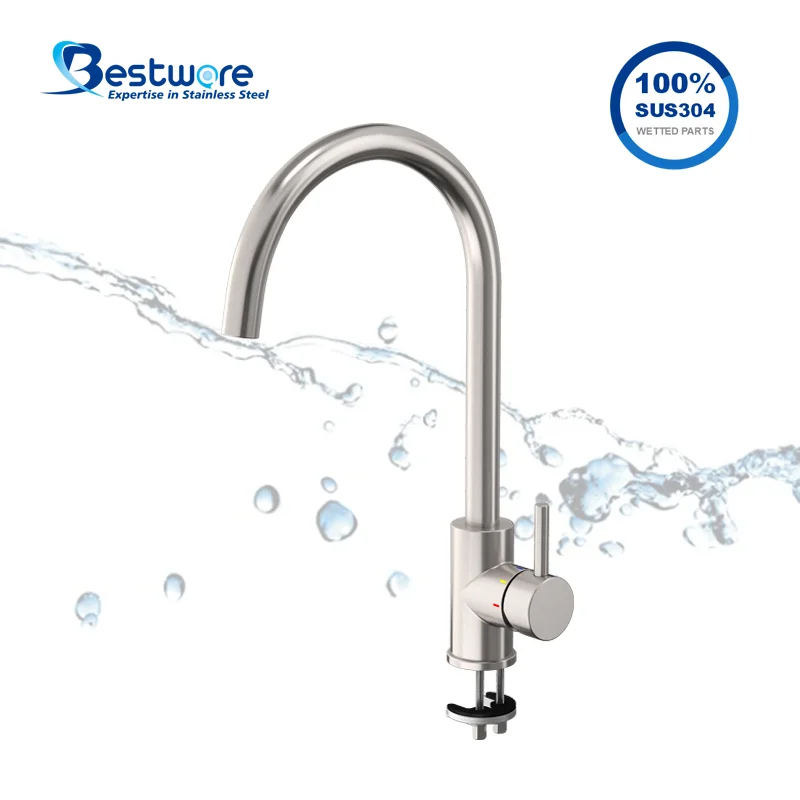
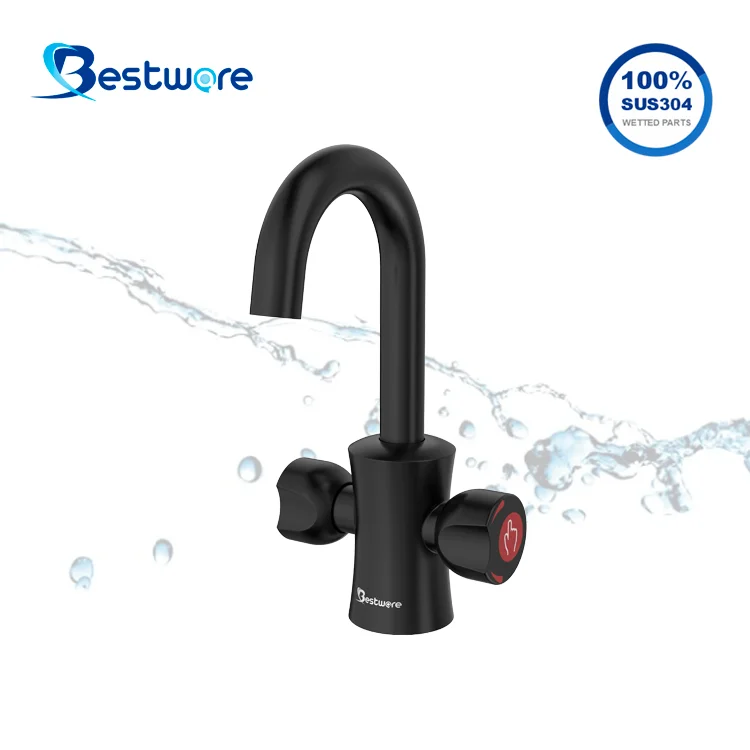
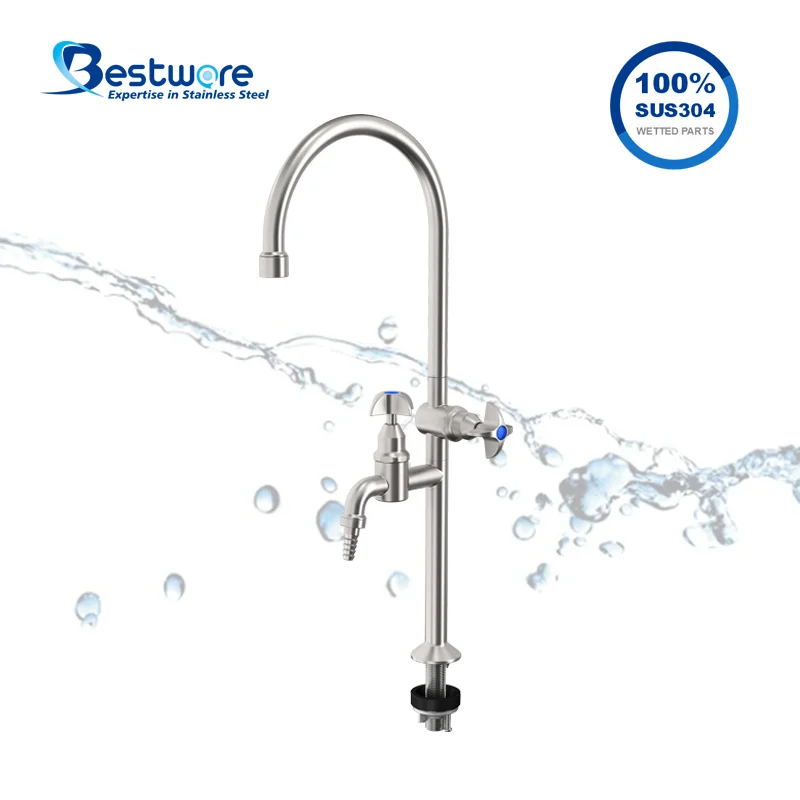
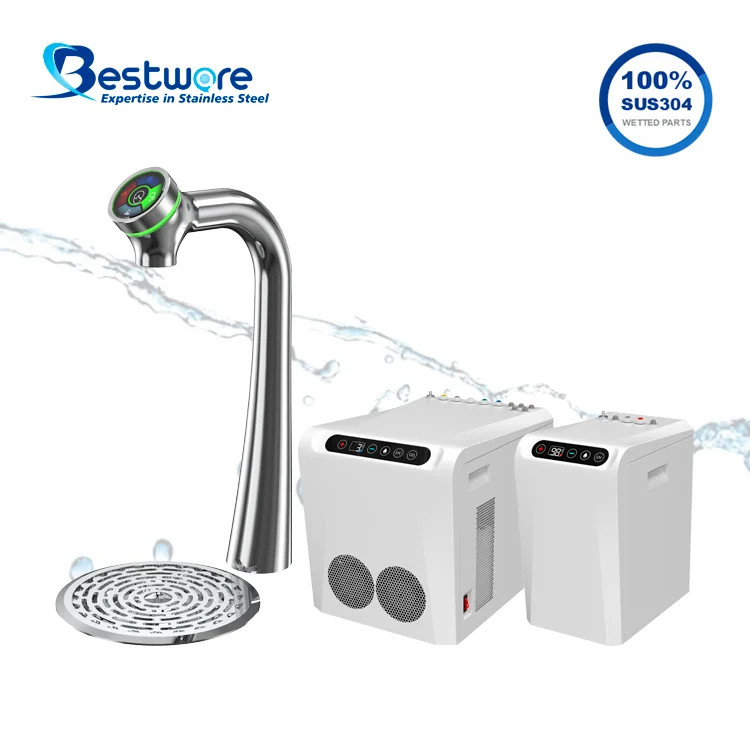
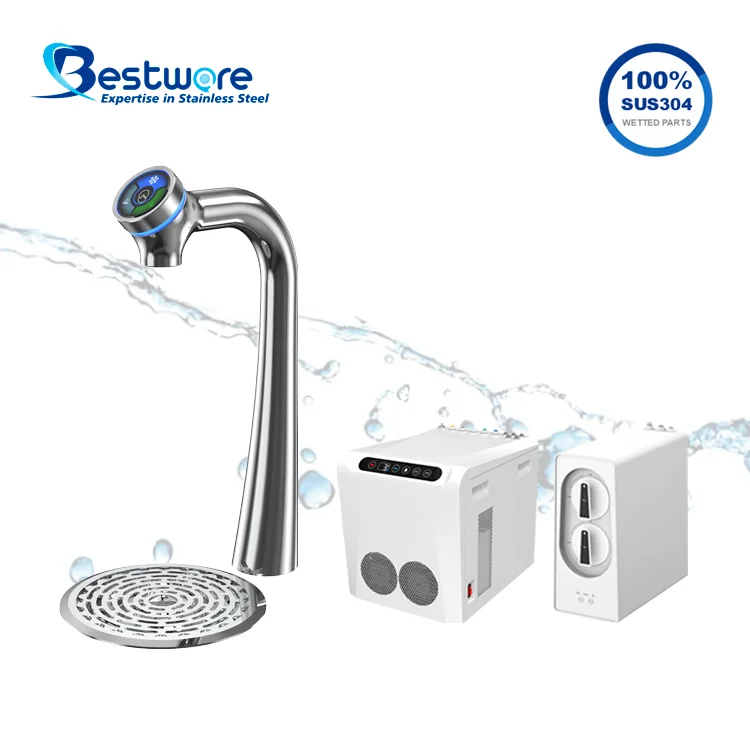
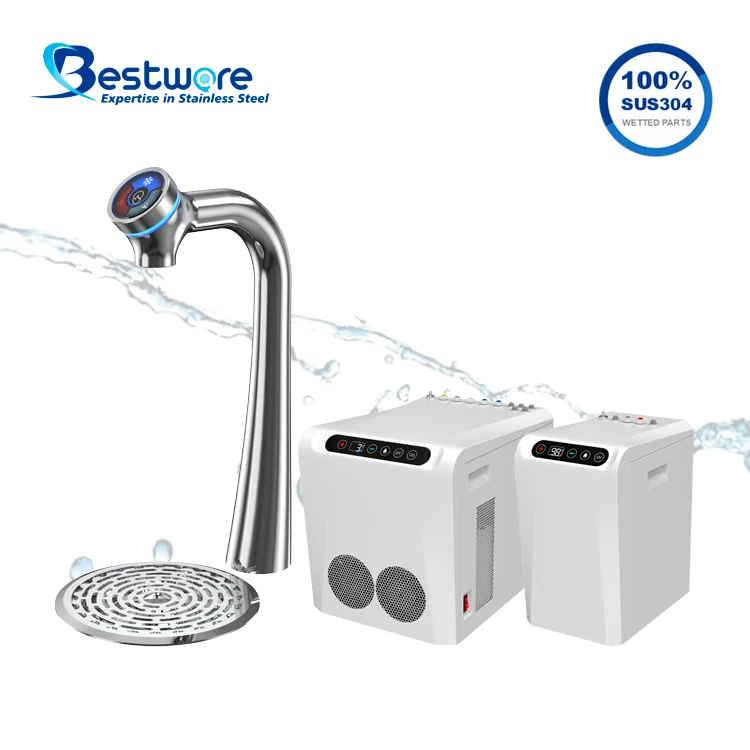
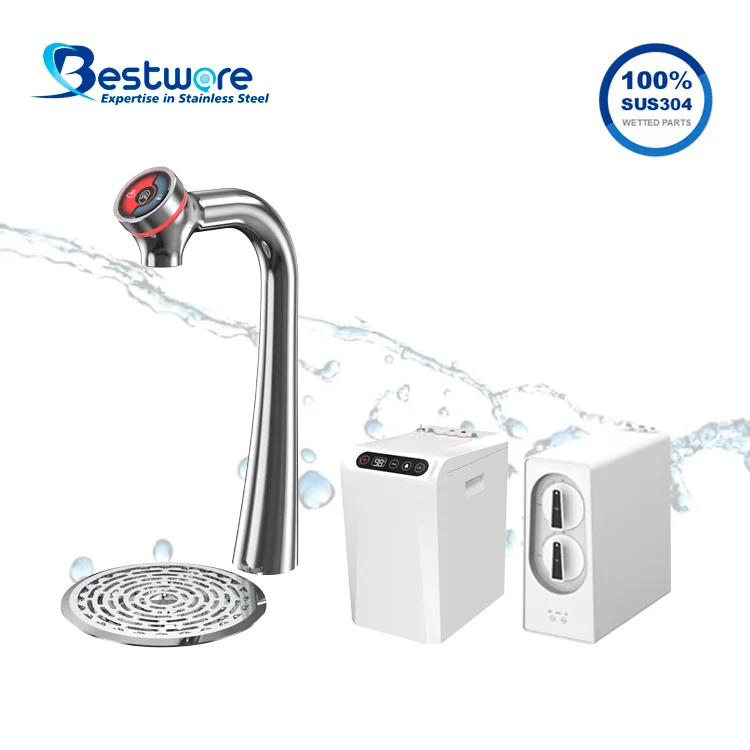
Bestware’s drinking tap range provides different mounting and structural solutions, including deck-mount and wall-mount options, as well as different outlet designs and configurations that can be selected according to the actual requirements of each project.
The focus of this product approach is not to give every model as many functions as possible, but to use different product structures to match different usage conditions. For example, in areas with limited space, a more compact structure may be preferable. For locations that require more operating space, an appropriate outlet length and design can be selected according to actual requirements. For projects that require both hot and cold water, the corresponding configuration can also be selected.
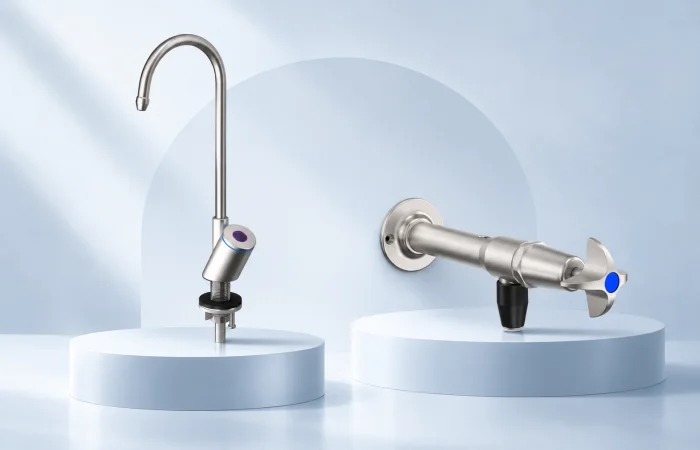
Public drinking facilities are never designed for just one fixed way of use. Users, containers, and operating habits can all vary, so drinking tap design cannot be based solely on ideal conditions. True adaptability does not come from adding more functions. It comes from leaving reasonable design margins in the outlet design, structural stability, and product configuration, allowing the product to accommodate variations in actual use. For commercial drinking equipment, good design does not necessarily predict every action a user may take. It should, however, ensure that when those variations occur, the equipment can continue to provide a smooth, stable, and easy-to-use experience.
One-stop Solution Provider of Stainless Steel Commercial Faucets
Email: business@bestware-stainless.com
after-sales@bestware-stainless.com
Tel: +86 18929047065
WhatsApp: +86 18929047065


WeChat: +86 18929047065


Website: www.bestware-stainless.com(Global Site)
www.bestware-sparkling.com(Water Dispenser)
Add: Block 8, No. 6, Jianda Nan Road, Jiangmen, Guangdong, China
Copyright © Bestware Hardware Production Co., Ltd. All Rights Reserved.
.webp)
(7).webp)
(6).webp)
(5).webp)