Date: 2026-10-27
In conveyor belt sushi restaurants, sushi faucets installed at individual dining stations allow customers to access hot water conveniently and are an integral part of the self-service tea experience. Although these fixtures may appear simple, their design must accommodate customer interaction, seating layouts, and frequent use. For foodservice equipment buyers and project designers, understanding how sushi faucets function in self-service tea settings helps inform decisions about operating mechanisms, installation positions, and maintenance requirements. This article explores how sushi faucets support this application from the perspectives of restaurant operations, user experience, and equipment design.
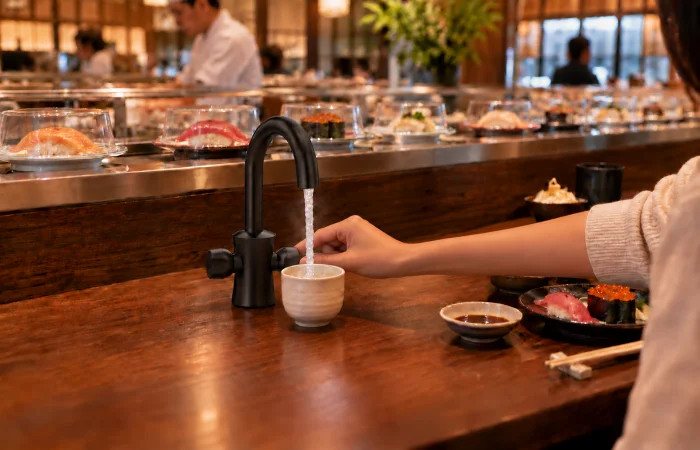
At conveyor belt sushi restaurants, customers can typically take a cup and tea powder, then dispense hot water from the sushi faucet at their dining station to prepare a drink according to their preferences. When they want a refill, they can operate the faucet directly from their seats without having to ask staff for assistance.
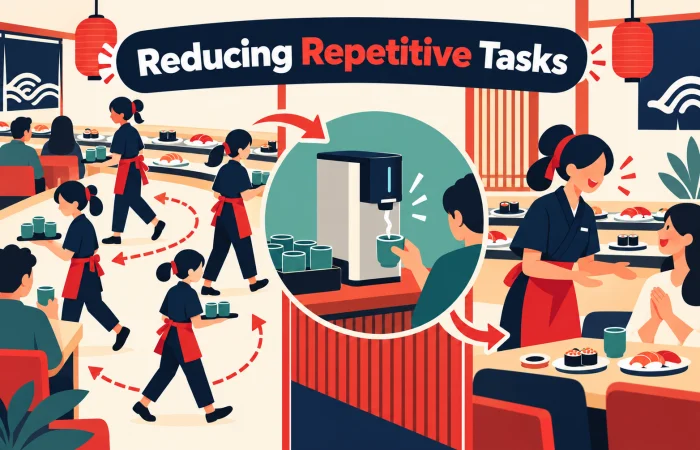
This arrangement integrates hot water dispensing into the dining experience, allowing customers to decide when and how much water they need. For restaurants, self-service dispensing also reduces the repetitive task of bringing hot water to individual tables, allowing staff to focus more on serving dishes, cleaning, and other service responsibilities.
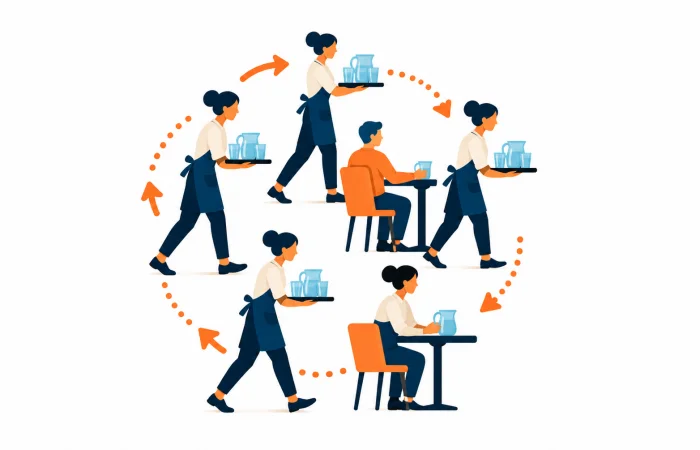
In busy restaurants, staff often handle multiple responsibilities simultaneously, including taking orders, serving food, clearing tables, and responding to customer inquiries. If every customer needs staff to refill their tea regularly, the workload can increase considerably as customer traffic grows.
Self-service hot water supply shifts some of these repetitive tasks to customers. Staff still need to replenish tea powder, inspect equipment, clean dining stations, and address any problems, but they no longer need to provide every hot water refill themselves.
The aim is not to eliminate staff involvement entirely, but to redistribute repetitive tasks within the service workflow. For chain sushi restaurants with standardized dining station layouts, this arrangement can also be incorporated more easily into consistent operating procedures.
Tables and counters in sushi restaurants must accommodate tableware, condiments, ordering devices, and other service facilities. If hot water is supplied from a location far from the seating area, customers may need to leave their seats to refill their cups, or staff may have to bring hot water to them.
Installing sushi faucets near individual dining stations shortens the distance customers need to reach for hot water and creates a more convenient arrangement for cups, tea powder, and water dispensing. However, the layout should be determined by table dimensions, customer movement, and the positions of other facilities. Placing a sushi faucet closer to customers is not always better; the design must balance convenient access with collision prevention and an uncluttered tabletop.
The steps involved in preparing tea are relatively simple, but the equipment needs to accommodate the entire process, from taking a cup and adding tea powder to dispensing hot water. The details of these everyday interactions often have the greatest impact on the user experience.
Customers typically place their cups directly beneath the spout to collect hot water. The spout height, reach, and installation position should therefore be compatible with the cups used in the restaurant.
If the spout is too far from the cup, hot water may splash during dispensing. If there is insufficient clearance, customers may struggle to position or remove their cups. For faucets installed on counters, the spacing between adjacent seats must also be considered, along with the risk of customers knocking into nearby items while handling their cups.
When selecting a sushi faucet, buyers should therefore evaluate more than the product's external dimensions. The dining station layout and commonly used cups should also be taken into account. For new restaurant projects, determining the faucet position and cup placement area in advance is generally more practical than making adjustments after installation.
Self-service equipment is used by customers of different ages, heights, and levels of familiarity with the equipment. Some may be visiting the restaurant for the first time and may not know how the faucet works. An easy-to-understand activation method is therefore important.
Hot water dispensing equipment may use different mechanisms, such as push controls, cup-actuated controls, or rotary controls. Each design involves different user actions, and no single mechanism is necessarily better in every situation. Restaurants should consider the activation method, customer operating habits, and the need to prevent accidental activation when selecting equipment.
For example, a cup-actuated design links cup placement with water activation. A rotary control, by contrast, requires customers to recognize the direction and method of operation. Regardless of the mechanism, operating instructions should be simple and clear to help prevent splashing or other incidents caused by misunderstanding how the faucet works.
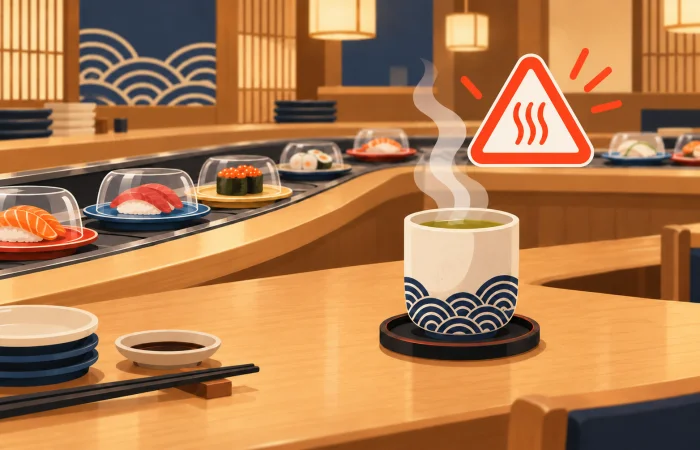
Safety considerations for self-service sushi faucets must account for the risks associated with dispensing hot water. In addition to normal operating convenience, restaurants should consider situations such as accidental activation and unstable cup placement that may compromise safe use.
The spout position should suit the cups commonly used in the restaurant to help reduce the likelihood of splashing during dispensing. The control mechanism should also be easy to understand and used according to the product's instructions. In public dining environments, clear hot-water warnings and operating instructions can be placed near the equipment where appropriate.
Correct installation and regular inspection are equally important. Hot water pipes and their connections must meet the equipment requirements. If leakage, abnormal control operation, or loose connections are detected, the equipment should be taken out of service and inspected promptly. Appropriate equipment selection, combined with routine management, can help reduce operating risks.
The frequency of use of dining station sushi faucets varies with customer traffic and operating hours. During busy periods, the same faucet may be activated repeatedly, so buyers should consider whether the product is suitable for the expected level of use.
Evaluation criteria may include the body material, valve cartridge design, connecting components, compatibility with the hot water operating conditions, and ease of maintenance. For equipment intended for long-term use, buyers should also understand the maintenance requirements, availability of replacement parts, and after-sales support.
It is important to distinguish material quality from the durability of the complete assembly. A stainless steel body alone does not establish whether the internal valve cartridge, seals, and connections can withstand a specific number of operating cycles. When comparing product service life, buyers should refer to test results and technical documentation for the specific model, as well as the conditions under which the equipment will be used.
Sushi faucets installed at dining stations remain accessible to customers, so their surfaces and surrounding areas need to be kept clean. Gaps that are difficult to reach or surfaces that are hard to wipe down can make routine cleaning more demanding.
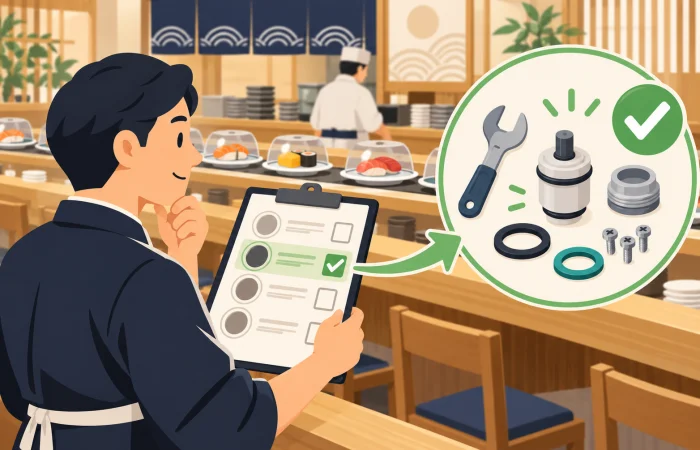
When selecting equipment, restaurants should therefore consider whether the exterior is easy to clean, whether connections are accessible for inspection, and whether routine maintenance requires the removal of multiple components.
The hot water supply system must also be maintained according to the manufacturer's instructions. Cleaning the faucet's exterior cannot replace the necessary cleaning and maintenance of the pipes, water supply, and associated equipment. For commercial foodservice operations, establishing clear procedures for cleaning, inspection, and fault handling helps support reliable long-term operation.
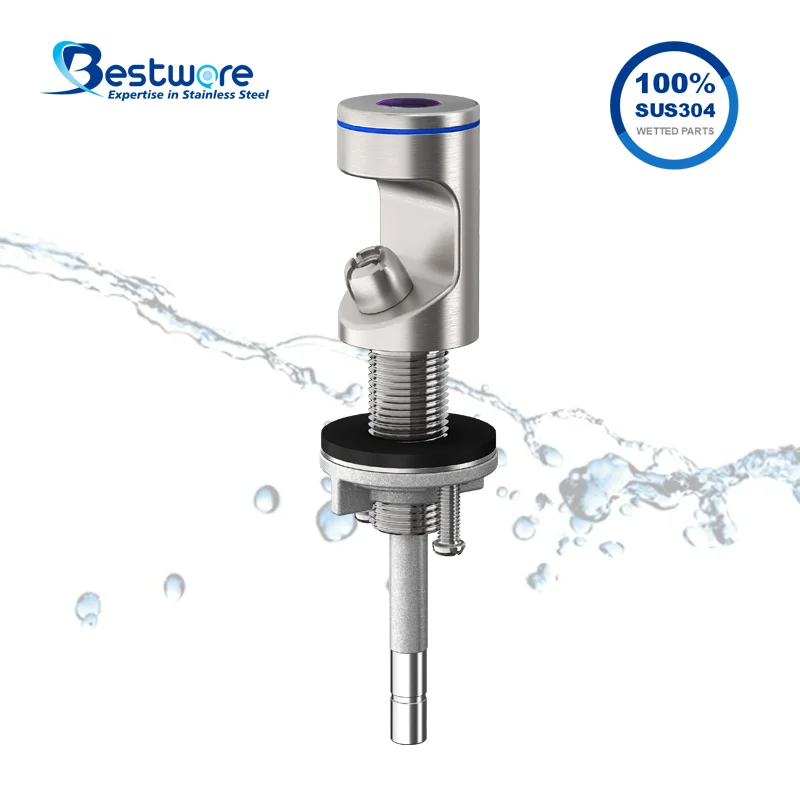
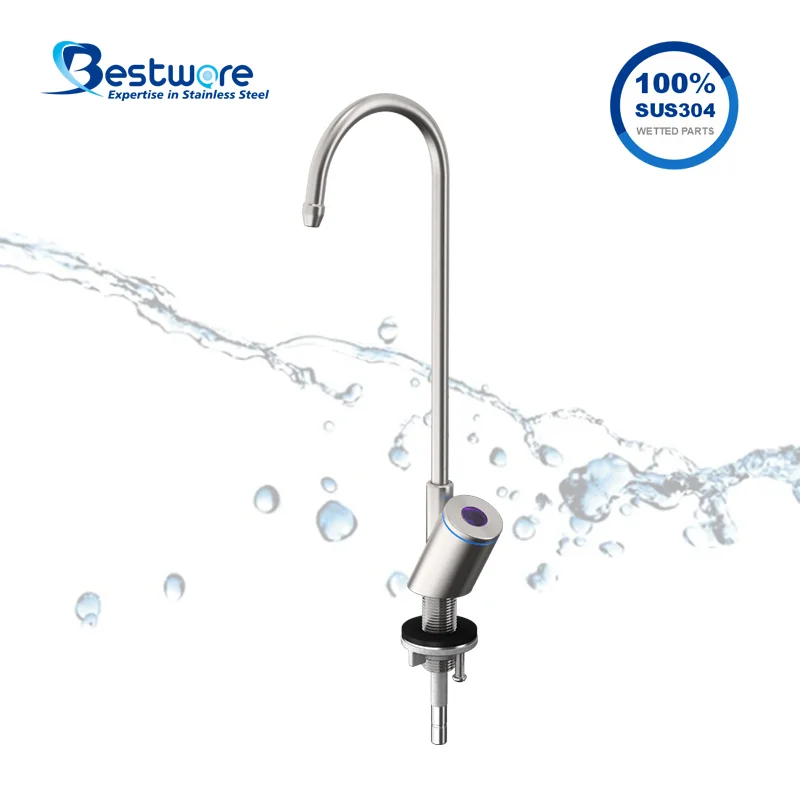
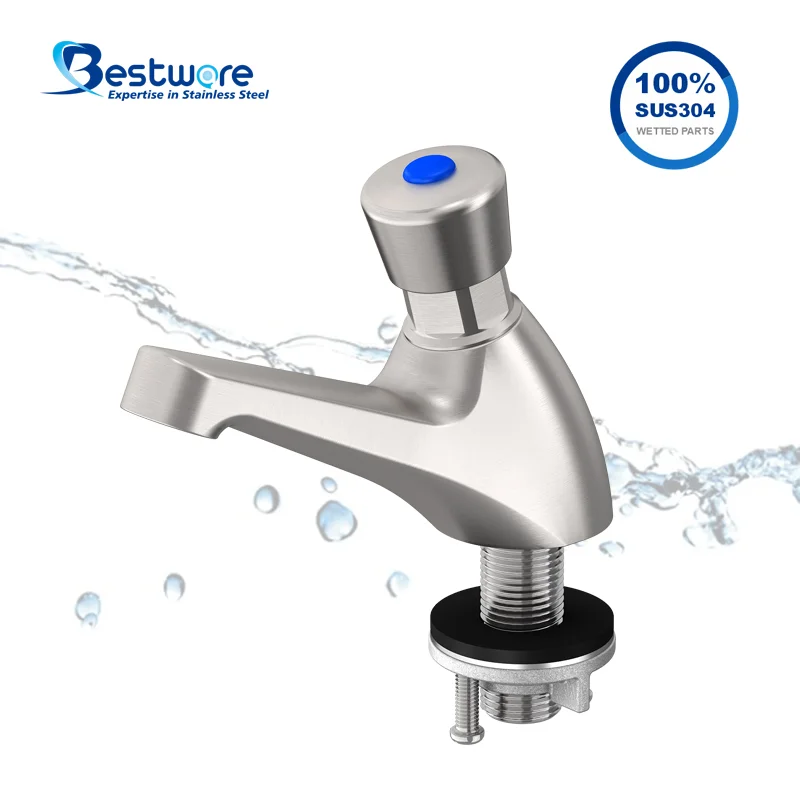
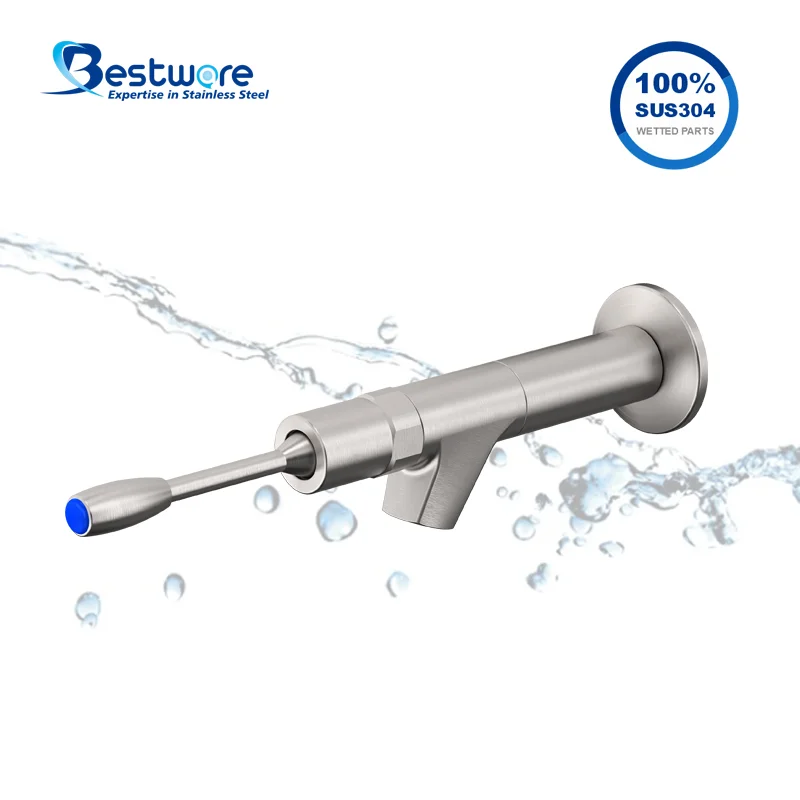
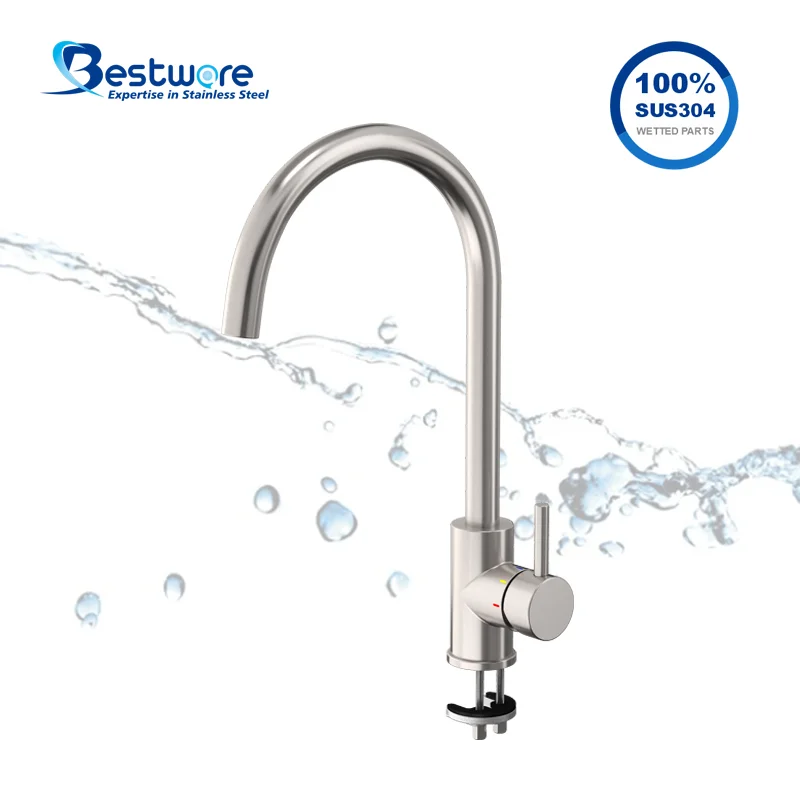
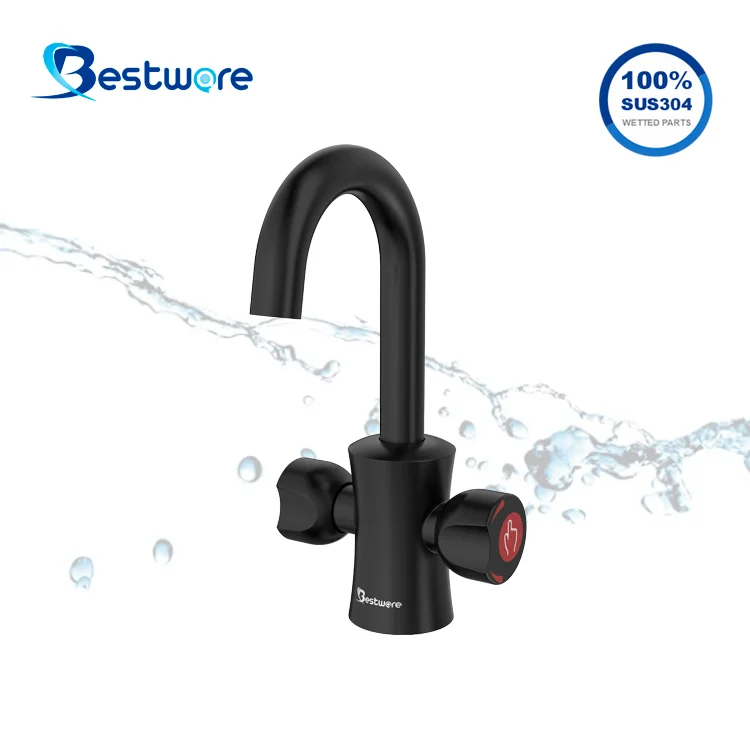
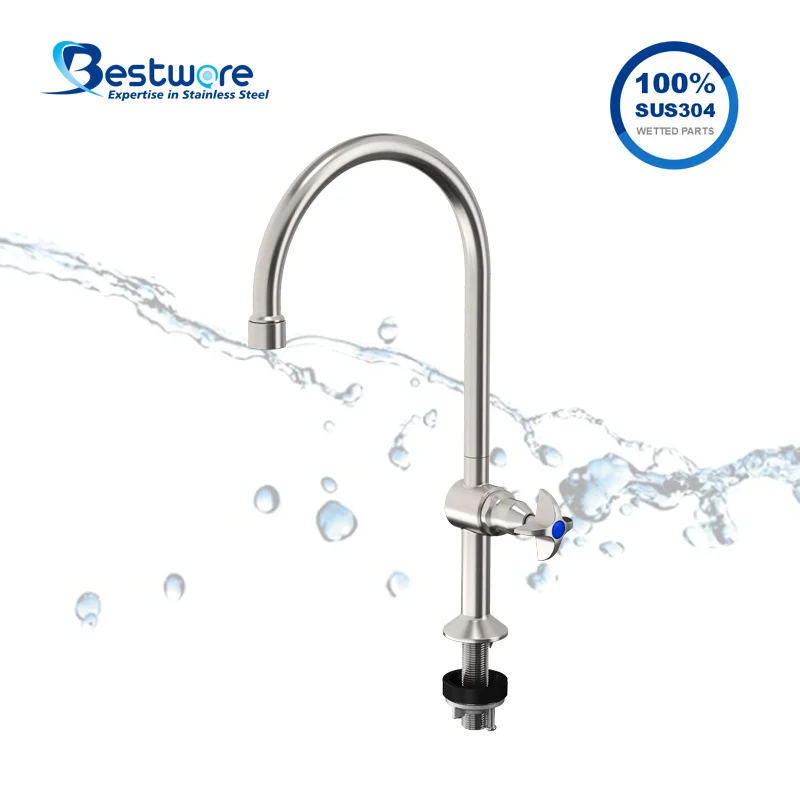
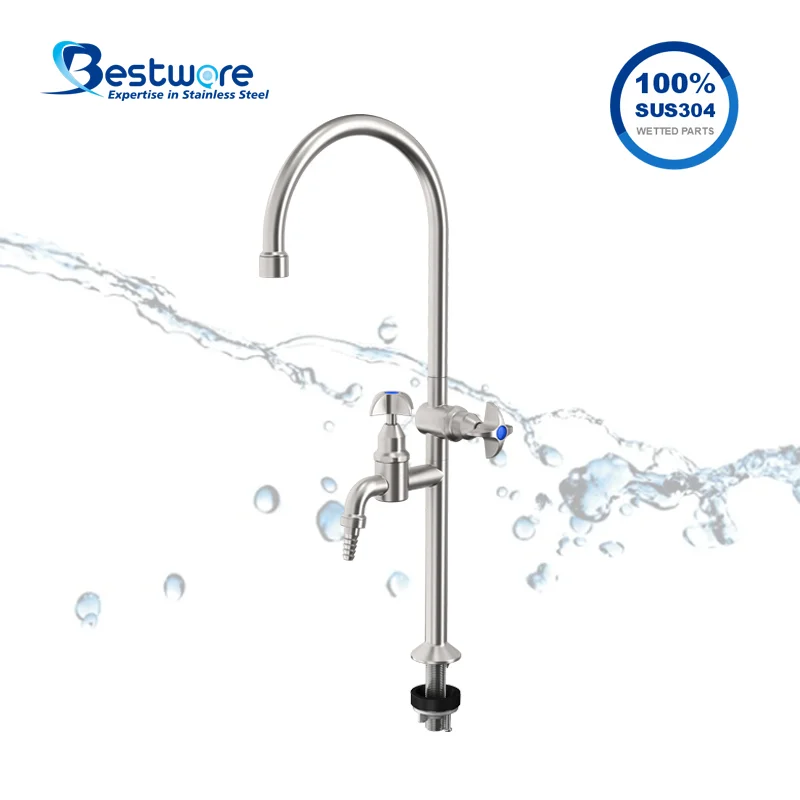
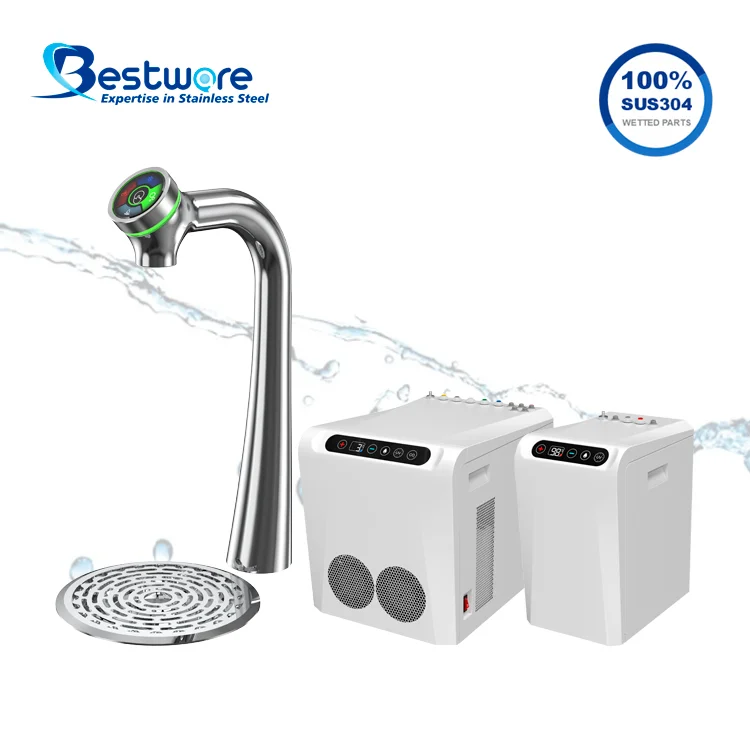
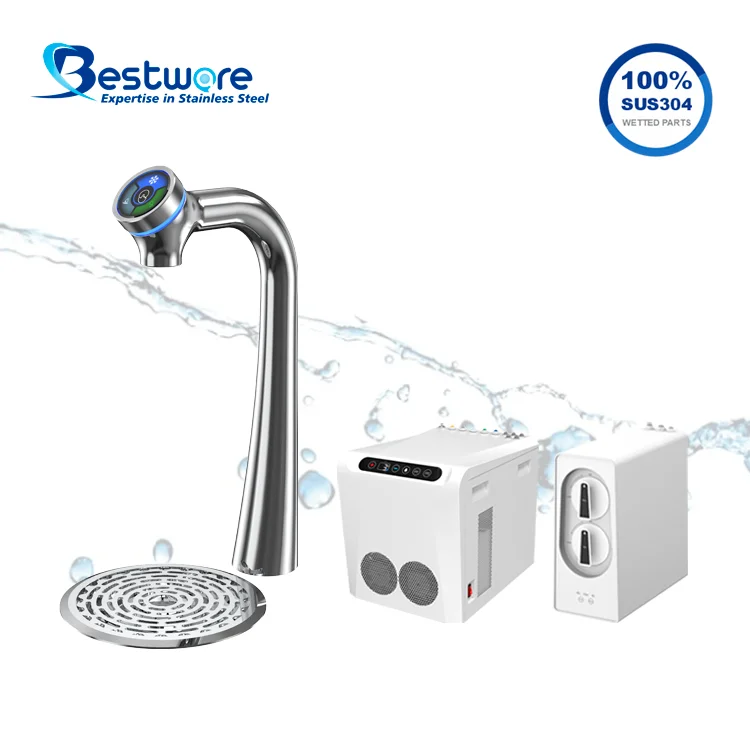
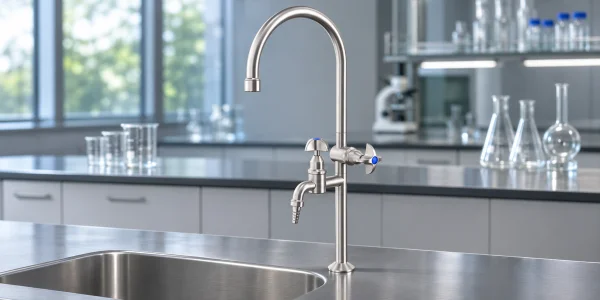
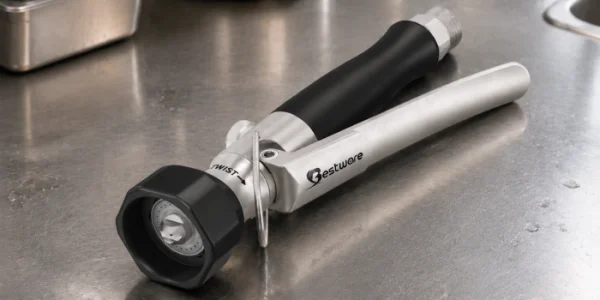
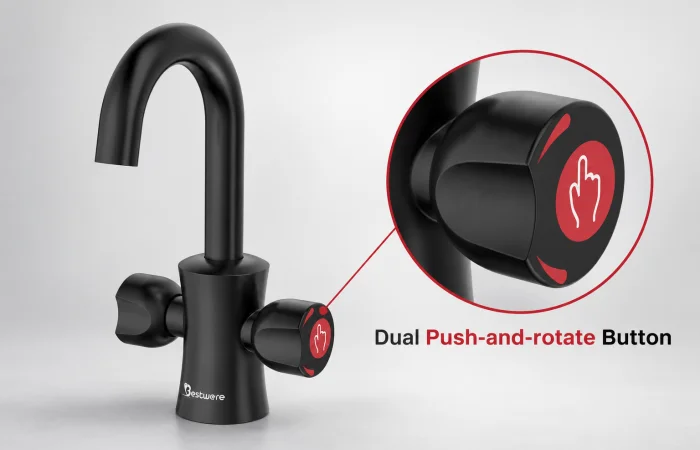
In terms of operation, Bestware's commercial sushi faucet uses a push-and-rotate activation mechanism. Users must deliberately perform the required actions to start the water flow. Unlike cup-actuated designs, in which the cup pushes a control component, this mechanism separates cup placement from water activation. Customers can position their cups beneath the spout first and then operate the faucet to dispense water. Combining pressing and rotating helps reduce the possibility of accidental activation caused by incidental contact with the control or by adjusting the cup position, providing more deliberate control during self-service hot water dispensing.
In terms of materials, Bestware's sushi faucet is made from food-grade SUS304 stainless steel, offering durability for everyday use and convenience in routine cleaning. The stainless steel body is suitable for regular wiping and cleaning in foodservice environments, helping keep the fixture looking clean and presentable. Its corrosion resistance is also beneficial in environments exposed to water and moisture. For sushi restaurants with high customer traffic and frequent faucet use, the body material is relevant not only to long-term product performance but also to the ease of routine cleaning and maintenance.
For sushi restaurant operators, foodservice equipment buyers, and project contractors, selecting a suitable sushi faucet requires consideration of operating safety, durability, and ongoing maintenance. Bestware specializes in the development and production of commercial stainless steel faucets and offers product options to meet the needs of different foodservice projects. This helps customers assess operating mechanisms, installation conditions, and application requirements when selecting equipment for self-service hot water dispensing at dining stations.
In the self-service tea process at conveyor belt sushi restaurants, sushi faucets do more than supply hot water. Their operating mechanisms, spout positions, and installation layouts also influence the customer experience and daily restaurant operations. Well-designed equipment should provide intuitive operation and convenient access while addressing the safety considerations associated with hot water and the demands of frequent use. Buyers should also evaluate material quality, the reliability of internal components, ease of cleaning, and ongoing maintenance requirements. Considering these factors together helps restaurants integrate self-service hot water dispensing more effectively into their overall service workflow.
One-stop Solution Provider of Stainless Steel Commercial Faucets
Email: business@bestware-stainless.com
after-sales@bestware-stainless.com
Tel: +86 18929047065
WhatsApp: +86 18929047065


WeChat: +86 18929047065


Website: www.bestware-stainless.com(Global Site)
www.bestware-sparkling.com(Water Dispenser)
Add: Block 8, No. 6, Jianda Nan Road, Jiangmen, Guangdong, China
Copyright © Bestware Hardware Production Co., Ltd. All Rights Reserved.