
Date: 2026-08-27
In commercial kitchens such as restaurants, hotels, central kitchens, and cafeterias, large stock pots and cooking vessels are essential for preparing soups, noodles, sauces, and other dishes in large quantities. While filling a pot with water may seem like a simple preparation task, repeatedly performing this operation in a busy kitchen can affect staff workload, workspace utilization, and overall workflow efficiency. Traditional kitchens typically rely on sinks as the main water source for large containers. This means large pots may need to be moved between the cooking area and the sink whenever they need to be filled. For large-capacity pots, especially when filled with water, repeated handling can add unnecessary effort and movement to the daily workflow. Pot fillers provide a more efficient approach by bringing the water supply directly to the cooking area. This allows large pots to remain where they are being used while being filled, helping reduce unnecessary handling, ease sink congestion, and create a more streamlined kitchen workflow.
In a traditional kitchen, the sink is usually the most convenient and commonly used water source. When a large pot needs to be filled, staff first have to move it from the cooking area to the sink.
For smaller pots, this may not be particularly inconvenient. Large stock pots and cooking vessels in commercial kitchens, however, are different. The pot itself may already be heavy, and its total weight increases significantly once a large volume of water has been added. If the filled pot then needs to be carried back to the cooking area, a simple filling task effectively involves two separate instances of pot handling.
More importantly, this handling is not required by the cooking process itself. It is an additional step created by the distance between the water source and the actual location where the pot is being used. Staff spend time moving the pot simply because it has to be brought to the water supply. This creates a straightforward limitation in the traditional approach: the pot has to be moved to the water source.
Pot fillers change this workflow by bringing the water source closer to the pot. Once the faucet is installed near the cooking area, staff can position the pot where it will actually be used and fill it directly, without moving it to the sink.
The pot can therefore remain in its working position from preparation through filling and into the cooking process. Once filling is complete, staff can proceed directly to the next step without having to move a heavy, water-filled pot again. The change may appear to involve only a short distance, but from a workflow perspective, it eliminates an entire repetitive handling step.
This is particularly relevant in commercial kitchens. Efficiency is often not determined by a single complex task, but by the combined effect of numerous repetitive activities. When large pots need to be filled several times a day, eliminating unnecessary handling can continuously reduce the workload associated with these routine operations.
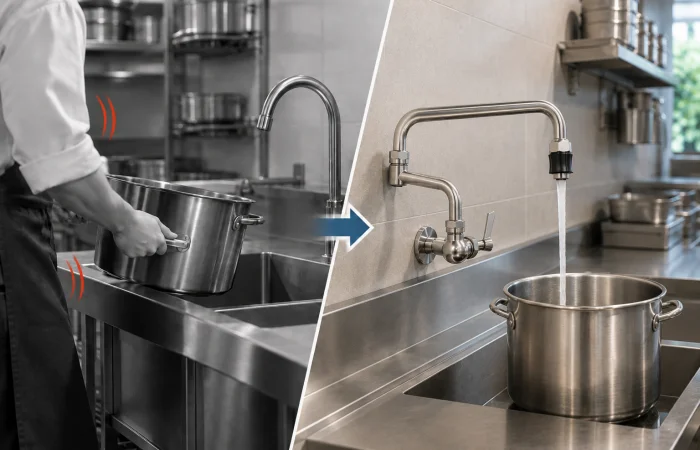
When pots no longer need to be repeatedly moved to the sink, the change extends beyond the individual filling task. It also affects how the sink, cooking area, and other workstations interact with one another.
Commercial kitchen sinks often serve multiple purposes, including washing ingredients, rinsing utensils, handling containers, and cleaning. If large pots also need to occupy the sink area for filling, different tasks become concentrated in the same workspace.
This conflict becomes more noticeable during busy periods. One employee may need to use the sink to process ingredients while another needs to fill a large pot. If the pot has to be brought into the sink area, one of the tasks may have to wait, or employees may need to constantly coordinate their movements.
Pot fillers provide an additional water supply point, allowing large pots to be filled near the cooking area while the sink remains available for washing and preparation tasks. In this way, different water-related tasks can be distributed across their respective work areas, reducing the demands that large-pot filling places on the sink and surrounding workspace.

Commercial kitchen efficiency depends not only on how quickly an individual employee completes a task, but also on whether different tasks can take place at the same time. Traditional pot filling requires staff to move between the cooking area and the sink. Although a single trip may seem insignificant, it temporarily takes the employee away from the current workstation and increases the movement of both people and large cookware through the kitchen.
Pot fillers bring the water supply to the pot instead. Staff can fill the pot near the cooking area and then continue with the cooking process without leaving their workstation simply to obtain water. At the same time, the sink remains available for washing, and other employees are less likely to have to make room for large cookware.
The improvement is therefore not limited to reducing the distance required to obtain water. It also improves the connection between different work areas. When the cooking area is primarily used for cooking, the sink is primarily used for cleaning and preparation, and large pots can be filled where they are actually being used, the roles of different work areas become clearer and unnecessary movement between them can be reduced. For hotel kitchens, central kitchens, and other foodservice operations that handle large-scale cooking, this workflow improvement can be more meaningful than simply eliminating a few steps.
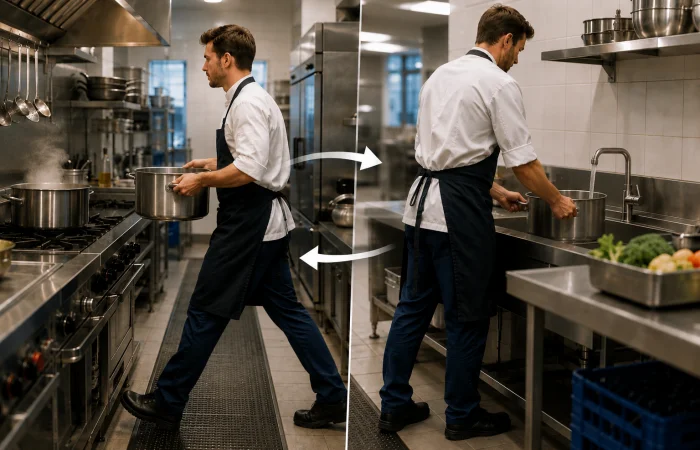
Keeping a large pot in its original position while filling it is not simply a matter of changing where the faucet is installed. The pot filler itself must also be designed around the size, position, and practical use of large cookware.
Large pots vary in size and may not always be positioned in exactly the same place. If the faucet outlet can only cover a fixed area, staff may still need to reposition the pot to bring it under the water stream, which reduces the practical benefit of point-of-use water supply.
For this reason, pot fillers are commonly designed with extended spouts and articulated or jointed structures to increase their reach. This allows staff to adjust the direction of the water flow according to the position of the pot, covering a larger working area without requiring the pot to be repeatedly repositioned.
This flexibility is particularly useful in commercial kitchens that handle large cookware. The larger the pot and the more limited the available workspace, the more directly the faucet's reach affects ease of operation.
The purpose of a pot filler's extended reach is not simply to increase the faucet's range of movement. More importantly, it allows the water flow to adapt to the position of the pot. Only when the outlet can effectively reach the actual working area can point-of-use water supply truly reduce pot movement.
For large pots, reach is only one part of filling efficiency. Water flow also affects the time required to fill a vessel. For example, filling a 60-liter pot at a theoretical flow rate of 10 liters per minute would take approximately 6 minutes, while a theoretical flow rate of 15 liters per minute would take approximately 4 minutes. Actual filling time can also be affected by water pressure, piping conditions, and outlet performance, so these calculations are intended primarily to illustrate the relationship between flow rate and filling time.
A commercial kitchen needs more than simply having water available. It needs to complete routine water-filling tasks within a reasonable amount of time. For kitchens that frequently prepare food in large batches, a stable and appropriate flow rate can reduce waiting during pot filling and help keep preparation work moving continuously. Pot filler design therefore needs to balance reach and water flow, ensuring that the water can reach the pot while providing a flow rate appropriate for the intended application.
Faucets in commercial kitchens may be opened, closed, and adjusted repeatedly, so ease of operation can also affect workflow continuity. Pot fillers are typically designed with controls that allow quick operation and paired with a movable spout, enabling staff to fill a pot from nearby while adjusting the outlet position as needed. In high-frequency commercial applications, the focus should not necessarily be on adding more functions, but on minimizing unnecessary actions. Staff should be able to complete the filling task without leaving the current work area or repeatedly repositioning the pot simply to accommodate the faucet.
From reach and flow rate to control design, these features ultimately serve the same purpose: to allow large pots to be filled conveniently and continuously where they are actually being used.
The practical value of a pot filler ultimately depends on how well it fits the kitchen's installation conditions and workflow. Commercial kitchens vary in terms of cooking equipment, available wall space, countertop configuration, and working areas. Pot fillers therefore need to offer installation options suited to different kitchen layouts, in addition to providing appropriate reach and stable water flow.
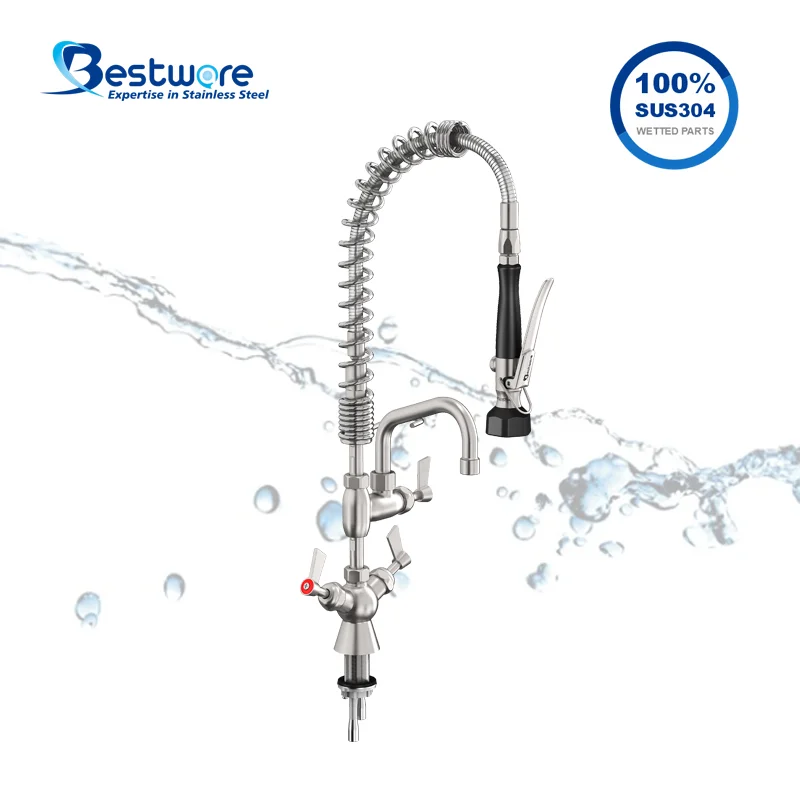
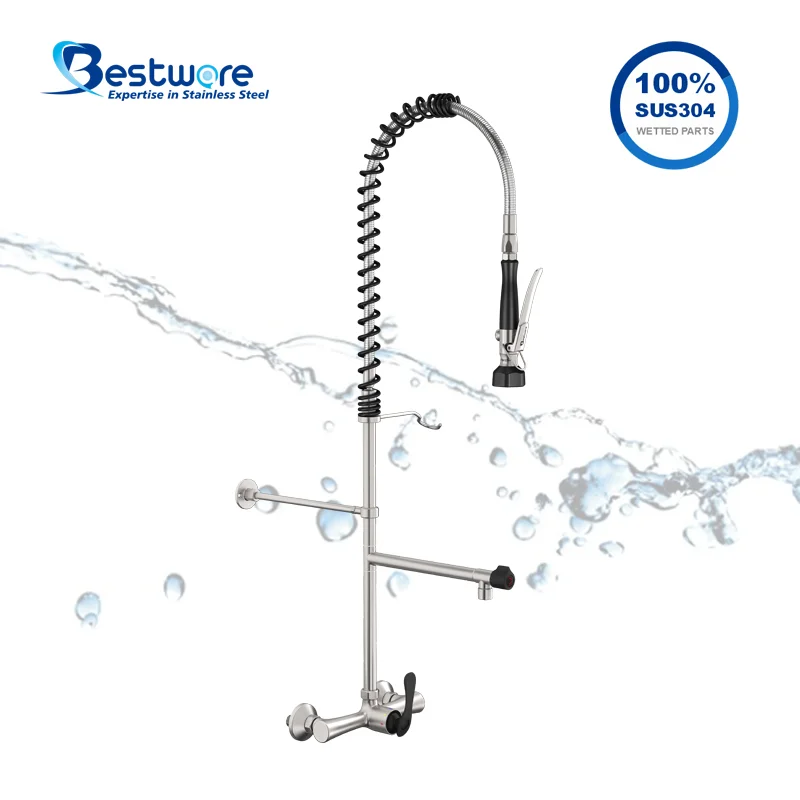
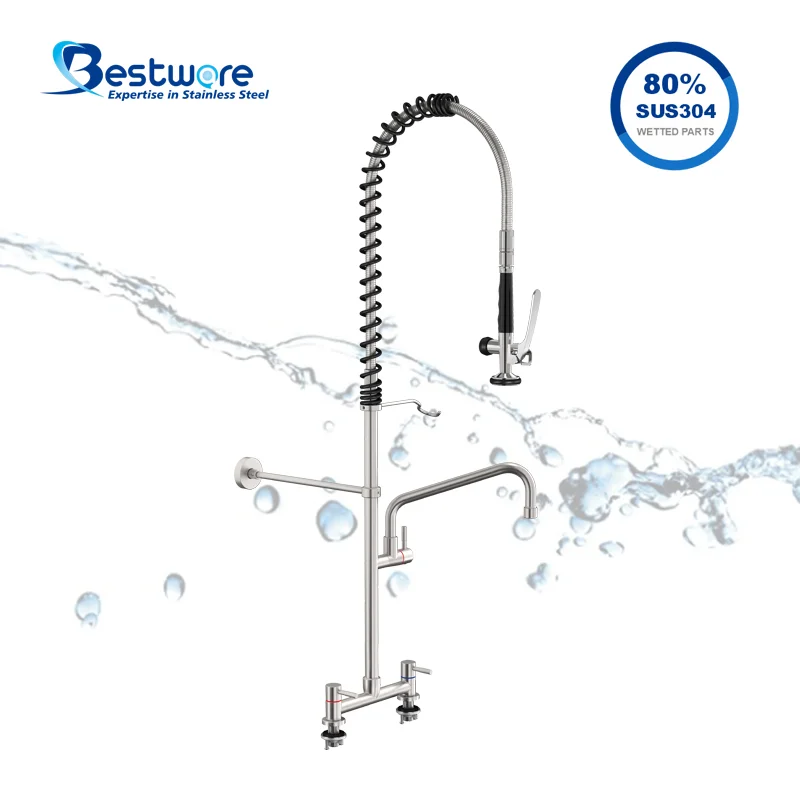
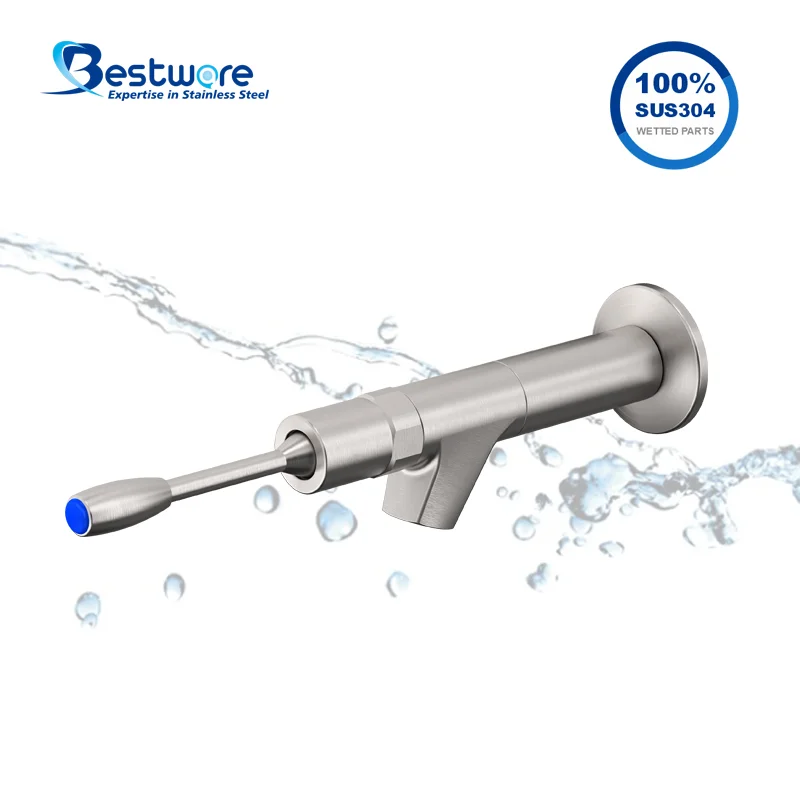
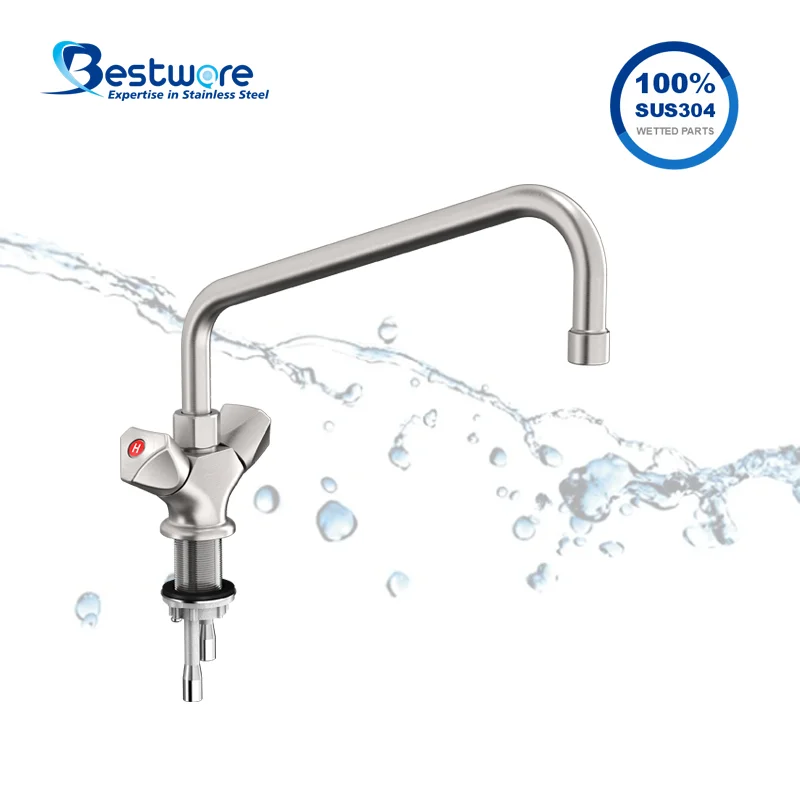
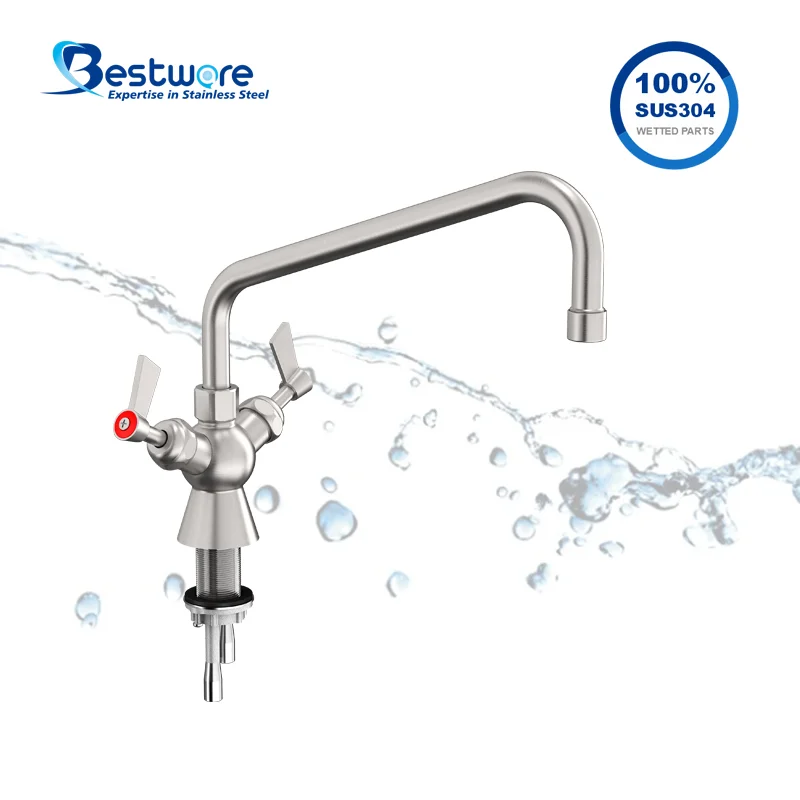
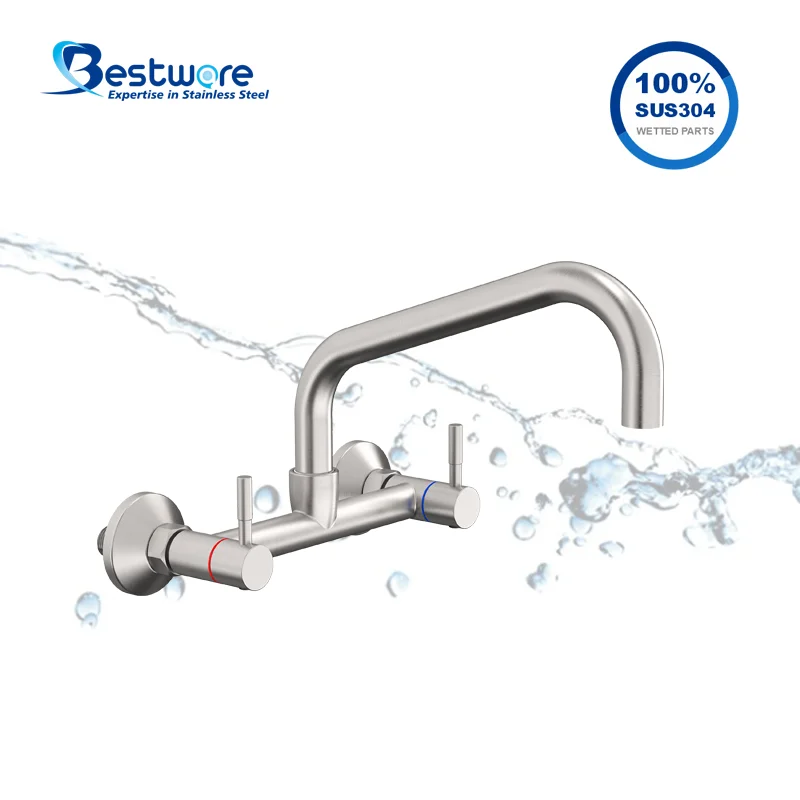
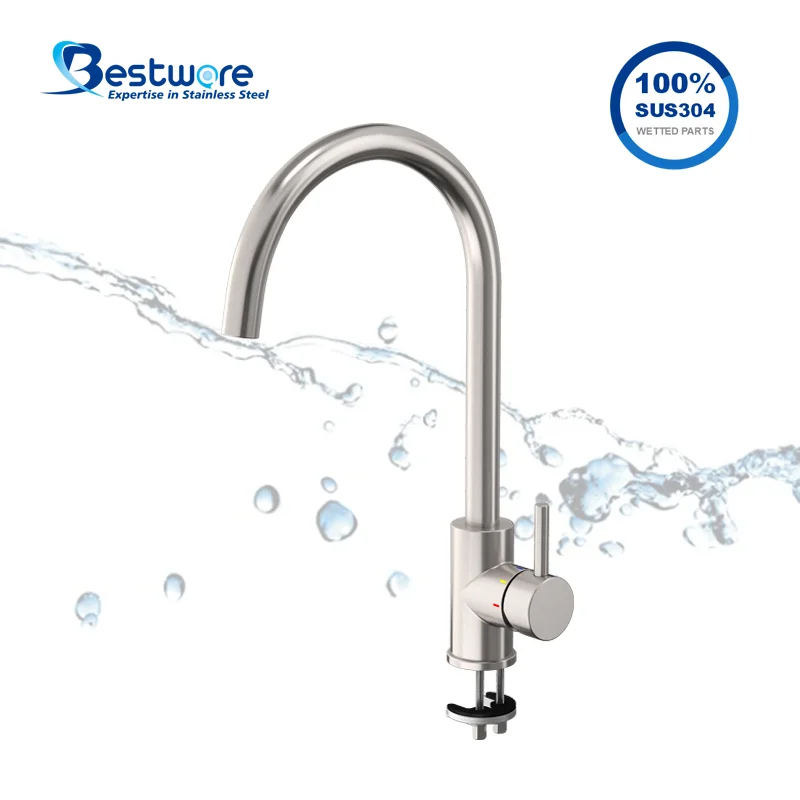
Bestware offers both deck-mounted and wall-mounted pot filler solutions, allowing the installation method to be selected according to the existing kitchen layout and available mounting conditions. A deck-mounted configuration can be installed directly on a suitable countertop or work surface near the cooking area or large pot. A wall-mounted configuration makes use of available wall space and positions the pot filler above or near the cooking area, providing a direct water supply for large cookware.
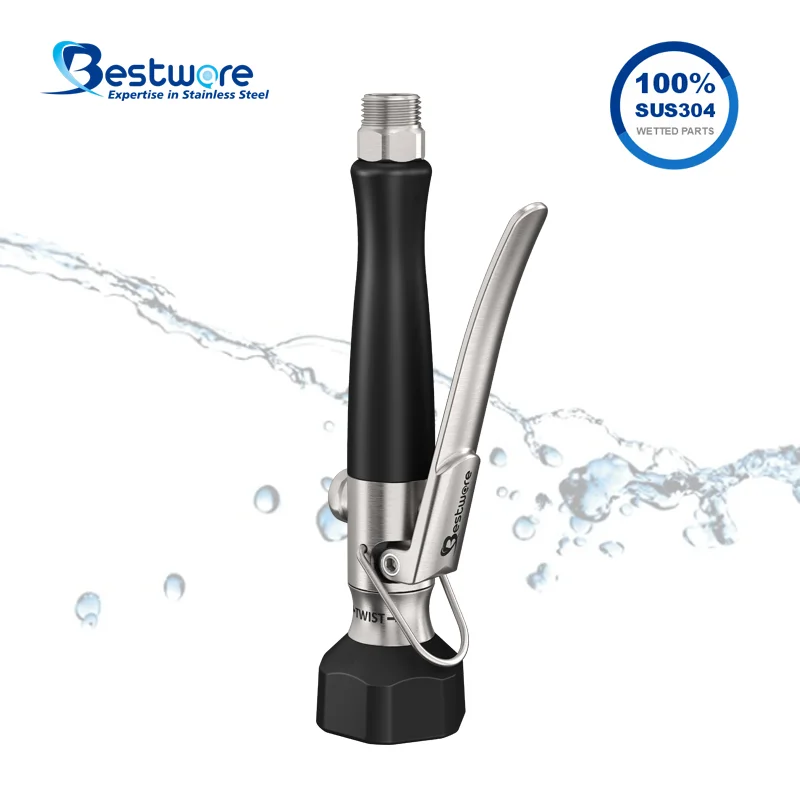
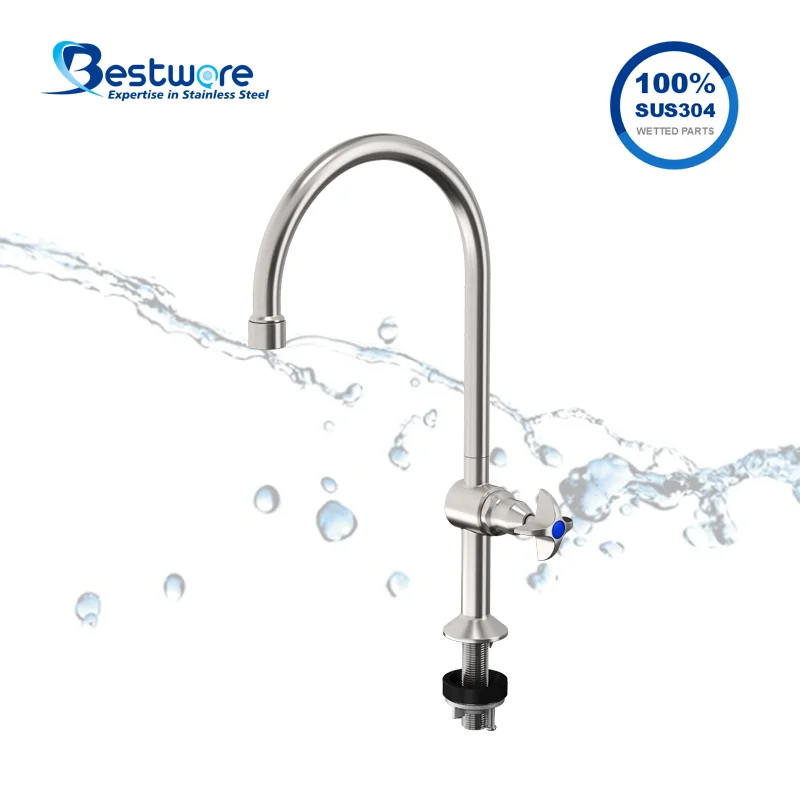
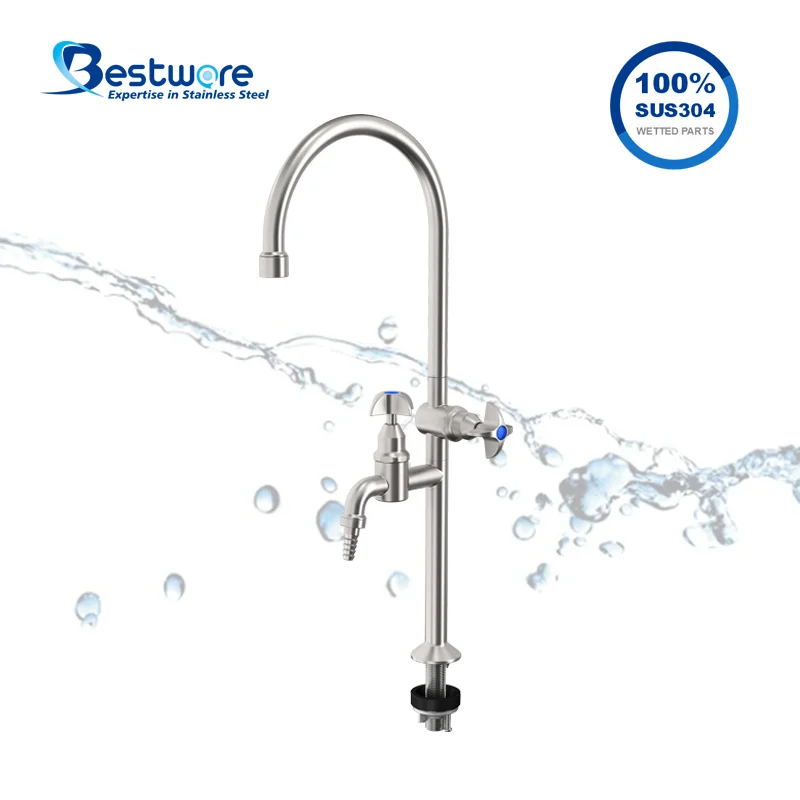
In terms of product design, Bestware pot fillers feature articulated swing spouts with extended reach, allowing the outlet to cover a wider working area and be adjusted according to the position of the pot. The faucets provide a rated flow rate of 15 LPM and feature a single-handle, single-control design for cold water, making everyday filling more convenient. Constructed from food-grade SUS304 stainless steel, they are designed to provide durability and corrosion resistance for long-term use in commercial kitchen environments.
By offering different installation configurations and flexible spout designs, Bestware provides commercial kitchens with a more convenient point-of-use water supply solution. Large pots can remain in their original work areas during filling, helping reduce unnecessary staff movement and pot handling.
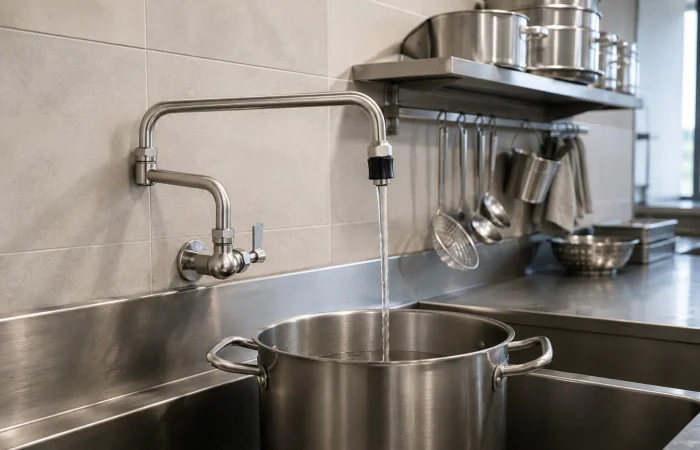
Kitchen efficiency is often reflected in the basic tasks that are repeated throughout the day. Filling large pots may seem simple, but traditional methods require staff to move between the cooking area and sink and handle the pot during the filling process. Over time, these repeated movements can add to staff workload and occupy valuable workspace. Pot fillers bring the water supply closer to large pots, allowing them to remain in their original work area while being filled. Combined with flexible reach and convenient operation, this makes water supply a more natural part of the cooking workflow. For restaurants, hotels, central kitchens, cafeterias, and other commercial kitchens that frequently use large cookware, the time saved during a single operation may not seem significant. However, when the same improvement is repeated throughout the day, its long-term efficiency value becomes much more meaningful. A pot filler does more than simplify one filling task. It helps optimize an essential part of the commercial kitchen workflow by bringing the water supply closer to where the work actually takes place.
One-stop Solution Provider of Stainless Steel Commercial Faucets
Email: business@bestware-stainless.com
after-sales@bestware-stainless.com
Tel: +86 18929047065
WhatsApp: +86 18929047065


WeChat: +86 18929047065


Website: www.bestware-stainless.com(Global Site)
www.bestware-sparkling.com(Water Dispenser)
Add: Block 8, No. 6, Jianda Nan Road, Jiangmen, Guangdong, China
Copyright © Bestware Hardware Production Co., Ltd. All Rights Reserved.
.webp)
(7).webp)
(6).webp)
(5).webp)