Date: 2026-07-30
Turn on a faucet and water flows smoothly.
But the component that most directly determines how the faucet performs is not its exterior design. It is the core part hidden inside: the cartridge.
The cartridge controls the opening and shut-off of water flow. It also helps determine how many operating cycles the faucet can withstand, how long it can remain in service, and how reliably it performs under demanding conditions.
Over the past several decades, ceramic cartridges have become the market standard because of their smooth action and mature manufacturing technology. Compression cartridges, by contrast, have long been viewed as the more traditional, basic option.
That perception is now changing as cartridge structures continue to evolve.
Ultimately, cartridge performance is not determined by “ceramic” or “rubber” alone. The critical questions are:
Which component carries the load, and which component creates the seal?
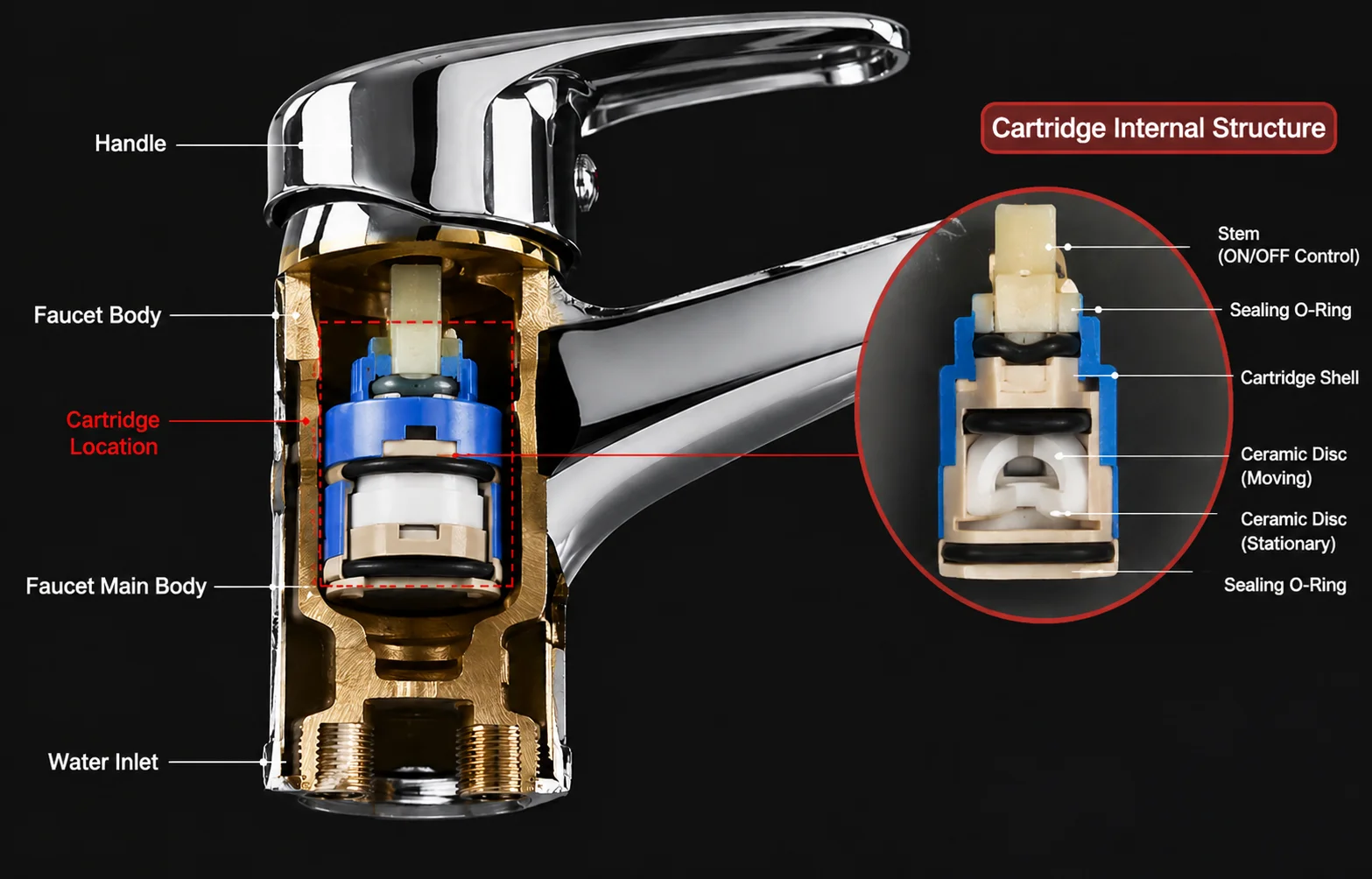
A faucet cartridge is the central mechanism that controls water flow inside the faucet.
Its main functions are:
Opening and shutting off the water flow
Regulating the flow rate
Maintaining a long-term watertight seal
From an engineering standpoint, cartridge performance is evaluated in four main areas:
1. Service life — How many on/off cycles the cartridge can withstand.
2. Operating feel — Whether the handle turns smoothly and the flow can be controlled accurately.
3. Sealing reliability — Whether the cartridge develops drips or leakage after prolonged use.
4. Environmental tolerance — Whether it remains stable when exposed to hot water, pressure fluctuations, and impurities in the water supply.
A cartridge is therefore more than a simple switch. It is the core control unit of the entire faucet system.
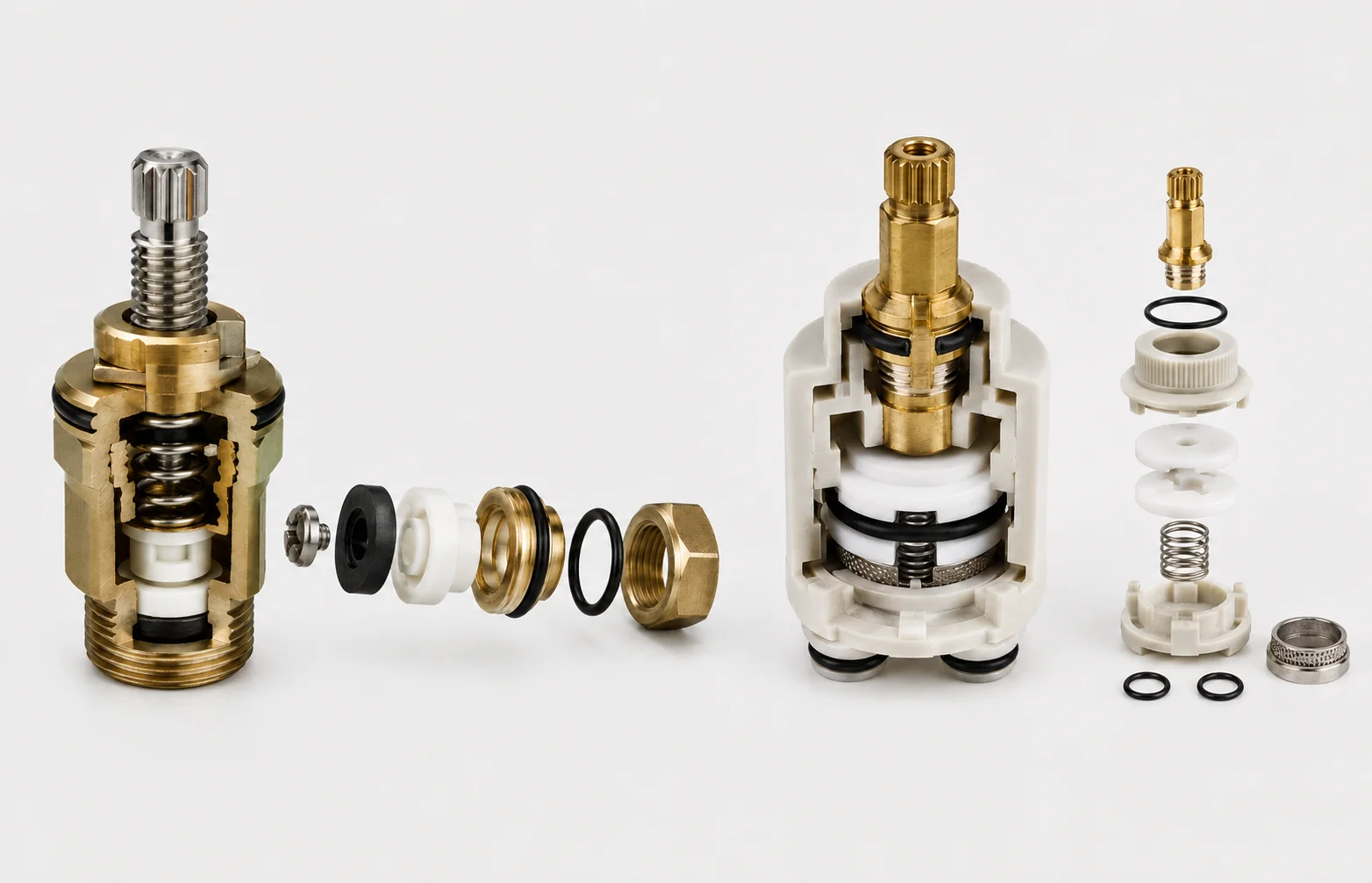
Most faucet cartridges on the market use one of two basic designs:
A ceramic cartridge contains two precision-machined ceramic discs.
Water flow is controlled by changing the position of the discs relative to each other:
Ports aligned → water flows
Ports offset → water stops
Key characteristics:
Operating feel — A relatively short opening angle with a light, smooth action.
Sealing method — A watertight seal created by the close, high-precision contact between the two ceramic discs.
Suitable applications — Environments with relatively stable water quality, including residential and commercial settings with moderate, balanced usage frequency.
Primary advantage — High-precision flow control and a smooth operating experience.
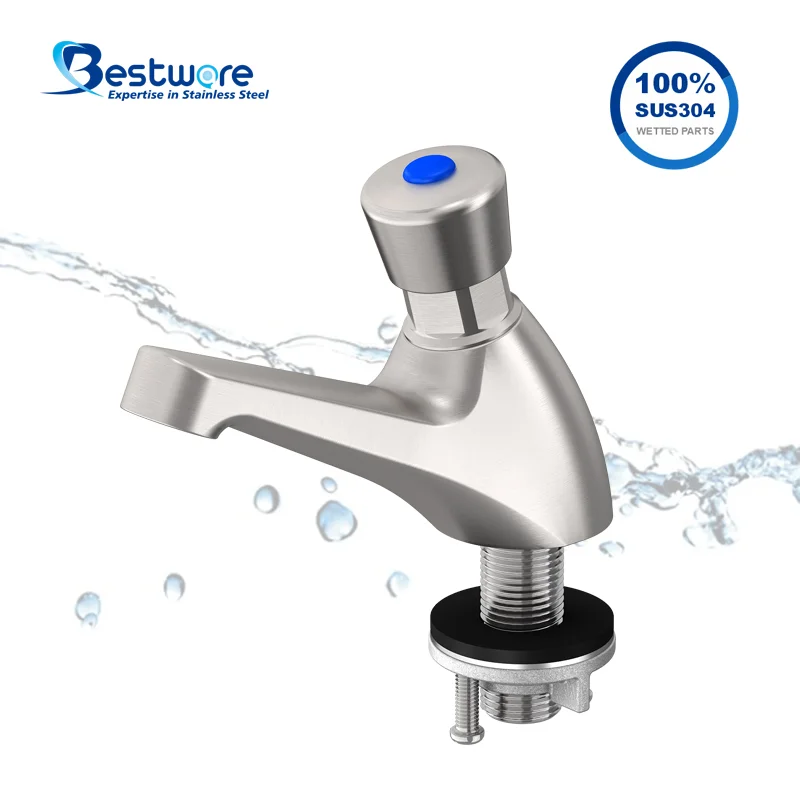
A compression cartridge works on a different principle.
Turning the valve stem moves the sealing component downward and presses it against the valve seat, thereby controlling water flow:
Seal compressed against the seat → water shuts off
Seal released from the seat → water flows
Key characteristics:
Operating feel — More noticeable mechanical feedback, with a straightforward and dependable mechanism.
Sealing method — An elastomeric sealing material is compressed to form a watertight barrier.
Suitable applications — High-cycle use, demanding applications such as commercial kitchens, and installations with significant water-pressure fluctuations.
Primary advantage — A simple, robust structure with strong tolerance for challenging operating conditions.
That industry perception did not arise without reason.
The main weakness of traditional compression cartridges was not the sealing principle itself. The real challenge was the quality of the sealing material and whether the cartridge structure managed mechanical loads appropriately.
In conventional designs, the rubber sealing element was often required to perform three demanding functions at the same time:
Withstand the mechanical load created during shut-off
Undergo repeated compression and recovery over a long service period
Maintain a stable, continuous seal
During prolonged, high-cycle use, concentrated stress on the rubber can lead to:
Material fatigue
Deterioration in sealing performance
Reduced service life
As a result, a simplified industry perception gradually emerged:
Ceramic cartridge = precision and durability
Compression cartridge = traditional construction
However, that judgment is based primarily on older compression-cartridge designs. The next step in compression-cartridge development is not simply to replace one sealing material with another. It is to redesign the internal load path so that each material performs the function for which it is best suited.
Bestware did not simply substitute one material for another. It redesigned the compression cartridge around the way force is transmitted through the mechanism.
The central design change is:
Conventional structure — The rubber seal carries the compression load by itself.
Redesigned structure — The metal structure carries the mechanical load, while the sealing material creates the seal.
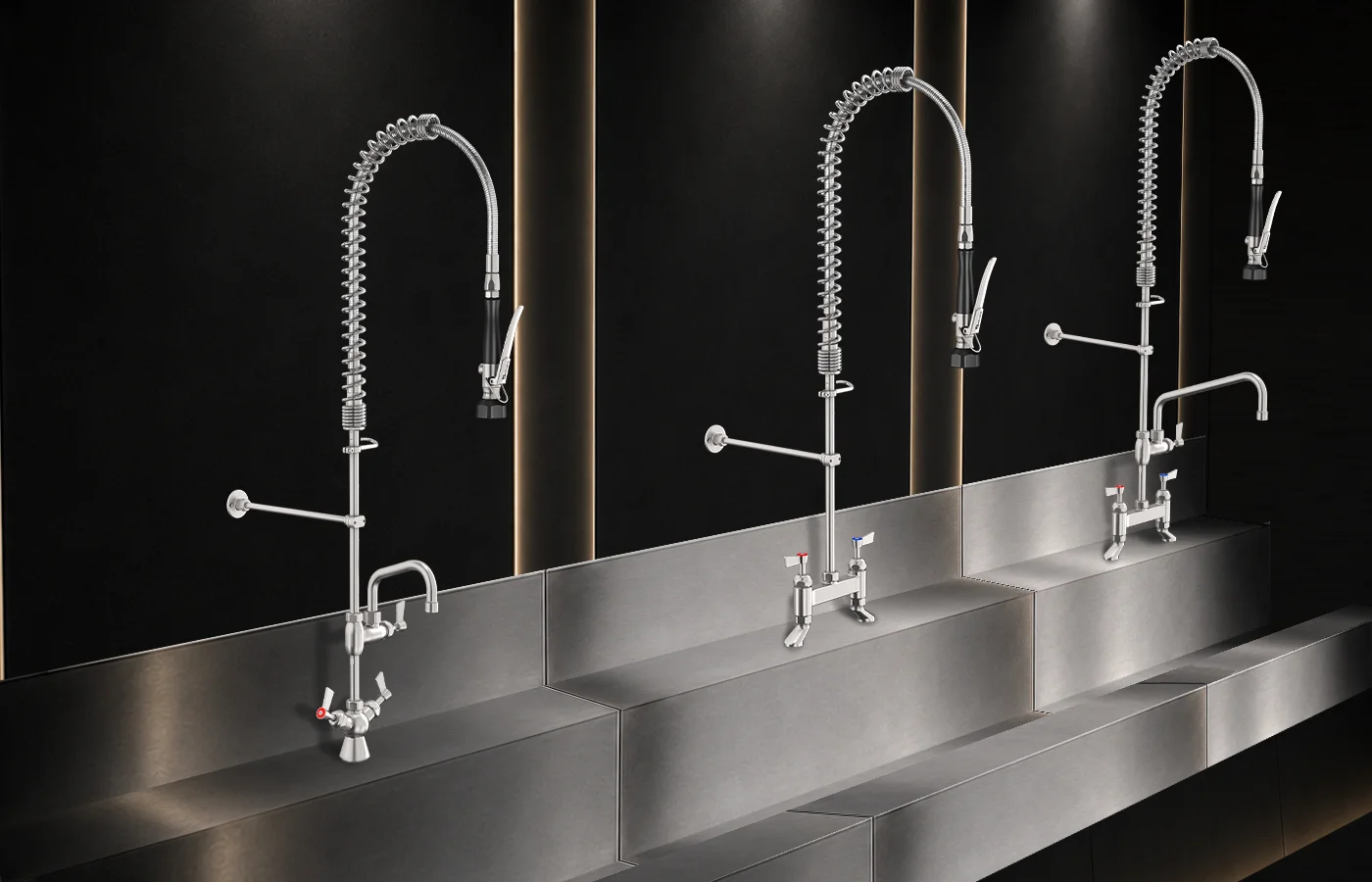
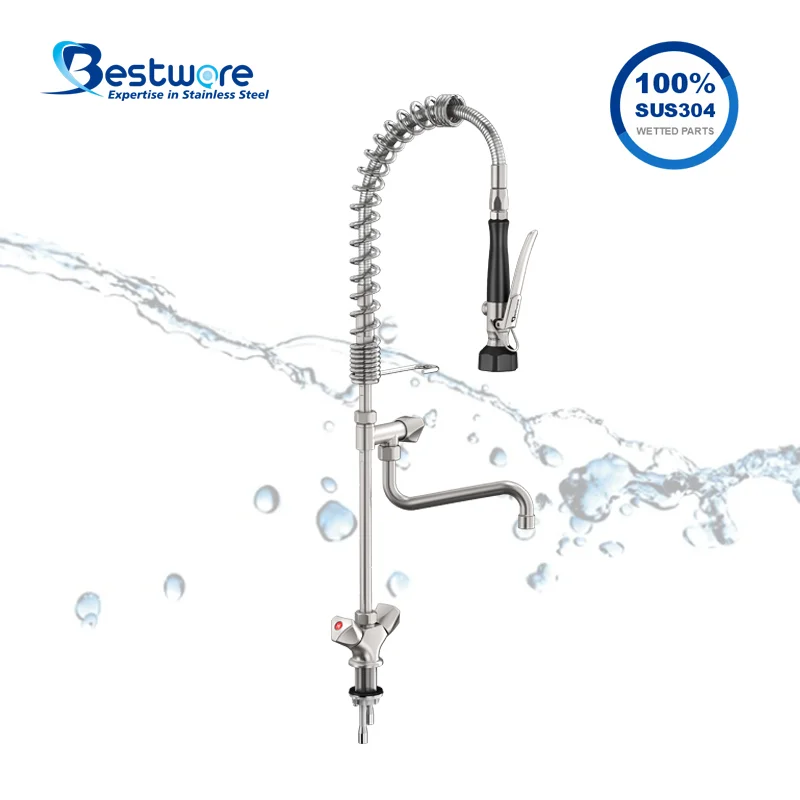
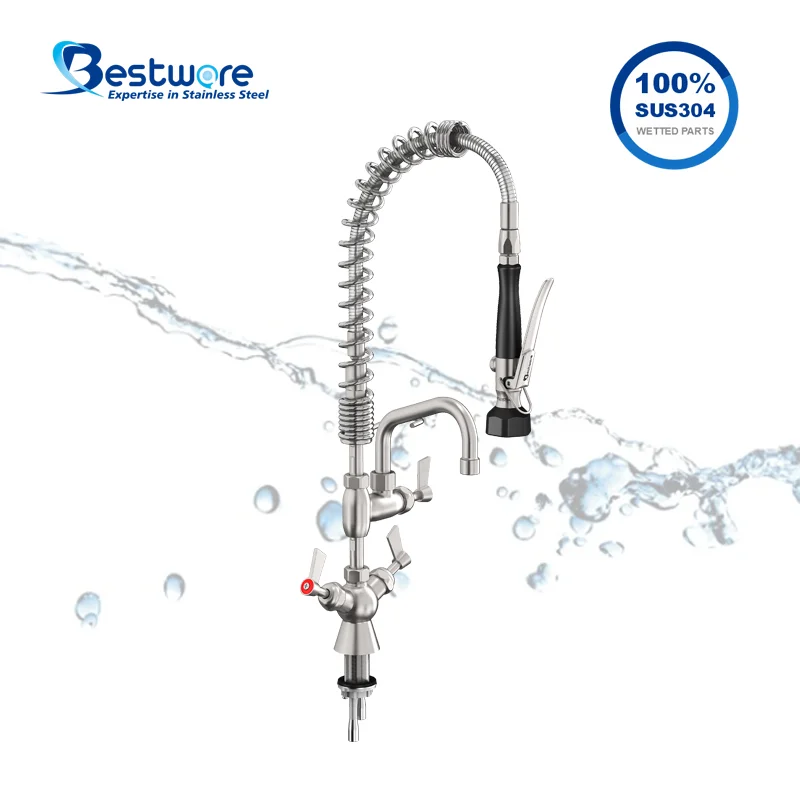
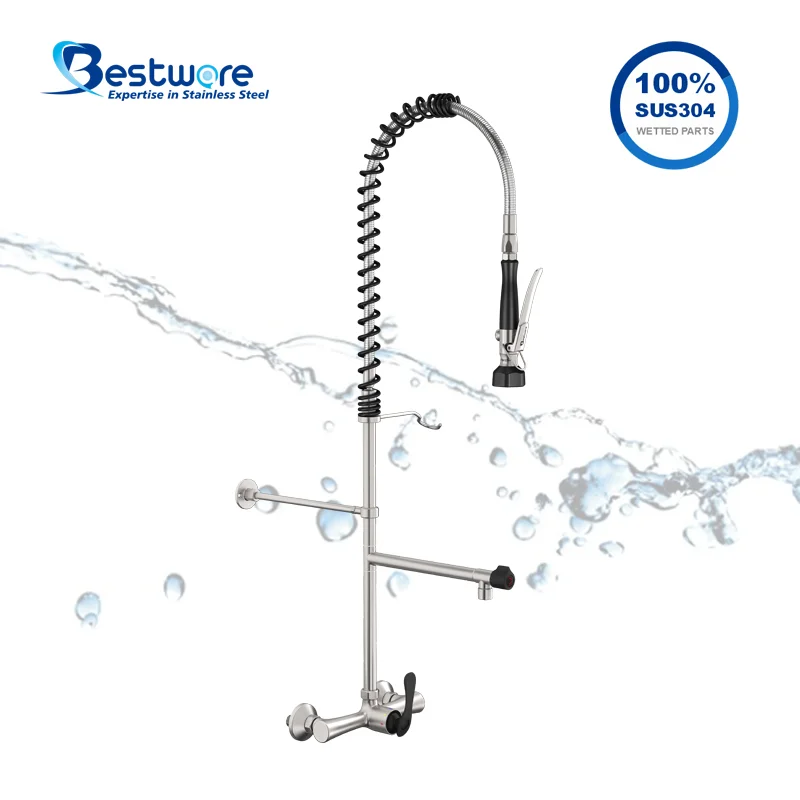
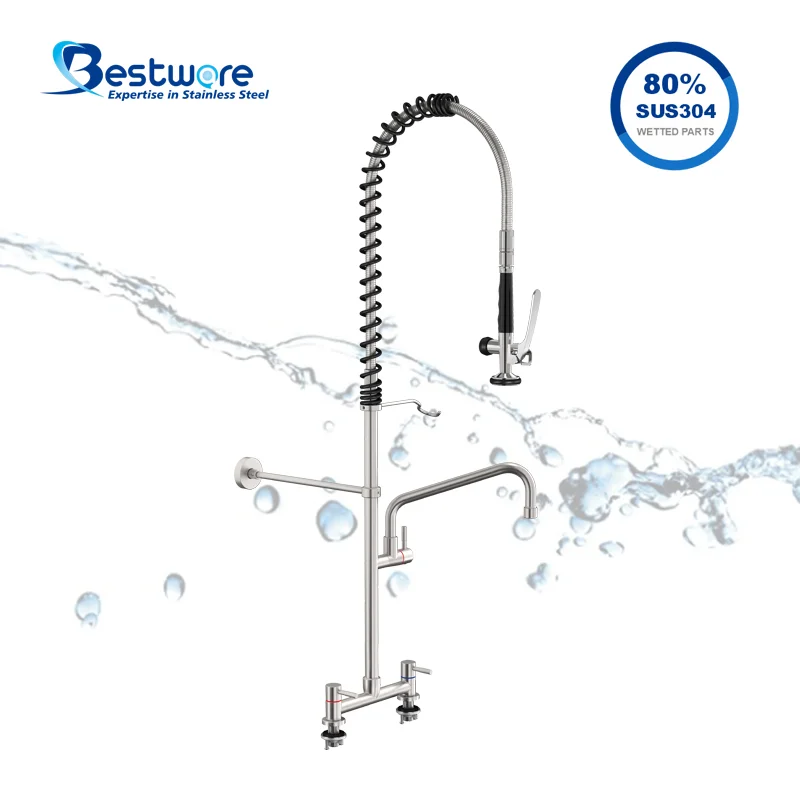
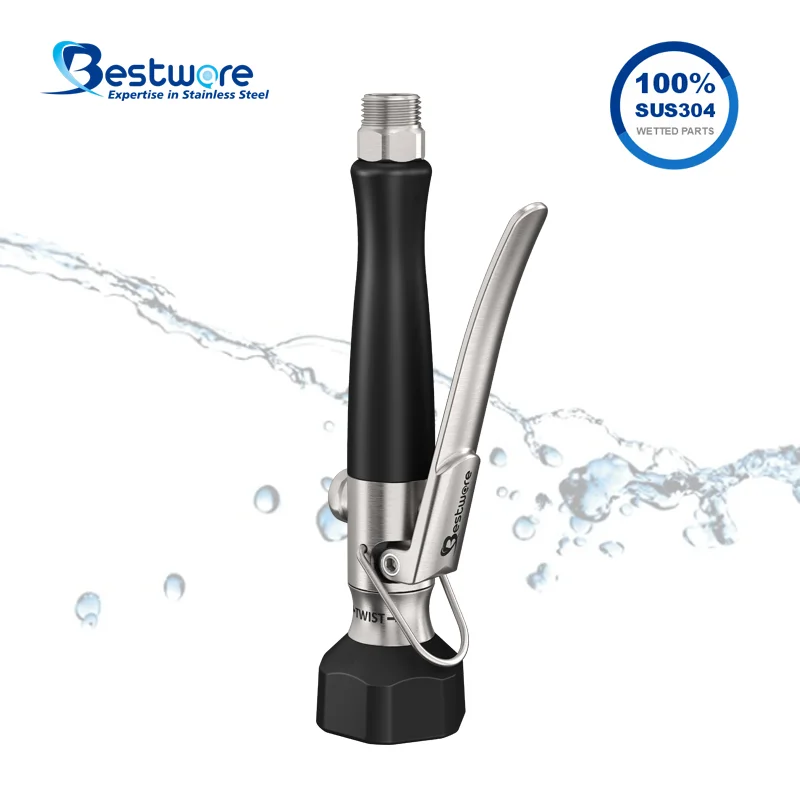
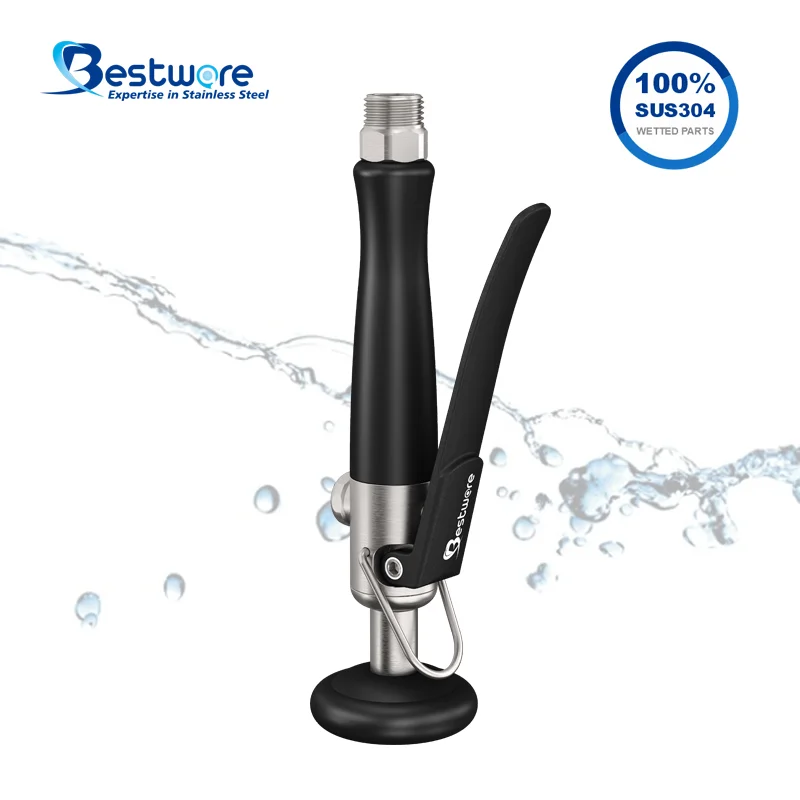
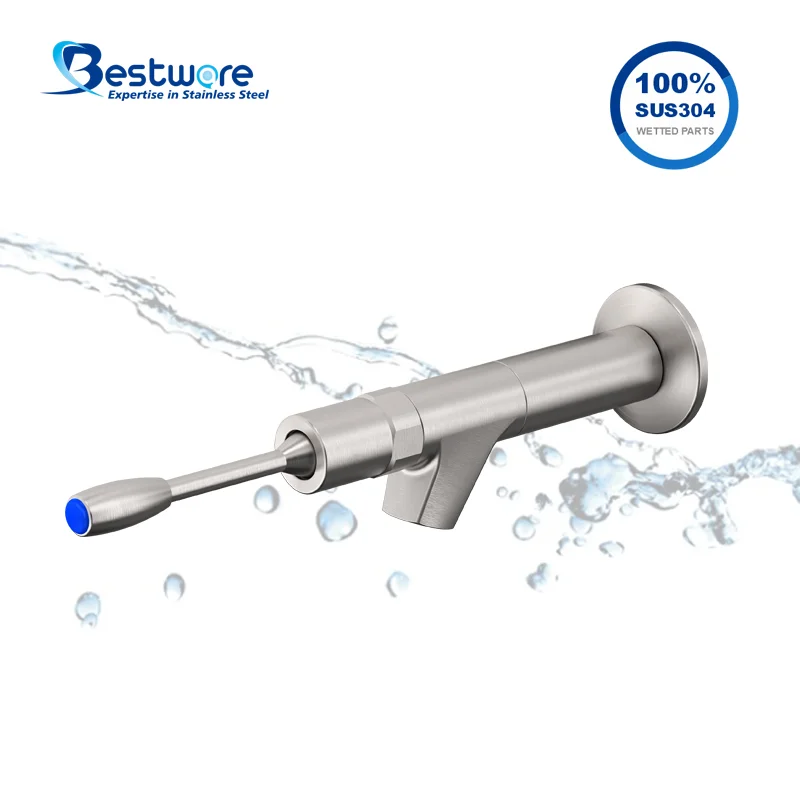
Consider the American-style quick-thread compression cartridge used in Bestware pre-rinse faucets:
Conventional structure — The rubber sealing element directly bears the compression force.
Potential consequences:
The load is concentrated in the rubber material
Material fatigue develops during prolonged use
Service life becomes more sensitive to how tightly users close the valve
Bestware’s optimized structure — A 304 stainless-steel load-bearing structure combined with a T-shaped NBR sealing component.
This arrangement allows:
The 304 stainless-steel structure to carry the primary mechanical load
The NBR rubber to focus on its sealing function
The key change is that the rubber is returned to the role it performs best—sealing—instead of serving as the primary load-bearing element.
With a conventional compression design: the tighter the valve is closed → the more the rubber is compressed → the faster the material ages.
Bestware incorporates a mechanical travel stop to:
Limit the maximum compression travel
Prevent over-compression
Keep the sealing material within its intended operating range
Different users apply different levels of closing force. The travel stop helps reduce additional wear caused by overtightening.
Conventional tests are often conducted at a standard water temperature of 65°C (149°F). Actual commercial kitchens, however, involve more demanding conditions:
Frequent on/off cycling
Prolonged hot-water use
Significant temperature changes
Longer operating periods
Bestware therefore tests the cartridge at temperatures above 95°C (203°F), combined with high-pressure cycling.
The objective is not simply to publish a higher test figure. It is to verify whether the cartridge can remain stable over time under demanding, real-world commercial operating conditions.
Bestware uses a high-performance NBR sealing material designed to comply with applicable NSF material requirements and WRAS approval criteria.
This helps support:
Stability under high-temperature conditions
Potable-water and food-service safety requirements
Requirements for international commercial applications
Progress in cartridge design should come from continued optimization of the internal operating logic: how force is distributed, how materials divide responsibilities, and how the seal remains stable over time.
Ceramic cartridges use precision ceramic contact surfaces to combine rotational control with hard-face sealing. Next-generation compression cartridges use a metal load-bearing structure together with an elastomeric sealing material, redesigning the mechanical seal so that each material performs the task it handles best.
In high-cycle commercial applications involving hot water and variable water quality, a structurally optimized compression cartridge can move beyond the limitations associated with older designs, offering stronger environmental tolerance and long-term reliability.
In the past, cartridges were often ranked by material alone. As engineering has advanced, that evaluation standard has changed. Cartridge quality is determined not simply by which material is used, but by whether the internal architecture assigns the right function to the right material.
Once load-bearing and sealing duties are structurally separated, the compression cartridge is no longer merely a basic, traditional sealing mechanism. Through engineering optimization, it becomes a next-generation cartridge solution for demanding commercial environments.
One-stop Solution Provider of Stainless Steel Commercial Faucets
Email: business@bestware-stainless.com
after-sales@bestware-stainless.com
Tel: +86 18929047065
WhatsApp: +86 18929047065


WeChat: +86 18929047065


Website: www.bestware-stainless.com(Global Site)
www.bestware-sparkling.com(Water Dispenser)
Add: Block 8, No. 6, Jianda Nan Road, Jiangmen, Guangdong, China
Copyright © Bestware Hardware Production Co., Ltd. All Rights Reserved.
(2).webp)
(1).webp)