Date: 2026-06-10
In commercial kitchen equipment procurement, the hose reel is a standard component widely used in restaurant back kitchens, central kitchens, food processing facilities, and institutional catering environments. During selection, buyers are often faced with a straightforward decision: choosing between an enclosed style or an open style design. Some users prefer the enclosed type due to its cleaner and more compact appearance, while others prefer the open type for easier maintenance and direct visibility of the structure. In practical applications, both designs have been widely used in the market for many years and serve different types of kitchen environments. Therefore, the key to selection is not determining which one is better, but understanding how structural differences align with operational requirements.
In the past, kitchen design primarily focused on core equipment such as cooking ranges, washing stations, and refrigeration systems, while hose reels were considered auxiliary components. However, with the evolution of kitchen management standards, this perception has changed. First, food safety requirements have become more stringent. Across both the catering and food processing industries, greater attention is now given to cross-contamination control and hygiene management. Floor drainage, grease accumulation, and cleanliness around equipment are now key inspection criteria. Efficient cleaning tools help staff complete daily cleaning tasks faster, reducing hygiene-related risks. Second, labor costs continue to rise. In large-scale kitchens, cleaning tasks require significant manpower. If cleaning equipment is inefficient, it not only increases workload but also consumes more operational time. As a result, more operators are now focusing on whether equipment can improve efficiency, rather than only meeting basic functional requirements. Against this background, hose reel structure selection has become more important.

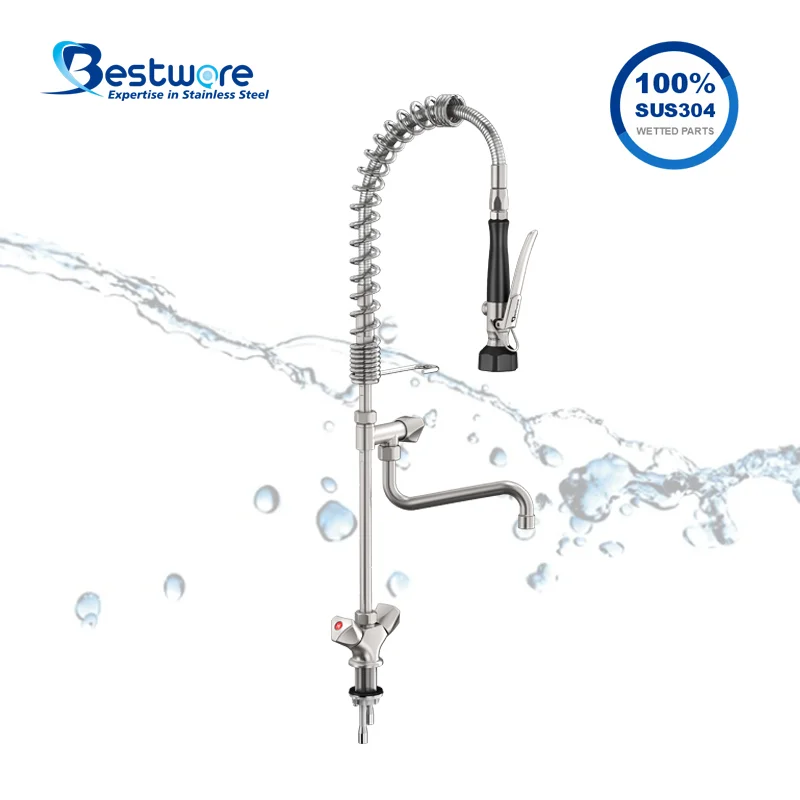
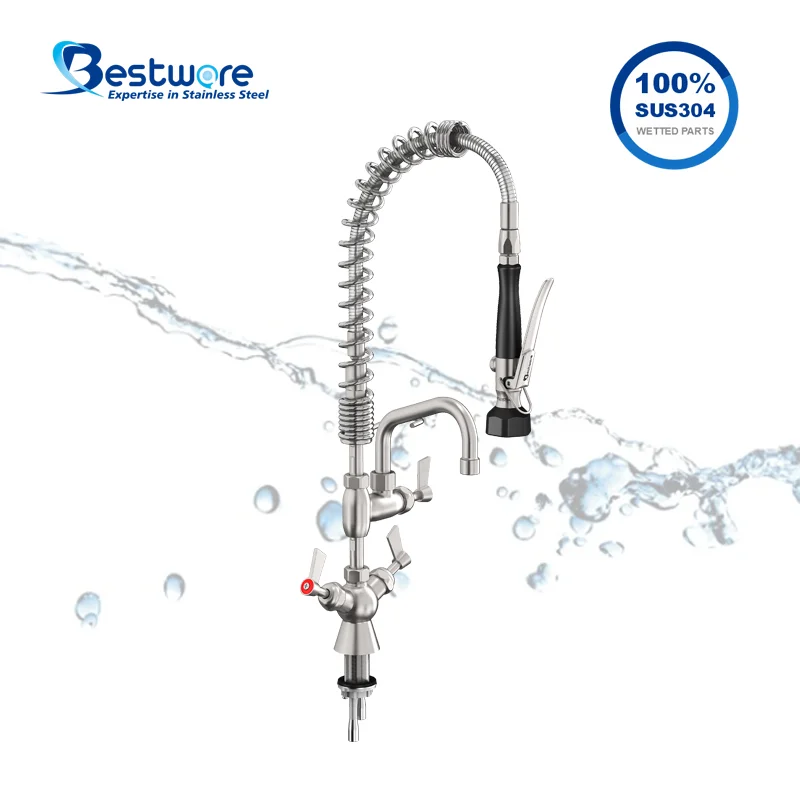
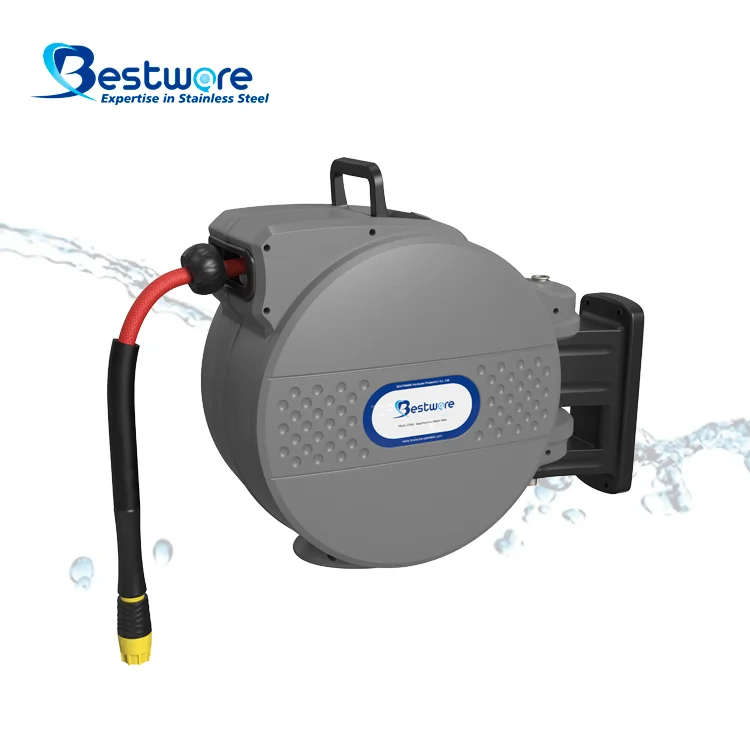
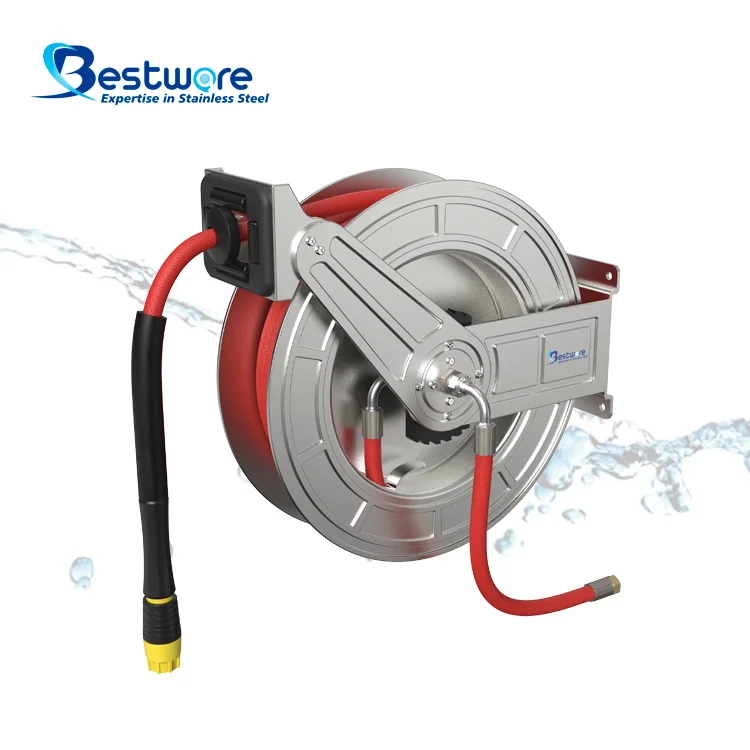
The main structural difference lies in whether the hose reel assembly is exposed to the external environment. An open style hose reel uses an exposed structure. The reel, bracket, and most of the hose are visible, allowing operators to clearly observe the working condition of the system. After use, the hose is automatically retracted into the reel through a spring-assisted mechanism. An enclosed style hose reel adds a protective housing around the reel assembly. Once retracted, most internal components are covered inside the casing, leaving only the hose outlet and operating area exposed. It is important to note that both designs share the same basic functions. Whether enclosed or open, they both support water supply, cleaning, and hose retraction operations.
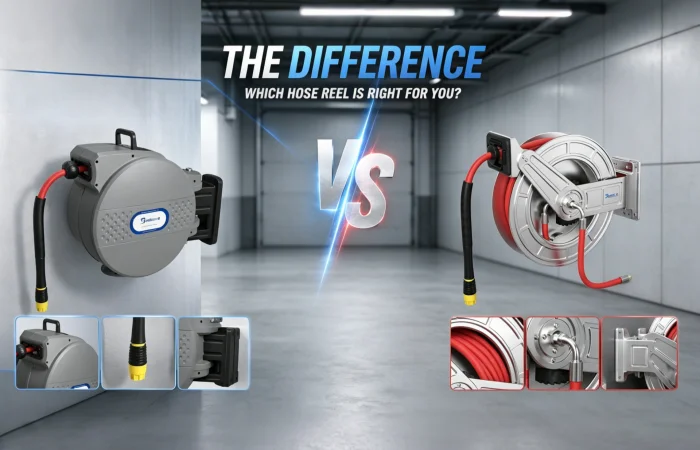
In an open style hose reel, the hose and reel are fully visible during operation. Operators can directly observe hose length, retraction status, and whether any tangling occurs. During use, adjustments can be made immediately based on visible conditions. In an enclosed style hose reel, the reel is covered by a housing, and only the outlet is visible. The internal hose condition cannot be observed directly. Operators mainly rely on pulling resistance and post-use confirmation to determine whether the system is functioning properly. The key difference is whether the system condition can be visually monitored during operation.

Open style hose reels allow direct inspection. The reel, hose, and spring mechanism are exposed, making it easy for maintenance staff to identify wear, looseness, or abnormal behavior. Hose replacement can be carried out without removing any cover, making the process straightforward. Enclosed style hose reels require the housing to be opened before internal inspection. However, the casing helps reduce exposure to grease, moisture, and mechanical impact, which can reduce wear and potential damage over time.
The hygiene management approach of an open style hose reel is based on direct cleaning. Since all components are exposed, grease, dust, and other contaminants can be easily seen and cleaned immediately when detected. However, because the hose remains exposed to the surrounding environment, it is more likely to come into contact with grease fumes and surface contamination during daily operation. The hygiene management approach of an enclosed style hose reel is to reduce exposure. When not in use, the hose is stored inside the housing, limiting its contact with the surrounding environment and helping reduce grease buildup on the hose surface. The difference between the two approaches is straightforward. Open style designs make inspection and cleaning easier, while enclosed style designs reduce exposure and contamination. Regardless of which design is selected, a well-established cleaning program can help meet the hygiene requirements of modern commercial kitchens.
|
Item |
Open Style Hose Reel |
Enclosed Style Hose Reel |
|
Hose visibility |
Fully visible |
Not visible |
|
Inspection method |
Direct visual inspection |
Requires opening housing |
|
Protection level |
No external protection |
Housing protection included |
|
Grease exposure |
Higher |
Lower |
|
Cleaning focus |
Hose and reel assembly |
External housing surface |
Different kitchen environments place different requirements on equipment usage and management, which leads to different selection preferences.
In large central kitchens, open style hose reels are commonly used. These facilities typically have structured maintenance systems and dedicated staff, allowing quick identification and handling of equipment conditions. Therefore, the visibility and maintenance convenience of open designs are highly valued.
In food processing facilities, both designs are widely adopted. If operational efficiency and inspection speed are the priority, open style is preferred. If reducing exposure to grease and external contamination is more important, enclosed style is often selected.
Hotel kitchens focus not only on daily cleaning functions but also on visual consistency and overall environment presentation. In open kitchen layouts or high-end dining environments, enclosed style hose reels are often preferred for their cleaner and more uniform appearance.
School and hospital kitchens are typically managed by fixed personnel with longer maintenance cycles. In such cases, enclosed designs are often selected to reduce the impact of grease, dust, and accidental contact during daily operation.
Overall, both open and enclosed hose reels can meet commercial kitchen cleaning requirements. The selection depends on operational environment, maintenance practices, and management needs rather than a simple judgment of which structure is superior.
In equipment procurement, price is often the most visible factor. However, for long-term commercial use, purchase cost is only part of the total cost of ownership. More important factors include maintenance frequency, ease of hose replacement, downtime during repairs, and overall operational convenience. In high-frequency kitchen environments, the impact of equipment failure often exceeds the savings from lower purchase cost.
Therefore, the following factors should be considered during selection:
· Kitchen scale
· Usage frequency
· Installation space
· Maintenance capability
· Hygiene requirements
Only by evaluating these factors together can the most suitable product be selected.

The main difference between enclosed and open style hose reels lies in structural design rather than core function. Both can meet the cleaning and rinsing requirements of commercial kitchens, but they differ in daily operation, maintenance approach, and hygiene management. Open style hose reels provide direct visibility and easier maintenance access, while enclosed style hose reels reduce exposure to external environments and offer additional protection for internal components. As a result, different kitchen environments naturally lead to different preferences. For procurement decisions, price alone is not sufficient. A comprehensive evaluation of kitchen scale, usage frequency, maintenance capability, and hygiene requirements is necessary to ensure that the selected product aligns with actual operational needs and delivers stable long-term performance.
One-stop Solution Provider of Stainless Steel Commercial Faucets
Email: business@bestware-stainless.com
after-sales@bestware-stainless.com
Tel: +86 18929047065
WhatsApp: +86 18929047065


WeChat: +86 18929047065


Website: www.bestware-stainless.com(Global Site)
www.bestware-sparkling.com(Water Dispenser)
Add: Block 8, No. 6, Jianda Nan Road, Jiangmen, Guangdong, China
Copyright © Bestware Hardware Production Co., Ltd. All Rights Reserved.
(2).webp)
(1).webp)