Date: 2026-10-09
Stainless steel offers good corrosion resistance, which is why it is widely used in commercial kitchens, food processing facilities, public facilities, and other applications where hygiene and durability are important. However, stainless steel is not completely immune to corrosion. In particular, cutting, stamping, welding, grinding, and other manufacturing processes may introduce iron contamination, oxides, or other residues onto the material surface, affecting its original corrosion resistance. For stainless steel faucets, which are in constant contact with water and frequently exposed to humid environments, the condition of the surface is particularly important for long-term performance. Passivation is an important surface treatment process for stainless steel after fabrication. So, what exactly does passivation do, and why is it worth applying in the manufacturing of stainless steel faucets?
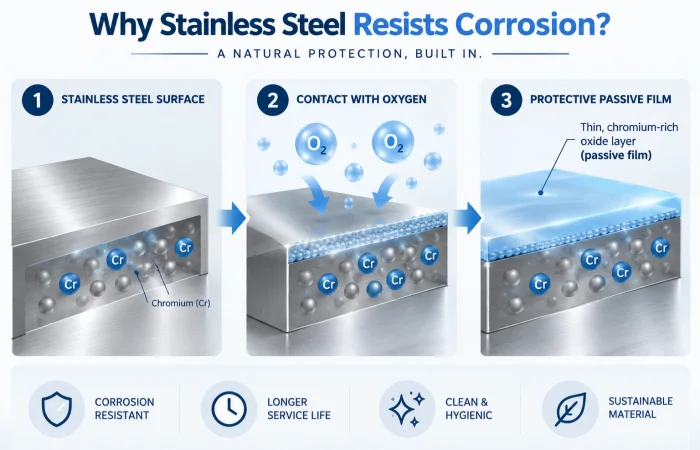
The good corrosion resistance of stainless steel is closely related to the chromium it contains. When the stainless steel surface comes into contact with oxygen in the air, the chromium on the surface reacts with oxygen to form an extremely thin chromium-rich oxide film. This film covers the metal surface and helps slow the reaction between the metal substrate and the surrounding environment, providing corrosion protection for the stainless steel. This protective film is commonly known as the passive film.
Although the passive film is extremely thin, it plays an important role in the corrosion resistance of stainless steel. When the surface is slightly damaged, a new passive film can reform under suitable conditions. Therefore, the corrosion resistance of stainless steel does not come from an additional coating, but from the material's ability to form and maintain a stable passive film.
However, during actual manufacturing, the processing environment experienced by stainless steel is not the same as the condition of the raw material. Cutting, stamping, welding, grinding, and other processes can all alter the condition of the material surface. This is one of the reasons why passivation needs to be considered.
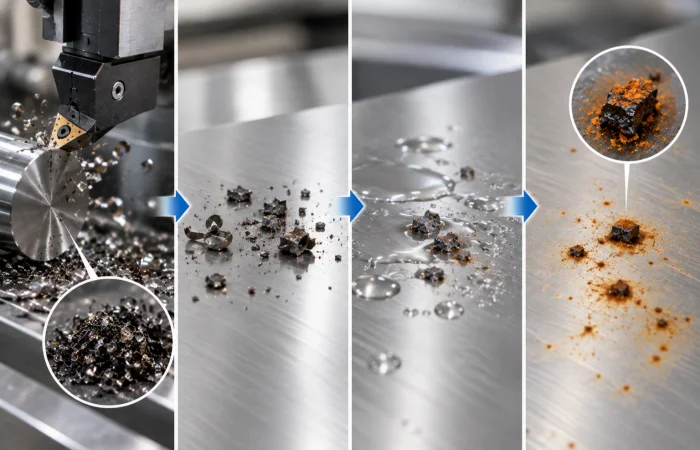
A stainless steel faucet goes through multiple manufacturing processes before it becomes a finished product. For example, tubes and sheets need to be cut, formed, or stamped; different components may need to be welded together; and some areas may undergo machining and surface grinding. Although these processes are essential to manufacturing, they may also introduce new contaminants onto the stainless steel surface. One issue that requires particular attention is iron contamination.
During processing, if the stainless steel surface comes into contact with ordinary carbon steel tools, iron particles, or other iron-containing materials, small amounts of free iron may remain on the stainless steel surface. This iron is not part of the stainless steel itself, but it may oxidize in a humid environment and cause rust spots.
Therefore, the appearance of rust on a stainless steel surface does not necessarily mean that the material used throughout the product has lost its corrosion resistance. In some cases, surface rust may be related to iron contamination introduced during manufacturing. This is particularly important for commercial faucets because they are in frequent contact with water and their surfaces also need to be cleaned regularly.
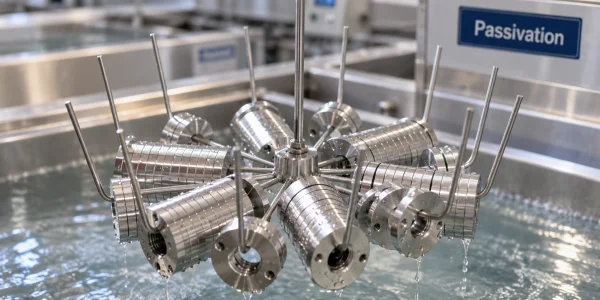
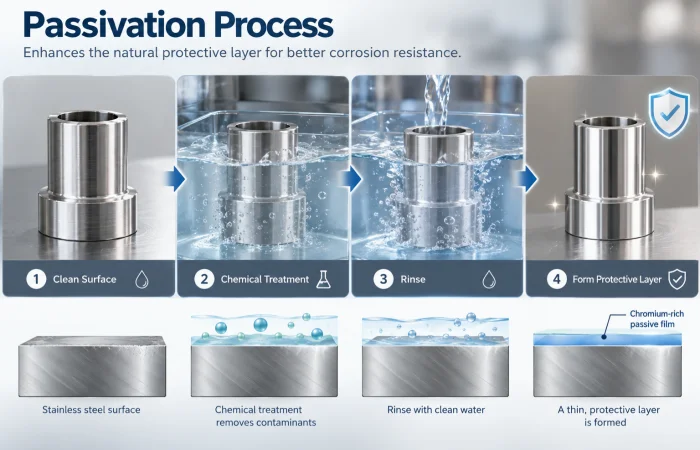
One of the main functions of passivation is to remove free iron and other contaminants from the stainless steel surface and create favorable conditions for the processed surface to form a stable passive film. From this perspective, passivation does not involve applying a new protective coating to the stainless steel surface. Instead, it primarily targets the metal surface after fabrication.
Under appropriate chemical treatment conditions, iron contamination and other substances on the surface can be removed. After appropriate passivation treatment and thorough rinsing, a clean stainless steel surface can form and maintain a stable passive film, allowing the material to better retain its inherent corrosion resistance.
Different stainless steel materials and products may require different passivation processes. ASTM A967/A967M covers a range of methods, including nitric acid passivation, citric acid passivation, and electrochemical treatment, as well as requirements for post-treatment cleaning and verification.
Therefore, passivation is not simply a matter of immersing a product in a chemical solution. The material type, surface condition, treatment conditions, cleaning process, and subsequent testing all need to be properly controlled.
For stainless steel faucets, the value of passivation is mainly reflected in maintaining surface cleanliness and corrosion resistance.
Stainless steel faucets undergo multiple machining processes. During these processes, controlling external iron contamination is particularly important. Passivation can help remove free iron and other related contaminants from the stainless steel surface, reducing the possibility that these contaminants will later oxidize and form rust spots. This is especially important for faucets that remain in humid environments for extended periods.
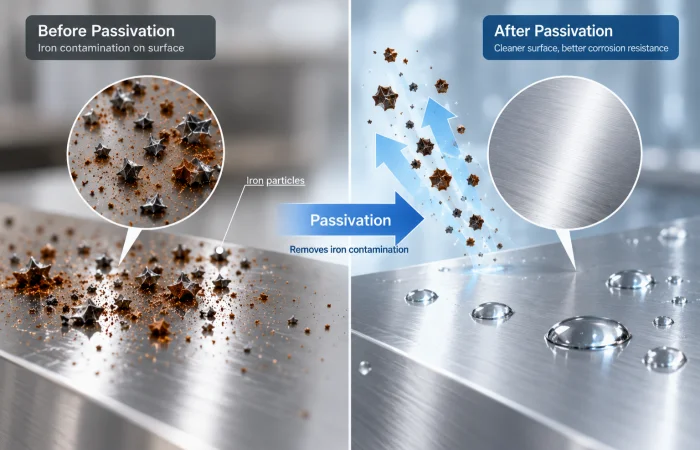
The corrosion resistance of stainless steel is closely related to its passive film. After processing, contaminants remaining on the surface may affect its condition. Appropriate passivation treatment can create better surface conditions for the formation of a stable passive film. This helps maintain the inherent corrosion resistance of the stainless steel material.
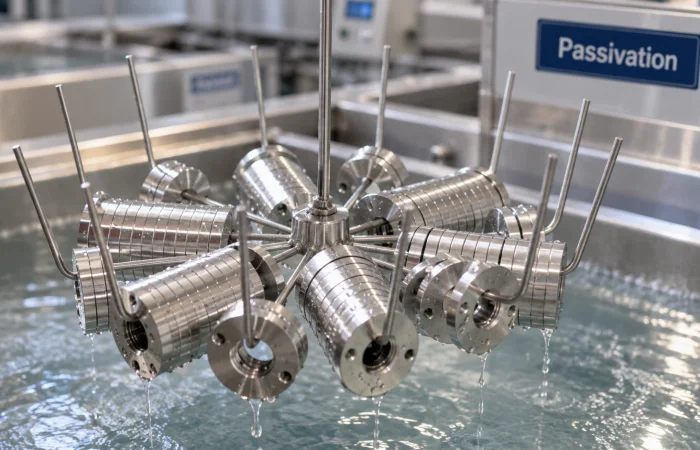
In commercial kitchens, faucets may be operated and rinsed frequently throughout the day while being exposed to water, cleaning agents, and humid air over long periods. In such environments, the condition of the product surface should not be judged solely by how bright it looks when it leaves the factory.
As a surface treatment process in manufacturing, passivation helps control surface contamination after fabrication and provides a more stable foundation for long-term product use.
Of course, passivation cannot make stainless steel completely immune to corrosion. Actual corrosion resistance is also affected by many factors, including the material grade, surface condition, welding quality, operating environment, water quality, and cleaning methods. Therefore, passivation should be regarded as an important part of the overall manufacturing process, rather than the only factor determining corrosion resistance.
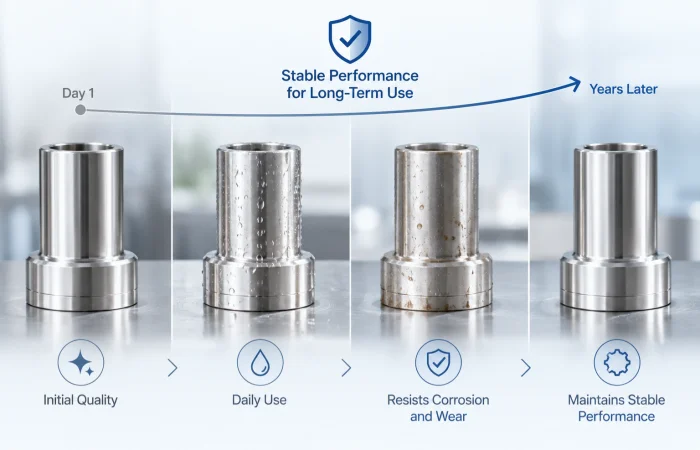
Residential and commercial faucets can face significantly different operating environments. Faucets used in commercial kitchens, restaurant back-of-house areas, food processing facilities, and public facilities typically need to withstand higher usage frequencies.
In a commercial kitchen, for example, staff may frequently rinse, wash their hands, clean equipment, and handle food ingredients. The faucet surface may remain exposed to moisture for long periods and may also come into contact with grease, food residues, and cleaning agents.
In such environments, the corrosion resistance of the material itself is certainly important, but the condition of the surface after fabrication should not be overlooked. If unwanted iron contamination remains on the surface after manufacturing, localized rust spots may still appear during subsequent use, even when the product is made of stainless steel. Therefore, for commercial stainless steel faucets, both material selection and final surface treatment need to be considered in relation to the actual operating environment.

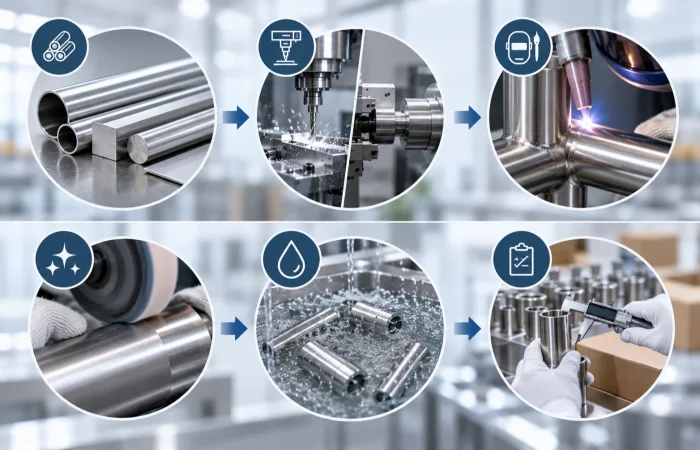
A commercial stainless steel faucet may not look particularly complicated, but it goes through multiple stages from raw material to finished product.
· Material determines the basic performance of the product.
· Forming and machining determine its dimensions and structure.
· Welding determines the quality of the connections between different components.
· Grinding and cleaning affect the final surface condition.
· Passivation further improves the condition of the stainless steel surface after fabrication.
· Finally, the product must undergo appropriate quality inspections before moving on to subsequent assembly and shipment.
Together, these processes determine the final performance of the product. For stainless steel products, many manufacturing details are not readily visible once the finished product is completed. Customers may see only a faucet with a clean, polished surface, but it is difficult to see directly how the material was processed or what surface treatments it went through. This is also one of the differences between stainless steel manufacturing and ordinary appearance-focused processing. Consistent product performance often comes from continuous attention to details throughout the manufacturing process.
Passivation is not a standard process adopted by every stainless steel faucet manufacturer. Some manufacturers may focus more on product appearance, structure, and basic functionality, while giving less attention to surface treatment after fabrication. However, for commercial faucets that remain in contact with water and require good corrosion resistance, achieving a good appearance and completing the basic manufacturing processes are not enough.
At Bestware, we place great importance on the inherent properties of stainless steel and how manufacturing processes affect long-term product performance. In addition to material selection, structural design, machining accuracy, and welding quality, we also pay attention to the surface condition after fabrication. Through passivation, we help remove free iron and other surface contaminants, allowing stainless steel to maintain its corrosion resistance.
We believe that high quality should be reflected not only in a product's polished appearance when it leaves the factory, but also in the manufacturing details that customers may not readily see but that can affect long-term performance. Passivation may not be the most visible step in the manufacturing process, but our attention to such details reflects Bestware's commitment to product quality.
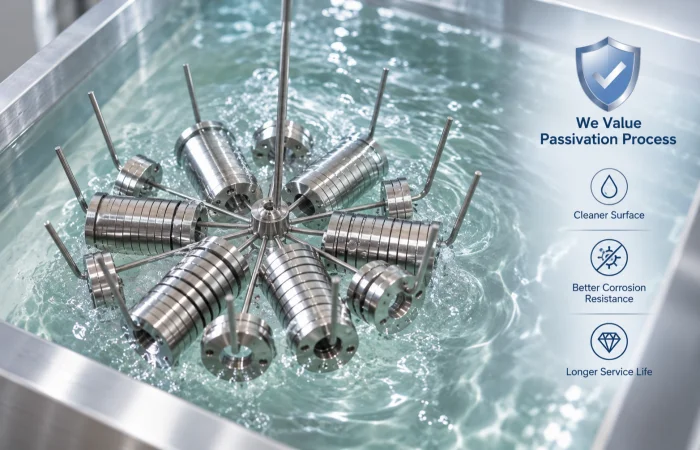
Stainless steel offers good corrosion resistance, but this does not mean that the manufacturing process can be overlooked. From raw materials to cutting, forming, welding, grinding, cleaning, and passivation, every process can affect the surface condition of the finished product. The value of passivation lies in treating the stainless steel surface after fabrication, reducing free iron and other contaminants, and helping the stainless steel return to a stable passive state. For commercial faucets that remain in contact with water for extended periods, these invisible manufacturing details deserve attention as well. A reliable stainless steel faucet depends not only on material selection, but also on how well the manufacturing process preserves and makes full use of the material's inherent properties.
One-stop Solution Provider of Stainless Steel Commercial Faucets
Email: business@bestware-stainless.com
after-sales@bestware-stainless.com
Tel: +86 18929047065
WhatsApp: +86 18929047065


WeChat: +86 18929047065


Website: www.bestware-stainless.com(Global Site)
www.bestware-sparkling.com(Water Dispenser)
Add: Block 8, No. 6, Jianda Nan Road, Jiangmen, Guangdong, China
Copyright © Bestware Hardware Production Co., Ltd. All Rights Reserved.