
Date: 2026-08-12
When people think of pre rinse faucets, the first applications that usually come to mind are large commercial foodservice environments, such as restaurant kitchens, hotel kitchens, and central kitchens. With powerful spray valves, flexible hoses, and versatile operation, pre rinse faucets can quickly rinse cookware, utensils, and food preparation equipment, significantly improving cleaning efficiency in commercial kitchens. However, with the rapid growth of mobile foodservice businesses such as food trucks, pre rinse faucets are now expanding into more space-limited commercial applications. Compared with traditional restaurants, food trucks need to complete the entire workflow of food preparation, equipment cleaning, and daily operations within a much smaller space. Although the working area is limited, cleaning requirements do not decrease. In fact, frequent equipment use and peak-hour service pressure create even higher demands for cleaning efficiency. Therefore, how to achieve fast, flexible, and reliable cleaning without taking up excessive workspace has become an important concern for many food truck operators. The mini pre rinse faucet is designed specifically for this type of application, providing a more efficient cleaning solution for compact commercial environments.
Many people assume that because food trucks are smaller than traditional restaurants, their cleaning requirements are also simpler. In reality, food trucks often perform many of the same tasks as commercial kitchens. From ingredient preparation and food processing to order fulfillment and equipment cleaning, every step must be completed within a limited workspace. Especially during busy service periods, food trucks may need to serve a large number of customers within a short time. Employees must not only prepare orders quickly but also clean and reuse various tools efficiently. Otherwise, insufficiently cleaned equipment can directly limit production capacity and slow down operations.
Different types of food trucks use different types of equipment. For example, burger trucks frequently need to clean griddles, tongs, trays, and food containers; fried food trucks must handle fryer baskets, cookware, and grease residue; coffee trucks need to clean milk pitchers and brewing equipment; beverage trucks repeatedly clean blender cups, juicing equipment, and various preparation tools.
During operation, these tools and equipment accumulate various residues, including grease, sauces, food particles, and beverage ingredients. If cleaning efficiency is insufficient, employees need to spend more time on cleaning tasks, reducing the time available for food preparation and order processing. For food trucks, cleaning efficiency does not only affect hygiene standards but also directly impacts equipment turnover speed and the number of orders that can be completed within a given time.
Compared with traditional restaurants, one of the biggest characteristics of food trucks is highly concentrated workspace. Traditional commercial kitchens can usually divide different functional areas, such as separate cleaning areas, preparation stations, and cooking zones. However, food trucks need to complete all operations within a limited space, meaning every piece of equipment must be carefully considered in terms of size and efficiency.
The sink area is especially important. If the faucet structure is too large, it may occupy valuable workspace and interfere with employee movement. If the operation is not flexible enough, workers need to constantly move cookware, containers, and tools during cleaning, creating unnecessary steps.
Therefore, for food trucks, the right cleaning equipment must not only provide effective cleaning performance but also fit into a compact workspace.
Food truck operations often experience clear peak periods. When orders increase rapidly within a short time, employees need to quickly complete food preparation, serving, and equipment turnover. If cookware, containers, or preparation tools cannot be cleaned in time, equipment availability may become a bottleneck and affect the entire workflow. Therefore, improving cleaning efficiency per unit of time can not only reduce employee workload but also help food trucks maintain a smoother and more stable operating rhythm.
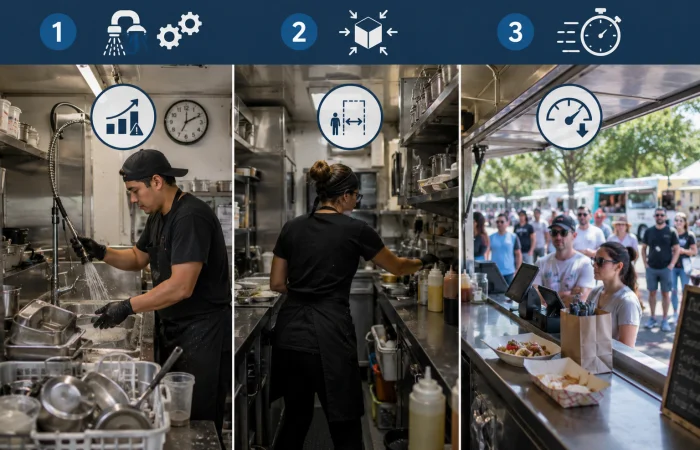
Some food trucks still rely on standard kitchen faucets for their daily cleaning tasks. While a conventional faucet may be sufficient for simple tasks such as handwashing, filling containers, and light rinsing, its limitations become increasingly apparent when it is used for frequent commercial cleaning.
Standard kitchen faucets typically deliver water from a fixed position. When employees need to clean large cookware, deep containers, or food preparation tools of different sizes, they often have to repeatedly reposition the item to find a suitable rinsing angle. In the limited workspace of a food truck, these repeated movements can reduce overall operational efficiency.
Food preparation in food trucks often produces residues that can be difficult to remove, such as grease, sauces, batter, and food particles. The relatively limited impact of a standard water stream may require longer rinsing times or even additional manual scrubbing to remove stubborn residue. During peak service hours, these extra cleaning steps can quickly add up, ultimately affecting overall operational efficiency.
A fixed kitchen faucet can only deliver water from a fixed direction. However, food trucks need to clean a wide variety of items, ranging from small preparation tools to large cookware. If the faucet cannot be easily repositioned, employees have to move the item being cleaned to match the water flow rather than directing the water where it is needed. This can make cleaning more cumbersome, especially in a compact workspace.
Large commercial kitchens can accommodate larger professional pre rinse equipment because they generally have sufficient workspace. Food trucks, however, operate under very different conditions. They need a cleaning solution that can provide professional cleaning performance without taking up excessive space. This is one of the key reasons why a mini pre rinse faucet can be a better fit for food truck applications.
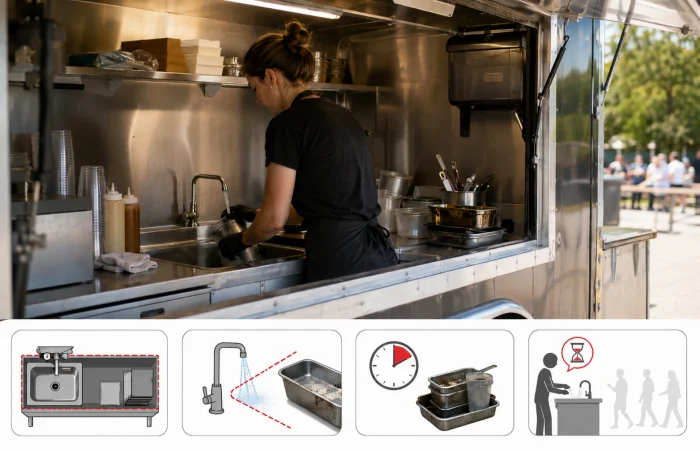
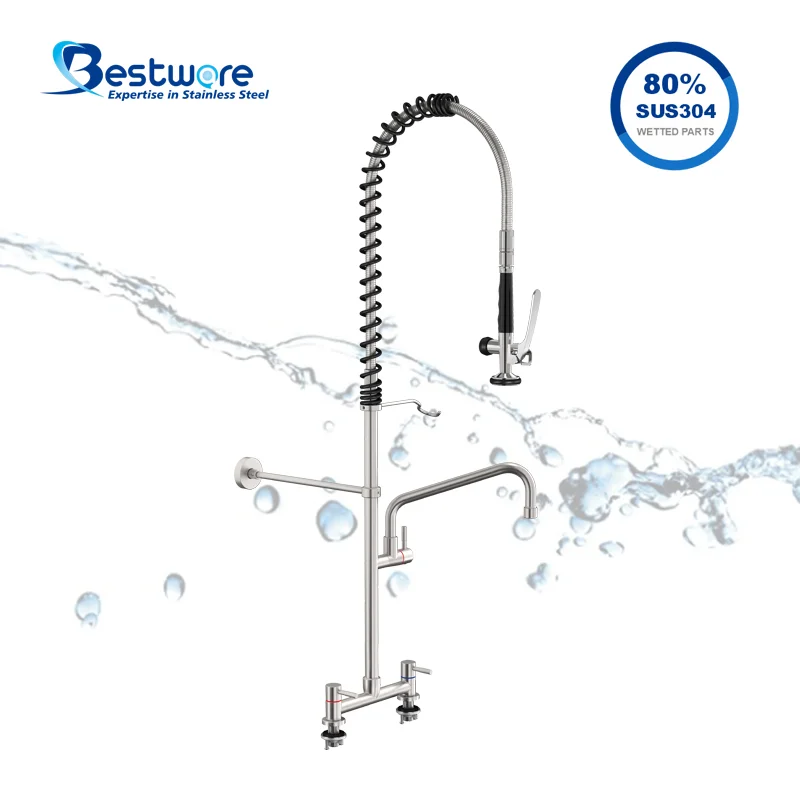
To address the challenges of rinsing efficiency, operational flexibility, and space utilization in food truck cleaning, a pre rinse faucet provides a more professional solution. For food trucks, cleaning equipment needs to deliver sufficient rinsing power while also accommodating limited workspace and continuous use. With powerful spray performance, flexible operation, and a compact design, a pre rinse faucet can help food truck operators improve cleaning efficiency and streamline their daily workflow.
One of the key advantages of a pre rinse faucet is its concentrated spray stream. Unlike the relatively dispersed water flow of a standard faucet, the spray valve can direct water precisely toward the area that needs to be cleaned, such as the inside of cookware, the bottom of containers, or the surfaces of food preparation equipment. This concentrated water stream can help quickly remove food residue and reduce the need for repeated rinsing. For food trucks, this means employees can clean equipment more efficiently and return tools to service sooner. During peak service hours, faster cleaning can translate directly into improved operational efficiency.
Space is limited inside a food truck, making operational flexibility particularly important. A pre rinse faucet is equipped with a flexible hose that allows the spray valve to be repositioned according to different cleaning requirements. Instead of repeatedly moving large cookware or containers, employees can simply adjust the position of the spray valve to reach different areas. Whether cleaning the inside of a deep pot, rinsing a large container, or removing residue from different areas of the sink, the flexible hose makes the process more convenient. For food trucks operating in compact workspaces, this flexibility can also make better use of the sink area.
One of the defining characteristics of a food truck is the need to complete the entire foodservice workflow within a limited space. Compared with traditional commercial kitchens, the sink, work counter, cooking equipment, and storage areas are usually positioned much closer together. As a result, cleaning equipment needs to deliver reliable performance while taking up a reasonable amount of installation space.
A mini pre rinse faucet is optimized for this type of application. While retaining the core functions of a pre rinse faucet, it features a more compact structure designed for smaller workspaces. Its compact footprint helps minimize installation space without interfering with employees' normal workflow, while still providing professional cleaning performance. For mobile foodservice operations, pop-up foodservice setups, and other space-constrained commercial environments, this balance between size and performance allows operators to make better use of their available workspace.
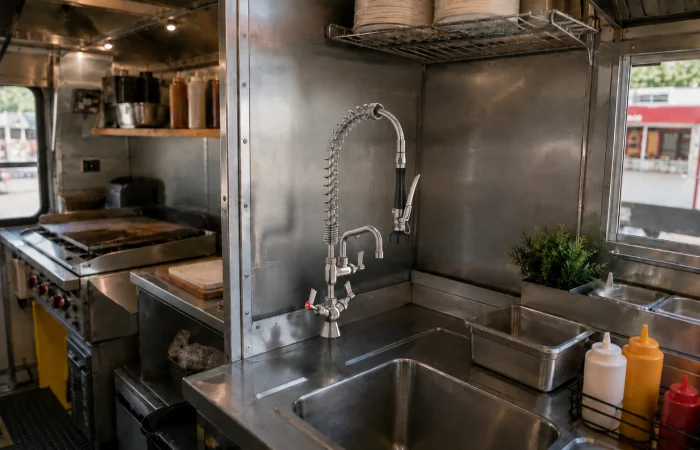
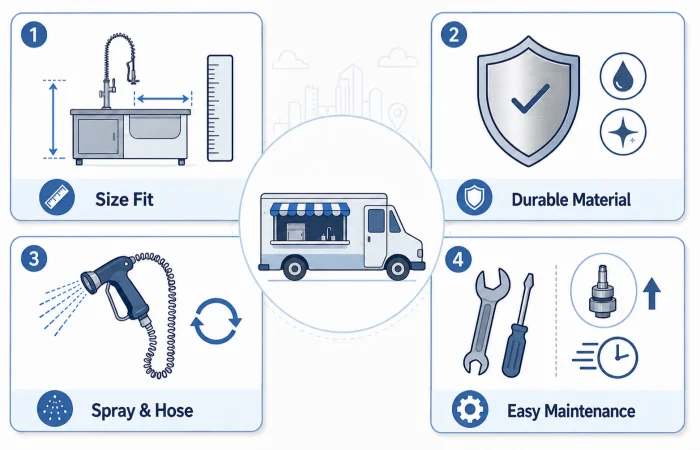
For food truck operators, choosing a pre rinse faucet is not simply about cleaning performance. It is equally important to consider whether the faucet can withstand long-term commercial use and fit the specific working environment.
Space is limited in a food truck, making product dimensions one of the first factors to consider. An oversized faucet may take up valuable workspace and interfere with the layout of other equipment. An impractical structure can also make daily operation more difficult. Choosing a compact pre rinse faucet with a space-efficient design can therefore provide a better fit for a food truck workspace.
Commercial foodservice environments place high demands on equipment durability. Faucets used in food trucks are frequently exposed to water, cleaning agents, and food residues, making corrosion resistance an important consideration. Compared with conventional chrome-plated brass products, 304 stainless steel offers excellent corrosion resistance and long-term stability, making it well suited for high-frequency commercial applications.
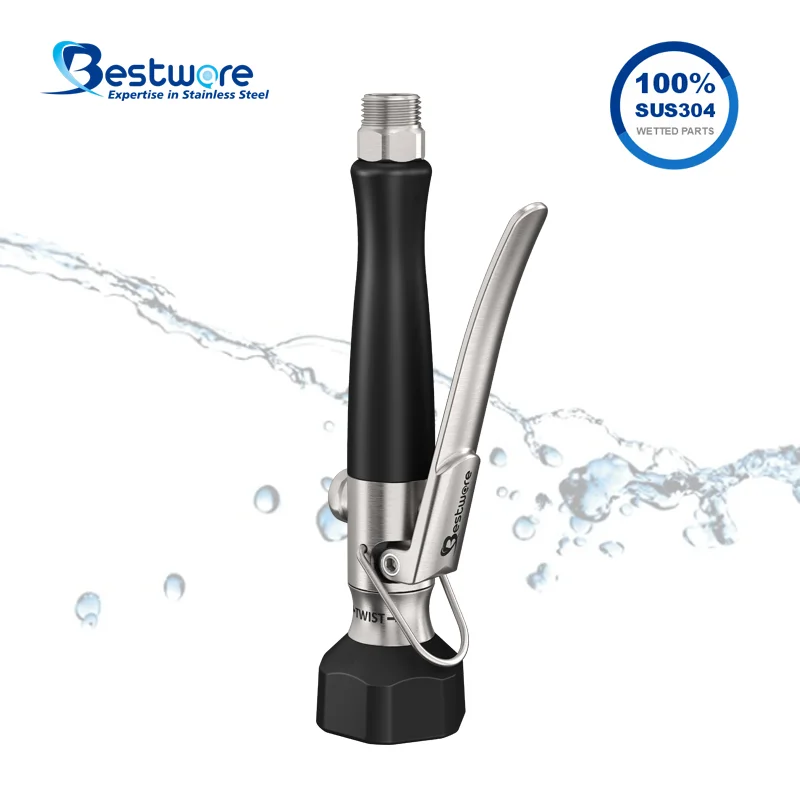
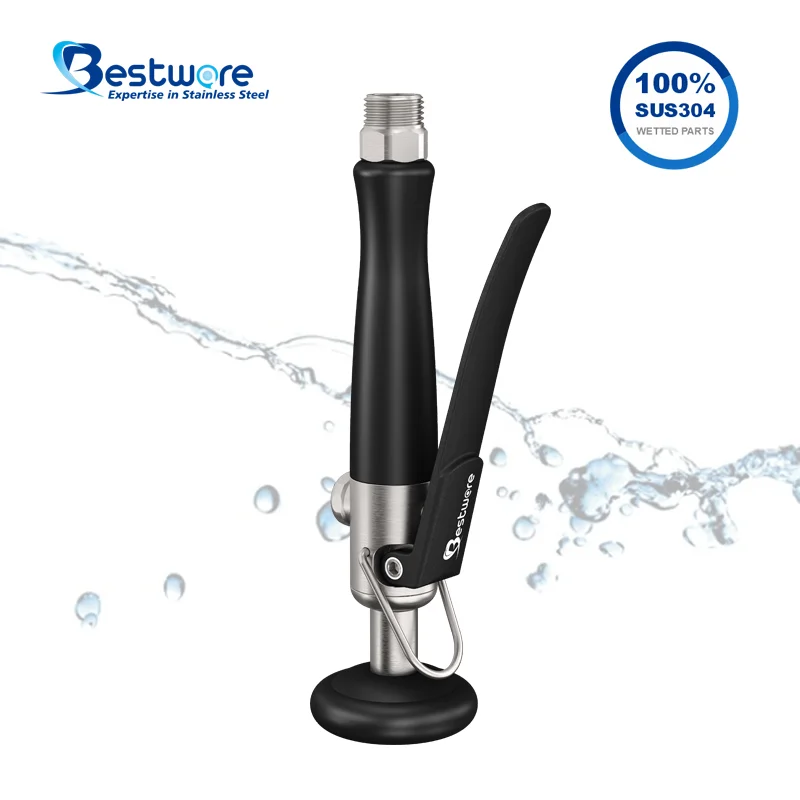
The spray valve and hose are among the most frequently handled components of a pre rinse faucet. For food truck employees, factors such as grip comfort, operating force, and hose flexibility can all affect the experience of extended use. A well-designed spray valve and flexible hose can make daily operation easier while helping reduce fatigue during repetitive cleaning tasks.
Food truck operations typically require equipment to remain available throughout the working day. If cleaning equipment is complicated to maintain, it can increase downtime and potentially disrupt normal operations. A pre rinse faucet with a simple structure and easy cleaning and maintenance can therefore be more suitable for long-term commercial use. Choosing reliable equipment can not only improve daily operating efficiency but also help reduce maintenance costs over time.
As a manufacturer specializing in commercial stainless steel faucets, Bestware has long focused on the practical needs of different commercial applications.
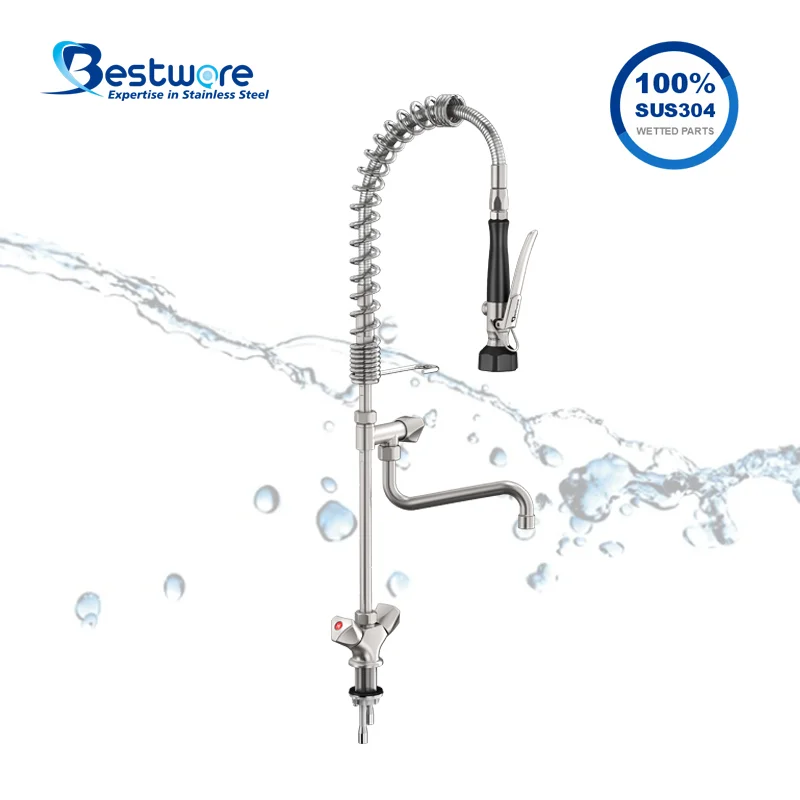
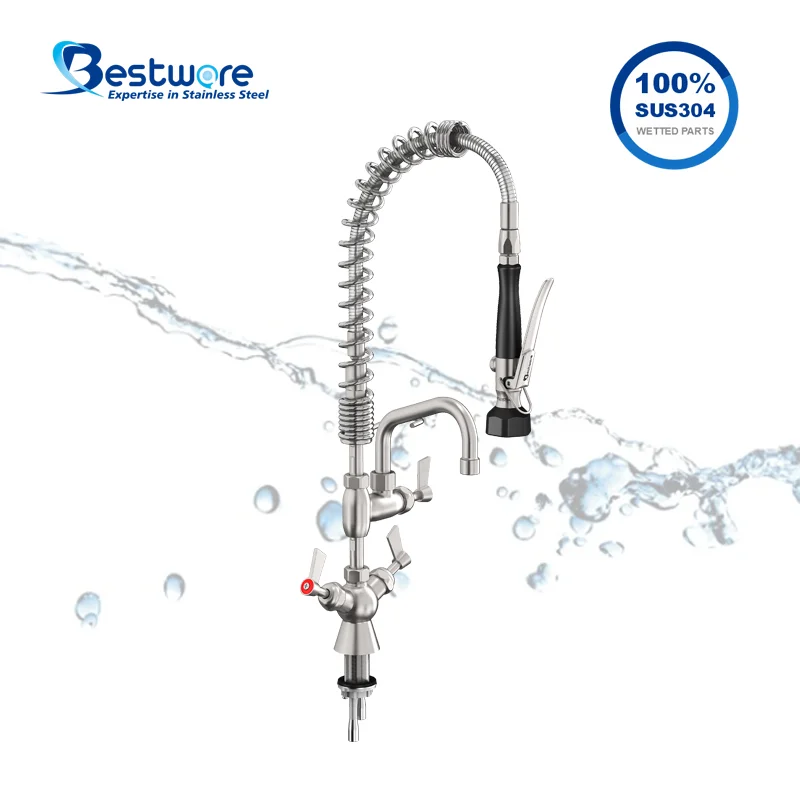
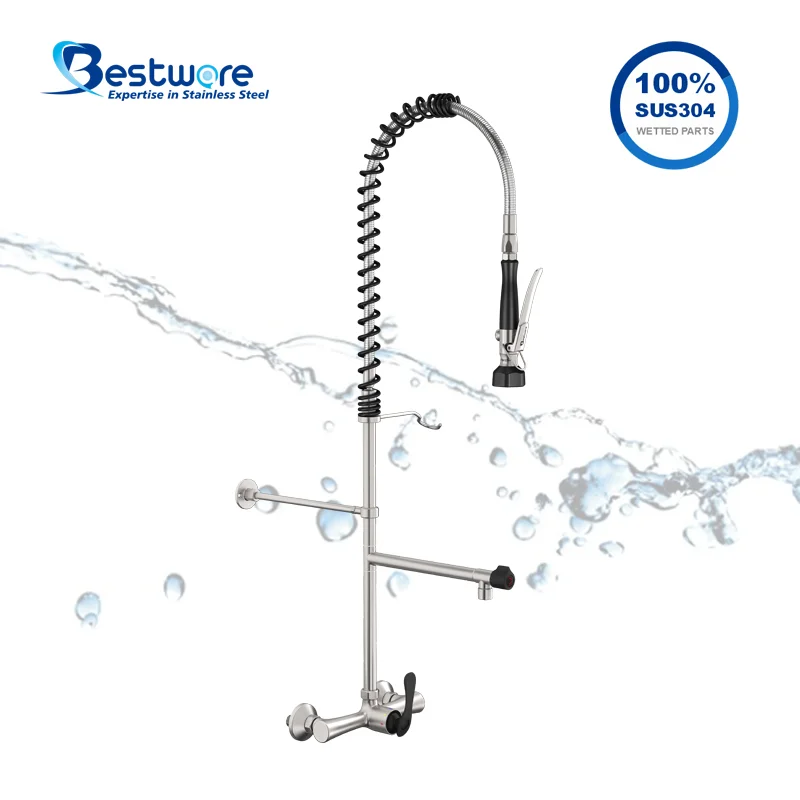
In addition to standard pre rinse faucets designed for restaurant kitchens, hotel kitchens, and central kitchens, Bestware also offers mini pre rinse faucets for commercial environments where space is limited.
Designed for applications such as food trucks and compact commercial kitchens, these faucets balance space efficiency with cleaning performance. Their compact construction minimizes installation space while retaining the powerful rinsing and flexible operation that define a pre rinse faucet, helping operators create a smoother cleaning workflow within a limited workspace.
Bestware pre rinse faucets are made from 100% food-grade 304 stainless steel, offering excellent corrosion resistance and long-term stability for demanding commercial environments involving frequent operation, rinsing, and continuous exposure to water.
The faucets also feature flexible hoses and ergonomically designed spray valves, allowing employees to clean cookware, containers, and food preparation tools from different angles with greater ease and convenience.
For food truck operators, limited space does not mean having to compromise on cleaning standards. Choosing a pre rinse faucet designed for the application can improve workflow efficiency and help bring professional commercial-kitchen cleaning capabilities to a mobile kitchen.
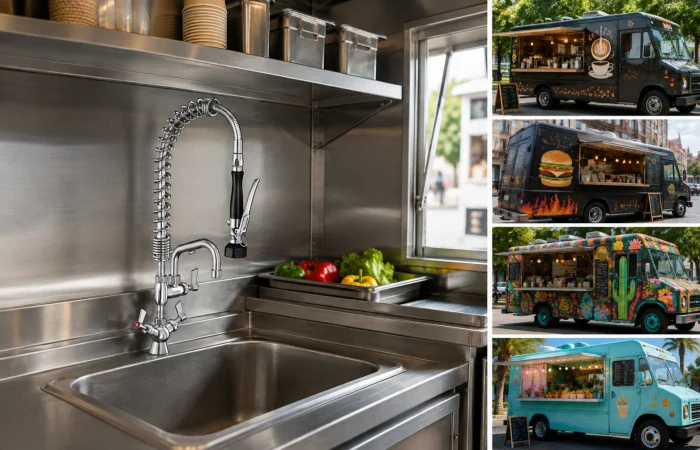
The application of pre rinse faucets is gradually expanding beyond traditional commercial kitchens. As food trucks, mobile foodservice businesses, and other compact commercial spaces continue to develop, operators are facing a growing need to achieve efficient and consistent workflows within limited spaces. Cleaning is an essential part of foodservice operations, directly affecting equipment turnover, employee efficiency, and overall service capacity. The right pre rinse faucet can help address everyday cleaning challenges through powerful rinsing performance, flexible operation, and space-efficient design. From large commercial kitchens to flexible mobile foodservice environments, pre rinse faucets are demonstrating their value across an increasingly diverse range of applications. For food truck operators looking to improve operational efficiency and optimize their workspace, choosing a pre rinse faucet that matches their available space and specific cleaning requirements can be an important step toward more efficient long-term operations.
One-stop Solution Provider of Stainless Steel Commercial Faucets
Email: business@bestware-stainless.com
after-sales@bestware-stainless.com
Tel: +86 18929047065
WhatsApp: +86 18929047065


WeChat: +86 18929047065


Website: www.bestware-stainless.com(Global Site)
www.bestware-sparkling.com(Water Dispenser)
Add: Block 8, No. 6, Jianda Nan Road, Jiangmen, Guangdong, China
Copyright © Bestware Hardware Production Co., Ltd. All Rights Reserved.
.webp)
(7).webp)
(6).webp)
(5).webp)