Date: 2026-07-31
When purchasing commercial stainless steel faucets, many buyers typically focus on material, certifications, functions, and price, while overlooking another critical factor that directly affects long-term product performance — corrosion resistance. For commercial kitchens, hotels, hospitals, schools, and various public facilities, faucets are constantly exposed to challenging conditions, including high humidity, frequent operation, and cleaning or disinfecting chemicals. Without sufficient corrosion resistance, even a faucet that looks perfect when newly installed may develop rust spots, surface oxidation, or other corrosion issues after long-term use. This is why more and more professional buyers consider the Salt Spray Test as an important reference when evaluating the quality and durability of commercial stainless steel faucets. So why can stainless steel 304 still experience corrosion? What does a 72-hour Salt Spray Test actually indicate? And what factors truly determine the corrosion resistance of a commercial faucet? This article explores the key factors behind corrosion resistance in commercial stainless steel faucets, including material selection, structural design, manufacturing processes, and quality control.
Many buyers have the same question: “If the faucet is made of stainless steel 304, why can corrosion still occur?”
In fact, this is one of the most common misunderstandings about stainless steel. Stainless steel is not a metal that is completely immune to corrosion. Rather, it offers significantly better corrosion resistance compared with ordinary steel.
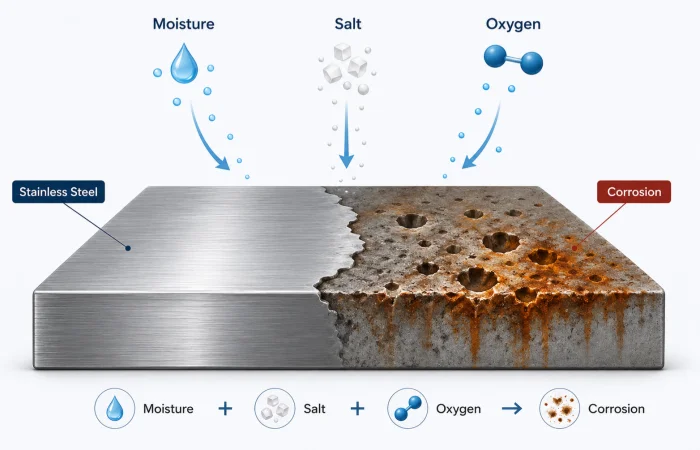
Its corrosion resistance mainly comes from chromium contained in the material. When chromium reaches a certain level, a very thin but stable protective oxide layer forms naturally on the surface of stainless steel. This layer is commonly known as the passive film. The passive film acts as a barrier between the metal and the external environment, preventing further oxidation and providing stainless steel with its excellent corrosion resistance.
However, under certain conditions, this protective layer can still be damaged, including:
Salt and chloride ions in water are among the major factors that affect stainless steel corrosion resistance. In coastal areas, food processing environments, and some commercial kitchens, long-term exposure to salt or chloride-containing substances may gradually damage the protective layer on stainless steel surfaces, leading to pitting corrosion.
The high temperatures generated during welding can change the structure of localized areas of metal. If welding parameters are not properly controlled, or if the welded areas are not adequately treated afterward, areas around the weld may become more vulnerable to corrosion.
During stainless steel fabrication, contamination from iron particles, carbon steel tools, or insufficient surface treatment may reduce the material's original corrosion resistance.
In commercial environments, faucets are constantly exposed to:
· Water stains
· Cleaning agents
· Disinfectants
· Food residues
If the product design allows water accumulation or the surface treatment is insufficient, corrosion risks may increase. Therefore, a truly high-quality stainless steel faucet cannot rely solely on the “304 stainless steel” label. Its long-term corrosion resistance depends on a combination of:
Material quality + Structural design + Manufacturing process + Surface treatment + Quality control
This is also why professional buyers increasingly pay attention to performance verification methods such as the Salt Spray Test.
Compared with residential applications, commercial faucets operate in much more demanding environments. In restaurants, hotels, central kitchens, food processing facilities, hospitals, schools, and other public facilities, faucets are often used at high frequency while being continuously exposed to hot water, steam, grease, food residues, cleaning agents, and disinfectants. These factors continuously challenge the protective properties of stainless steel surfaces and increase the risk of corrosion over time.
For commercial projects, corrosion issues such as rust spots, pitting, or surface damage not only affect appearance but may also increase maintenance and replacement costs, and even disrupt normal operations. Therefore, professional buyers increasingly focus on whether a faucet can maintain stable performance under long-term, high-intensity use conditions. Corrosion resistance has become one of the key indicators for evaluating the reliability of commercial stainless steel faucets.

The Salt Spray Test is an internationally recognized accelerated corrosion test, mainly used to evaluate the corrosion resistance of metal materials and their surface treatments. Compared with natural environments where corrosion may take years to become visible, the Salt Spray Test can simulate a high-salt and high-humidity environment in a laboratory, allowing the corrosion resistance of products to be evaluated within a much shorter period. Therefore, it is widely used in industries such as plumbing products, automotive, marine, construction, electronics, and other fields.
The test is usually conducted according to international standards such as ASTM B117 or ISO 9227. During the test, products are placed in a dedicated salt spray chamber and continuously exposed to a 5% sodium chloride (NaCl) solution under a controlled temperature of approximately 35°C. This creates a highly corrosive environment to accelerate the aging process of materials.
For commercial stainless steel faucets, the Salt Spray Test is not simply a test of whether the metal will rust. Instead, it is a comprehensive evaluation of the product's raw material quality, welding process, surface treatment, and overall manufacturing capability.
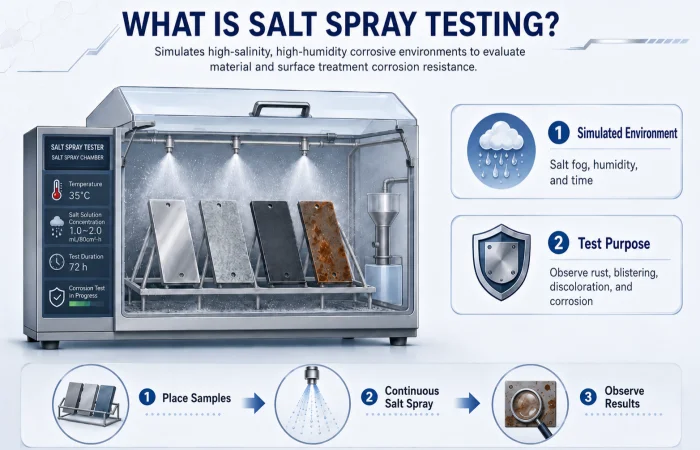
When many customers first see the term “72-hour Salt Spray Test”, they may have a question: “Does it mean the product can only be used for 72 hours?” The answer is no. The 72-hour period does not represent the service life of the product. Instead, it means that the product must undergo continuous testing for 72 hours in a highly corrosive environment simulated in a laboratory and meet the specified evaluation requirements. This testing environment is far more severe than most actual application conditions, making it a typical accelerated corrosion test.
Successfully passing a 72-hour Salt Spray Test usually indicates that the product has the following advantages:
· Good corrosion resistance of the material
· Uniform and stable surface treatment, reducing the possibility of oxidation or rust
· Reliable welding and manufacturing processes, reducing corrosion caused by local defects
· Better adaptability to long-term humid environments such as commercial kitchens, hotels, and hospitals
It is important to note that the Salt Spray Test is only one of the important indicators for evaluating product quality. It cannot be directly equated with the actual service life of a product, but it can effectively reflect the overall corrosion resistance of the product.
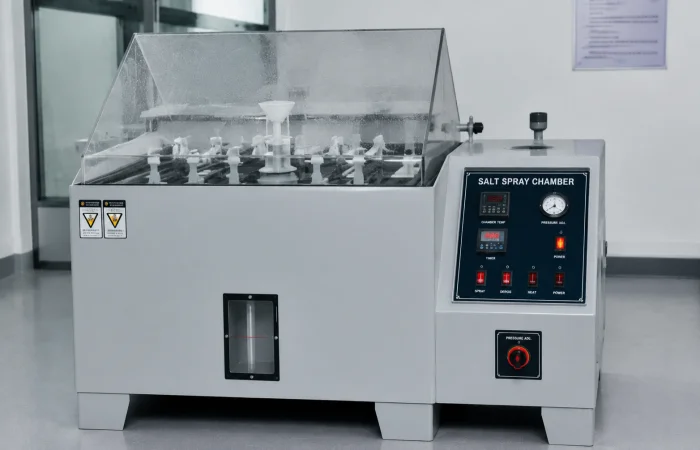
The results of a Salt Spray Test are not determined by a single factor. Whether a commercial stainless steel faucet can maintain excellent corrosion resistance over a long period depends on multiple aspects throughout the entire product lifecycle.
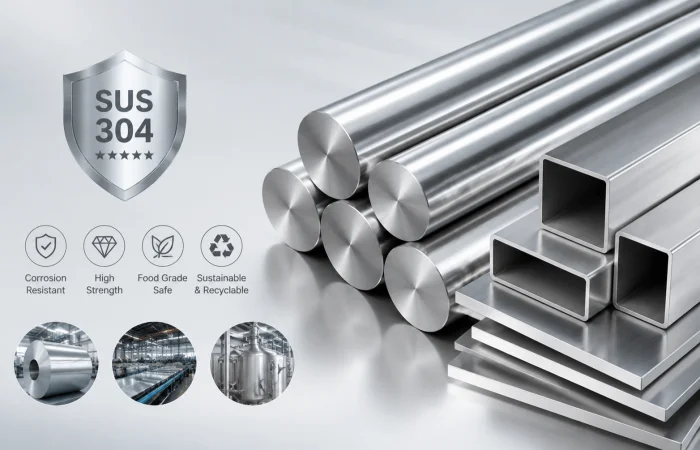
Material quality is the first line of defense when it comes to corrosion resistance. Although many products on the market are labeled as using 304 stainless steel, differences in suppliers, manufacturing processes, and raw material standards can lead to significant variations in final performance.
High-quality SUS304 stainless steel features:
· Stable chemical composition
· Excellent corrosion resistance
· High consistency
If the material itself contains excessive impurities or insufficient control of alloy composition, corrosion risks may still increase during long-term use, even if the product surface has been treated. Therefore, selecting stainless steel materials that meet required standards and have stable chemical composition is the foundation for ensuring long-term corrosion resistance of commercial faucets.
Many people focus on the material itself but overlook the impact of product structure on corrosion resistance. In reality, excellent structural design can effectively reduce the possibility of corrosion.
For example:
· Areas where water can easily accumulate
· Gaps that are difficult to clean
· Locations where water stains may remain for a long time
Therefore, high-quality commercial faucets require not only corrosion-resistant materials but also optimized structures to:
· Reduce areas where water accumulates
· Improve cleaning convenience
· Minimize residue buildup
For commercial products operating in humid and high-frequency-use environments, proper structural design can effectively reduce corrosion risks and improve overall reliability.

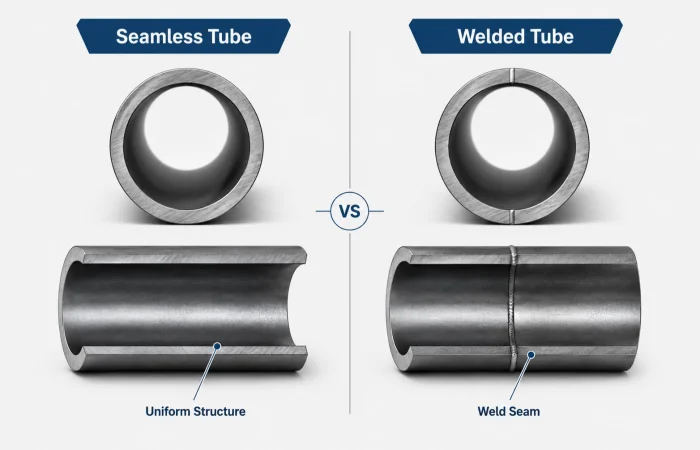
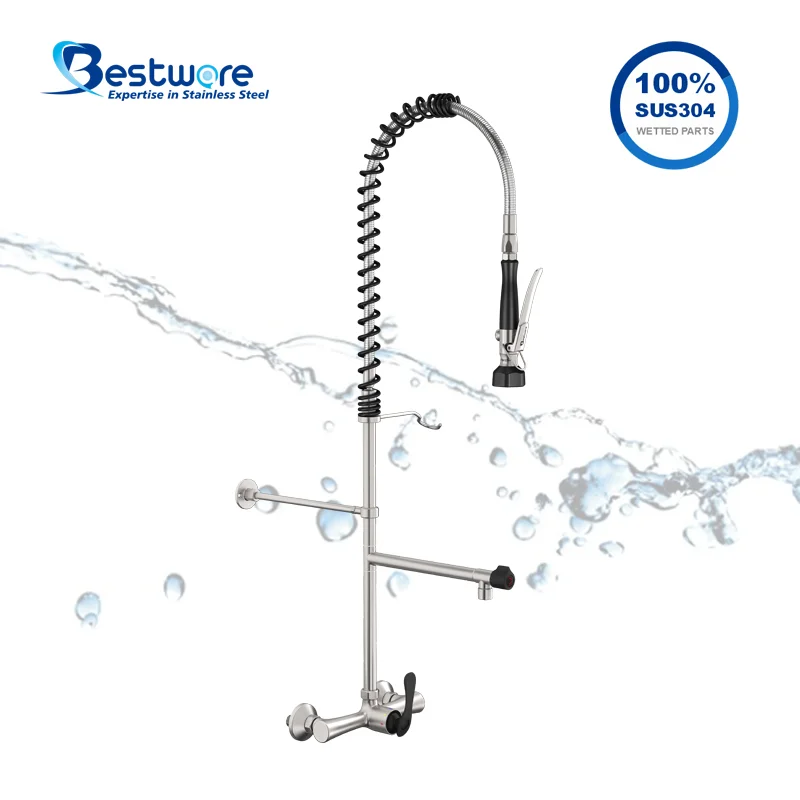
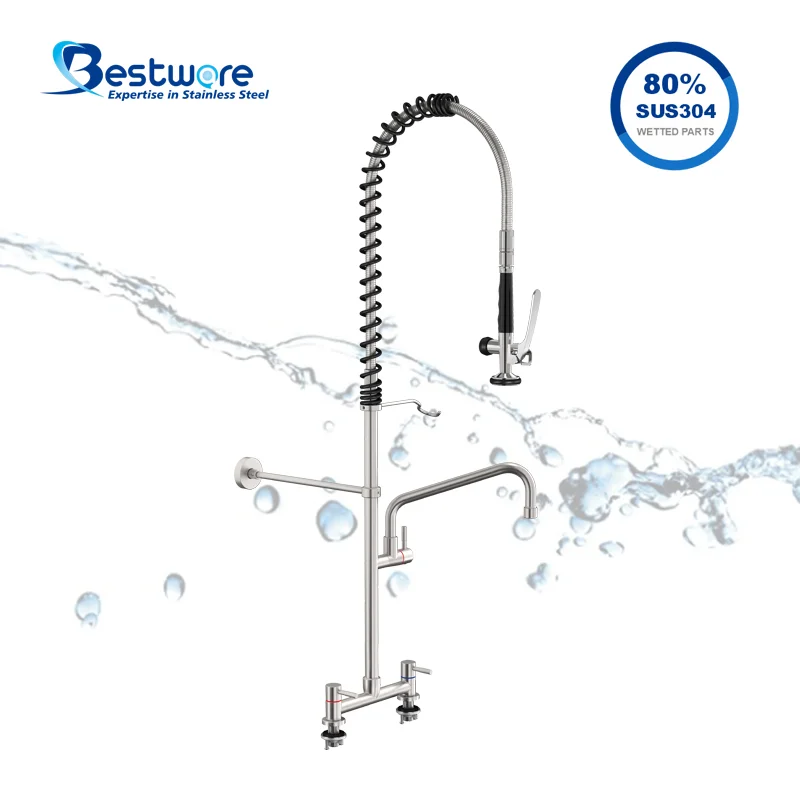
For certain commercial pre rinse faucet products, the tube structure plays an important role in corrosion resistance. In traditional manufacturing methods, some metal tubes are formed through welding processes. However, welded areas undergo high-temperature processing, which may cause changes in the material structure and become potential areas where corrosion risks increase. In comparison, seamless stainless steel tubes feature a more continuous material structure, helping reduce potential weak points where corrosion may occur.
The main advantages of seamless tubes include:
Reduced Weld-Related Risks
Since seamless tubes do not have the longitudinal weld seams found in traditional welded tubes, they can reduce potential corrosion-prone areas.
Maintaining a More Complete Material Structure
The continuous structure of seamless tubes helps improve long-term stability during use.
Improved Product Consistency
For commercial kitchen environments with frequent use, seamless structures can provide more reliable performance.
Of course, whether to use a seamless structure depends on the product design and application requirements. However, for high-frequency commercial applications, tube structure is one of the key factors affecting product reliability.
For commercial projects, what truly matters is not only whether one individual product can pass the test, but whether every batch of products can maintain consistent quality. Therefore, a comprehensive quality management system is essential.
Every stage of production requires strict control, including:
· Raw material inspection
· Manufacturing processes
· Welding treatment
· Product assembly
· Finished product testing
Only by establishing a complete quality control process can manufacturers ensure consistent corrosion resistance throughout the product lifecycle.

Corrosion resistance is not achieved through a single factor. Instead, it is the result of the combined efforts of material selection, structural design, manufacturing processes, and quality management. As a brand specializing in the research, development, and manufacturing of commercial stainless steel faucets, Bestware controls every key factor affecting corrosion resistance from the beginning of product development.
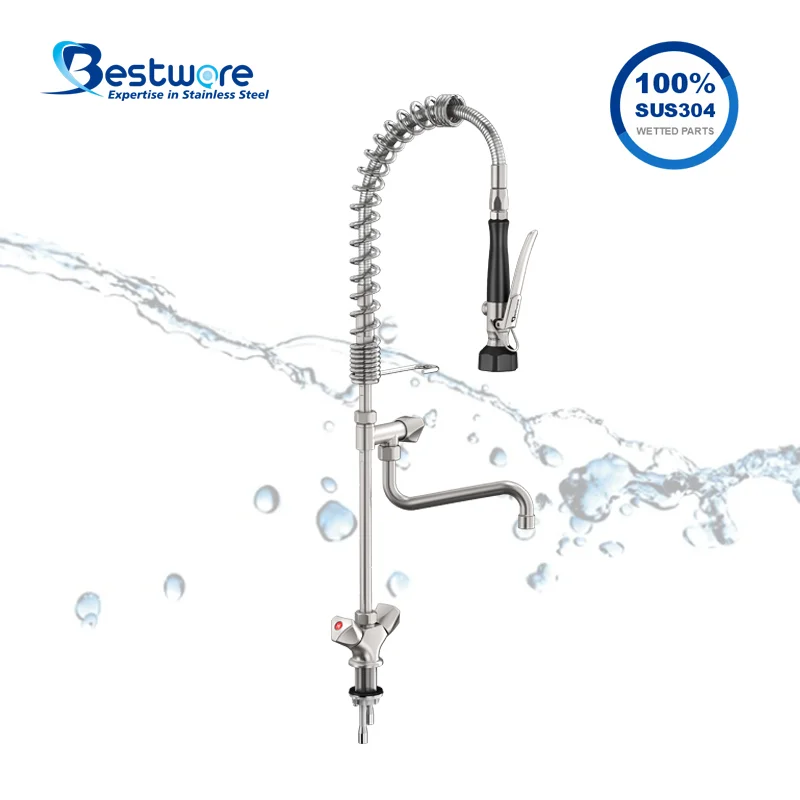
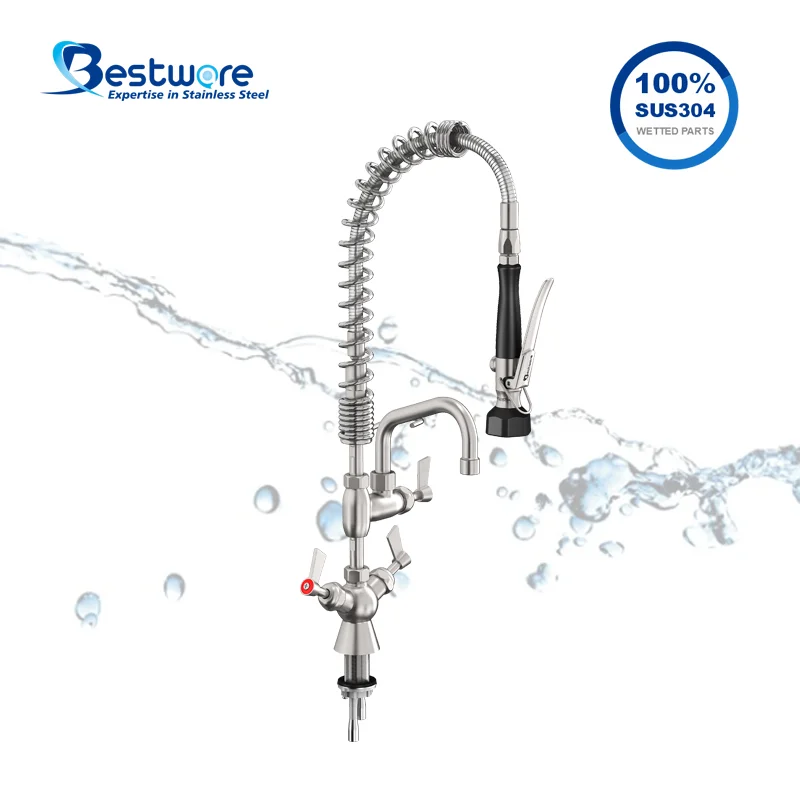
Bestware insists on using 100% food-grade SUS304 stainless steel as the primary material, ensuring a stable foundation for corrosion resistance. At the same time, during product design, we focus on optimizing structural details, reducing areas prone to water accumulation and dirt buildup, and lowering corrosion risks during long-term use. For some high-frequency-use pre rinse faucet products, Bestware adopts seamless SUS304 stainless steel tube designs, reducing potential corrosion risk points associated with traditional welded tube structures while improving overall structural stability.
During manufacturing, Bestware leverages years of stainless steel processing experience and strictly controls key processes including welding, polishing, surface treatment, assembly, and finished product inspection to ensure consistent quality across every production batch. The 72-hour Salt Spray Test is only one part of the overall quality verification system. The true foundation supporting long-term product reliability is the comprehensive quality control system established throughout the entire process, from material selection to manufacturing.
Through continuous investment in material performance, manufacturing technology, and product reliability, Bestware commercial stainless steel faucets are designed to meet the long-term application needs of high-frequency environments such as commercial kitchens, hotels, schools, hospitals, and food processing facilities, providing more stable and durable solutions for OEM and ODM customers.

For buyers, the Salt Spray Test is an important indicator for evaluating the quality of commercial stainless steel faucets, but it is not the only factor that should be considered. A truly reliable product requires comprehensive evaluation from multiple aspects:
Is the material reliable?
Does the product use high-quality SUS304 stainless steel or higher-grade materials?
Is the structure well designed?
Does the design reduce water accumulation and corrosion risks?
Are the manufacturing processes mature?
Are welding and surface treatment processes stable and reliable?
Is quality control comprehensive?
Can the manufacturer ensure consistent quality across long-term production batches?
Compared with simply comparing whether a product passes a 72-hour, 96-hour, or 240-hour Salt Spray Test, it is more important to understand whether the manufacturer has complete product development capabilities and quality control systems. Laboratory tests verify specific performance indicators, while a mature manufacturing system determines the actual performance and reliability of products after years of use.

For commercial stainless steel faucets, corrosion resistance directly affects product lifespan, maintenance costs, and the end-user experience. The 72-hour Salt Spray Test is not only a laboratory verification method, but also a comprehensive evaluation of a product's material selection, structural design, manufacturing processes, and quality management capabilities. Bestware remains committed to using 100% food-grade SUS304 stainless steel, combined with mature stainless steel manufacturing processes, reliable structural design, and strict quality control systems, to create more durable and stable commercial stainless steel faucet solutions. We believe that truly trustworthy quality is not only reflected in a test report, but also demonstrated through the long-term value created by products that operate reliably for years.
One-stop Solution Provider of Stainless Steel Commercial Faucets
Email: business@bestware-stainless.com
after-sales@bestware-stainless.com
Tel: +86 18929047065
WhatsApp: +86 18929047065


WeChat: +86 18929047065


Website: www.bestware-stainless.com(Global Site)
www.bestware-sparkling.com(Water Dispenser)
Add: Block 8, No. 6, Jianda Nan Road, Jiangmen, Guangdong, China
Copyright © Bestware Hardware Production Co., Ltd. All Rights Reserved.
(2).webp)
(1).webp)