Date: 2026-04-28
In commercial kitchens, a pre rinse faucet may seem like a basic piece of equipment. In reality, however, it has a direct impact on labor efficiency and overall operational costs. Many restaurants focus primarily on upfront price during procurement, while overlooking the hidden costs that emerge over time. In the long run, a poor choice can continuously drain time, labor, and maintenance budgets.
Pre rinse faucets operate under high frequency, high water pressure, and demanding working conditions. Core components such as spray valves, hoses, and cartridges are all typical wear parts. If the product quality is not up to standard, these components will deteriorate much faster. In the U.S. market, replacing a spray valve typically costs between $60–$120, while hoses range from $80–$150. Labor-inclusive service costs are generally around $80–$150 per visit. For frequently used kitchen equipment, requiring 2–3 repairs per year is not uncommon, resulting in an annual maintenance cost of approximately $300–$700 per unit.
|
Cost Item |
Cost per Occurrence (USD) |
Annual Frequency |
Annual Cost Estimate (USD) |
|
Spray Valve Replacement |
$60 – $120 |
1-2 times |
$60 – $240 |
|
Hose Replacement |
$80 – $150 |
1 times |
$80 – $150 |
|
Labor Cost |
$80 – $150 |
1-2 times |
$80 – $300 |
|
Total Annual Cost |
— |
— |
$300 – $700 per unit |
Even under conservative assumptions, annual maintenance costs can easily reach several hundred dollars per unit. For lower-quality products, this frequency may increase further. In other words, any savings from a lower upfront price are often offset—and even exceeded—by ongoing repair and replacement expenses.

The primary function of a pre rinse faucet is to improve washing efficiency, yet performance differences are often underestimated. For example, if an efficient spray valve completes a rinse in 5 seconds, while a less efficient one takes 8 seconds, the 3-second difference may seem negligible. However, in a high-frequency environment, this gap quickly accumulates.
|
Metric |
High-Efficiency Faucet |
Low-Efficiency Faucet |
|
Time per rinse |
5 seconds |
8 seconds |
|
Daily usage |
400 times |
400 times |
|
Total daily time |
~33 minutes |
~53 minutes |
|
Time difference |
— |
+20 minutes/day |
|
Annual time |
— |
~120 hours/year |
In the U.S., average back-of-house labor costs are around $15/hour. This means inefficiencies alone can result in an additional $1,800 in annual labor costs per worker. Furthermore, according to the EPA, pre rinse operations can account for up to one-third of total kitchen water usage. Inefficient equipment therefore not only wastes time but also increases water and energy expenses. This combination of time and resource waste makes efficiency loss one of the most overlooked yet persistent hidden costs.

In high-intensity kitchen environments, equipment plays a crucial role in employee performance. Poor-quality pre rinse faucets often involve high trigger resistance, inconsistent water flow, and poor hose rebound. While these issues may not be noticeable in short-term use, repeated operation throughout the day can lead to wrist fatigue, reduced efficiency, and inconsistent cleaning performance. Over time, this can lower employee satisfaction, increase turnover, and raise training costs. Frontline feedback frequently highlights that poor equipment handling directly impacts workflow and may even cause physical discomfort. Although these costs are not immediately visible in financial reports, they manifest through reduced productivity and workforce instability.

In the foodservice industry, equipment reliability is directly tied to service capacity. When a pre rinse faucet fails, it can disrupt the entire cleaning workflow and slow down kitchen operations, especially during peak hours. For example, if the spray valve stops functioning properly, dishwashing efficiency drops, dish turnover slows, and service speed is affected. In extreme cases, this can lead to delayed service or a decline in customer experience. Industry feedback consistently emphasizes the importance of uninterrupted operation. Equipment failures often create cascading effects, including workflow delays, idle staff, and reduced customer satisfaction. While such failures may not occur frequently, their impact can far exceed the cost of a single repair.

All of the hidden costs mentioned above share a common trait—they do not appear at the time of purchase, but accumulate over time during use. Instead of addressing these issues later, selecting a more reliable and commercial-grade solution from the outset is a more effective approach.
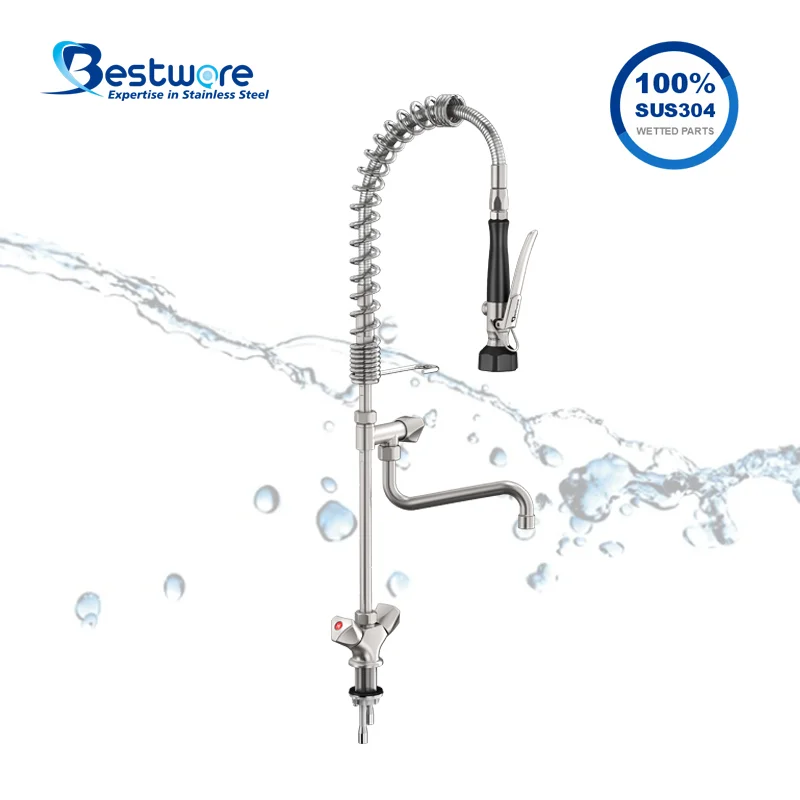
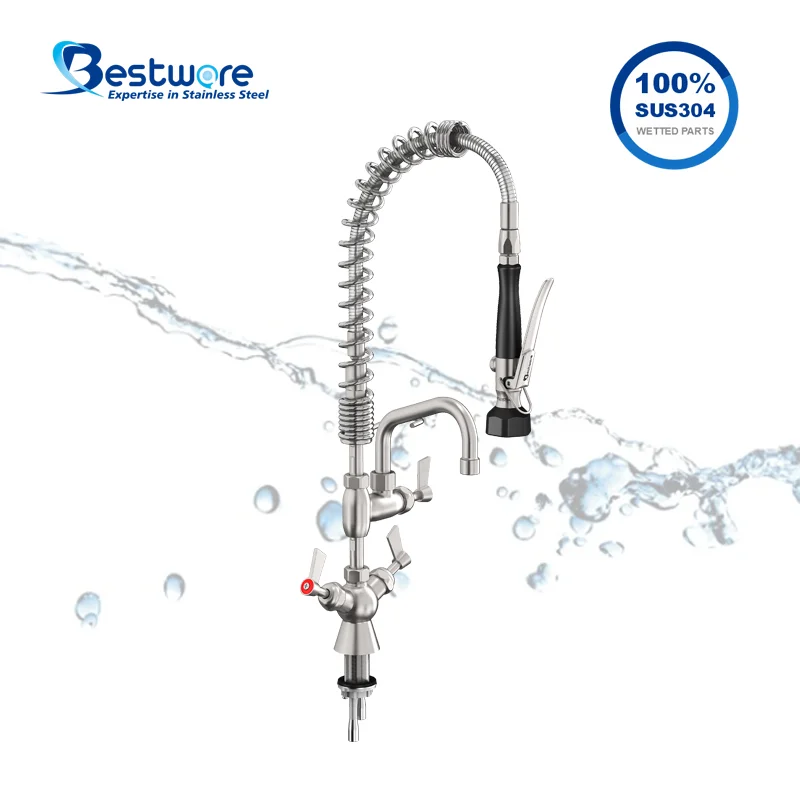
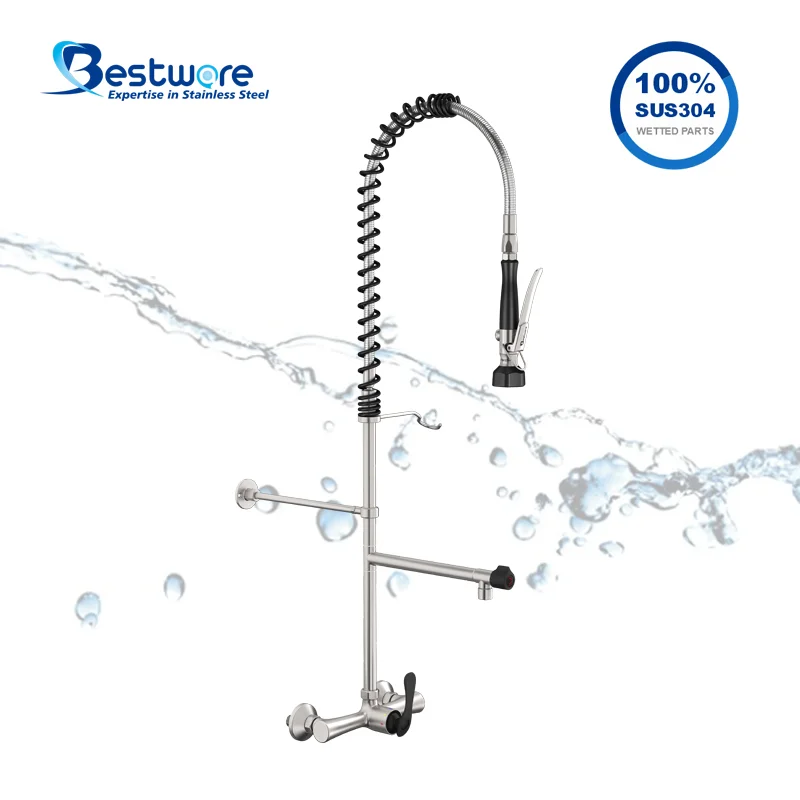
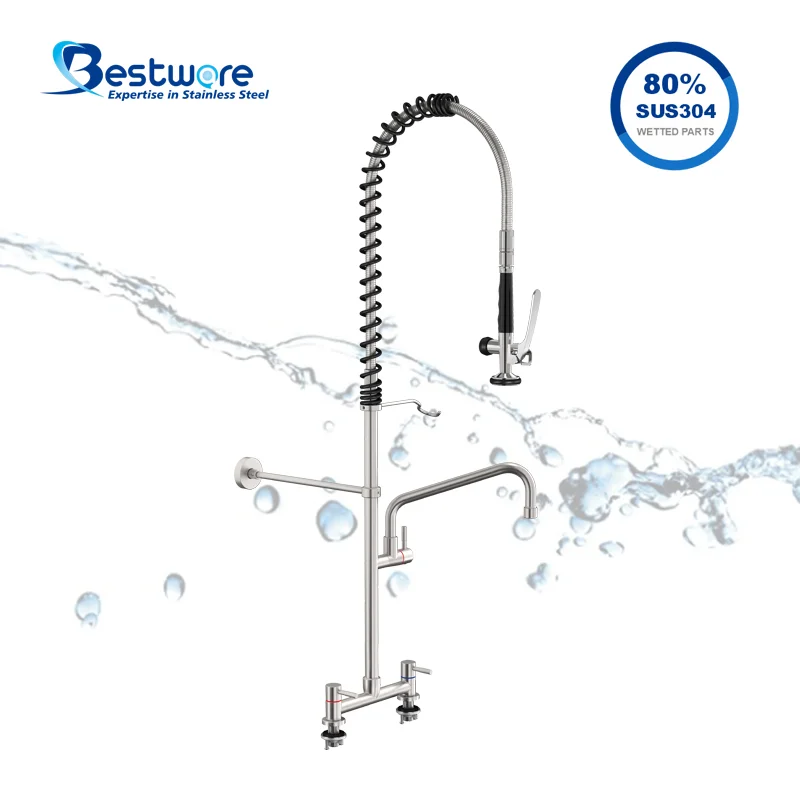
Bestware pre rinse faucets are designed with long-term performance in mind, with targeted optimizations across key areas. For more details, you can also refer to our article “A Comprehensive Guide on How to Choose a Pre Rinse Faucet”.
Made from SUS304 stainless steel, the faucet offers superior corrosion resistance and durability in high-use environments. Compared to conventional materials, it is less prone to wear and degradation, helping reduce repair frequency.

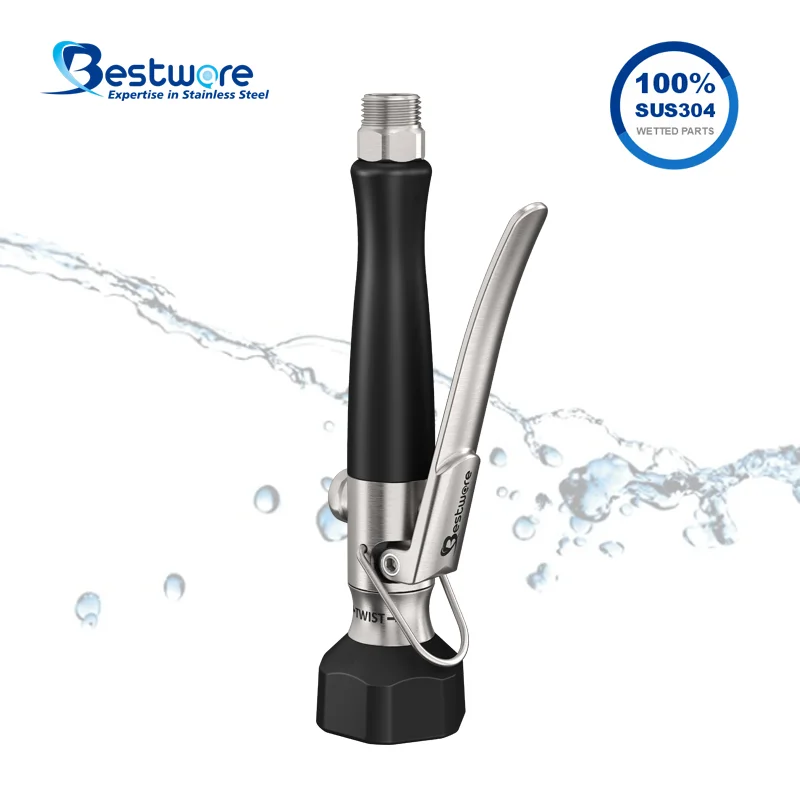
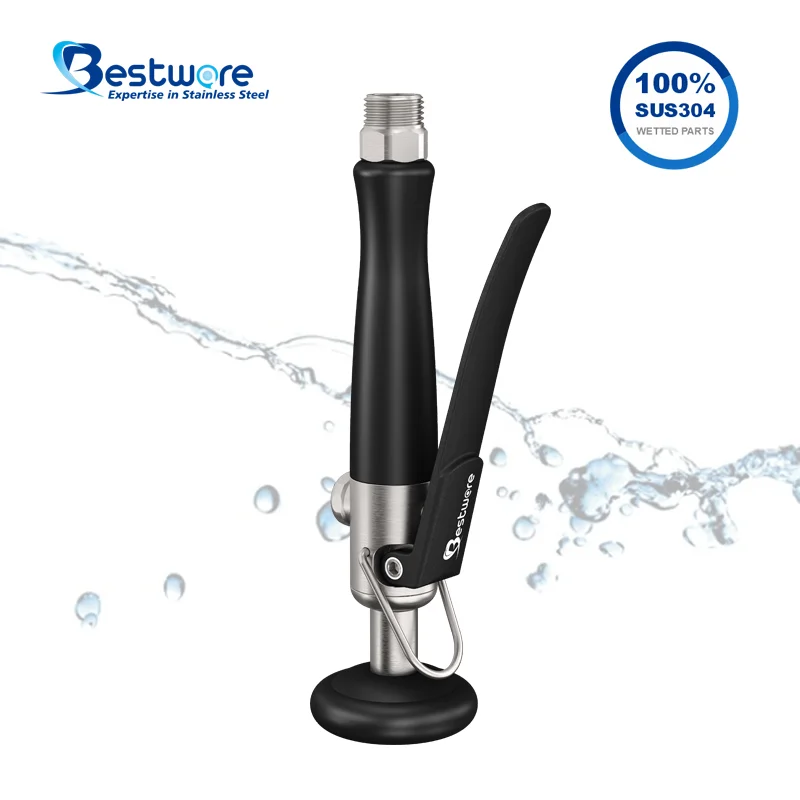
Different cleaning tasks require different spray patterns. Bestware's spray valves feature a dual spray mode design, allowing for smoother operation, minimizing unnecessary adjustments, and helping maintain consistent rinse times.
The structure is optimized for smooth and stable operation. Features such as a 360° rotating head and a universal ball joint, along with a built-in hydraulic buffer in the spray valve, help maintain consistent handling and reduce fatigue during prolonged use.
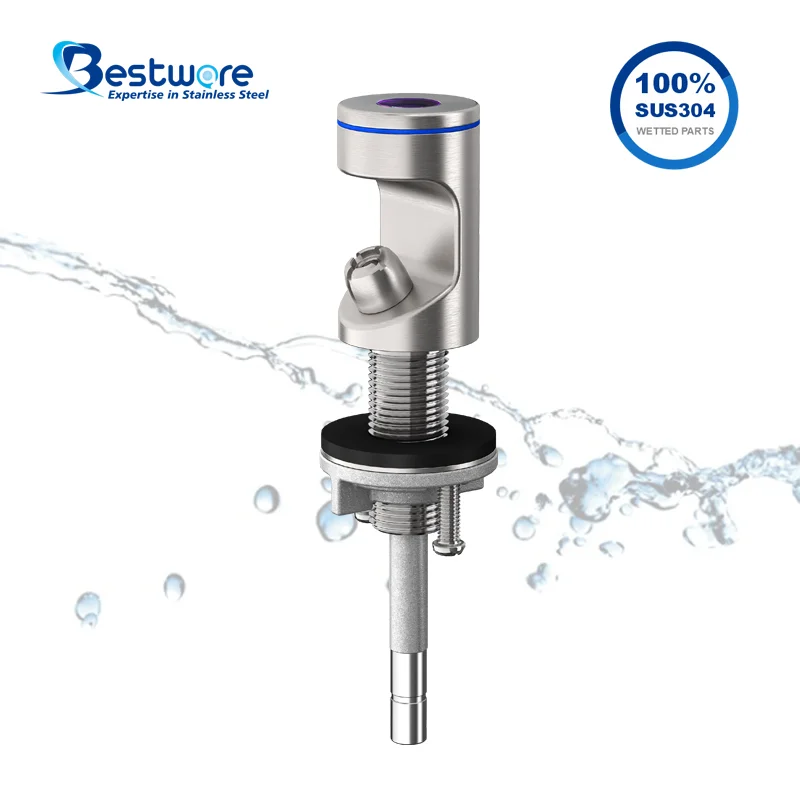
Enhanced structural strength and stable internal components ensure reliable performance over time. This reduces the likelihood of unexpected failures and helps maintain uninterrupted kitchen operations.
Choosing a pre rinse faucet is not simply a purchasing decision—it is a long-term operational cost decision. Lower-quality products often lead to higher maintenance needs, reduced efficiency, and increased operational instability. By contrast, well-designed and durable solutions can minimize maintenance requirements, improve workflow efficiency, and enhance the overall working environment. For foodservice operators, the key consideration should not be initial price, but total lifecycle performance. A pre rinse faucet may be just one component in the kitchen system, but its impact on cost structure is continuous and cumulative. In other words, the equipment itself is not expensive—what truly costs more is the long-term inefficiency caused by the wrong choice.
One-stop Solution Provider of Stainless Steel Commercial Faucets
Email: business@bestware-stainless.com
after-sales@bestware-stainless.com
Tel: +86 18929047065
WhatsApp: +86 18929047065


WeChat: +86 18929047065


Website: www.bestware-stainless.com(Global Site)
www.bestware-sparkling.com(Water Dispenser)
Add: Block 8, No. 6, Jianda Nan Road, Jiangmen, Guangdong, China
Copyright © Bestware Hardware Production Co., Ltd. All Rights Reserved.
(2).webp)
(1).webp)