Date: 2026-06-22
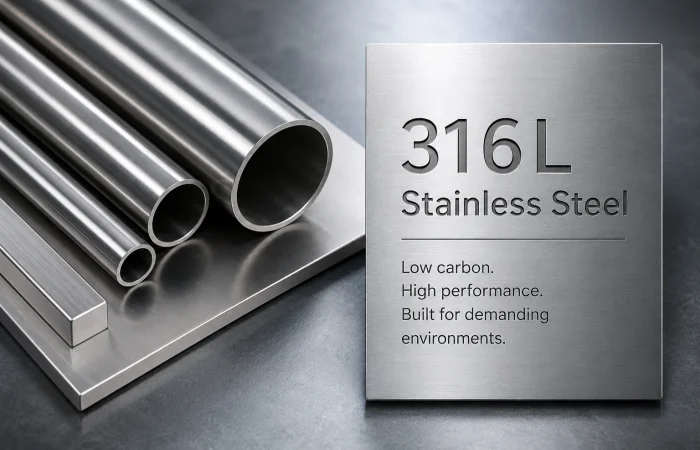
When purchasing commercial faucets, public restroom faucets, metering faucets, or drinking water fixtures, buyers often compare 316 stainless steel with 316L stainless steel. A common question is: Is 316L always better than 316? Is it necessary to choose 316L for a metering faucet? And how should the right material be selected for projects in schools, hospitals, airports, coastal buildings, or commercial kitchens? The answer is not as simple as saying that 316L is a higher-grade material. Both 316 and 316L are austenitic stainless steels, and their basic corrosion resistance is very similar. The key difference lies in carbon content. The “L” in 316L stands for “Low Carbon.” The main purpose of this low-carbon design is to reduce the risk of intergranular corrosion after welding or high-temperature processing. As a result, 316L can be a more suitable choice for projects involving complex structures, welded components, long-term exposure to moisture, or more demanding corrosive environments.
The main difference between 316 and 316L is not the content of chromium, nickel, or molybdenum, but the carbon content. According to the 316 series composition table listed by ASSDA, the maximum carbon content of 316 stainless steel is typically 0.08%, while that of 316L is typically 0.03%. Their chromium, nickel, and molybdenum ranges are generally similar.
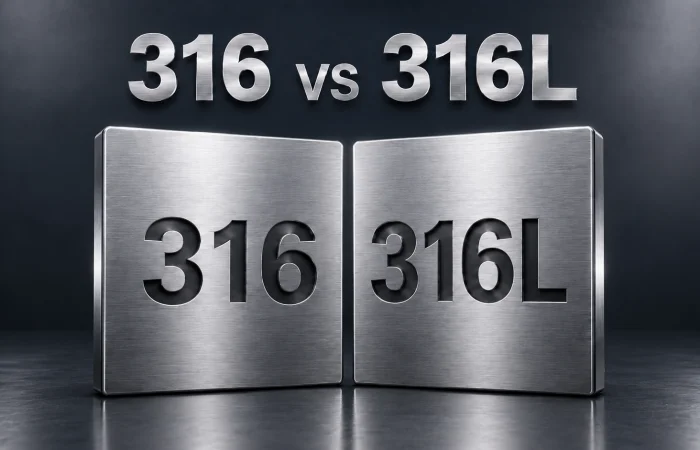
This means that 316L is not a completely different material. It is the low-carbon version of 316 stainless steel. Lower carbon content helps reduce carbide precipitation during welding, thereby lowering the risk of intergranular corrosion in the heat-affected zone. Carpenter Technology also defines 316L as a low-carbon version of conventional 316 and notes that limiting carbon content to a maximum of 0.03% helps reduce carbide precipitation during welding.
|
Item |
316 Stainless Steel |
316L Stainless Steel |
|
Material Type |
Molybdenum-bearing austenitic stainless steel |
Low-carbon version of 316 |
|
Carbon Content |
Typically ≤0.08% |
Typically ≤0.03% |
|
Corrosion Resistance |
Excellent |
Similar to 316, with better stability in welded areas |
|
Weldability |
Good, but intergranular corrosion risk should be controlled |
More suitable for welded parts and complex structures |
|
Suitable Applications |
Corrosive environments, higher-strength requirements, general industrial use |
Coastal, humid, welded, or long-term corrosion-resistant applications |
316 stainless steel is widely used in coastal environments, food processing, chemical processing, pharmaceuticals, and medical equipment. The key reason is its molybdenum content. Molybdenum improves resistance to pitting and crevice corrosion, especially in environments containing chloride ions.
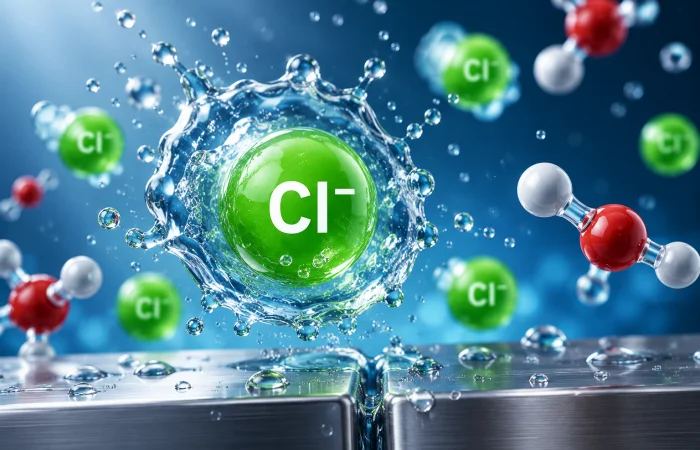
Chloride ions are one of the main causes of localized corrosion in stainless steel. Sea air, salt spray, chlorine-based disinfectants, certain cleaning agents, industrial water, and high-humidity environments can all increase the risk of stainless steel corrosion. ASSDA also points out that the main advantage of 316 over standard grades is its stronger resistance to pitting and crevice corrosion in warm chloride environments, making it suitable for applications such as coastal architecture, marine fittings, food processing, and chemical equipment.
However, this does not mean that 316 or 316L will never rust. Under conditions involving high temperatures, high chloride levels, standing water, improper cleaning, or contaminants trapped in crevices, 316-series stainless steel can still corrode. Therefore, material grade is only the foundation of durability. Cleaning practices, installation environment, and product structure are equally important.
The core advantage of 316L is not simply stronger surface corrosion resistance. Its real value lies in better stability after welding. When stainless steel is welded or exposed to high-temperature processing, certain areas of the material enter a high-temperature zone. If the carbon content is relatively high, chromium and carbon may form carbides along the grain boundaries, reducing the chromium content near those boundaries. Since chromium is essential for forming the passive protective layer on stainless steel, insufficient chromium in localized areas can make welded zones more vulnerable to intergranular corrosion.
316L reduces this risk by lowering the carbon content. For welded components, complex waterway structures, long-term humid environments, coastal public facilities, or projects with high maintenance costs, 316L is often the safer option. This is especially relevant for metering faucets. Faucets in public spaces are not low-frequency products. They are exposed to frequent pressing, water pressure fluctuations, cleaning agents, and humid air over long periods. If the project is located in a coastal area, on an island, near a port, or in a hospital, laboratory, or food processing facility, the value of 316L goes beyond material specification. It becomes part of the product's long-term reliability.
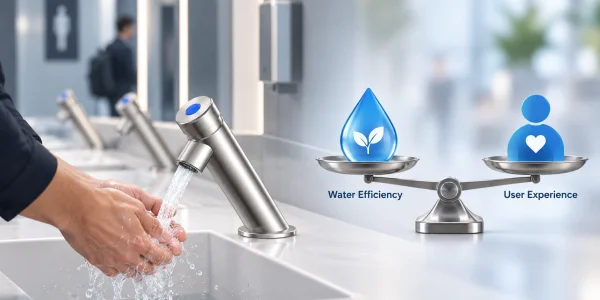
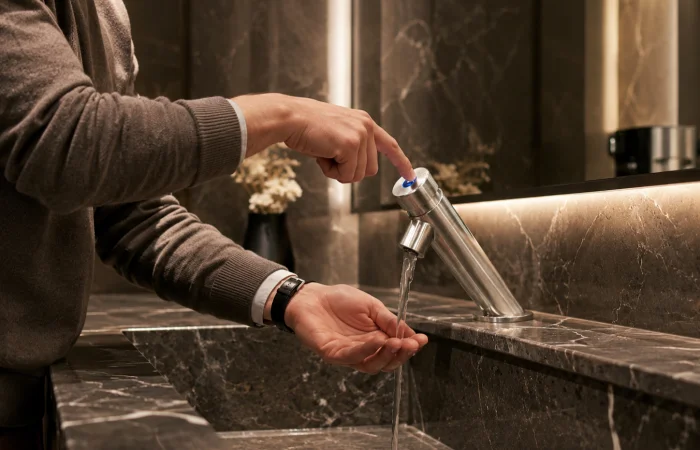
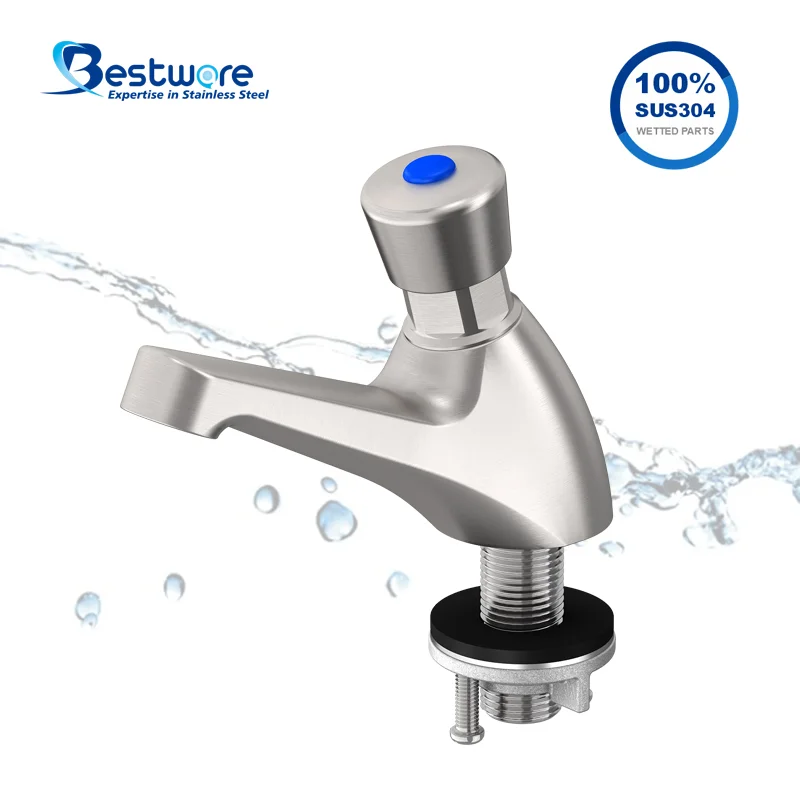
Metering faucets are mainly used in high-traffic water-use areas such as public restrooms, schools, hospitals, airports, railway stations, shopping malls, and commercial kitchens. Their key function is simple: after the user presses the button, water flows automatically and shuts off after a set period, helping reduce water waste and improper operation.
Compared with residential faucets, commercial metering faucets face more demanding operating conditions. First, they are used much more frequently, which means the push mechanism, valve cartridge, spring, and seals must remain stable over long-term operation. Second, the installation environment is often humid, and public restrooms are frequently exposed to cleaning agents and disinfectants. Third, some projects are located in coastal or high-salt-spray areas, where chloride ions in the air can increase the risk of corrosion.
For ordinary indoor projects, a high-quality stainless steel metering faucet, such as one made from 304 stainless steel, can meet most requirements. But for more demanding environments, 316L provides a higher corrosion-resistance safety margin. It is not mandatory for every project, but it is a configuration worth considering for projects with higher durability requirements.
If your project falls into one of the following categories, 316L stainless steel metering faucets are worth prioritizing.
First, coastal buildings, island projects, port facilities, and seaside schools. Salt spray and humid air can increase the risk of pitting on stainless steel surfaces, while 316L offers stronger long-term corrosion protection.

Second, hospitals, laboratories, pharmaceutical plants, and food processing facilities. These environments often have higher requirements for hygiene, cleaning, and corrosion resistance, and may involve frequent use of disinfectants or cleaning agents.
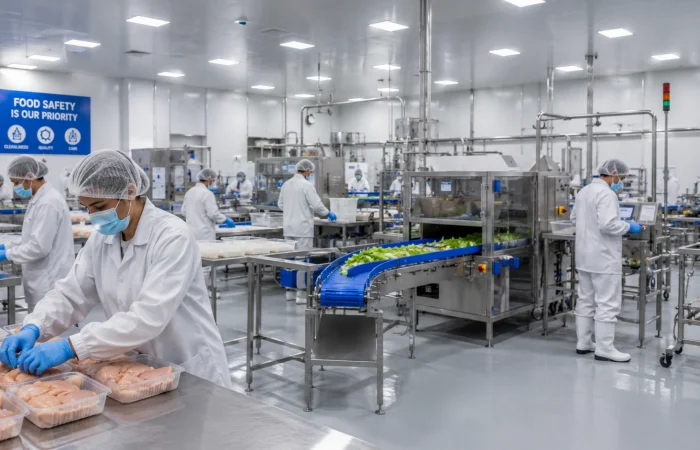
Third, high-traffic public restrooms in airports, railway stations, and commercial complexes. These projects usually involve higher maintenance costs. Once a faucet suffers from corrosion, sticking, or leakage, the impact of repair work can be much broader.

Fourth, high-end hotels, public buildings, and long-term operation projects. If the owner is more concerned with lifecycle cost than one-time purchase cost, 316L can be a more reliable long-term configuration.

It is important to note that ordinary office buildings, standard school restrooms, and regular shopping mall restrooms do not necessarily require 316L. The key is to match the material to the actual environment.
To meet the material and environmental requirements of different commercial projects, Bestware has developed a series of 316L stainless steel metering faucets. These products provide a more suitable water-use solution for hospitals, schools, food processing areas, coastal public buildings, and other locations exposed to high humidity or salt-spray conditions. Of course, for most schools, shopping malls, office buildings, and standard public restroom projects, 304 stainless steel metering faucets can usually meet long-term use requirements. Therefore, Bestware offers both 304 and 316L stainless steel options, allowing projects to choose the most suitable material based on the actual environment and budget.
In terms of user experience, Bestware metering faucets feature a light-press delayed-action valve cartridge. Compared with standard models, the pressing resistance is reduced by approximately 50%, making the faucet easier to use for children, elderly users, and people with limited hand strength. The lighter pressing action also helps reduce component wear caused by repeated forceful pressing in public spaces. The valve cartridge includes a built-in filter structure, which helps prevent impurities from entering the internal waterway and reduces the risk of sticking, leakage, or unstable shut-off.
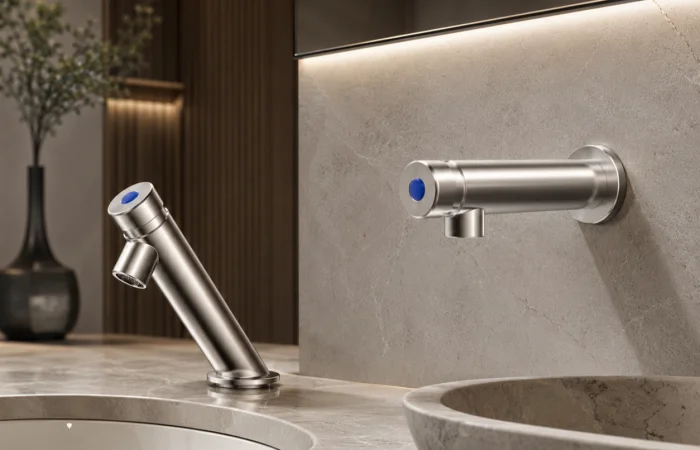
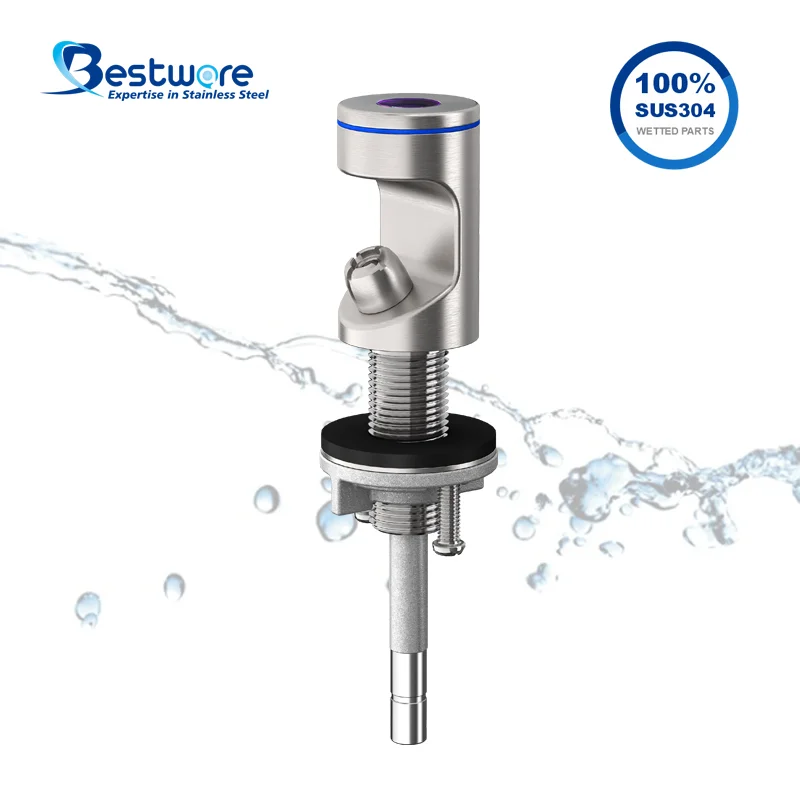
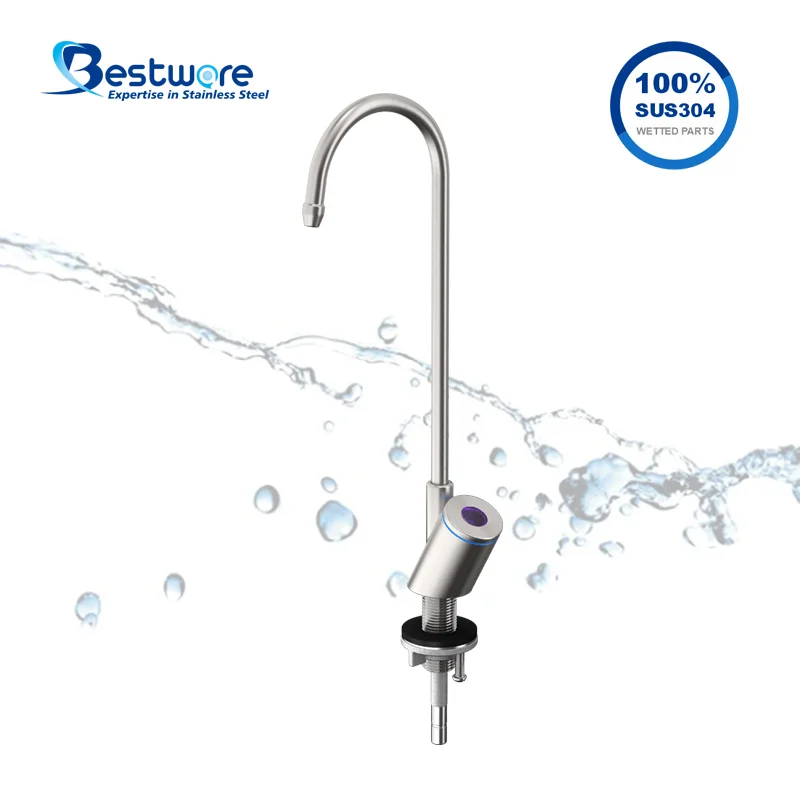
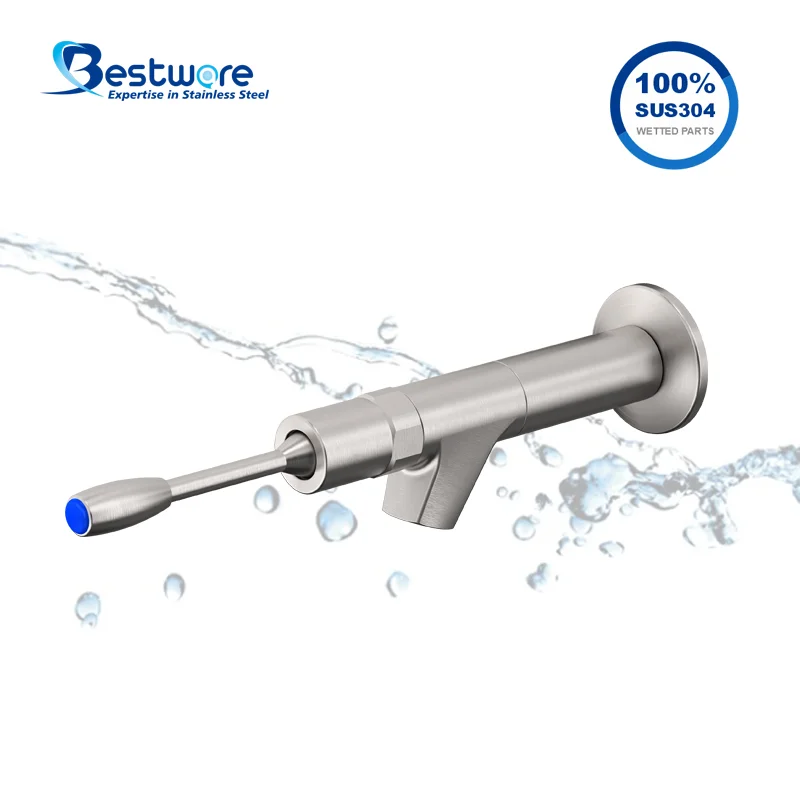
To meet different installation requirements, Bestware offers both deck-mount and wall-mounted . The deck-mounted version is suitable for common basins and countertop installations, while the wall-mounted version is ideal for projects with wall-mounted water supply outlets, limited countertop space, or higher requirements for easy countertop cleaning.
Is 316L always more corrosion-resistant than 316?
Not exactly. The basic corrosion resistance of 316 and 316L is very similar because their chromium, nickel, and molybdenum content ranges are generally the same. The main advantage of 316L lies in its improved resistance to intergranular corrosion after welding or high-temperature processing.
Can 316L stainless steel still rust?
Yes. 316L is more corrosion-resistant than ordinary stainless steel, but it is not completely rust-proof. If it is exposed for a long time to high chloride levels, salt spray, standing water, strong acid or alkaline cleaning residues, or poor maintenance conditions, pitting, tea staining, or localized corrosion may still occur.
Do metering faucets always need to be made from 316L?
No. For ordinary indoor public restrooms, office buildings, shopping malls, and schools, high-quality 304 or 316 stainless steel products can usually meet the requirements if the water quality is stable and the air is not highly corrosive. 316L is more suitable for coastal buildings, hospitals, laboratories, food processing plants, chemical environments, high-humidity areas, and premium public buildings where corrosion resistance is more important.
What is the practical value of reducing pressing force by 50%?
Users in public spaces are not always adults. They may include children, elderly users, and people with limited hand strength. If the pressing force is too high, users may press repeatedly, hit the button, or even avoid using the faucet. Bestware's new metering faucet reduces pressing resistance by approximately 50%, making operation easier and more comfortable. This is especially useful for schools, hospitals, elderly care facilities, and high-traffic public restrooms.
What is the function of the built-in filter screen in the delayed-action valve cartridge?
The built-in filter screen helps block particles in the waterway, reducing wear, sticking, and leakage risks caused by impurities entering the valve cartridge. In public buildings, the water supply may contain sediment, metal particles, or construction residues. A filter structure can improve valve cartridge stability and help extend the service life of the faucet.
Why does ±2 second water-flow timing accuracy matter?
The water-saving performance of a metering faucet depends largely on whether each water-flow cycle is consistent. If the timing deviation is too large, it may either waste water or affect the handwashing experience. Bestware's new 316L model controls water-flow timing within approximately ±2 second, which is more suitable for unified water-saving management in public projects compared with ordinary products that often have much wider timing deviations.
The key difference between 316 and 316L stainless steel lies in carbon content. By reducing carbon content, 316L improves the stability of welded and complex structures in corrosive environments. Meanwhile, 316 still has its own value in applications where strength and high-temperature performance are required. For metering faucets, material selection should not be based on grade alone. It should also take into account the installation environment, usage frequency, water quality, cleaning methods, and maintenance costs. If the project is located in an ordinary indoor public space, the priority should be a metering faucet with a stable structure, reliable water-flow timing, and easy maintenance. If the project is in a coastal, humid, high-salt-spray, medical, laboratory, or food processing environment, a 316L stainless steel metering faucet will be the safer and more durable choice.
One-stop Solution Provider of Stainless Steel Commercial Faucets
Email: business@bestware-stainless.com
after-sales@bestware-stainless.com
Tel: +86 18929047065
WhatsApp: +86 18929047065


WeChat: +86 18929047065


Website: www.bestware-stainless.com(Global Site)
www.bestware-sparkling.com(Water Dispenser)
Add: Block 8, No. 6, Jianda Nan Road, Jiangmen, Guangdong, China
Copyright © Bestware Hardware Production Co., Ltd. All Rights Reserved.
(2).webp)
(1).webp)