Date: 2026-11-05
Drinking taps in public spaces such as schools, office buildings, hospitals, and shopping centers are not always in continuous use. Overnight closures, weekends, and public holidays can leave water sitting inside the faucet and its connecting pipes for extended periods. People tend to focus on whether the incoming water supply meets drinking water standards, while overlooking what happens after water enters the dispensing equipment. In fact, prolonged stagnation can lead to a reduction in disinfectant residuals, microbial attachment to pipe surfaces, and changes in water temperature. So, what happens to water inside a drinking tap when it remains unused for a long time, and what should be done before putting it back into service?
When a drinking tap is not in use, the water inside does not immediately become contaminated. However, as stagnation continues, the water quality and conditions inside the plumbing system may gradually change.
Many public water supply systems use chlorine or other disinfection methods to control microorganisms. A certain level of disinfectant residual is maintained as water travels through the distribution network to help limit microbial growth.
However, when water remains stagnant inside a faucet and its connecting pipes for an extended period, disinfectant residuals may gradually decrease. The rate of decline depends on factors such as water temperature, pipe materials, and the presence of organic matter in the water. Higher temperatures generally accelerate disinfectant decay.
This means that after prolonged inactivity, stagnant water inside the equipment may no longer be in the same condition as water in a regularly used system. Flushing is therefore recommended before the equipment is used again.
Water may contain small amounts of microorganisms. Even after disinfection, it is not possible to guarantee that an entire water supply system remains completely sterile.
Microorganisms can gradually attach to surfaces that come into contact with water, including pipe walls, valve components, and dispensing outlets, potentially forming a biofilm. A biofilm consists of microorganisms embedded in substances they produce, including extracellular polymeric substances. This structure adheres to equipment surfaces and provides some protection for the microorganisms within it.
When water is not regularly renewed, the contact time between microorganisms and pipe surfaces increases, potentially creating conditions that favor biofilm development. This is why the hygiene of internal pipework and dispensing components deserves attention after prolonged periods of inactivity.
Water temperature also affects the condition of stagnant water. When water is not regularly flowing, it gradually approaches the surrounding ambient temperature. If equipment is installed near a heat source, in a poorly ventilated area, or where it is exposed to direct sunlight, the water temperature inside may rise considerably. Warmer conditions can make microbial control more challenging.
In addition, the first water dispensed after a long period of inactivity may sometimes have an unusual odor, appear cloudy, or show discoloration. These changes may be related to sediment in the pipework, corrosion products, or the condition of filtration components. Further inspection may be necessary to identify the cause.
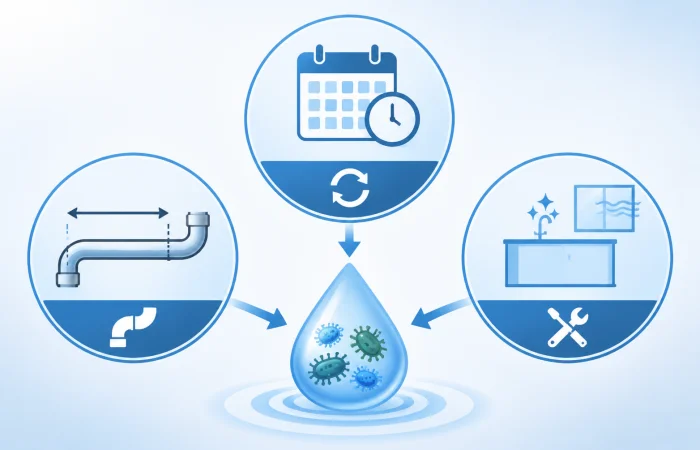
The longer the pipework and the greater its internal volume, the more stagnant water may need to be replaced after a period of inactivity. Water renewal may also be less effective when the connecting pipes contain numerous bends, branches, or sections that are rarely used. During installation, unnecessary pipe length and overly complex configurations should therefore be avoided to reduce areas where water may remain stagnant.
Usage frequency directly affects how often water is renewed inside the pipework. Drinking taps in schools and office buildings may be used frequently on weekdays but remain idle for extended periods during weekends and public holidays. Drinking stations in some public facilities also receive relatively little use, making stagnant water management particularly important. In general, the longer the equipment remains unused, the more important it is to inspect and flush the system before putting it back into service.
Ambient temperature, ventilation, and exposure to sunlight can all affect water temperature inside the pipework. In addition, dispensing outlets that are not cleaned regularly may accumulate scale and dirt, while filters that exceed their recommended service life may also affect water quality. Hygiene management should therefore extend beyond the incoming water supply to include installation conditions, outlet cleaning, and filter maintenance.
Drinking equipment in public facilities should be returned to service following an appropriate procedure after an extended period of inactivity. Specific procedures should follow the equipment manufacturer's instructions and applicable local drinking water regulations.
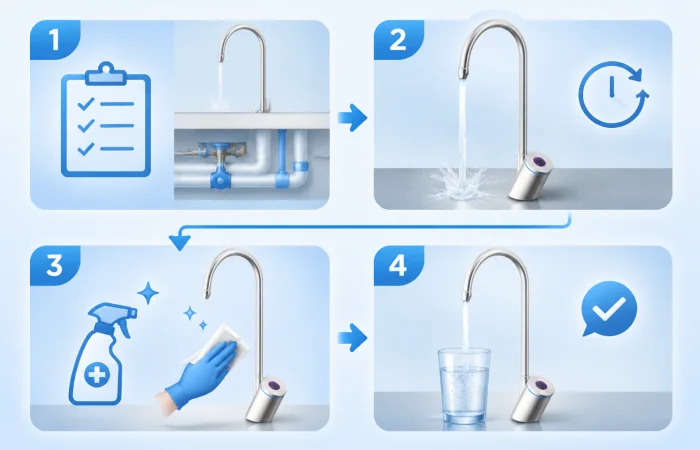
Before restarting the equipment, inspect the water connections, hoses, valves, fittings, and dispensing components. Check for leaks, loose connections, damage, or unusual deposits.
If the equipment is connected to a filtration system, check whether the filter cartridge has exceeded its recommended service life and replace it according to the manufacturer's instructions. Equipment that has been idle for an extended period or has previously experienced water supply issues may require further inspection.
Once the water supply system has been checked and no obvious issues have been identified, flush it according to the equipment and plumbing maintenance requirements. The purpose is to remove water that has remained stagnant and allow fresh supply water to enter the equipment.
If the equipment provides both drinking and bottle-filling functions, each dispensing channel should be checked and flushed separately where necessary. This helps prevent stagnant water from remaining in a circuit that has not been used for a long time.
It is important to ensure that flushing covers the pipework that actually needs to be renewed. Simply opening the faucet may not be sufficient to replace all the water in a system with long upstream pipes or multiple branches. The flushing duration and procedure should be determined based on pipe volume, the length of inactivity, and applicable guidelines.
Flushing helps renew the water inside the system, but it does not replace the cleaning and disinfection of equipment surfaces.
Dispensing outlets, buttons, and other frequently touched areas should be cleaned regularly according to the manufacturer's instructions. For equipment with visible contamination or a prolonged period of inactivity, appropriate disinfection measures should also be taken based on the actual conditions.
The type and concentration of disinfectant, as well as the required contact time, must comply with applicable guidelines. Unsuitable chemicals should be avoided, as they may damage stainless steel surfaces, seals, and internal components.
After flushing and any necessary maintenance, check whether the water flows continuously and at a stable rate. Also look for unusual odors, discoloration, or cloudiness.
For equipment with a chilling function, confirm that the water temperature has returned to its normal operating range. If abnormal conditions persist after flushing, or if water contamination is suspected, stop using the equipment and carry out further inspections. Water quality testing may be necessary.
For public drinking equipment with irregular usage patterns, relying entirely on manual flushing increases the workload for facility management staff. To address this, some modern drinking water systems are equipped with automatic flushing functions that activate water flow according to preset programs after extended periods of inactivity.
Automatic flushing typically uses a control system with preset activation conditions. For example, when the equipment has not been used for a specified period, the solenoid valve opens automatically to allow water to flow through the corresponding pipework.
This function helps renew stagnant water inside the equipment and reduces the time water remains stationary. In schools, office buildings, and similar facilities, flushing can take place according to the programmed schedule even during nighttime or non-operating hours.
However, the actual effectiveness depends on the flushing coverage, flow rate, and duration. If there are long upstream branches or sections of pipework not covered by the flushing cycle, automatic flushing may not renew all the water throughout the entire supply system.
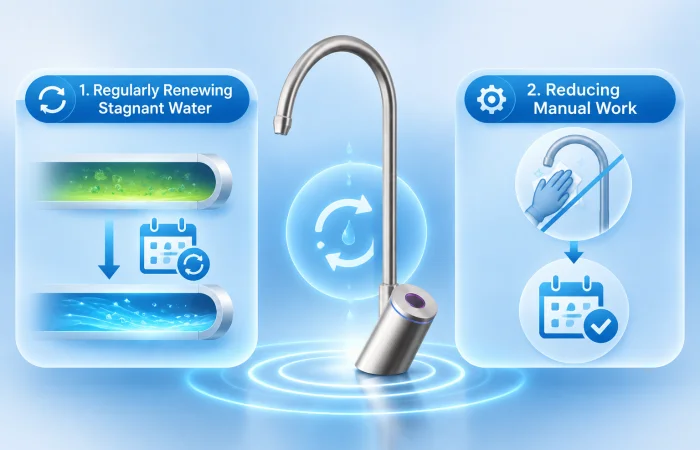
Automatic flushing incorporates part of the routine water renewal process into the equipment's operating program, reducing the need for facility managers to flush each unit manually.
However, this does not eliminate the need for regular inspections. Facility managers should still verify that the flushing function operates correctly and that the associated pipework and dispensing components remain in good condition.
Hygiene management for public drinking equipment depends not only on routine maintenance but also on the equipment's structural design and control features.
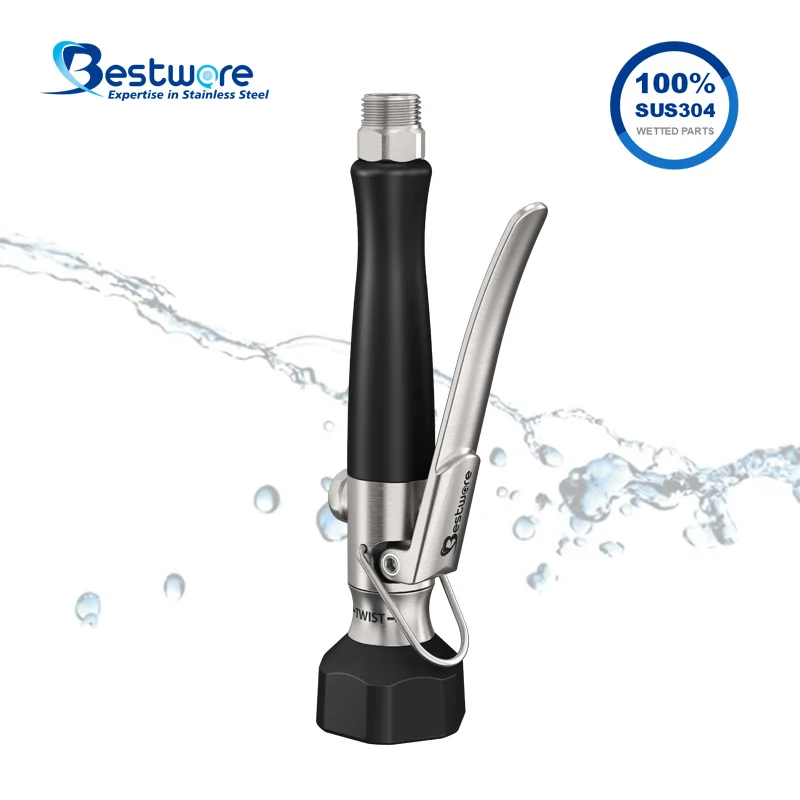
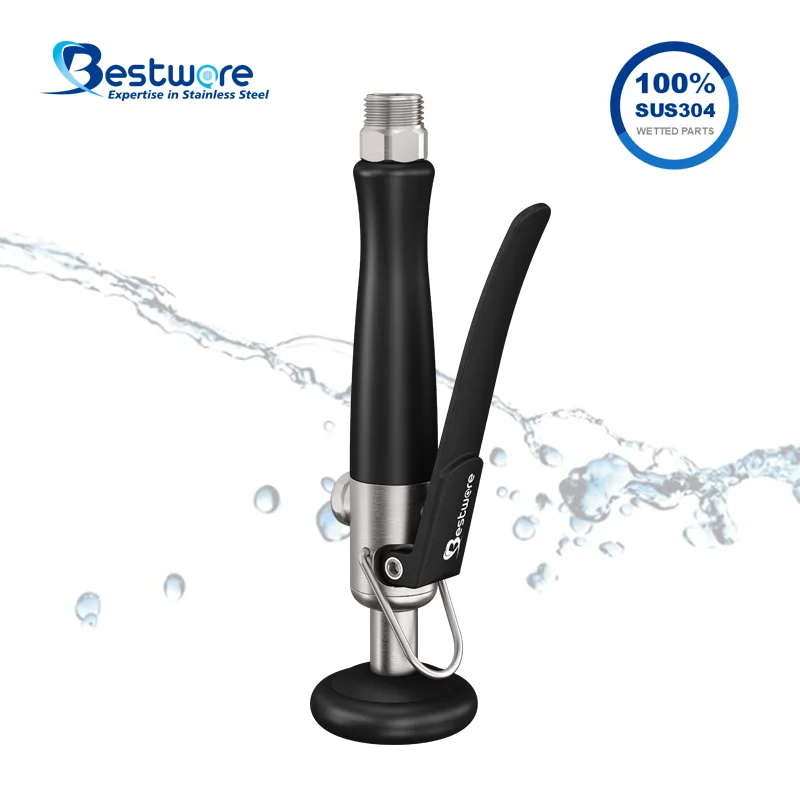
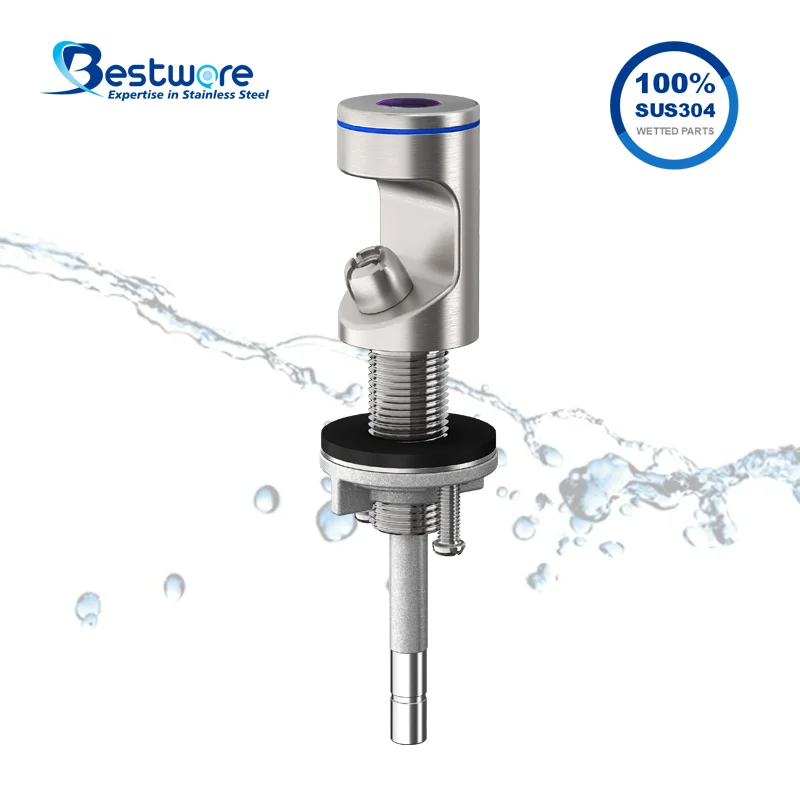
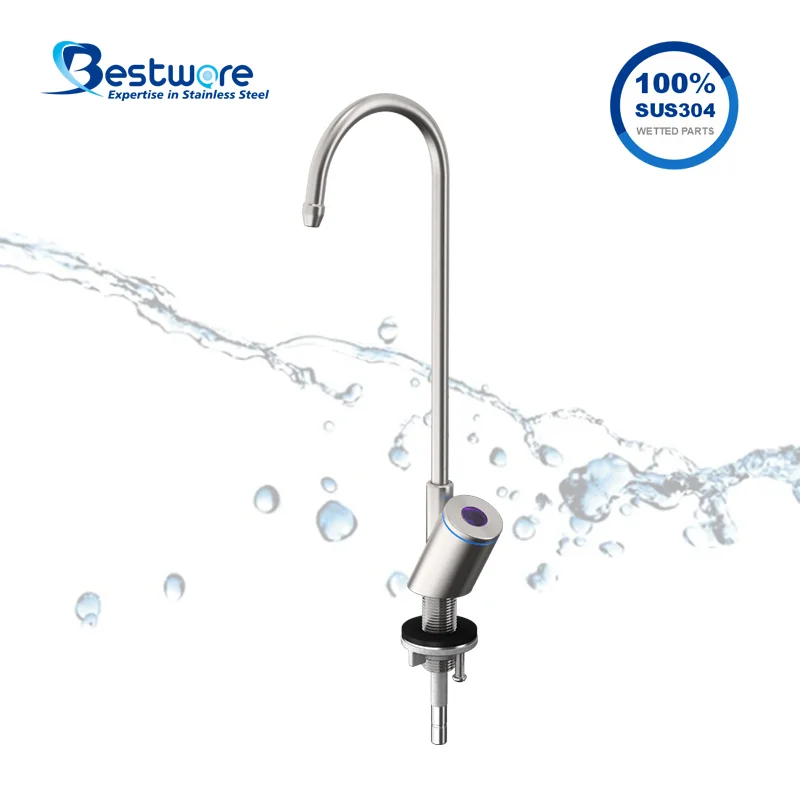
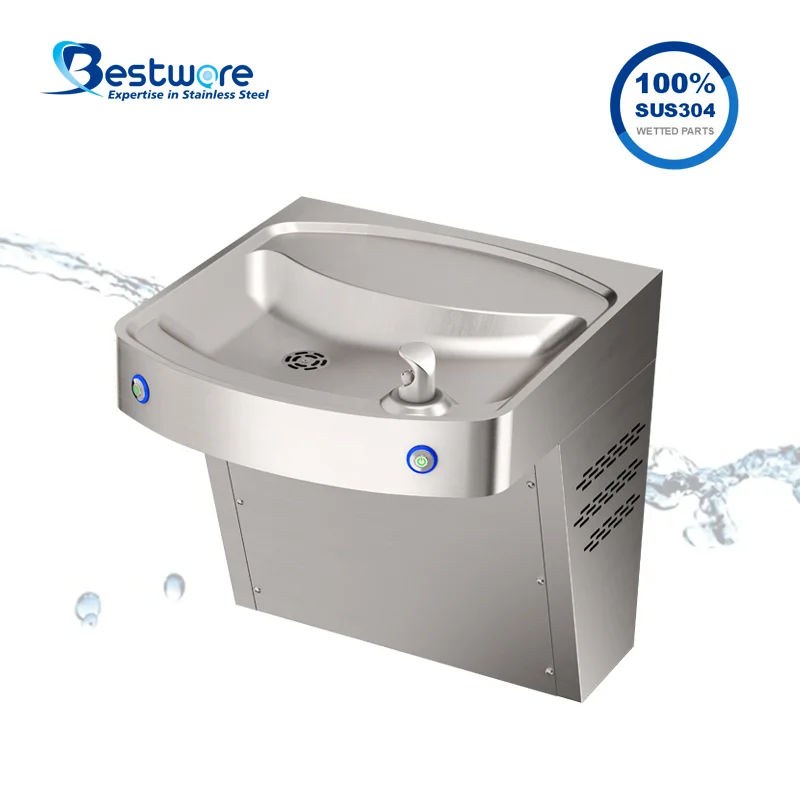
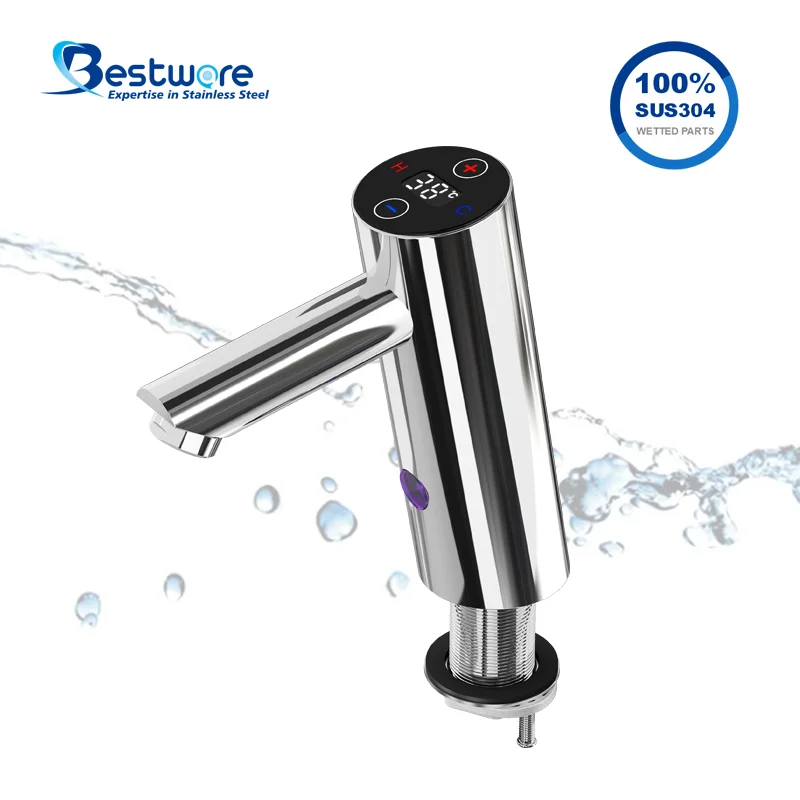
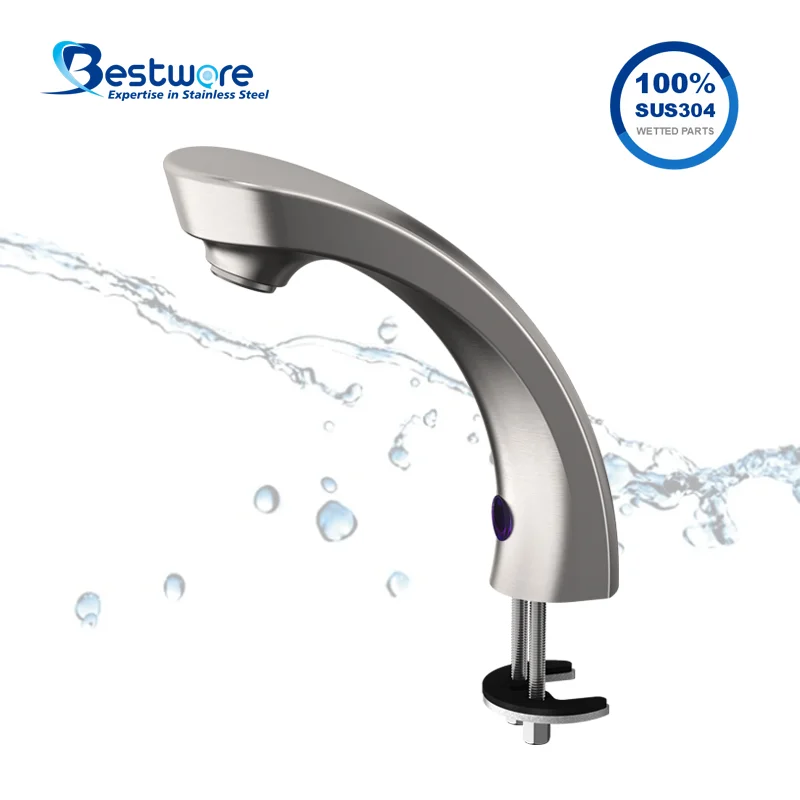
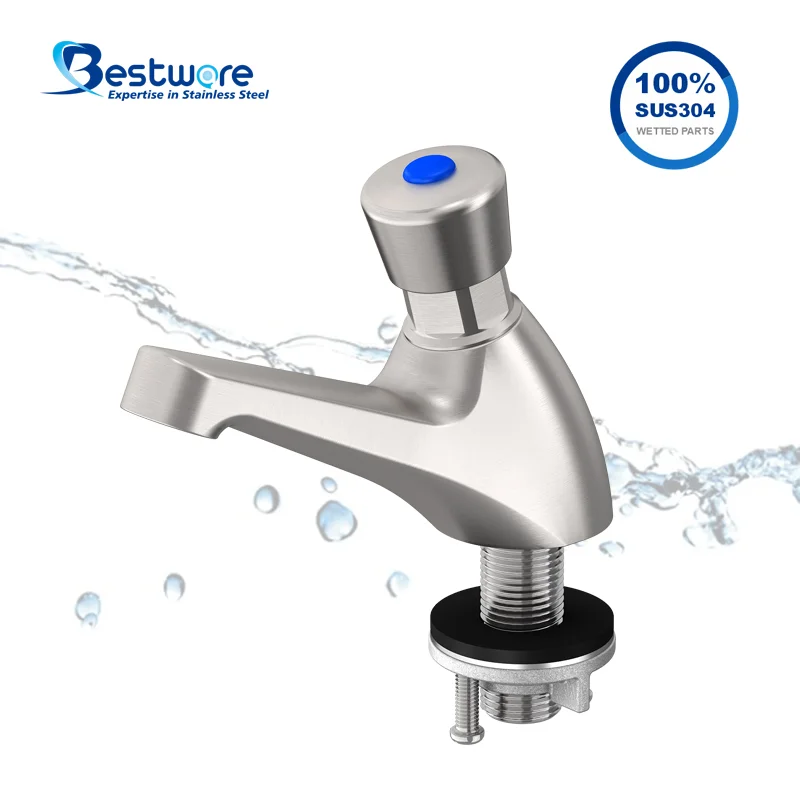
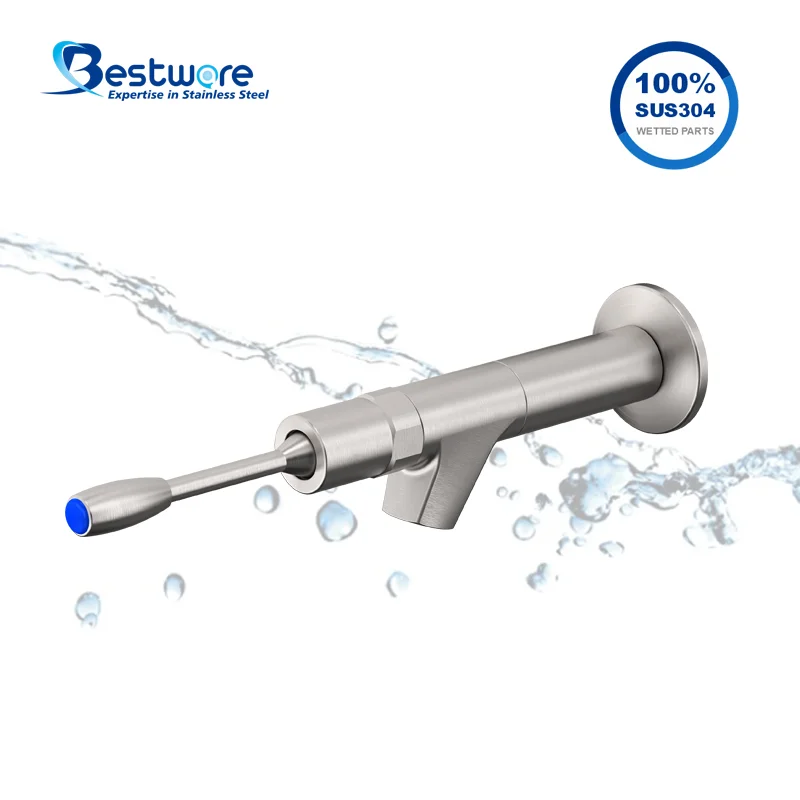
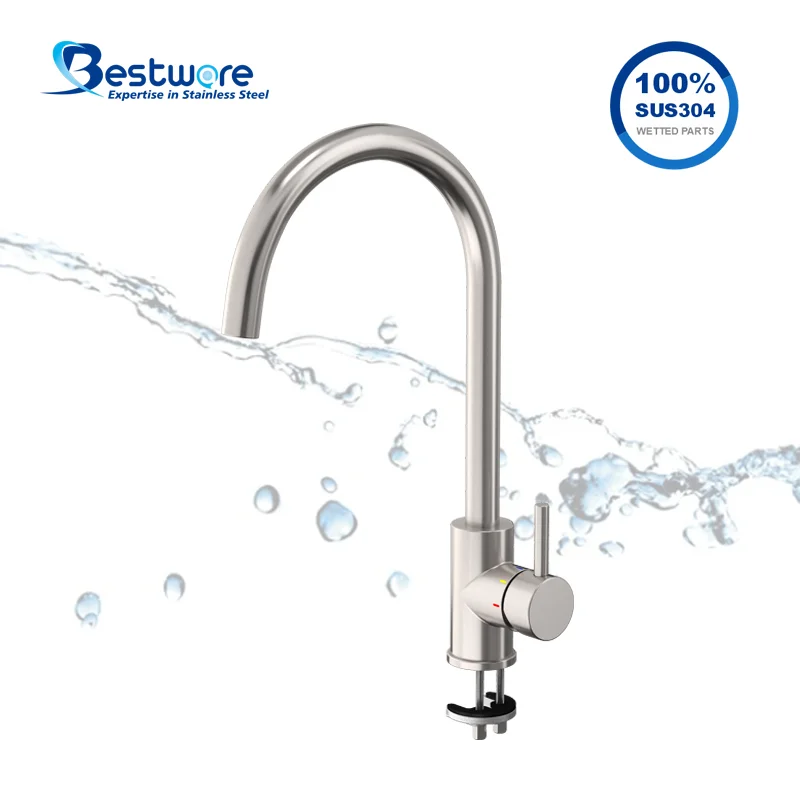
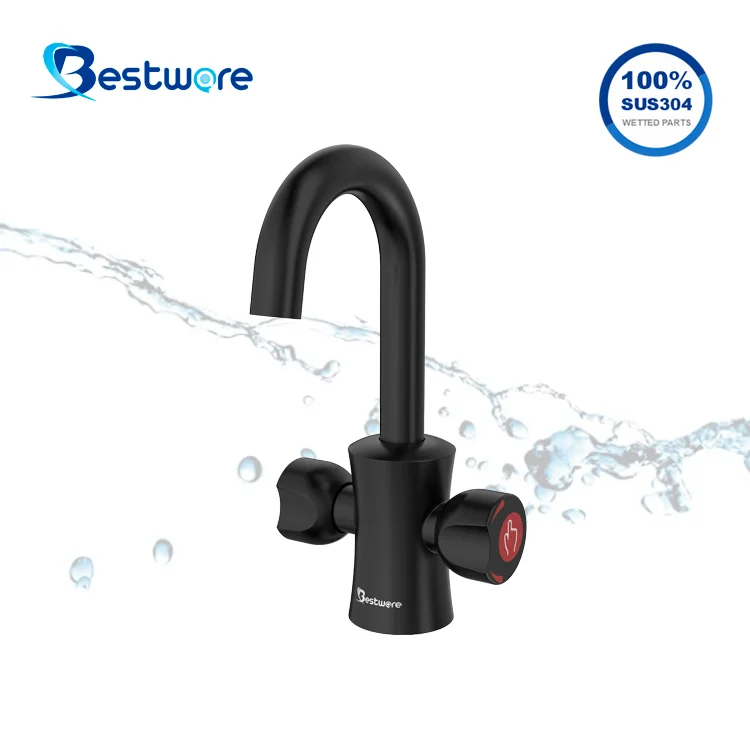
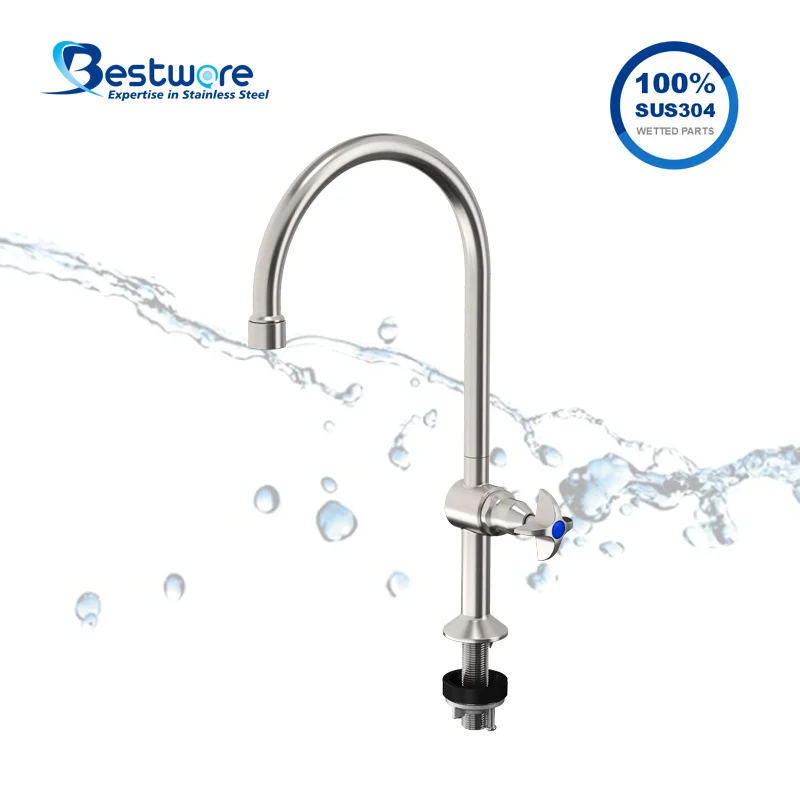
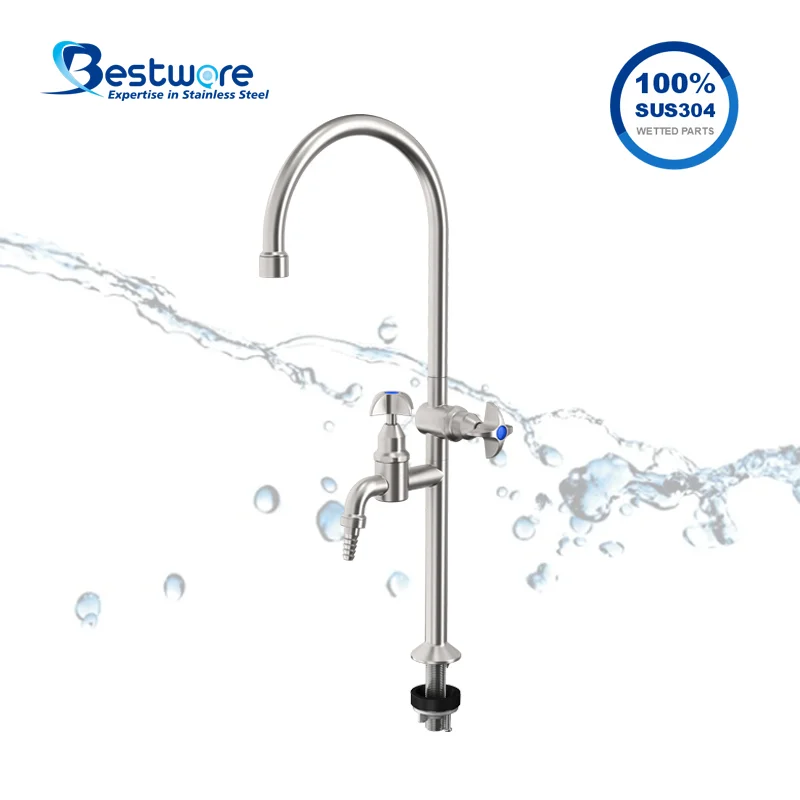
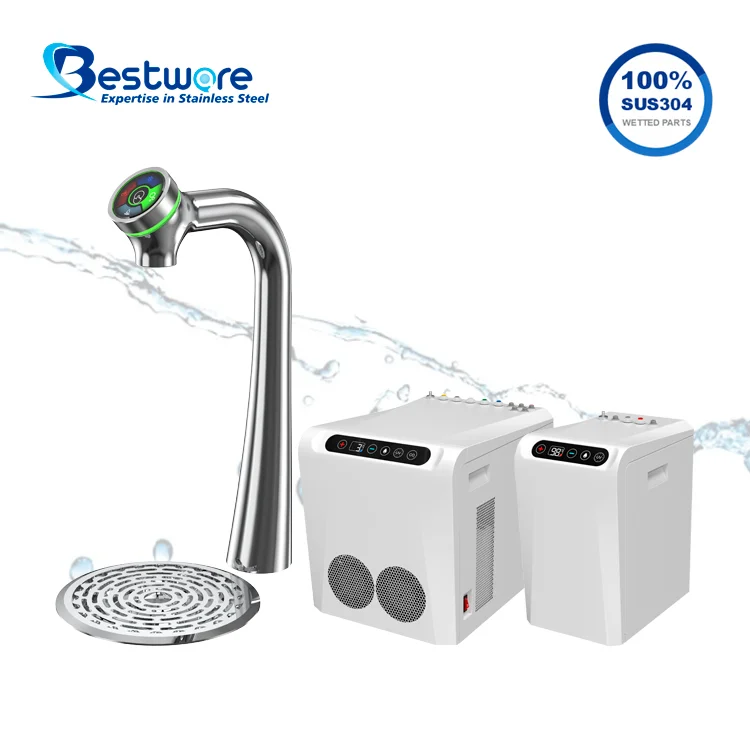
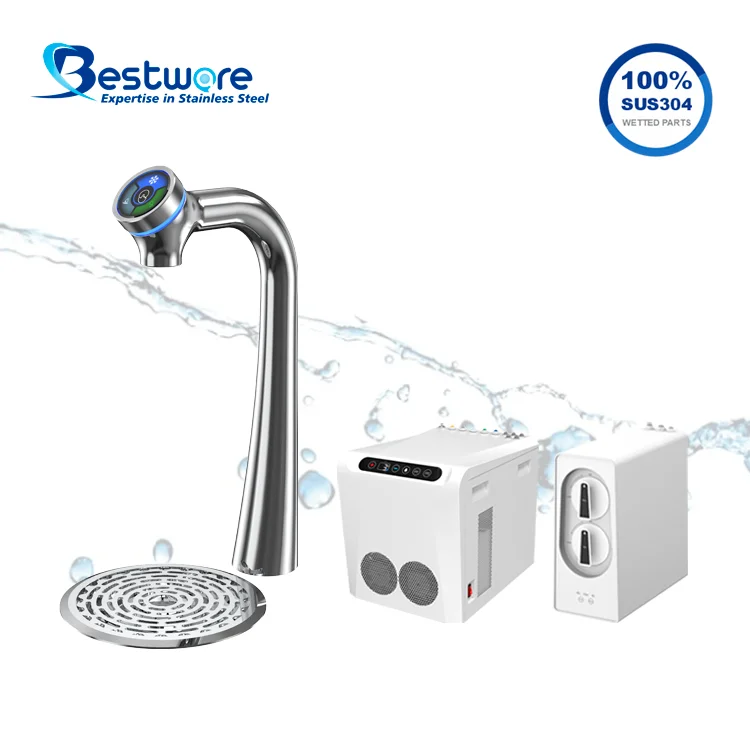
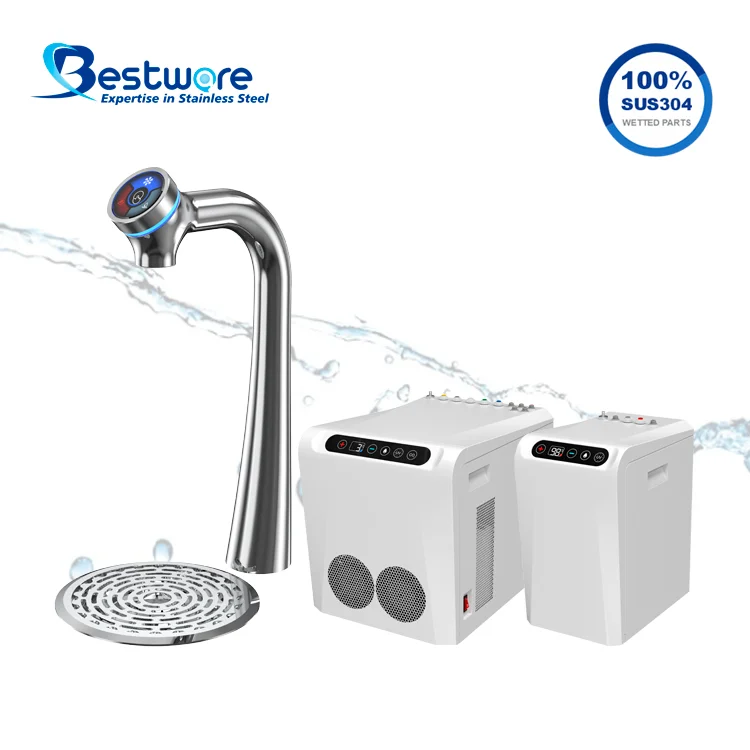
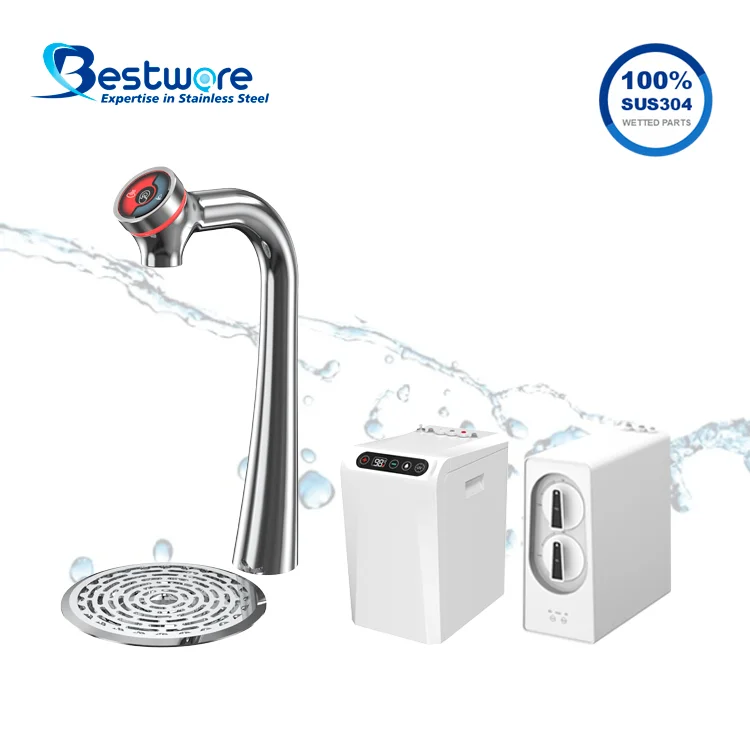
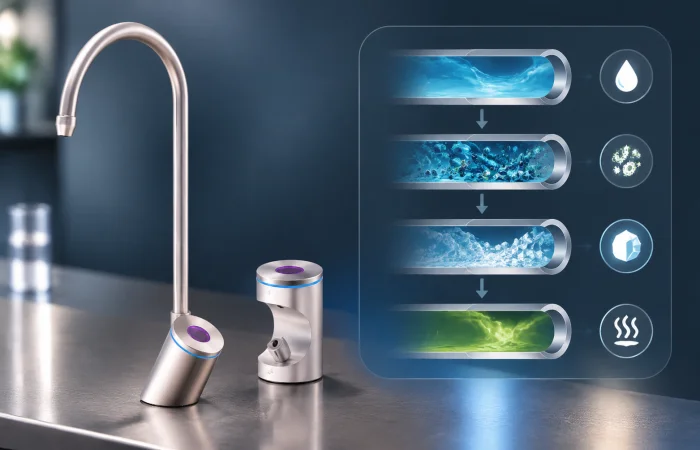
Bestware public drinking taps feature a food-grade SUS304 stainless steel body, making them suitable for schools, commercial buildings, and other public drinking facilities. To accommodate intermittent usage in public environments, the equipment includes an automatic flushing function that activates for five seconds after 24 hours of inactivity. Once the preset idle period is reached, water flows automatically to help renew stagnant water in the corresponding internal pipework.
The equipment also features automatic water shutoff protection in the event of water supply interruptions, power failures, or blockages. Its built-in flow regulation and pressure stabilization designs help accommodate fluctuations within a certain range of water pressure, supporting more consistent water flow.
When drinking taps remain unused for extended periods, the water inside may experience declining disinfectant residuals, temperature changes, and microbial attachment. Although these changes do not mean that every period of inactivity will result in water quality problems, equipment management after prolonged shutdowns should not be overlooked in public facilities. From pipework design to flushing, cleaning, and inspection before restarting, as well as routine automatic flushing and scheduled maintenance, every step contributes to the hygiene management of drinking equipment. Automatic flushing helps reduce prolonged water stagnation, but it cannot replace a complete cleaning and disinfection program. Only by combining appropriate equipment design with proper maintenance practices can public drinking equipment remain reliable over the long term.
One-stop Solution Provider of Stainless Steel Commercial Faucets
Email: business@bestware-stainless.com
after-sales@bestware-stainless.com
Tel: +86 18929047065
WhatsApp: +86 18929047065


WeChat: +86 18929047065


Website: www.bestware-stainless.com(Global Site)
www.bestware-sparkling.com(Water Dispenser)
Add: Block 8, No. 6, Jianda Nan Road, Jiangmen, Guangdong, China
Copyright © Bestware Hardware Production Co., Ltd. All Rights Reserved.