
Date: 2026-08-29
In commercial settings such as restaurant kitchens, food processing areas, hospitals, and laboratories, staff need to wash their hands, clean equipment, and access water repeatedly throughout the day. Unlike in residential settings, these tasks typically take place as part of an ongoing workflow. A chef may be preparing ingredients, a food processing worker may be moving between different stages of a process, and a laboratory worker may need to wash their hands immediately after completing a task. In these situations, hand washing is not an isolated task but part of the overall workflow. This means that the design of the wash sink can directly affect how staff carry out their work. If every use of the water supply requires staff to stop what they are doing, free up a hand to operate the faucet, and then return to their original position, even a simple cleaning task can repeatedly interrupt the workflow. A knee-operated wash sink allows staff to control the water flow with their knees, eliminating the need to use their hands to operate the faucet and reducing disruption to their existing workflow. However, its impact goes beyond the operating method itself, also affecting the transition between cleaning tasks, hygiene management, water control, and the layout of the work area.
At a standard wash sink, staff need to operate the faucet by hand before starting the water flow. In everyday residential settings, this action may seem insignificant, but wash sinks in commercial environments are used much more frequently. For example, in a restaurant kitchen, an employee may need to move continuously between ingredient preparation, hand washing, tool rinsing, and worktop cleaning. If every use of the water supply requires manual faucet operation, staff have to repeatedly interrupt what they are doing. Each action may only take a few seconds, but repeated throughout the day, these interruptions can break up an otherwise continuous workflow.
Many tasks in commercial settings require the use of both hands. Staff may be handling ingredients during food preparation, holding cleaning tools when cleaning equipment, or need to keep their hands clean in hospital and laboratory environments. In food processing, minimizing unnecessary contact between hands and other surfaces is also particularly important.
When the faucet still requires manual operation, staff have to temporarily stop their current task. Knee-operated control changes this part of the process by separating water control from hand operation. Staff can control the water flow with their knees while keeping both hands available for their work, eliminating the need to completely stop their current task just to access water.
In commercial settings, a faucet is not only a water supply fixture but also a surface that staff frequently touch. If staff need to touch the faucet again to turn off the water after washing their hands, this creates additional contact with the control components. Knee-operated control can reduce this hand contact, allowing staff to complete cleaning without directly operating the faucet again. This is particularly valuable in restaurants, food processing facilities, healthcare environments, and other commercial settings where controlling unnecessary contact is important.
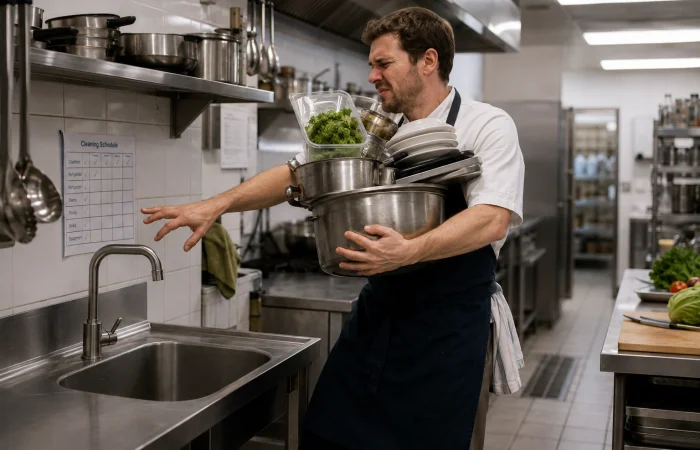
Cleaning is one of the most common water-related tasks in commercial settings. For staff who continuously wash utensils, tools, ingredients, or work areas, knee-operated control can reduce the need to operate the faucet by hand during cleaning, making it easier to move continuously from work to cleaning and back to work.
Hygiene management depends not only on cleaning procedures but also on how equipment is operated. If equipment must be frequently operated by hand, the faucet controls themselves can become high-touch areas. Knee-operated control reduces hand contact, allowing staff to complete cleaning without touching the faucet again. For commercial environments where contact frequency needs to be controlled, this represents an important equipment-level improvement.
Workflow efficiency and water conservation are not mutually exclusive. When staff need to repeatedly turn the faucet on and off manually, water may run longer than necessary during busy periods. A delayed shut-off function can automatically stop the water after the preset duration, helping reduce waste caused by forgetting to turn off the water. Instant control, on the other hand, allows staff to decide exactly when the water should start and stop based on the task at hand. Both control options ultimately serve the same purpose: matching water flow more closely to actual work requirements.
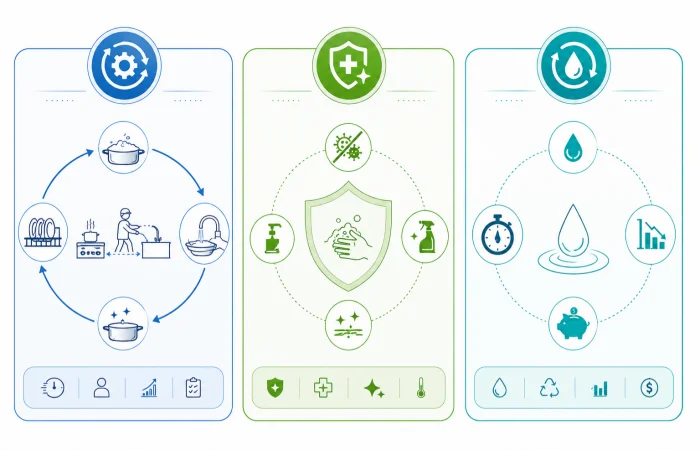
In commercial settings, the impact of equipment needs to be considered over the long term. A wash sink may be used repeatedly by multiple staff members every day. If each use involves manual operation, repeated adjustments, or additional cleaning, these small inconveniences can become increasingly noticeable as usage accumulates. Therefore, when choosing a knee-operated wash sink, it is important to consider not only the knee-operated control but also whether the product can reliably support the workflow over long-term use.
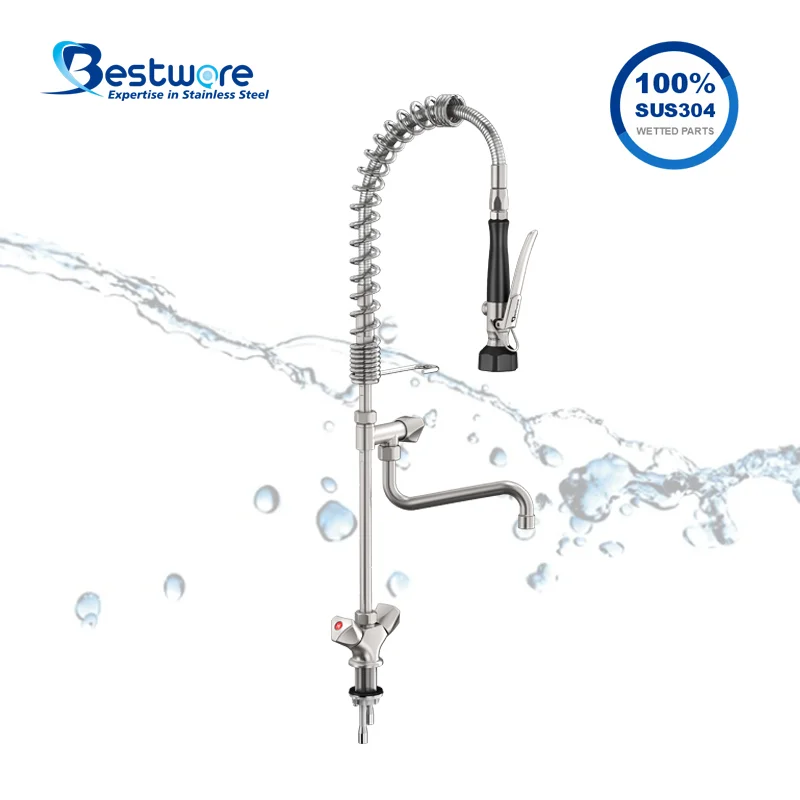
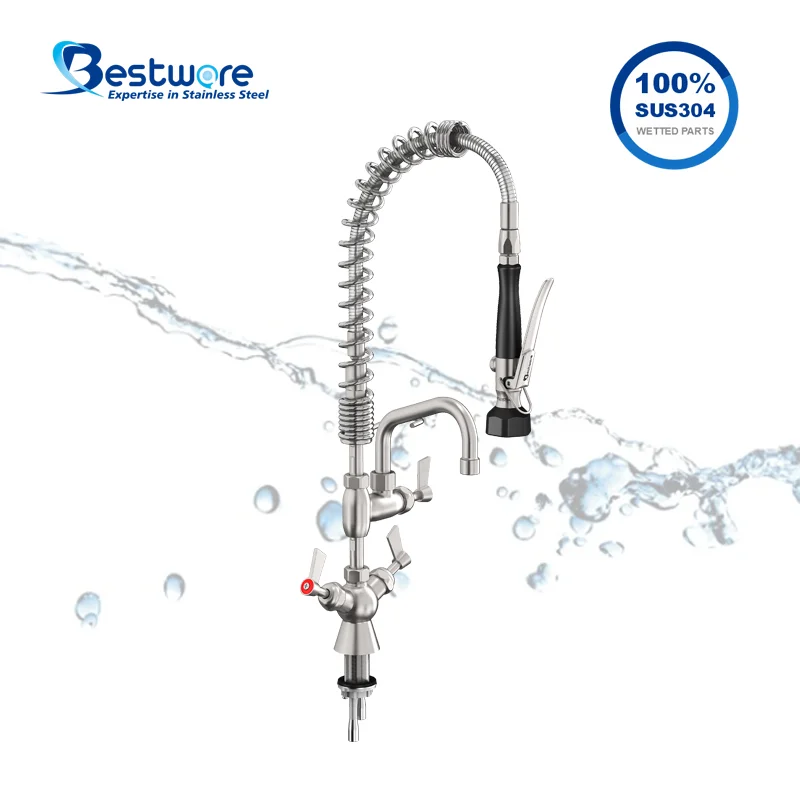
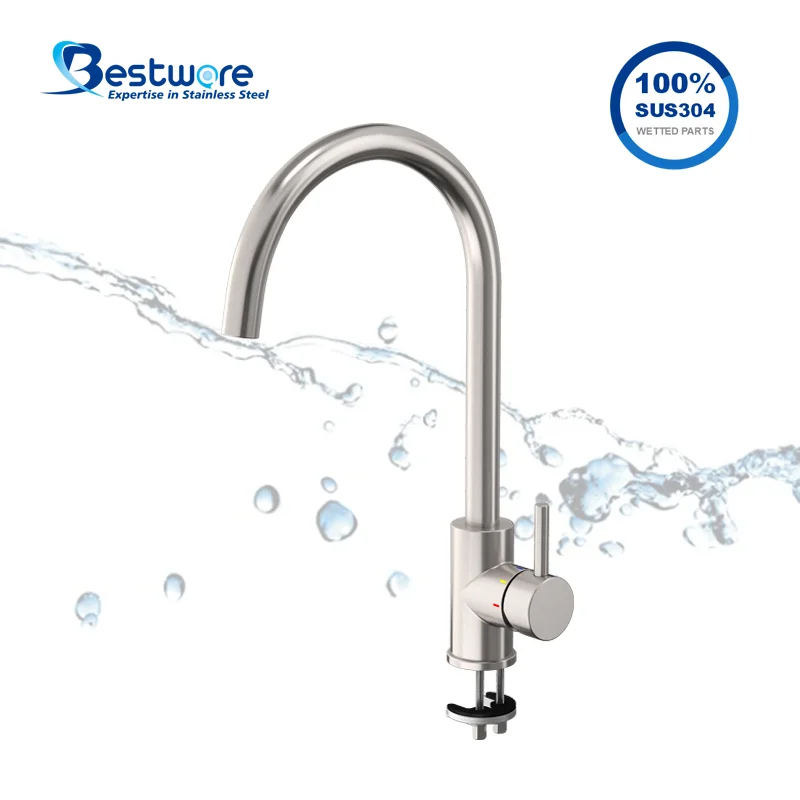
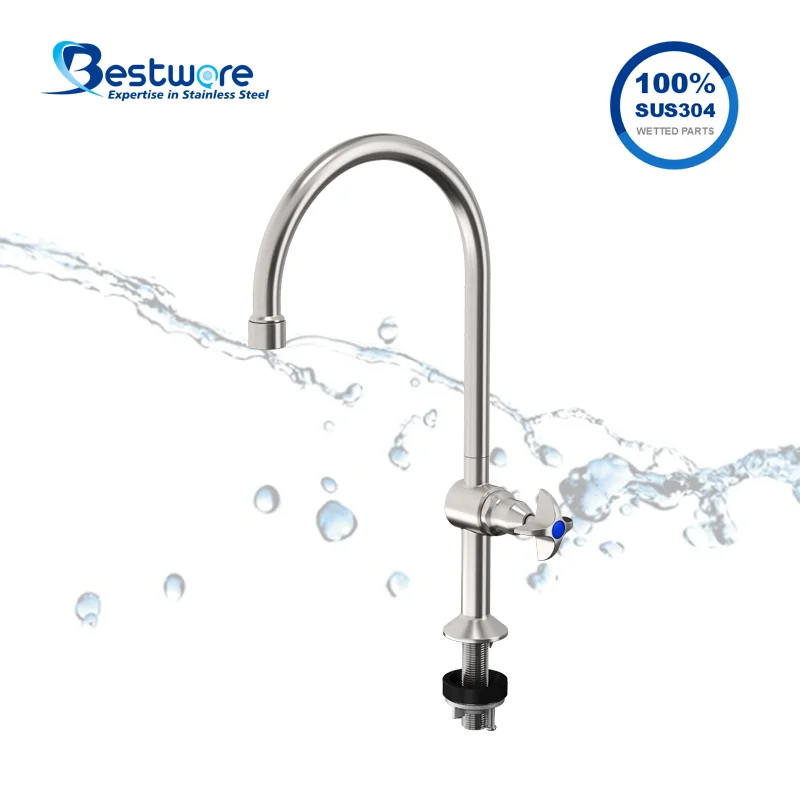
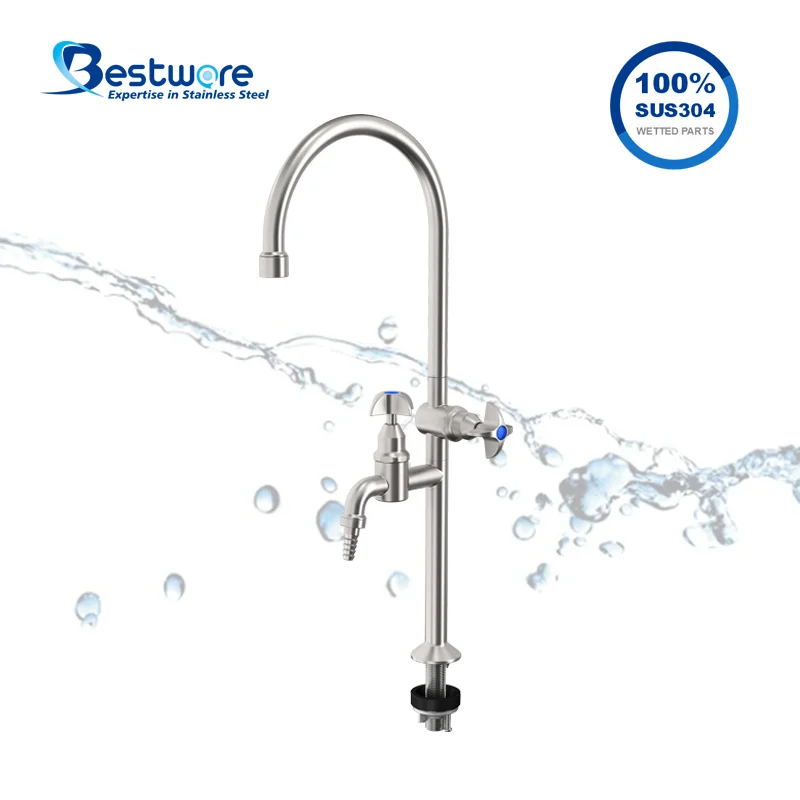
The gooseneck spout provides more working space, while the Neoperl aerator produces a softer water stream and helps reduce splashing. Stable water flow allows staff to focus more on the cleaning task while also helping reduce unnecessary water consumption.
Commercial equipment is generally used much more frequently than residential equipment, so material quality and structural strength directly affect long-term performance.
Commercial wash sinks require frequent cleaning. A brushed stainless steel surface does not require plating, eliminating the risk of plating peeling and making routine cleaning and maintenance easier.
The check valve function helps prevent backflow and maintain stable water pressure. Although it does not directly change how staff operate the faucet, it is an important detail for the reliable long-term operation of a commercial faucet.
For commercial projects, equipment selection should not be based solely on appearance or a single feature. Instead, the first step should be to identify the specific challenges that need to be addressed in the actual work environment.
If staff frequently need both hands to handle ingredients, tools, or cleaning tasks, reducing hand-operated controls can provide clear benefits. In such environments, a knee-operated wash sink can be considered as a solution that keeps both hands available for work.
If staff typically use water for similar lengths of time and want the water to stop automatically after completing the operation, a delayed mode may be more suitable. If staff need to control the water flow flexibly for different tasks, an instant mode may be a better choice.
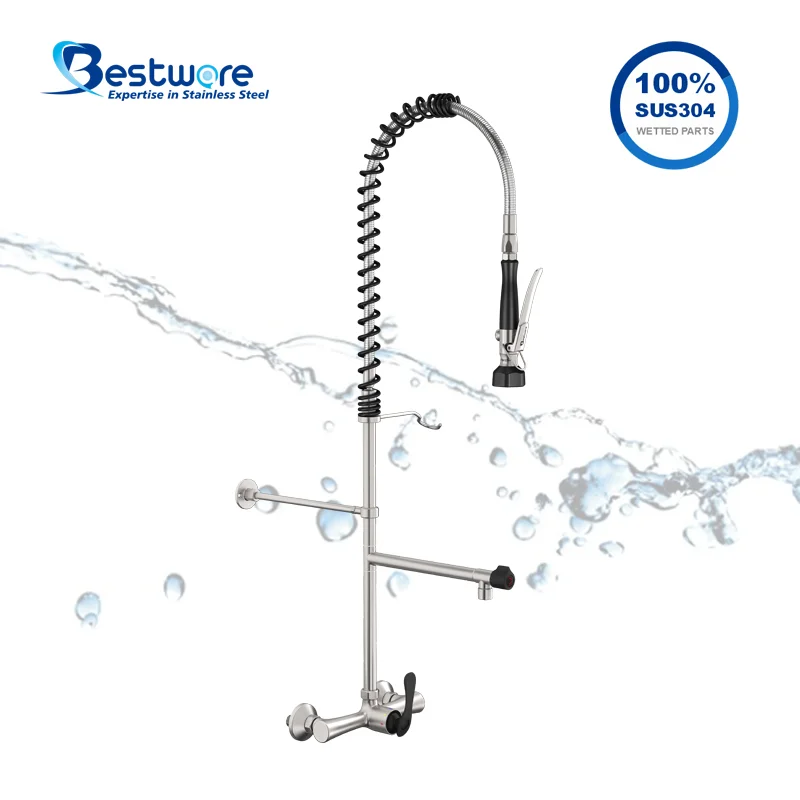
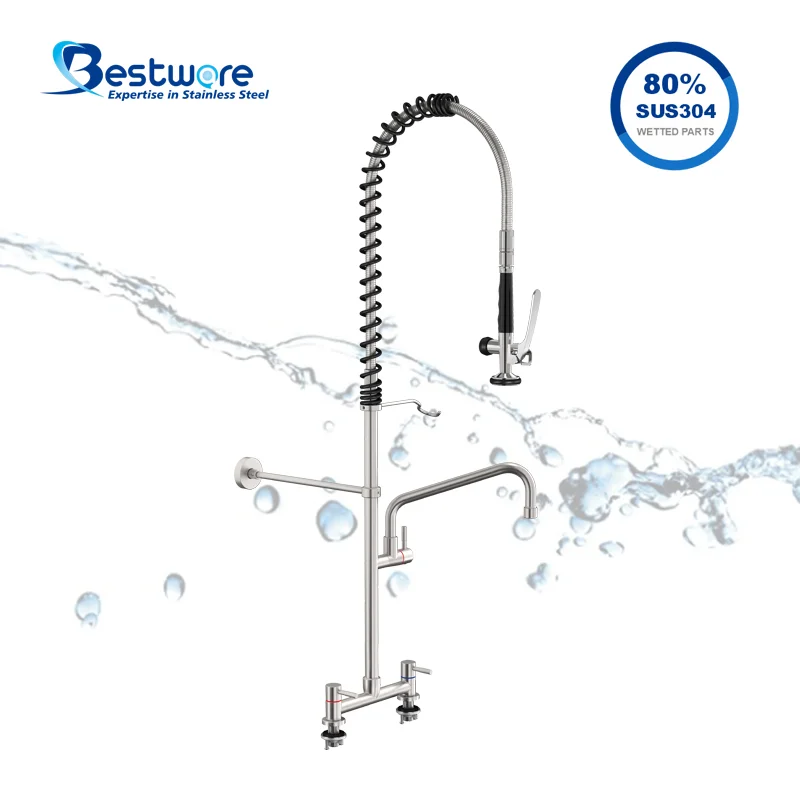
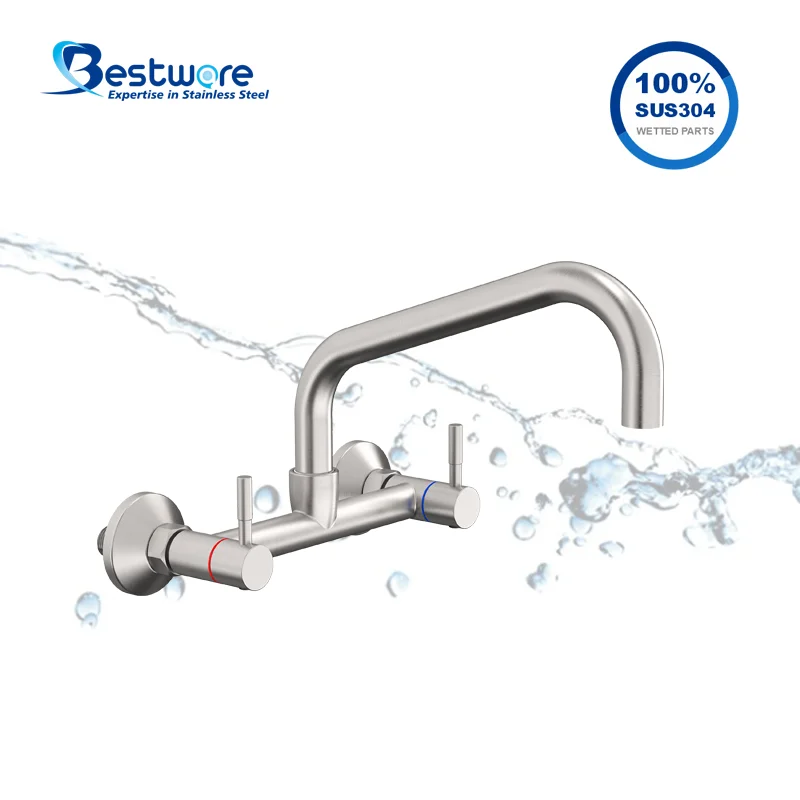
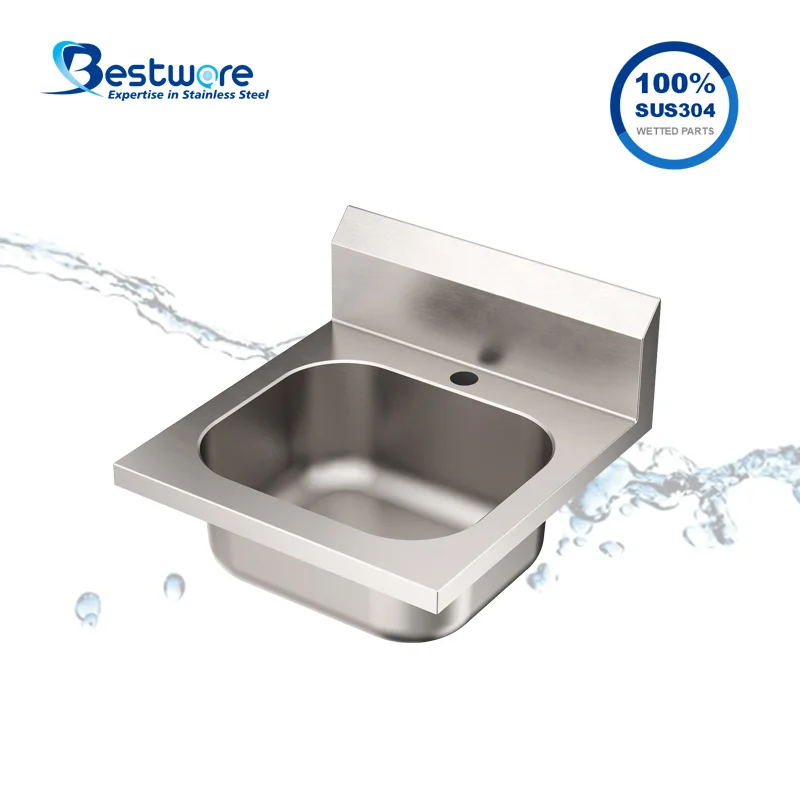
For high-frequency work areas, the wash sink should be positioned where staff can access it easily. A wall-mounted design can reduce the amount of floor space occupied and make it easier to integrate the wash sink into the layout of the work area.
In addition to the control method, attention should also be paid to the material, thickness, surface finish, spout design, and waterway structure. These factors directly affect the equipment's long-term use and maintenance.
From this perspective, a knee-operated wash sink designed for commercial environments should not simply add a knee-operated control. It should also be designed around the actual workflow in terms of operation, space utilization, and long-term use.
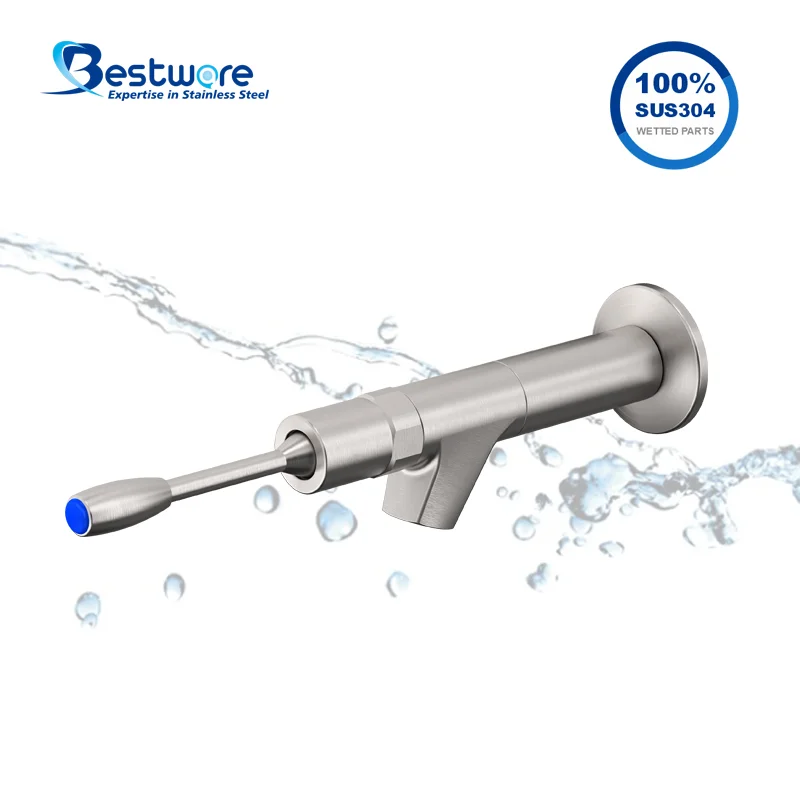
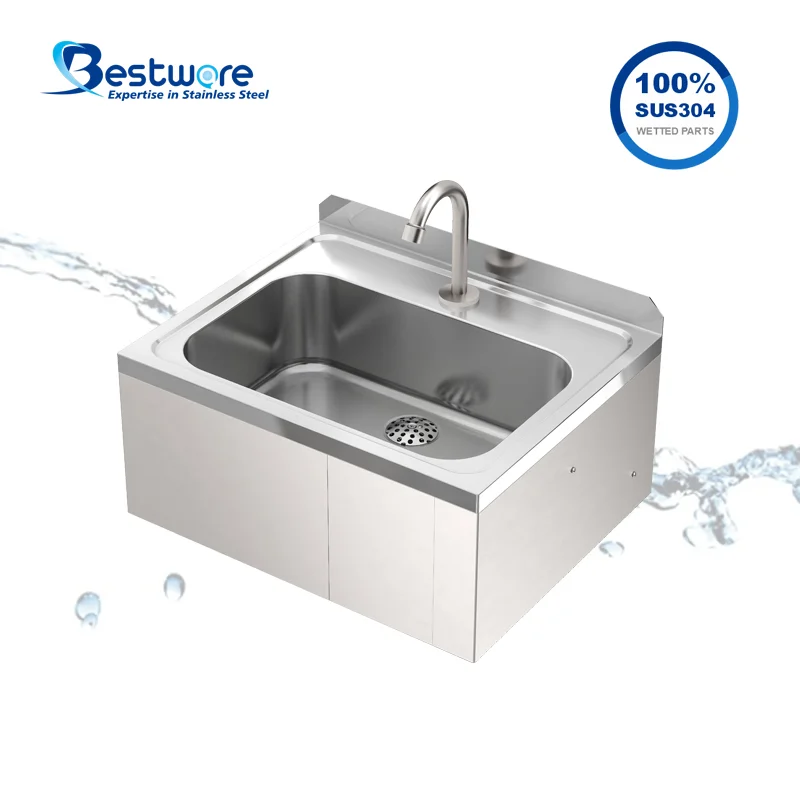
Bestware knee-operated wash sinks are designed around the high-frequency usage requirements of commercial environments such as restaurant kitchens, food processing areas, hospitals, and laboratories. The product is made from 100% food-grade SUS304 stainless steel and is more than twice as thick as similar products, offering lead-free safety, corrosion resistance, and structural strength for long-term use. The stainless steel construction is also recyclable, meeting commercial requirements for durability and sustainability.
The product uses knee-operated control, allowing staff to operate the water flow without using their hands, and supports both instant and delayed modes. Instant mode is suitable for flexible control of water usage time, while delayed mode can be adjusted from 6 to 16 seconds and is suitable for repetitive processes such as hand washing. The standard configuration provides cold water only, while an optional thermostatic mixing valve can be added to provide hot and cold water adjustment.
The gooseneck spout provides more working space and is equipped with a Neoperl aerator to deliver a softer water stream, reduce splashing, and help conserve water. The wall-mounted design minimizes floor space requirements and makes it easier to arrange the wash sink according to the work area. The brushed surface requires no plating, providing good resistance to wear and scratches while making cleaning easier. The built-in check valve helps prevent water backflow and maintain stable water pressure.
From knee-operated control and water flow modes to material, mounting method, and internal waterway design, Bestware knee-operated wash sinks are designed around the practical needs of commercial environments, providing a stable and durable water solution for high-frequency hand washing and cleaning applications.
Commercial workflows consist of many repetitive steps. Hand washing, cleaning, and accessing water are not complicated tasks in themselves, but if equipment requires staff to repeatedly stop what they are doing, free up their hands, or make additional movements, it can continuously affect the overall workflow. A knee-operated wash sink changes the way water flow is controlled, allowing staff to access and use water while keeping both hands available for work. Therefore, the real value of a knee-operated wash sink is not simply a change in the operating method, but its ability to integrate hand washing, cleaning, and water access more naturally into the existing workflow of commercial environments. For commercial settings where wash sinks are used frequently, this approach to equipment design around actual working practices is what makes a meaningful contribution to everyday workflow efficiency.
One-stop Solution Provider of Stainless Steel Commercial Faucets
Email: business@bestware-stainless.com
after-sales@bestware-stainless.com
Tel: +86 18929047065
WhatsApp: +86 18929047065


WeChat: +86 18929047065


Website: www.bestware-stainless.com(Global Site)
www.bestware-sparkling.com(Water Dispenser)
Add: Block 8, No. 6, Jianda Nan Road, Jiangmen, Guangdong, China
Copyright © Bestware Hardware Production Co., Ltd. All Rights Reserved.
(8).webp)
.webp)
(7).webp)
(6).webp)