
Date: 2026-08-24
For restaurants, cafés, bars, and beverage shops, labor costs are always one of the key operating expenses that need to be carefully managed. Especially during peak hours, employees need to handle not only taking orders, food preparation, beverage making, and serving, but also the constant handling of used glassware. Although glass rinsing may seem like a simple task, if it requires frequent operation and repeated rinsing, it can gradually become a factor that affects overall workflow efficiency. In this situation, a commercial glass rinser is more than just an auxiliary device for rinsing glassware. A well-designed glass rinser can shorten the rinsing time for each glass, reduce repetitive operations, and help employees complete glassware turnover more quickly, making better use of limited labor resources. For restaurant operators, the key consideration is whether the equipment can reduce unnecessary manual operations in daily workflows and help improve overall efficiency over the long term.
In the daily operation of a restaurant, many tasks need to be repeated, and glass rinsing is one of them. Cafés need to continuously handle coffee cups, glasses, and beverage cups; bars need to quickly turn over large quantities of drinkware; and beverage shops need to process used glassware continuously as orders come in. As long as the business is operating, glass rinsing continues throughout the day.
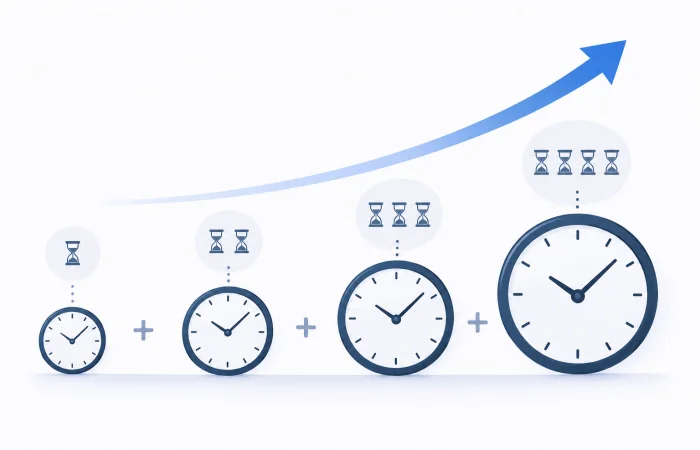
When considered individually, rinsing a single glass usually does not take much time, making it easy to overlook its impact on labor efficiency. However, for commercial foodservice operations that handle large quantities of glassware every day, the key issue is not how long a single rinse takes, but how many times the task needs to be repeated throughout the day. When employees constantly switch between glass rinsing and other tasks, even a few additional seconds per operation can gradually add up as the number of operations increases.
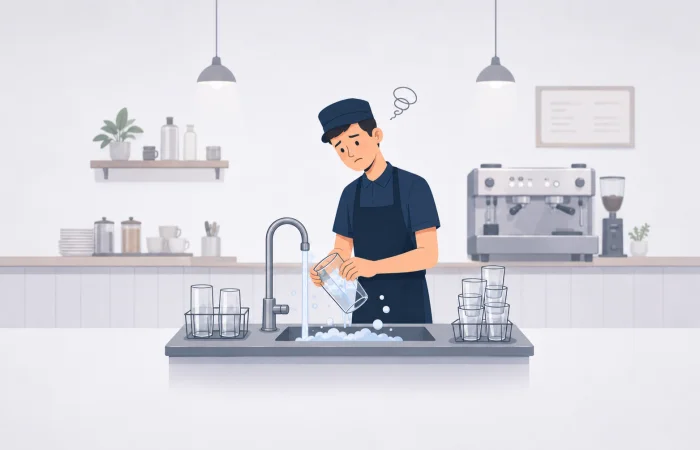
Suppose a restaurant needs to process approximately 300 glasses per day. If differences in rinsing efficiency result in an average of 5 additional seconds per glass, that adds approximately 25 minutes of labor time per day. Assuming 26 operating days per month, the accumulated additional time would reach approximately 10.8 hours per month.
|
Item |
Example Data |
|
Glasses processed per day |
300 |
|
Additional time per glass |
5 seconds |
|
Additional time per day |
25 minutes |
|
Operating days per month |
26 days |
|
Additional time per month |
Approx. 10.8 hours |
Note: The figures above are provided only to illustrate the cumulative effect of time. The 5-second figure does not represent the actual time savings of any specific glass rinser. Actual results may vary depending on the number of glasses, operating methods, employee experience, and equipment performance.
More than 10 hours may seem like just a number, but from a labor-efficiency perspective, it represents additional time employees spend each month on repetitive glassware handling. Therefore, for foodservice businesses that handle glassware frequently, optimizing the glass-rinsing process is not simply about "rinsing faster." It is about reducing the time employees spend on repetitive tasks and allowing limited labor resources to be used more efficiently elsewhere.
If a business wants to improve glass-rinsing efficiency through equipment, the first step is to identify where time is actually being wasted. In commercial foodservice applications, one of the key considerations is whether a single rinse can be sufficiently effective.
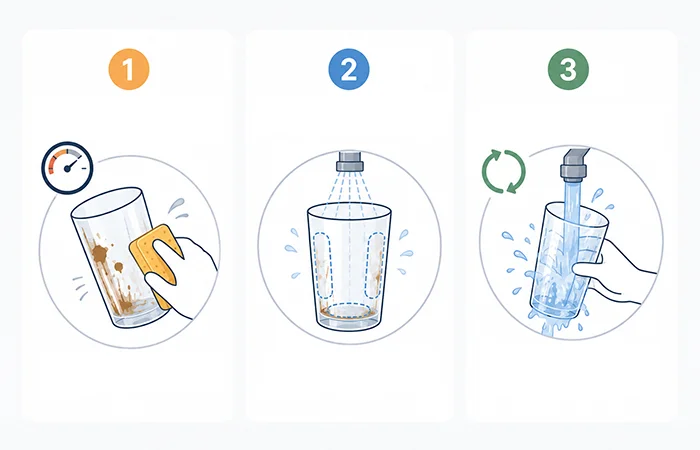
If the water flow is not powerful enough, employees may need to rinse the glass for longer to achieve the desired cleaning result. This means that although the task is completed, more time has to be spent on each operation. For a glass rinser used frequently throughout the day, rinsing power directly affects the efficiency of each rinse.
Water coverage also affects rinsing efficiency. If the water flow is concentrated mainly in a limited area inside the glass, employees may need to adjust the position of the glass or extend the rinsing time to ensure that more areas are properly rinsed. When this operation is repeated hundreds of times a day, the additional time gradually adds up.
Repeated rinsing is one of the most easily overlooked sources of time loss. If a single rinse does not achieve the desired result, the employee needs to repeat the operation. Each additional rinse may only take a few seconds, but when large quantities of glassware are involved, these seconds can quickly accumulate.
Therefore, when evaluating a commercial glass rinser, the key consideration is not simply whether it provides water flow, but whether it can deliver sufficient rinsing power and coverage in a single operation, thereby reducing unnecessary repeated rinsing.
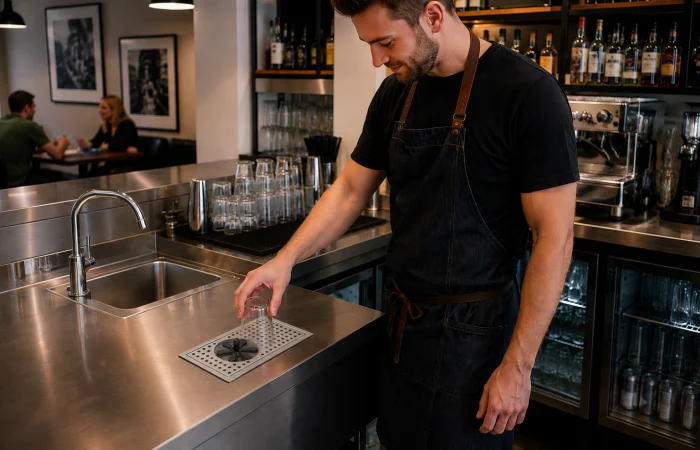
Once the sources of inefficiency are clear, the way a glass rinser can improve labor efficiency becomes easier to understand. It does not directly replace employees; instead, it improves the effectiveness of each rinse and reduces repetitive work during glassware handling.
One of the core functions of a glass rinser is to use water flow to quickly rinse the inside of a glass. With stronger rinsing power, the water can act more effectively on the inside of the glass, helping reduce the need to extend rinsing time due to insufficient cleaning performance. For restaurants that process large quantities of glassware every day, even this improvement in the efficiency of each individual operation can make a practical difference.
In addition to rinsing power, water coverage is equally important. Wider cleaning coverage allows the water to reach a larger area inside the glass, reducing the need for employees to make additional adjustments to rinse different areas. This allows the glass to be rinsed through a more direct and efficient operation.
For commercial glass rinsers, spray design is an important factor affecting rinsing efficiency. An efficient spray design should allow the water to cover the inside of the glass more effectively and achieve an effective rinse within a shorter operating time. When employees do not need to frequently adjust the glass or repeat the operation due to insufficient rinsing, the overall glass-rinsing process becomes more streamlined.
Therefore, the efficiency of a glass rinser should not be judged solely by whether it can rinse a glass. It should also be evaluated by whether it can reduce unnecessary labor throughout the entire rinsing process.
If a restaurant wants to reduce labor time with a glass rinser, purchasing decisions should not be based on product price alone. More importantly, the equipment should be evaluated based on whether it is designed to address the key factors that affect rinsing efficiency.
Stronger rinsing power can improve the efficiency of each rinse and reduce the need to extend rinsing time due to insufficient cleaning performance.
Wider coverage allows the water to reach a larger area inside the glass, reducing additional adjustments and repeated operations caused by insufficient coverage.
Equipment used in commercial environments needs to adapt to fast-paced, continuous workflows. The simpler and more straightforward the operation, the easier it is for employees to integrate the equipment into their existing workflow, reducing unnecessary operating time.
A glass rinser needs to withstand frequent use over the long term, making material quality and structural reliability equally important. For foodservice applications, materials such as lead-free, food-grade 304 stainless steel can provide both safety and durability for beverage service environments.
When purchasing equipment, businesses should not compare only the initial purchase price. If a glass rinser can consistently reduce repetitive operations, shorten rinsing time, and improve employee efficiency over the long term, these benefits should also be considered when evaluating its overall value.
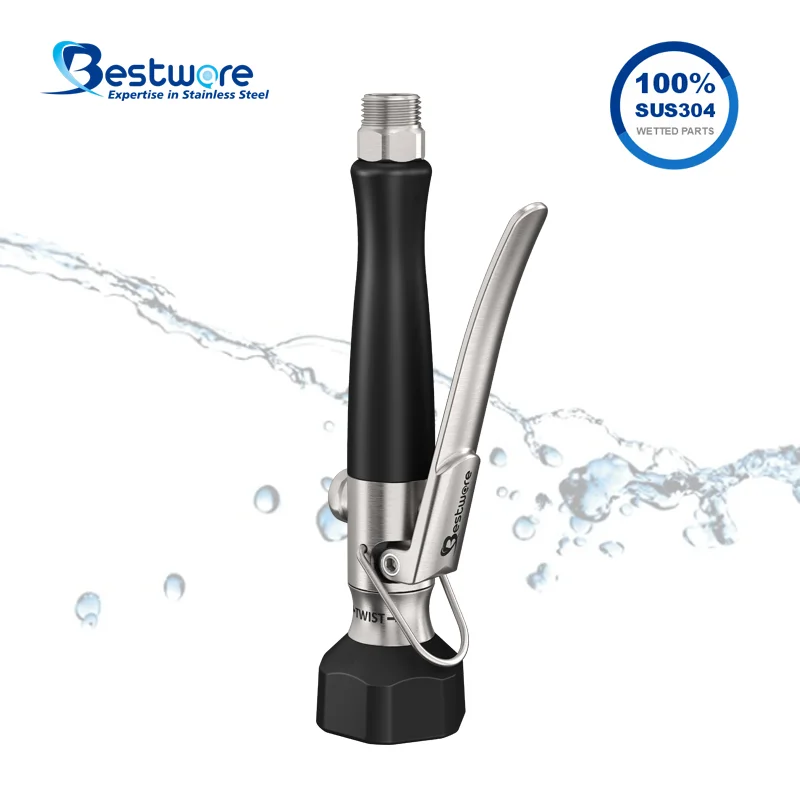
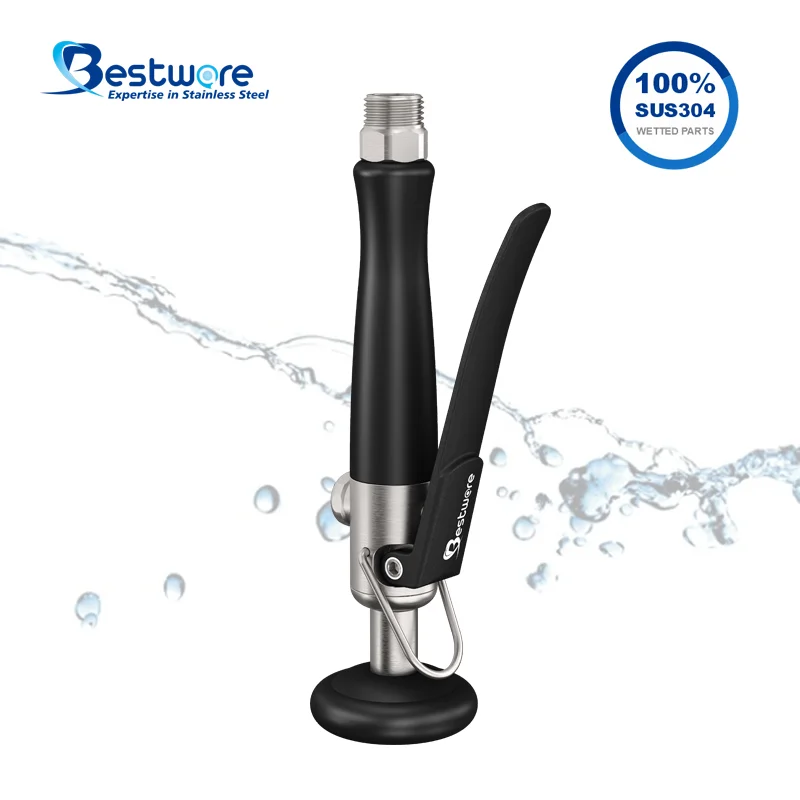
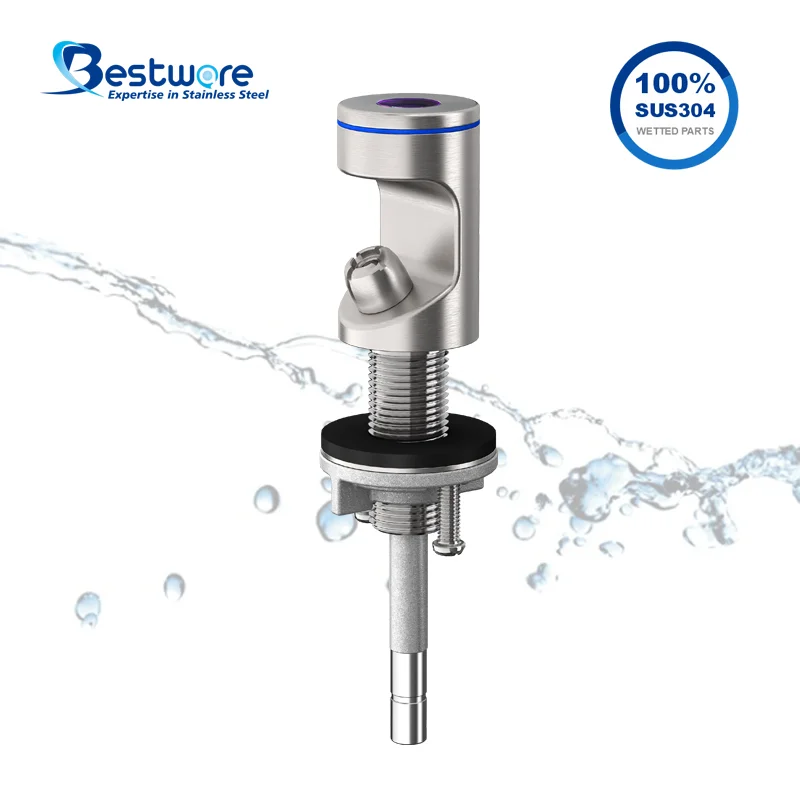
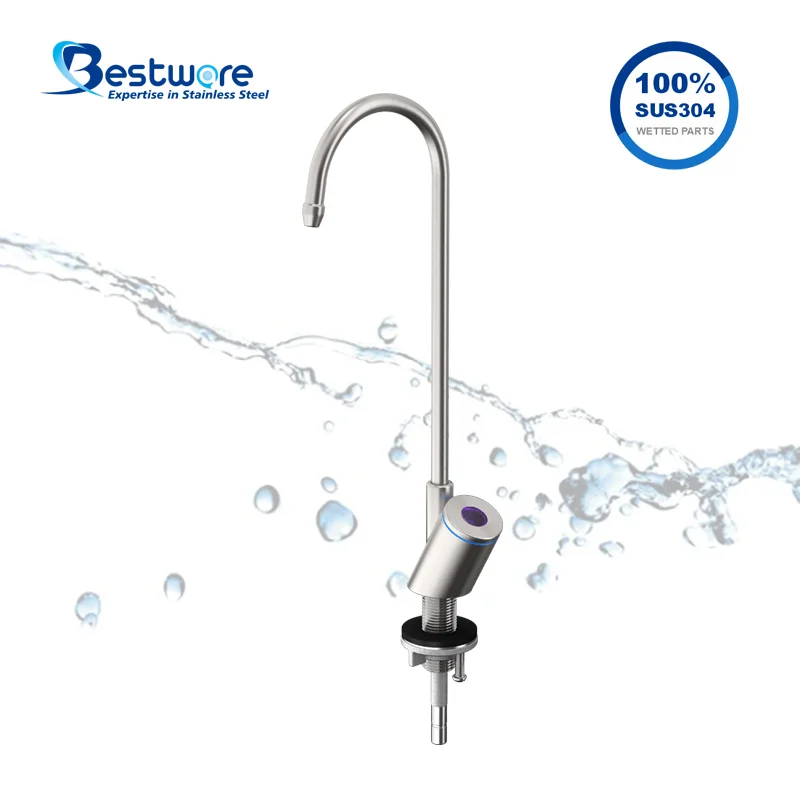
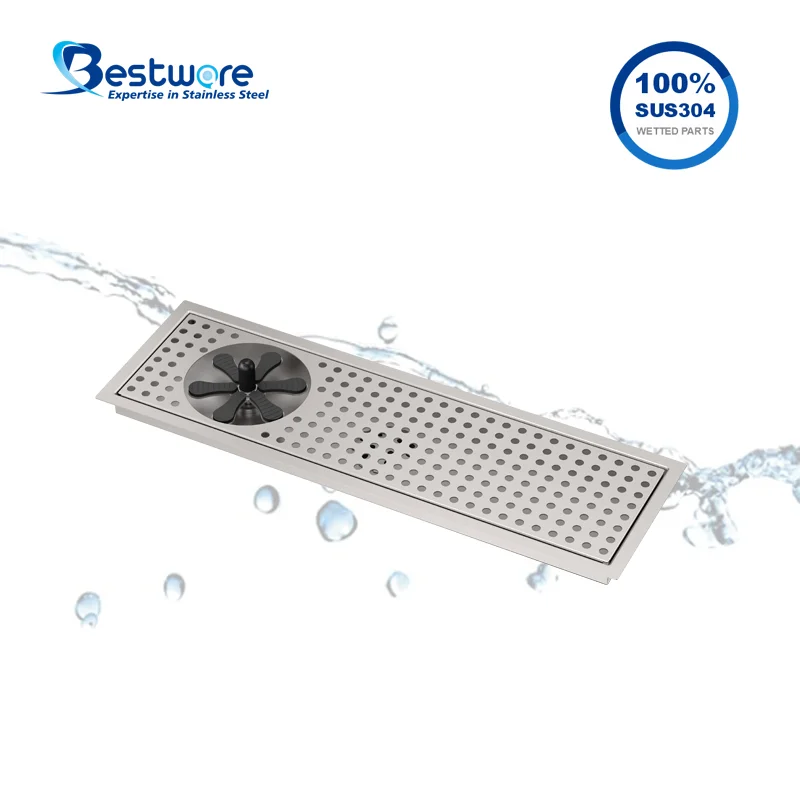
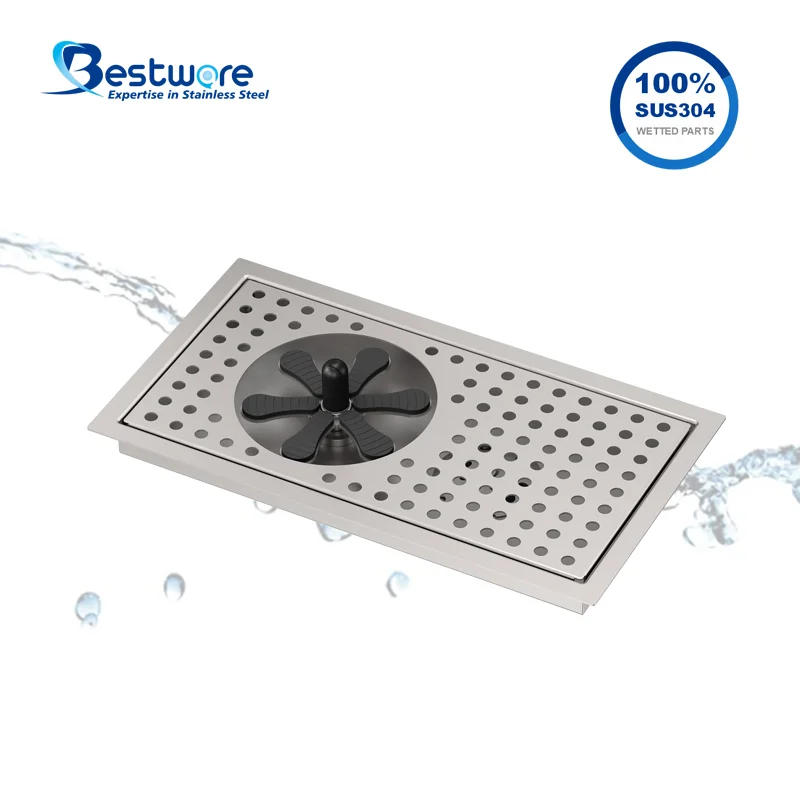
Bestware glass rinsers are designed for high-frequency glass-rinsing applications in restaurants, cafés, and beverage shops.
The product is made of lead-free, food-grade 304 stainless steel, combining hygienic performance for beverage service with the safety and durability required for long-term use in commercial environments.
At the core of the rinsing system, Bestware uses an innovative blade-style rotating spray design. Compared with the conventional column-type spray commonly found on the market, this design provides stronger rinsing power and wider cleaning coverage, allowing the water flow to act more effectively across the inside of the glass.
Stronger rinsing power and wider coverage can help reduce unnecessary adjustments and repeated rinsing, thereby shortening the time required for each rinse and improving glassware handling efficiency.
For restaurants, cafés, and beverage shops that handle glassware frequently, the value of this design is reflected not only in rinsing performance but also in employee efficiency. In other words, Bestware glass rinsers are designed not only to answer the question of "how to rinse a glass clean," but also to help employees complete large volumes of repetitive glass-rinsing tasks more efficiently.
For foodservice businesses, optimizing labor costs is not simply about reducing the number of employees. More importantly, it is about making better use of the time of the existing workforce. Glass rinsing may seem like a simple part of the daily workflow, but because it is a high-frequency, repetitive task, even small amounts of wasted time per operation can accumulate as the volume of glassware increases. When rinsing power is insufficient, coverage is limited, or repeated rinsing is required, employees need to spend more time completing the same task. Therefore, the value of an effective commercial glass rinser is not simply that it can rinse glassware faster. It is that it can improve rinsing efficiency, reduce repetitive work, increase glassware turnover efficiency, and allow employees to spend more of their time on other tasks. For foodservice businesses that handle glassware frequently, optimizing each rinse is also a way to optimize the overall workflow and the use of human resources. A glass rinser may seem like a small piece of equipment, but when used in high-volume, high-frequency glassware handling applications, the efficiency gains accumulated over time can contribute to more efficient day-to-day operations.
One-stop Solution Provider of Stainless Steel Commercial Faucets
Email: business@bestware-stainless.com
after-sales@bestware-stainless.com
Tel: +86 18929047065
WhatsApp: +86 18929047065


WeChat: +86 18929047065


Website: www.bestware-stainless.com(Global Site)
www.bestware-sparkling.com(Water Dispenser)
Add: Block 8, No. 6, Jianda Nan Road, Jiangmen, Guangdong, China
Copyright © Bestware Hardware Production Co., Ltd. All Rights Reserved.
.webp)
(7).webp)
(6).webp)
(5).webp)