Date: 2026-10-23
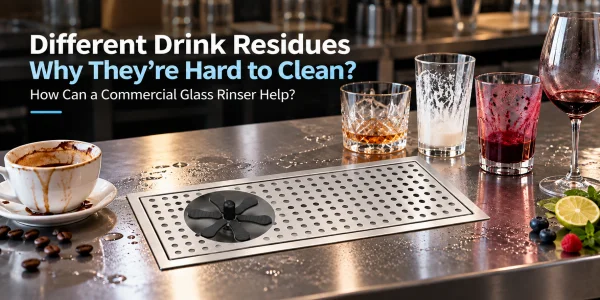
In coffee shops, bubble tea stores, bars, and other beverage businesses, glassware must be cleaned before it can be used again. However, different beverages leave behind different types of residue. Coffee may leave visible stains on glass surfaces, milk proteins and fats can adhere to the sides, while syrups and fruit purées may leave sticky deposits. For businesses that need to turn over glassware frequently, these differences affect both cleaning difficulty and the choice of rinsing methods and equipment. Understanding the characteristics of common beverage residues and combining suitable rinsing equipment with appropriate cleaning procedures can help businesses meet their daily operational needs.
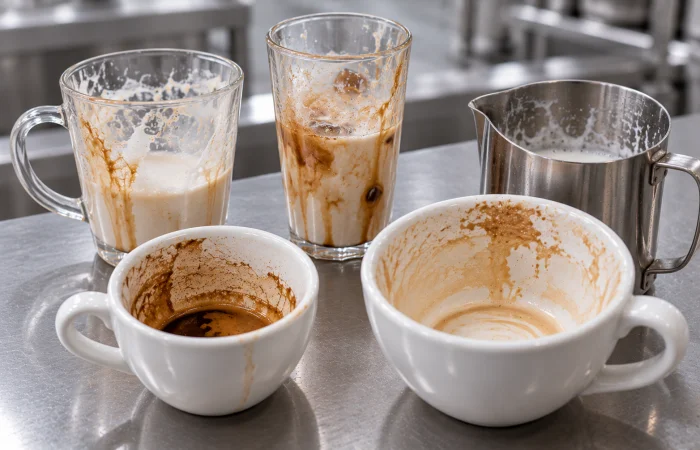
Coffee contains various soluble compounds that may leave dark stains on the bottom or sides of a glass. If coffee residue remains for an extended period and begins to dry, it may become more difficult to remove. For businesses that frequently serve espresso, Americano, and other coffee drinks, removing leftover liquid promptly can help reduce the effort required for subsequent cleaning.
Milk-based drinks, such as lattes and cappuccinos, present a different challenge. Milk proteins and fats may adhere to glass surfaces, and dried milk or milk foam can be more difficult to remove. Compared with coffee residue alone, milk-based drinks require greater attention to adhering deposits. Depending on the condition of the glassware, additional cleaning methods or suitable cleaning agents may also be necessary.
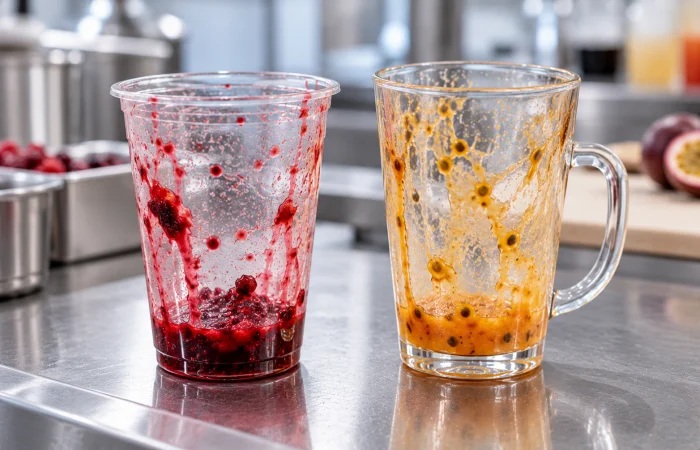
Bubble tea shops and beverage bars often use syrups, honey, fruit purées, and other flavoring ingredients. These ingredients may leave sticky residue on the sides or bottom of a glass, while some fruit purées may also contain small particles.
Timing is particularly important when dealing with syrup residue. When sugary liquids remain in a glass for too long, evaporation can leave behind more concentrated deposits that are harder to remove with a simple rinse. For drinks containing fruit pulp, the rinsing process must also account for areas where small particles may accumulate, rather than focusing only on the rim or part of the glass wall.
Staff can reduce the likelihood of residue drying by emptying leftover beverages before pre-rinsing the glassware. However, when deposits have already adhered firmly to the surface, simply extending the rinsing time may not be enough. Additional cleaning steps may be required depending on the type and severity of the residue.
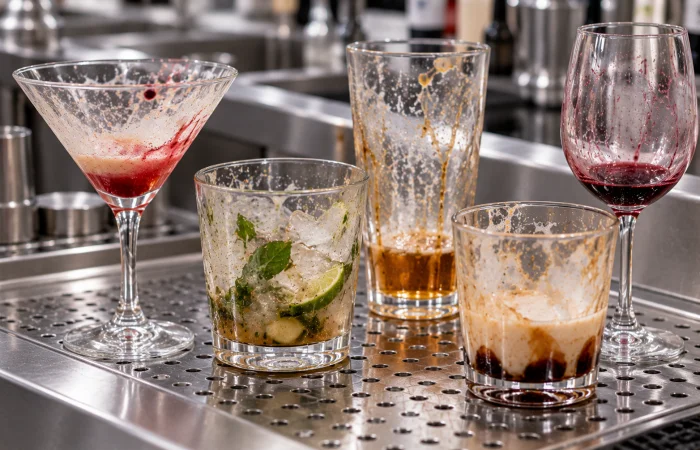
Bars use a wide variety of glassware, and beer, cocktails, and other mixed drinks can leave different types of residue. In addition to the beverages themselves, ingredients such as syrups, fruit juices, and cream may also adhere to glass surfaces.
For example, sugary cocktails may leave sticky deposits, while fruit-based drinks may leave visible stains. Beer glasses have their own cleaning requirements: grease or detergent residue on the glass surface can affect beer foam formation. Therefore, removing visible stains is not enough; glassware must also undergo appropriate cleaning and rinsing.
These examples show that different beverage residues present different cleaning challenges. Rather than relying on a fixed rinsing time for every glass, businesses should choose suitable procedures based on beverage ingredients, residue levels, and glassware type.
Although coffee, milk tea, and alcoholic beverages leave different types of residue, many beverage businesses share the need to remove leftover liquids and loose deposits promptly during daily operations.
A commercial glass rinser uses directed water flow to remove residual liquid and some adhering material from the inside of glassware. It serves as a quick-rinsing tool within a broader cleaning process. For coffee cups, it can help remove leftover coffee; for bubble tea cups, it can rinse away some syrup and beverage residue; and for bar glassware, it can remove residual liquid before subsequent cleaning.
However, rinsing performance depends on more than water pressure. Water coverage, spray direction, and glassware shape also play important roles. If the water flow is concentrated in a limited area, the bottom, sides, or other parts of the glass may not be rinsed adequately. This is particularly worth considering when handling deep or unusually shaped glassware, where effective coverage of the interior can be more challenging.
This is one reason why different spray designs can produce different rinsing results. Instead of evaluating a glass rinser solely by how powerful its water flow appears, buyers should consider whether the spray effectively reaches the areas that need rinsing and whether the design suits the intended application.
It is also important to understand the limitations of a glass rinser. Quick rinsing alone may not completely remove dried milk residue, hardened syrup, or stubborn deposits. Depending on the condition of the glassware, businesses may still need to use brushing, cleaning agents, commercial dishwashing equipment, or other appropriate sanitation procedures. Rinsing should not be treated as a substitute for a complete cleaning and sanitizing process.
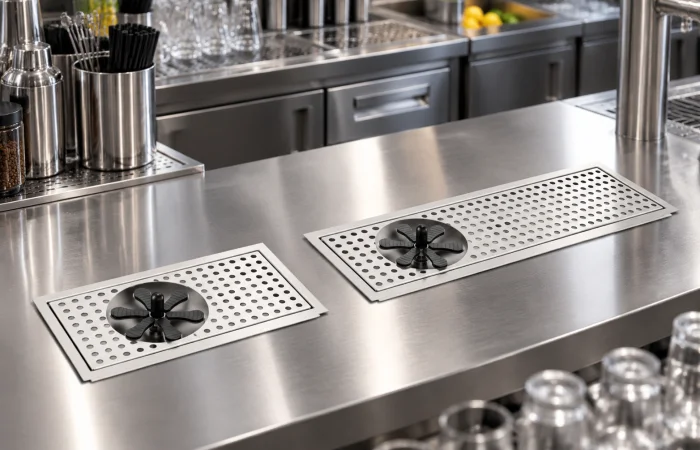
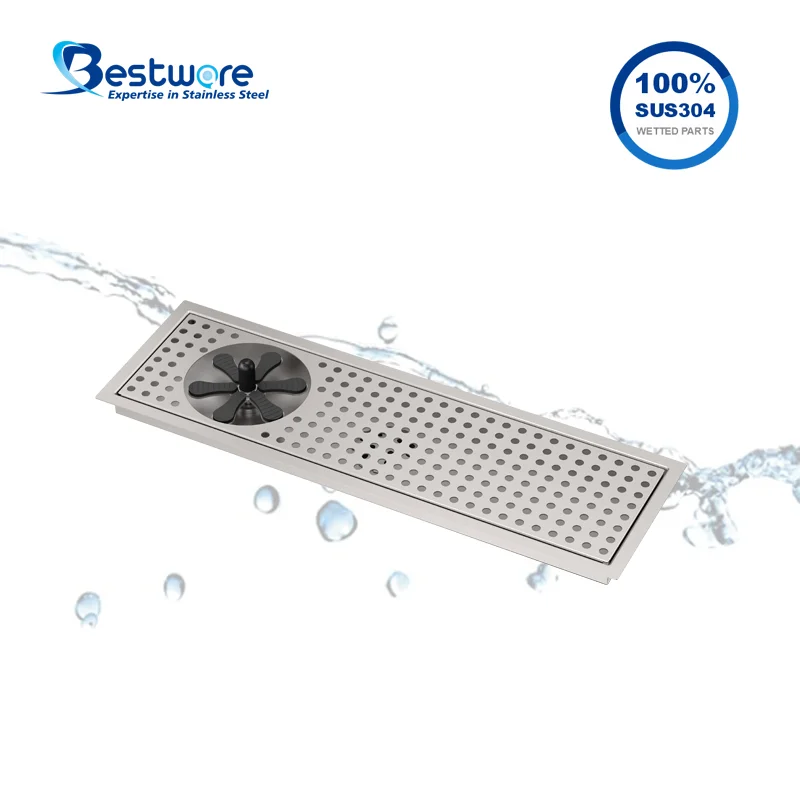
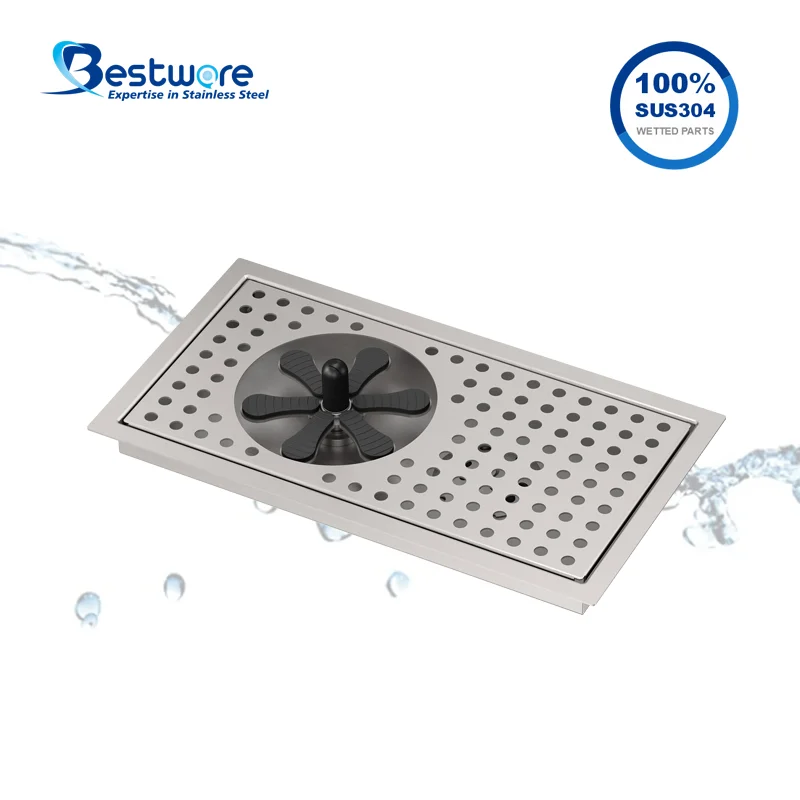
Different spray designs affect how water reaches the inside of a glass. Traditional jet designs typically produce a relatively concentrated stream, while a blade-style rotating spray design uses a different water-flow pattern to expand rinsing coverage.
For businesses that regularly handle a variety of beverage residues, buyers should assess whether the water flow reaches the main interior surfaces of the glass rather than focusing solely on spray strength. The bottom, sides, and other areas where beverage residue may collect should all be considered. Actual performance also depends on the water supply, glassware shape, and product design.
Glassware used in coffee shops, bubble tea stores, and bars can vary considerably in rim diameter, depth, and overall shape. Before purchasing a glass rinser, buyers should confirm that their commonly used glassware can be positioned securely and that the spray design is suitable for the intended glass types.
Installation requirements are equally important. A glass rinser generally needs to work with the countertop, water supply, and drainage system. Available installation space, connection requirements, and ease of routine cleaning can all affect the user experience. Checking these details in advance helps prevent compatibility issues after the equipment has been delivered.
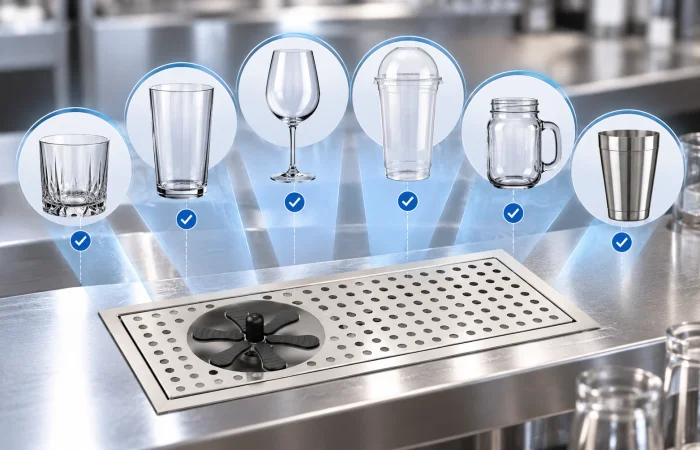
Commercial bar equipment must withstand frequent use, making material quality, structural reliability, and ease of maintenance important considerations. When evaluating a stainless steel glass rinser, buyers should check the stainless steel grade, surface finish, and relevant material specifications rather than judging quality by appearance alone.
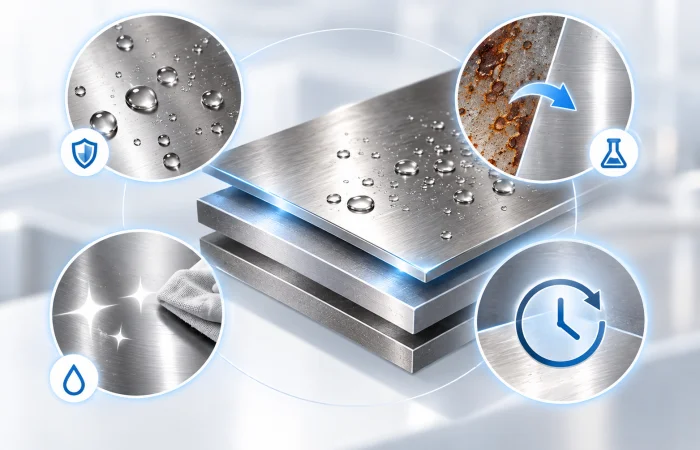
Evaluating spray design, glassware compatibility, material, and installation requirements together provides a more reliable basis for selecting equipment that meets a business's needs than comparing a single specification. These factors are also useful for foodservice equipment distributors and project buyers assessing whether a product is suitable for their customers' applications.
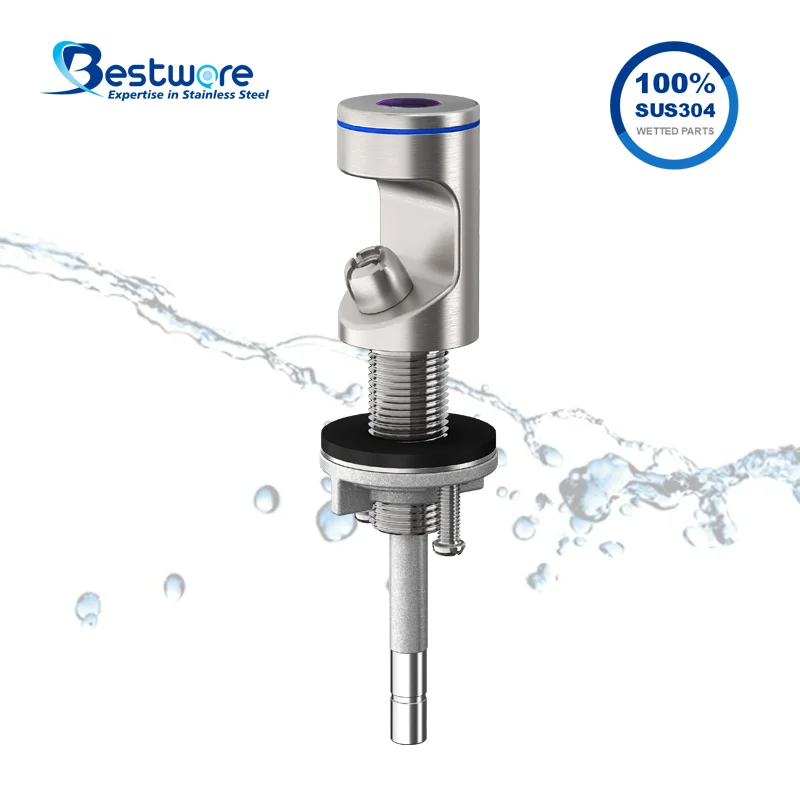
To meet the quick-rinsing needs of commercial bars and beverage preparation areas, the Bestware glass rinser is made from SUS304 stainless steel and features a blade-style rotating spray design. This design helps expand water coverage, allowing the flow to reach different areas inside compatible glassware.
For commercial users who frequently handle coffee cups, beverage glasses, and other compatible containers, this design offers a practical option for routine pre-rinsing. Businesses can incorporate the glass rinser into their existing cleaning procedures by first removing leftover beverages and then carrying out any additional cleaning required for the glassware and type of residue.
For equipment buyers and foodservice equipment distributors, selecting a glass rinser should involve assessing the glassware commonly used by the target customer, frequency of use, installation conditions, and cleaning requirements. Matching the equipment design to the intended application and following appropriate cleaning procedures helps meet the practical needs of commercial environments.
Coffee stains, milk residue, syrup deposits, and residues from mixed drinks may seem like minor cleaning issues, but they differ in their adhesion characteristics and cleaning requirements. Coffee shops need to address visible stains and milk residue, bubble tea stores must deal with syrup and fruit purée, while bars need to account for multiple beverage ingredients and the cleanliness requirements of different types of glassware. A commercial glass rinser can help remove leftover beverages and some loose residue, but it cannot resolve every cleaning challenge. Understanding the characteristics of different residues, selecting suitable rinsing equipment, and following appropriate cleaning procedures can help businesses maintain glassware cleanliness while supporting convenient, consistent daily operations.
One-stop Solution Provider of Stainless Steel Commercial Faucets
Email: business@bestware-stainless.com
after-sales@bestware-stainless.com
Tel: +86 18929047065
WhatsApp: +86 18929047065


WeChat: +86 18929047065


Website: www.bestware-stainless.com(Global Site)
www.bestware-sparkling.com(Water Dispenser)
Add: Block 8, No. 6, Jianda Nan Road, Jiangmen, Guangdong, China
Copyright © Bestware Hardware Production Co., Ltd. All Rights Reserved.